Read the wattage as a shared budget
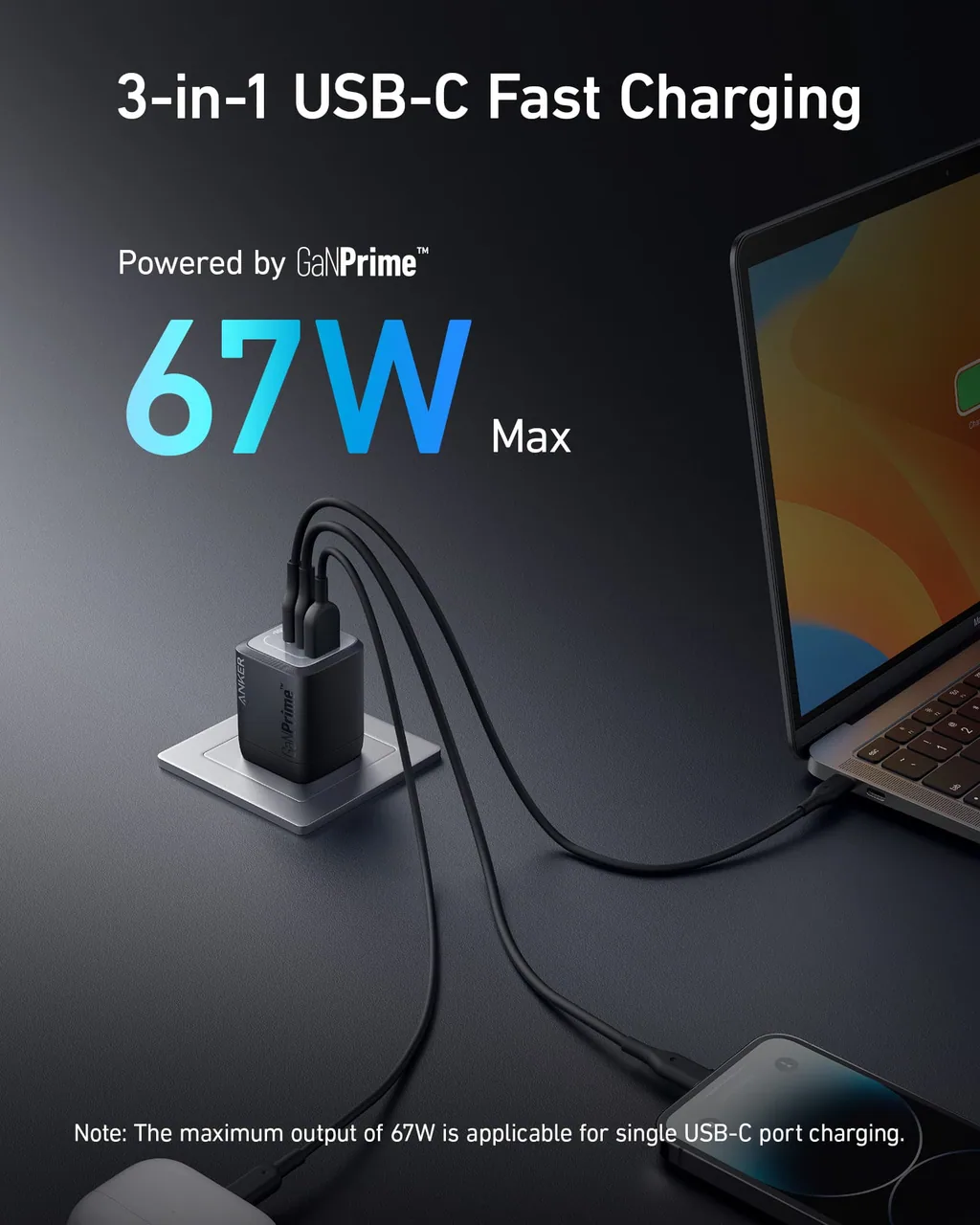
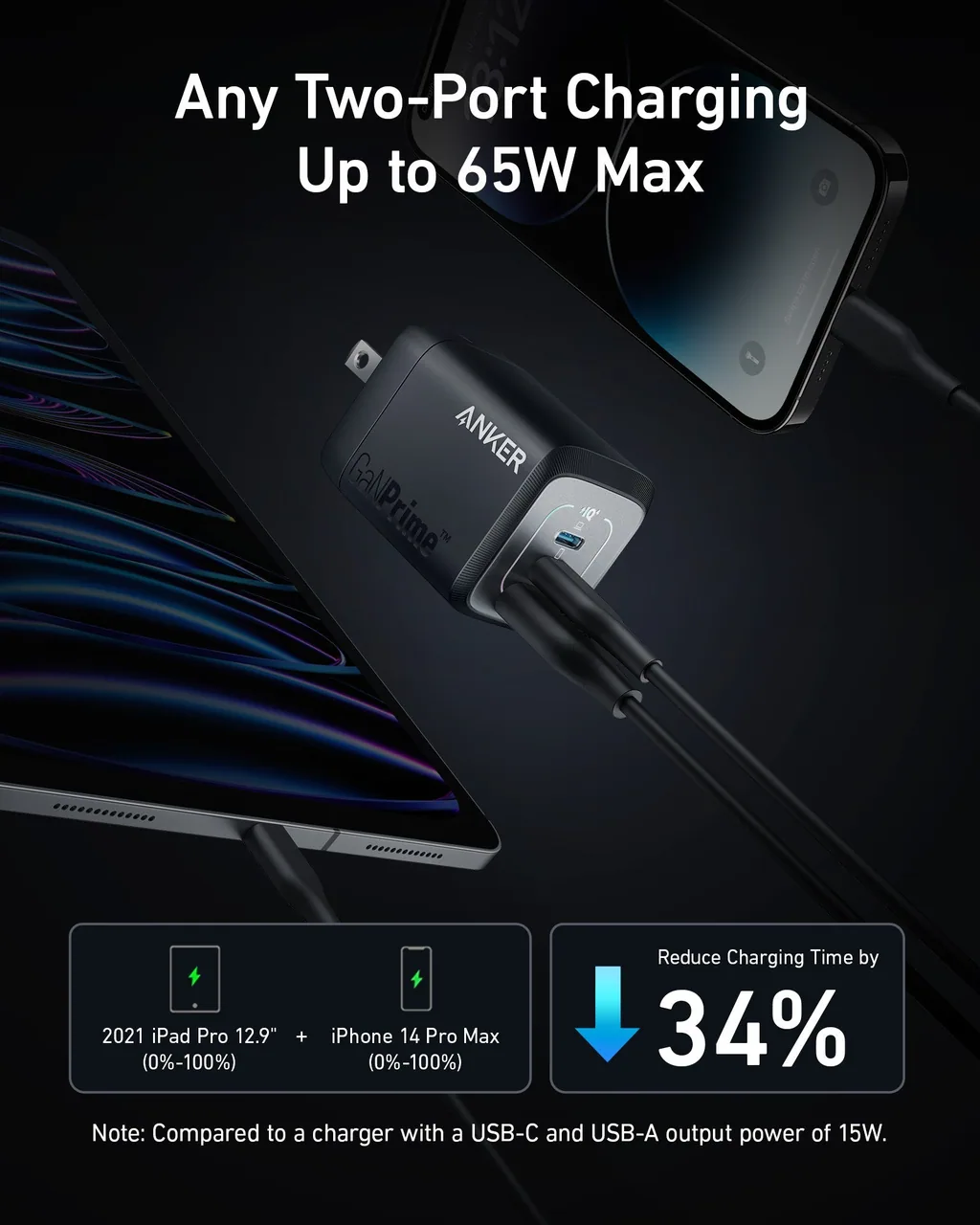
A 67 W label on a three-port charger is easy to misread. Anker advertises up to 67 W from a single USB-C port; add another device and the total is redistributed. The allocation graphic matters more than the headline. Before buying, check the laptop’s required USB-C Power Delivery wattage and then check the exact two-port combination you will use on a typical trip.
Pack the right cable and plug plan
This model has two USB-C ports and one USB-A port. Check the retailer’s current box contents for a suitable USB-C cable instead of assuming one is included. Its folding US-style pins save space in an American bag but do not magically fit other socket types. For international travel, a suitable adapter and local electrical compatibility still matter.
Who should keep the original brick
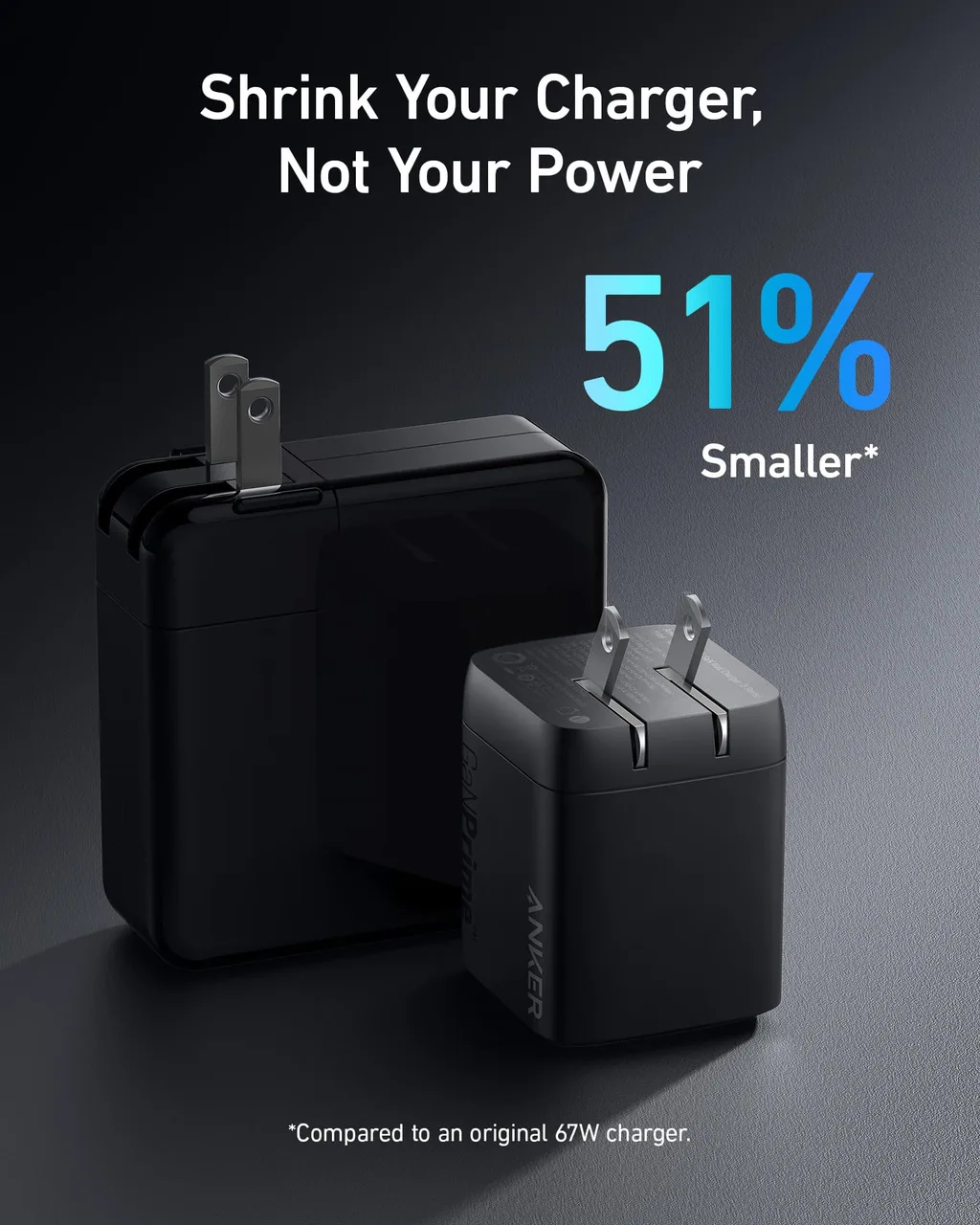
A high-performance laptop that demands more than this charger can supply may charge slowly or lose power under load. A simple phone-only traveller may not need three ports at all. This Anker is a good fit for a moderate-power laptop plus phone and small accessory when reducing the number of wall bricks is the point. Verify the exact A2669-style product and cable bundle at the retailer, rather than assuming every “67 W Anker” listing is identical.

Our bottom line
One compact brick can replace several adapters when travelling with a laptop, phone and accessory. But 67 W is a maximum single-port figure, not 67 W to every attached device simultaneously. Check the exact variant and current terms at the retailer. This is desk research, not a hands-on test.


