A wallet can look wonderfully slim until it meets the money you actually use. Imagine ordering the smaller version, opening it at a café, and discovering that your usual banknotes sit awkwardly above the edge. The color was right; the decision was not.
The Bellroy Hide & Seek makes most sense for someone who still wants a recognizable bifold: open it, take out a card, and reach for cash without unfolding a tiny stack. Its useful twist is concealed storage, but the first buying decision is LO versus HI, not the hidden pocket. This is a research-based buying guide, not a claim that we have carried or tested this wallet.
LO or HI: let your currency choose
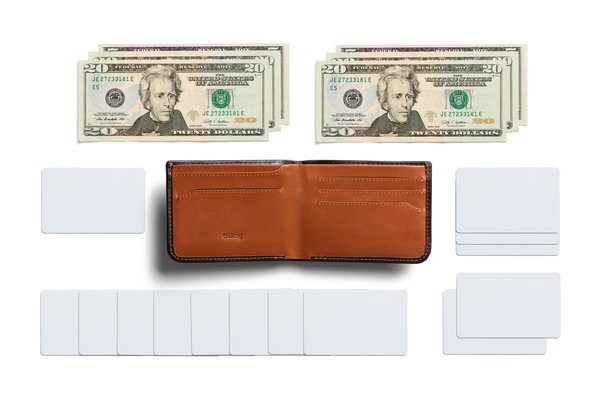
Bellroy’s size guide puts US, Australian, Canadian and New Zealand dollars in the LO group, along with currencies up to 74 mm high. It recommends HI for British pounds, euros and several other taller currencies. That distinction matters for an English-language audience: a wallet chosen for an American daily routine is not automatically the right gift for someone in Britain or Ireland.
If you regularly travel, put the tallest note you genuinely carry on the table before choosing. Do not pick the smaller wallet and assume that folding everything will feel equally convenient; preserving flat bills is part of the appeal of this design. Conversely, a once-a-year trip need not dictate the pocket size you live with every day.
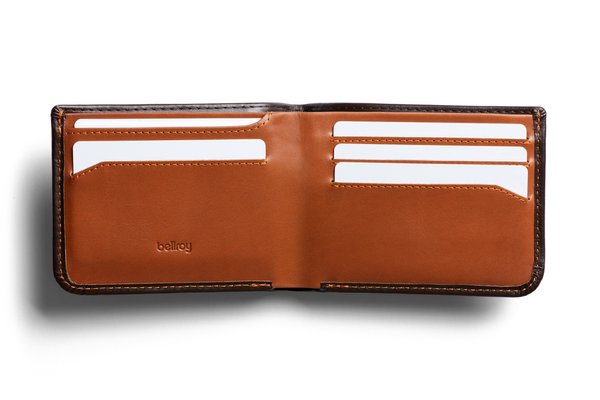
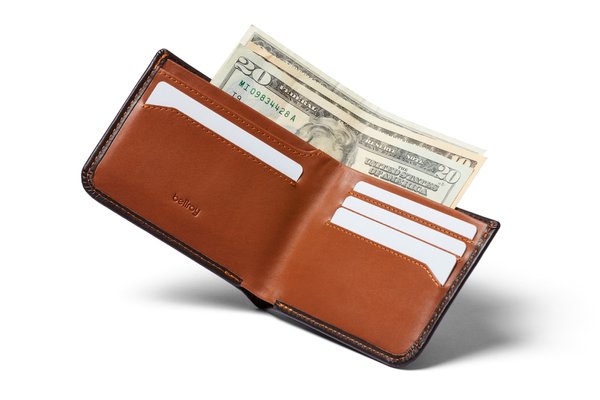
Give the visible slots the jobs you repeat
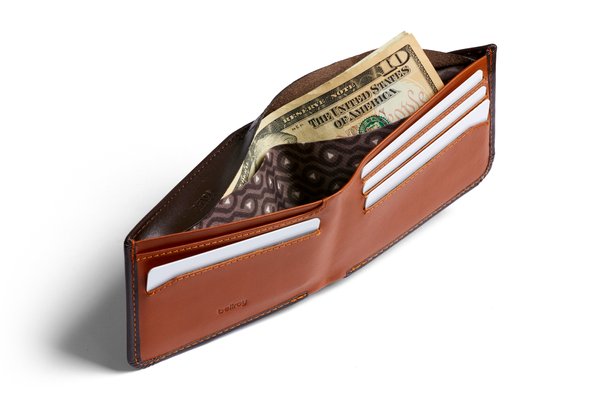
The four quick-access slots are the everyday working area. A sensible arrangement is your main payment card, backup payment card, identification and the access card you retrieve most often. Those are examples, not a required packing list. An access card that must be removed for use belongs where you can actually reach it.
Bellroy lists room for 5–12+ cards, including storage away from the front slots. Treat that as a capacity statement, not a promise of identical slimness at every load. Several stacked cards still have thickness even when the wallet uses fewer separating layers. A person who pays with two cards and someone who carries a dozen are buying very different pocket experiences.
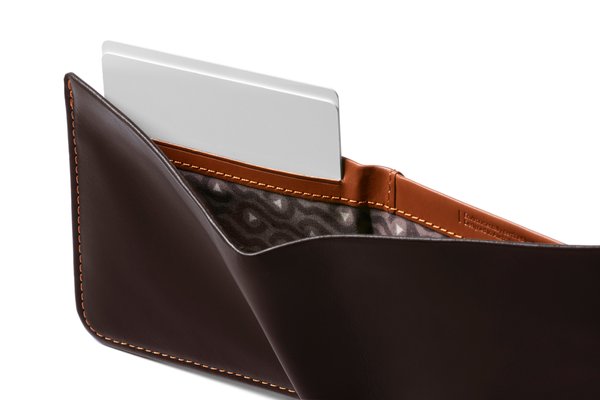
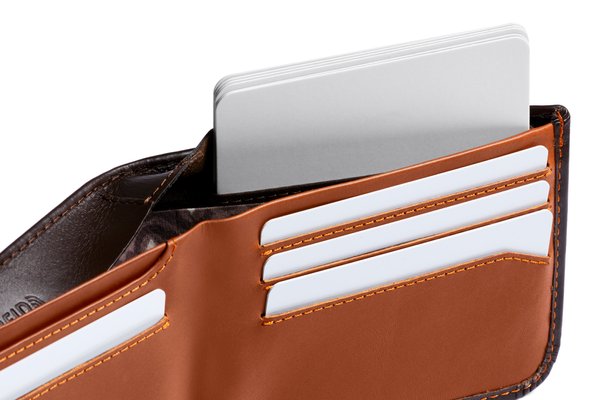
The hidden section is a sorting tool, not a security system
The concealed cash area can separate backup notes from the cash you spend routinely. That is useful when paying in front of other people or keeping a small reserve untouched. It does not establish resistance to theft, searching or loss, and it cannot replace keeping essential funds in more than one place when that matters to you.
Try a simple rule: everyday money in the ordinary bill section; a deliberately limited reserve behind the flap; receipts somewhere else. Without a rule, another compartment can become another place to forget things. If your present wallet is thick because of receipts, transferring them into a cleverly divided new wallet will not solve the cause.
Leather details versus the way you use a wallet
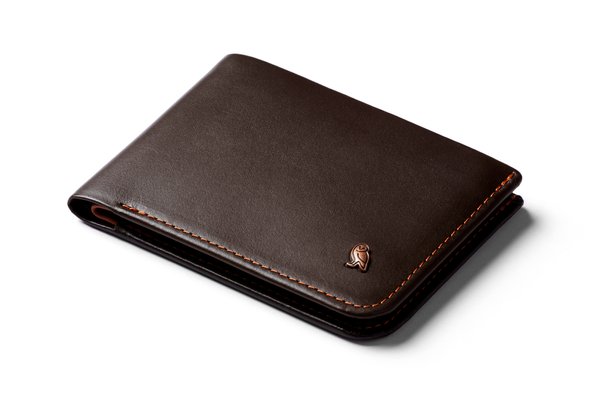
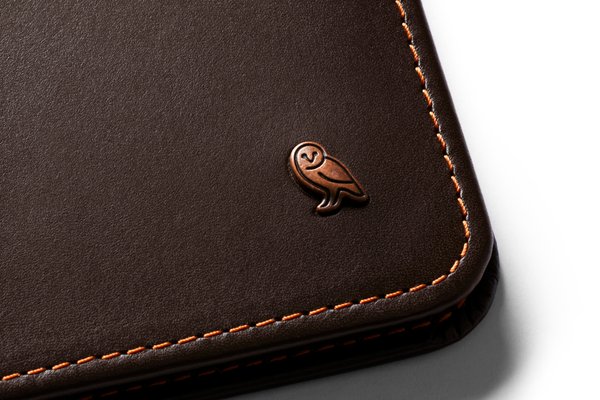
The close-up photograph helps you inspect the edge treatment and stitched construction. It cannot tell you how a particular finish will age against your keys, how easily your cards will slide after months, or whether the loaded wallet will suit a tight trouser pocket. We have not measured those outcomes.
Our photos show the Java leather version from Bellroy’s press library. Current colors and material editions may differ; do not use this image as confirmation that Java is presently available. If you select a leather-alternative edition, check that listing on its own terms rather than inheriting a leather-care recommendation.
Hide & Seek or a smaller card wallet?
Choose the Hide & Seek when flat cash and familiar access are genuine daily requirements. Compare the Apex Slim Sleeve guide if you mainly carry cards and can fold occasional cash. The Apex makes a different trade: a shaped, magnetic format rather than conventional billfold access. Neither is automatically the better wallet.
Before spending anything, remove unused cards from your existing wallet for a week. Count how often you need cash and which cards you retrieve. If the reduced load now works perfectly, keep the wallet. If you still want flat bills, visible daily cards and separated reserve cash, the Hide & Seek has a coherent job to do.
The buying check that prevents the wrong order
Confirm the selected LO/HI size, material and return conditions together. For a gift, ask what currency the recipient uses rather than guessing from where you are ordering. For travel, verify the specific notes you carry; the size guide is more useful than a generic promise that a wallet is international.
Our Hide & Seek product notes collect the model, limitations and direct retailer route. Make that visit to confirm your chosen version—not because a hidden pocket alone makes replacement necessary.
Does it replace a coin purse? Bellroy lists a hidden coin pouch, but we would not choose a slim bifold primarily to store a growing handful of coins. Does RFID protection prove theft prevention? No. It is a manufacturer-listed feature, not a finding from a security test by Findweave. The stronger reason to consider this wallet is its cash-and-card organization.