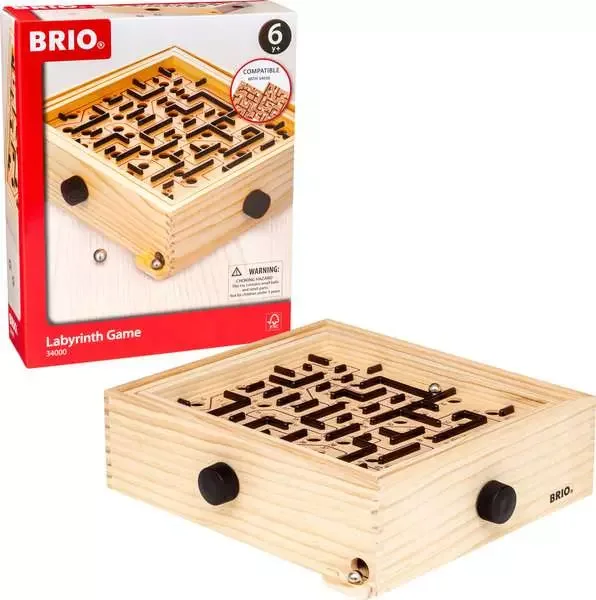
The ball reaches the bend. You turn the knob a fraction too far, and it vanishes through a hole. BRIO’s wooden Labyrinth makes a simple idea unusually inviting: one more attempt, this time with a steadier hand. It is a physical challenge, not a screen, a score notification or another thing to charge.
Two knobs, one ball, plenty of restraint
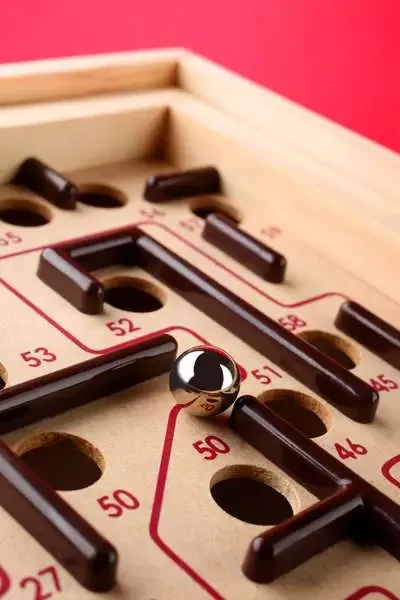
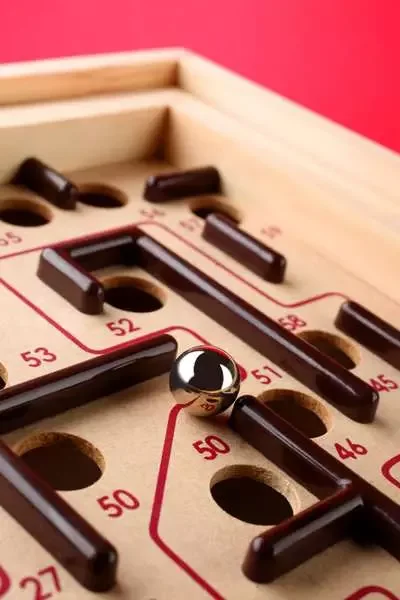
The knobs tilt the inner board along two axes. Your job is to guide a metal ball through the numbered route without dropping it into a hole. The original 34000 is a single-player dexterity game, recommended for ages six and up. Several people can take turns, but they are not playing simultaneously.
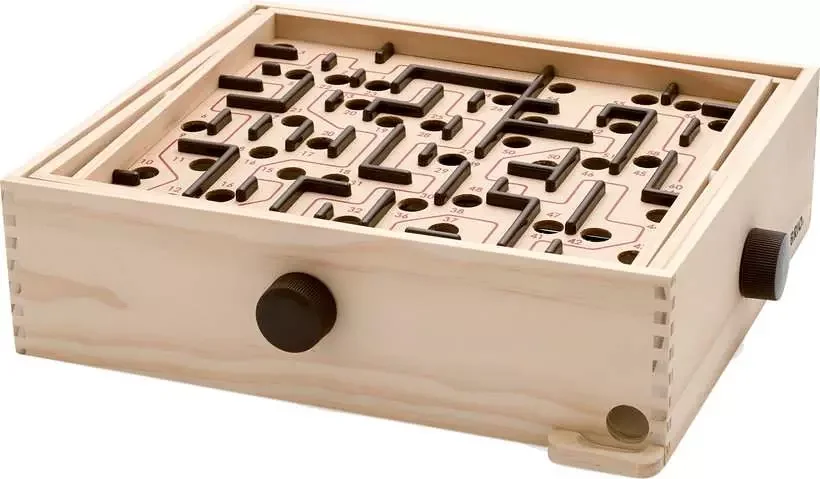
The wooden case and exposed maze make the mechanism part of the appeal. It can sit out between attempts rather than disappear into a complicated setup. That is useful only if an unfinished challenge feels enjoyable to you: this is not a soothing object for someone who dislikes repeatedly failing a precise movement.
A desk object with a real footprint
At roughly 35 × 30.5 × 9.4 cm, the game needs more room than a palm-sized fidget toy. Check your table before imagining it beside a laptop. Set it on a stable, level surface and leave access to both knobs. Its loose metal balls also make it unsuitable within reach of small children.
Which box should you buy?
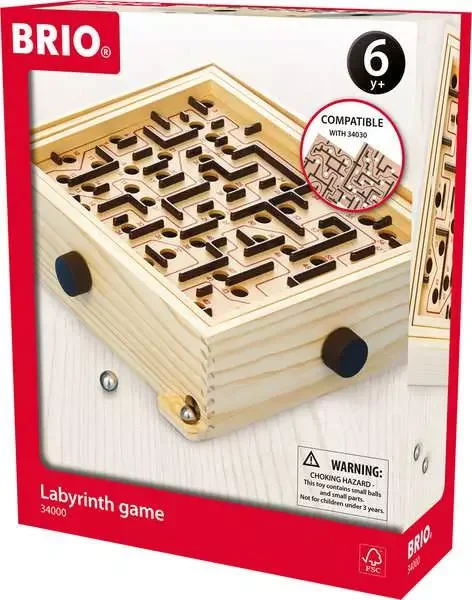
The standard set shown here includes one maze and two metal balls. It is not the extra-board bundle with easier practice layouts. If you want a forgiving introduction for a younger child, compare those beginner boards before choosing this version.
The right kind of gift
Choose BRIO Labyrinth for someone who likes a tactile puzzle, visible progress and a small challenge to revisit. Skip it for someone expecting a multiplayer board game or an effortless stress reliever. The charm is learning control; no purchase can promise better concentration or coordination. Check model 34000 on the retailer page before ordering.