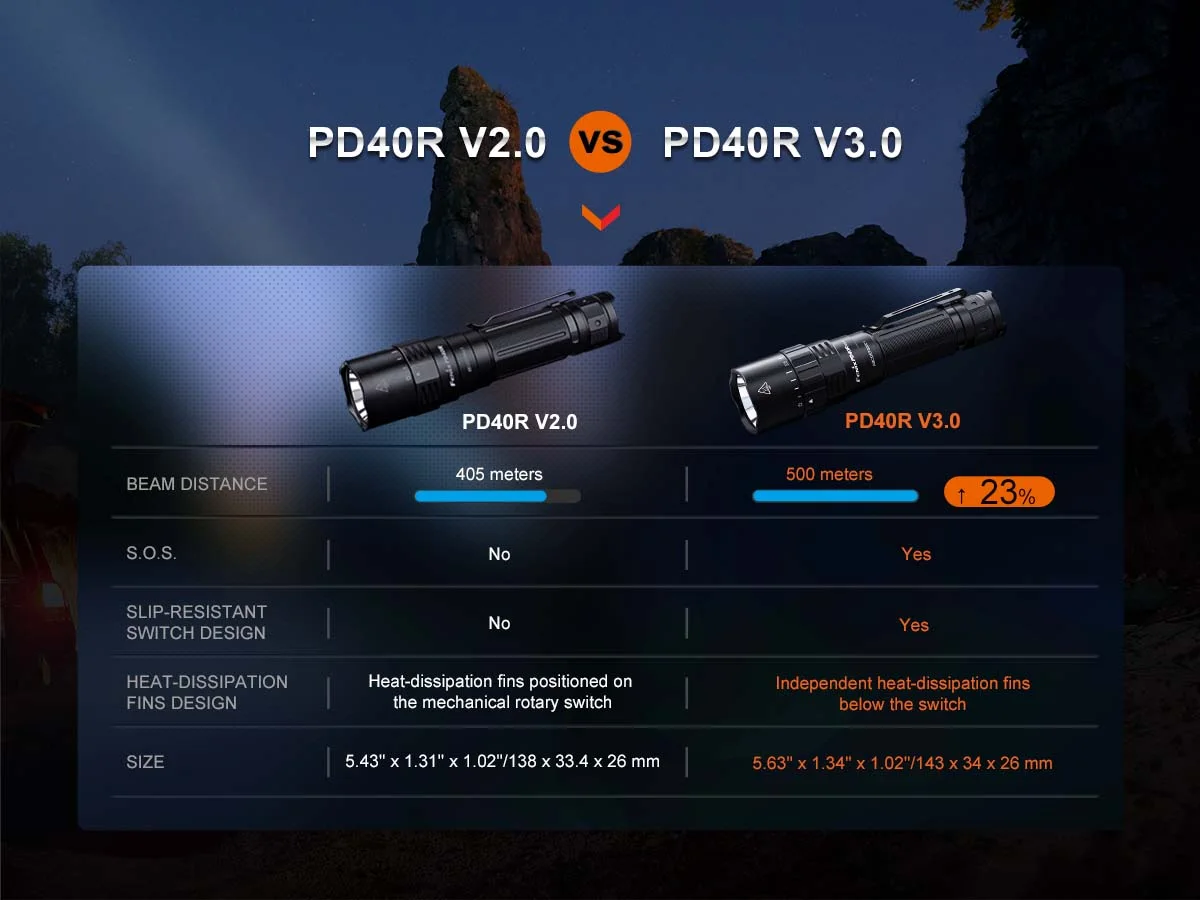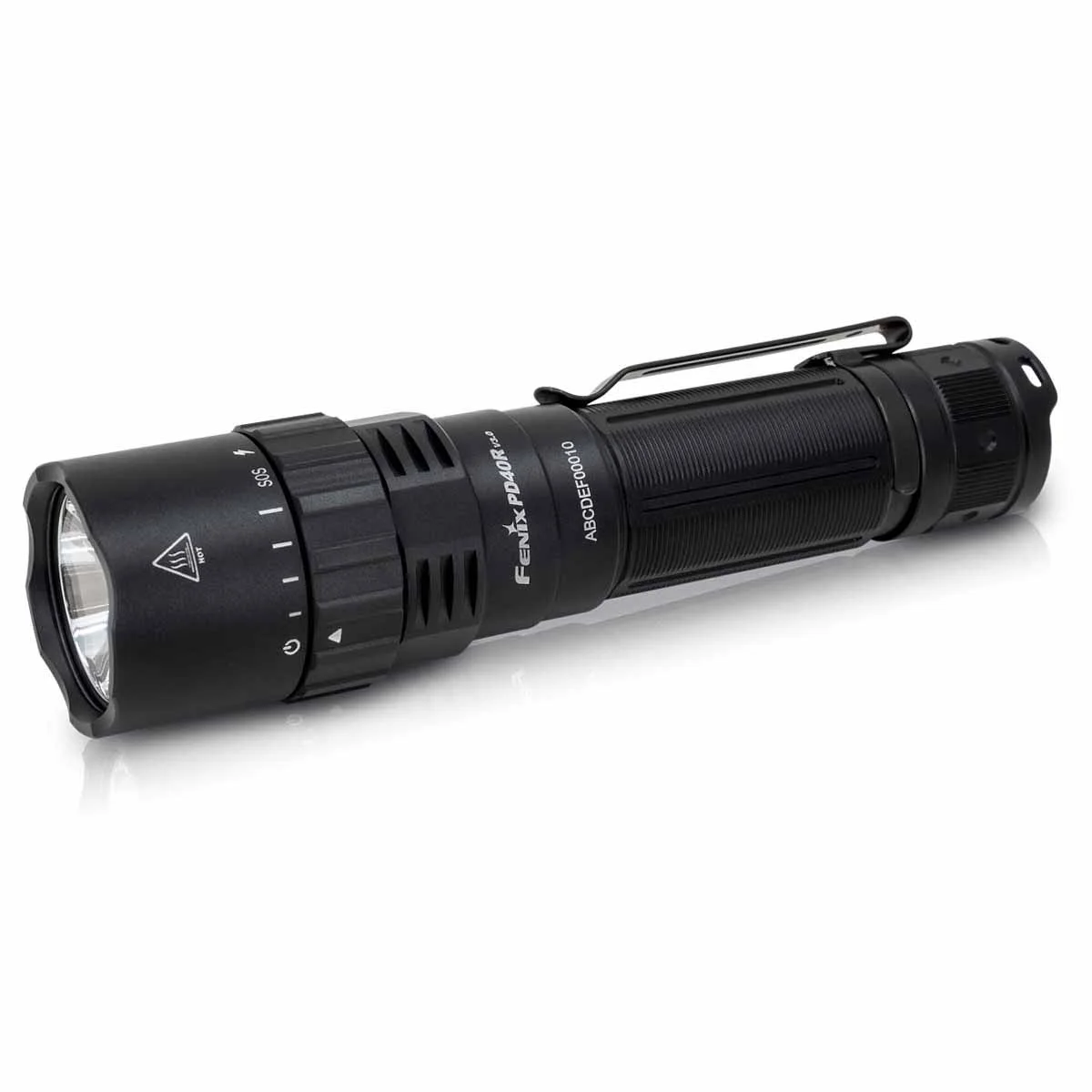
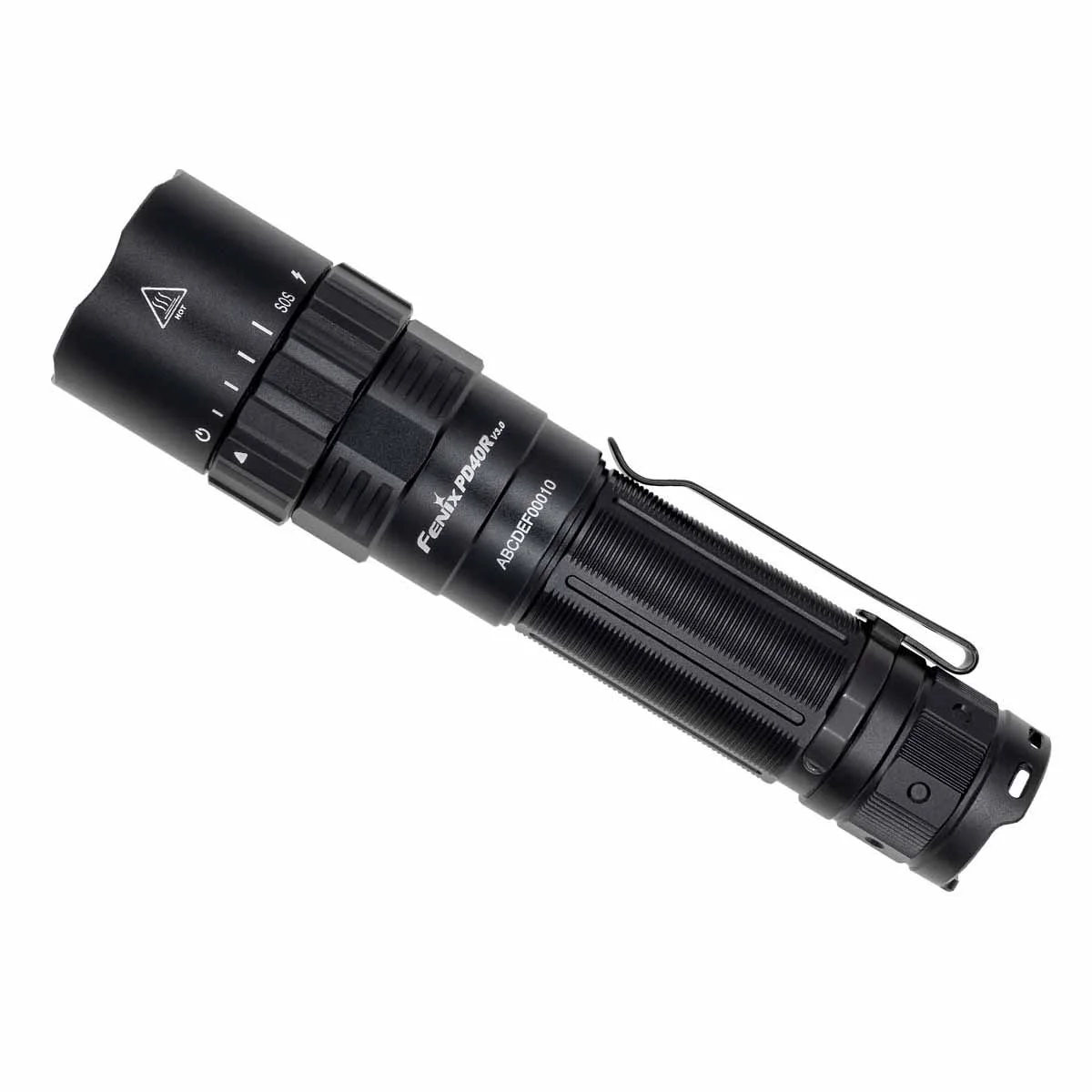
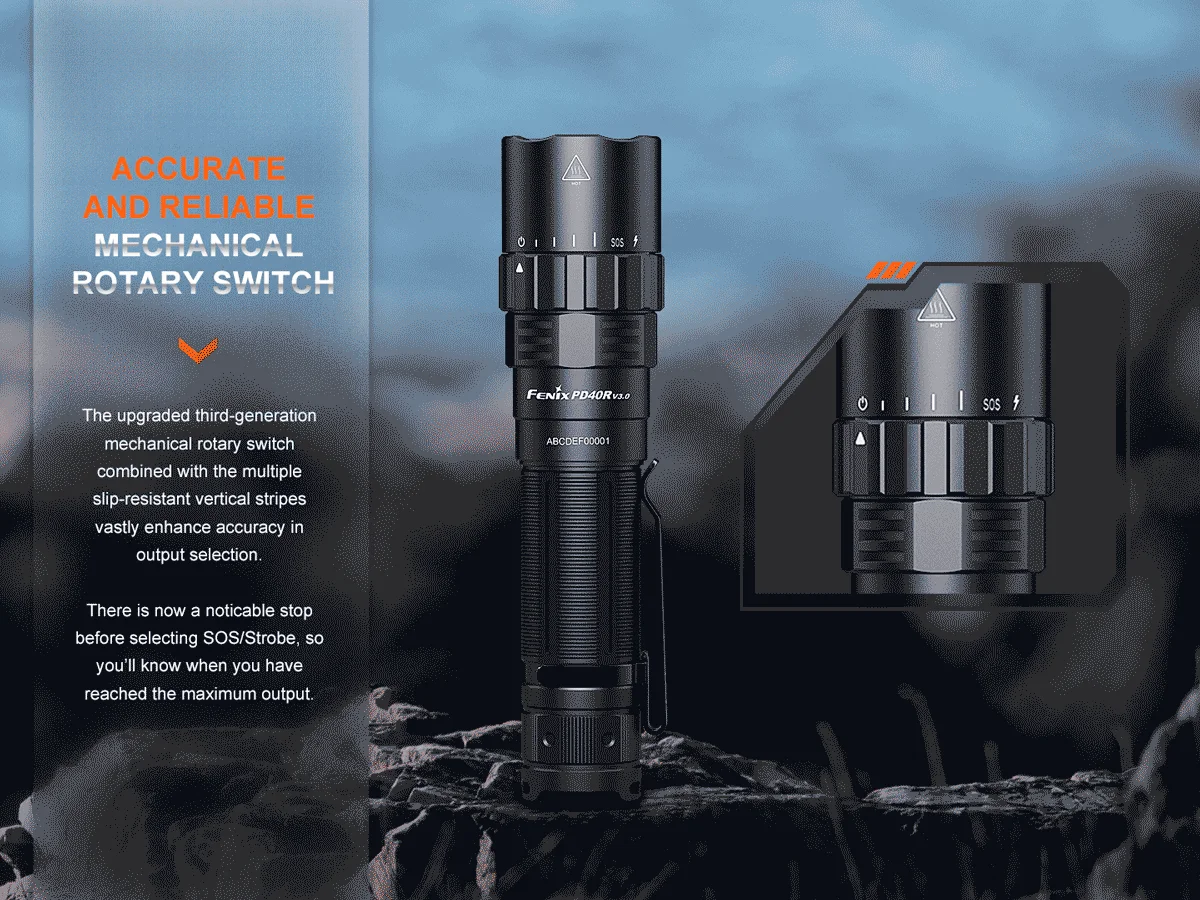
A powerful flashlight is not much help if selecting the right mode is awkward. The Fenix PD40R V3 uses a mechanical rotary selector, giving this model a clear reason to exist beyond its 3,000-lumen headline. Buy it because that interface suits your routine, not because a larger number automatically means a better everyday torch.
Rehearse the switch in your head
Think about taking the light from a pocket, selecting low illumination and changing to a brighter beam. The rotary control follows a different pattern from a tail-switch light. If your existing habit depends on a rear button, this model asks you to change that habit rather than preserving it.
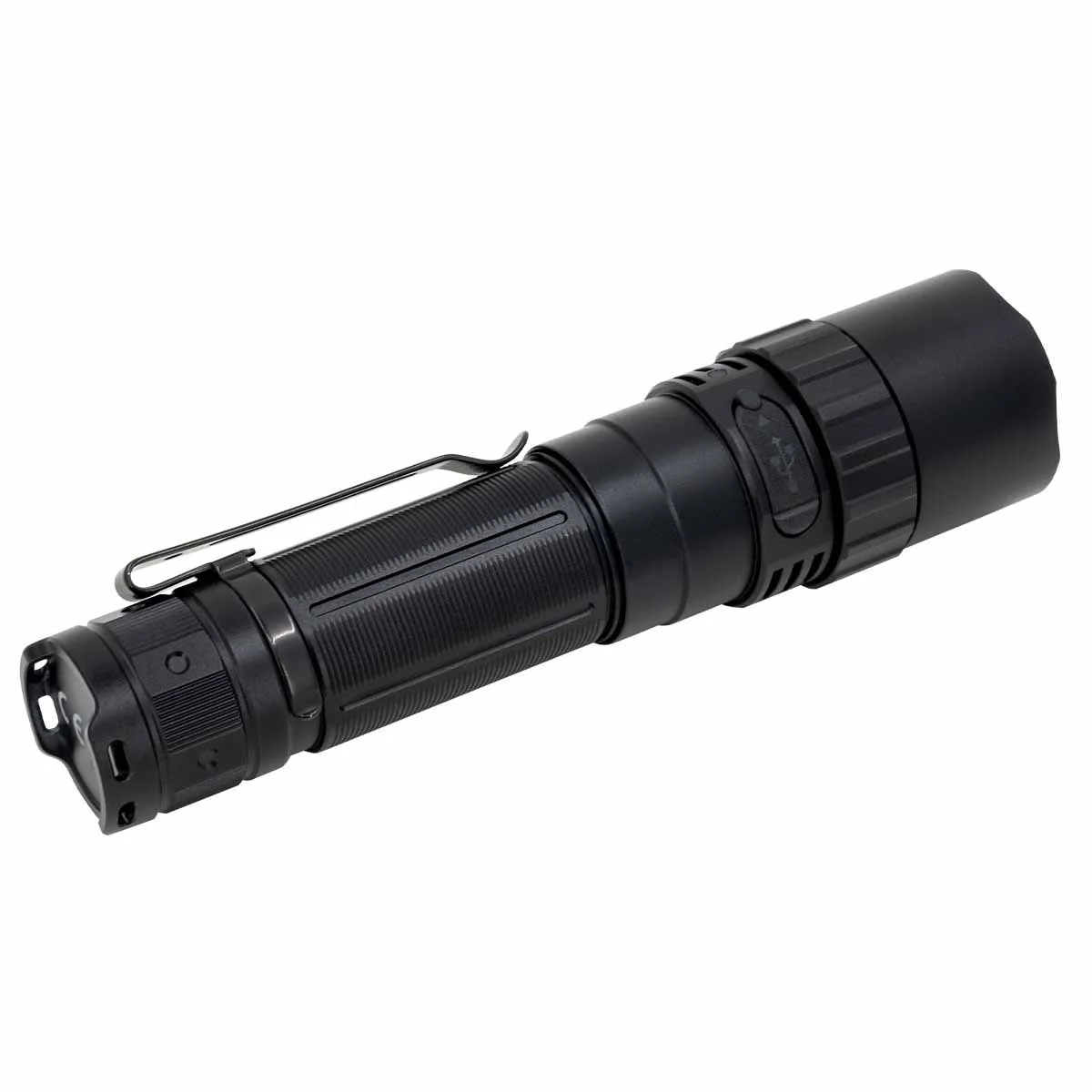
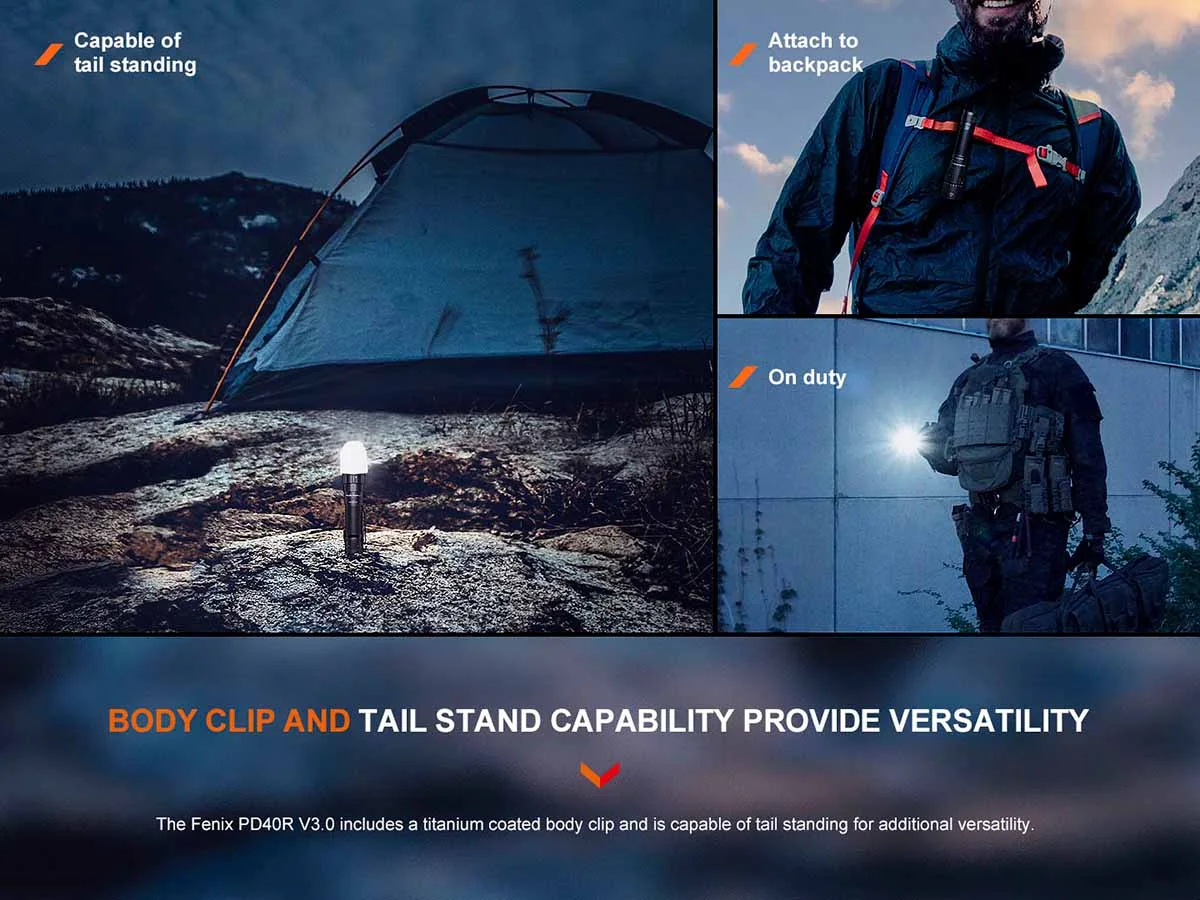
The flat tail permits standing on a suitable level surface. That can be helpful for temporary room lighting, but a narrow torch body is not a stable campsite lantern on uneven ground.
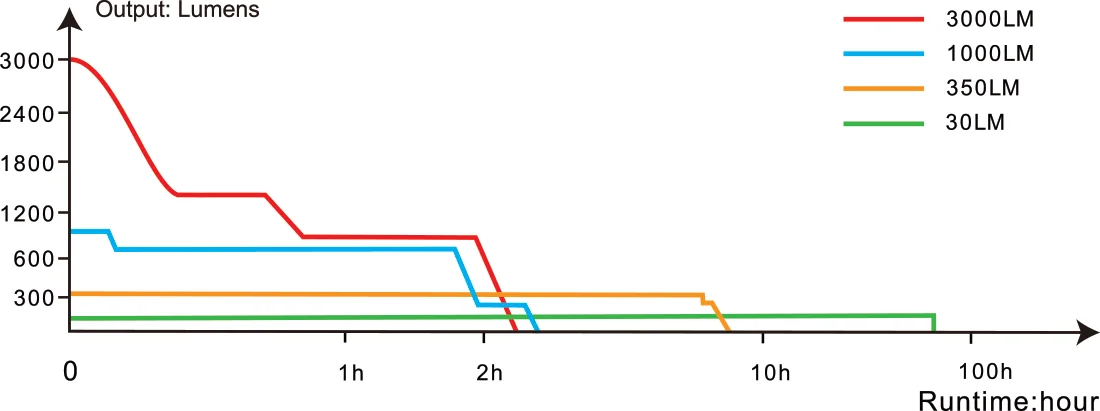
The runtime graph matters more than the hero beam
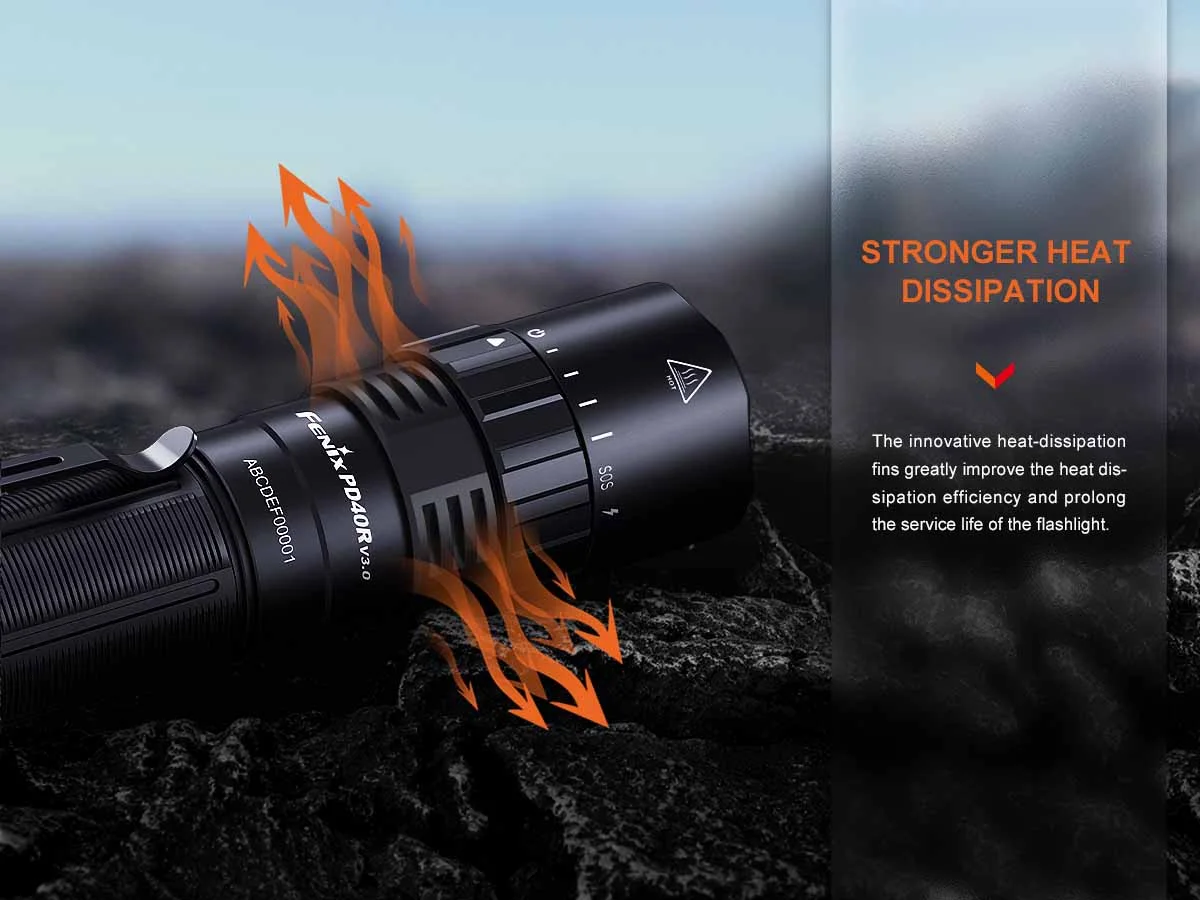
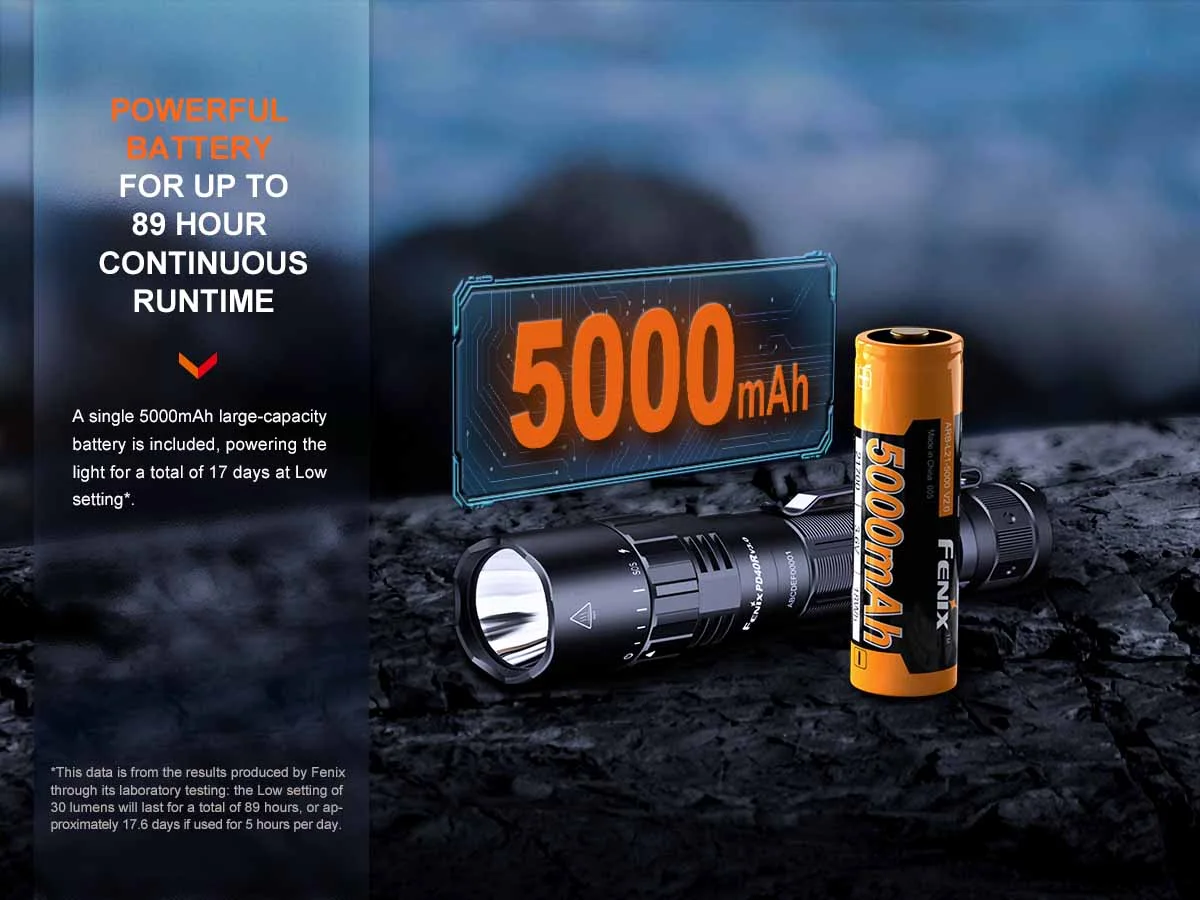
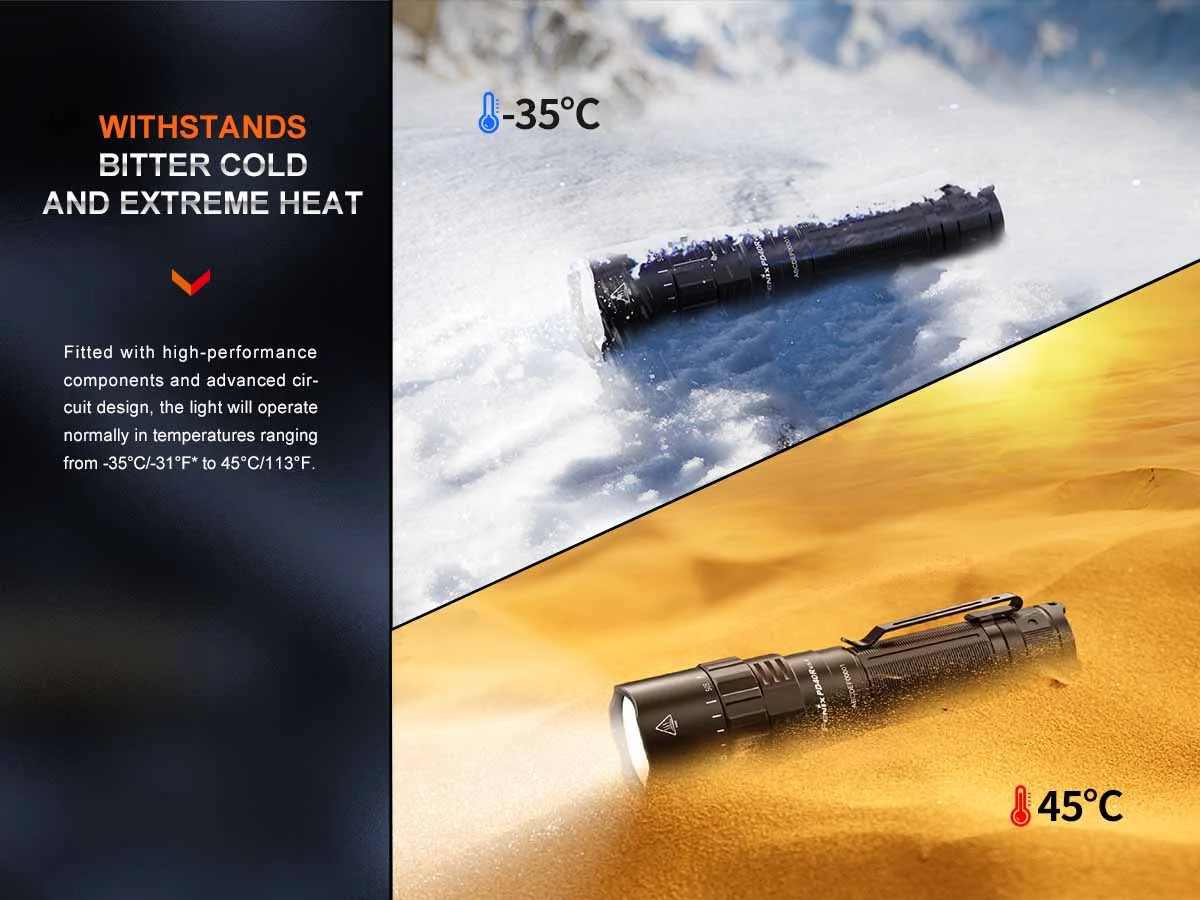
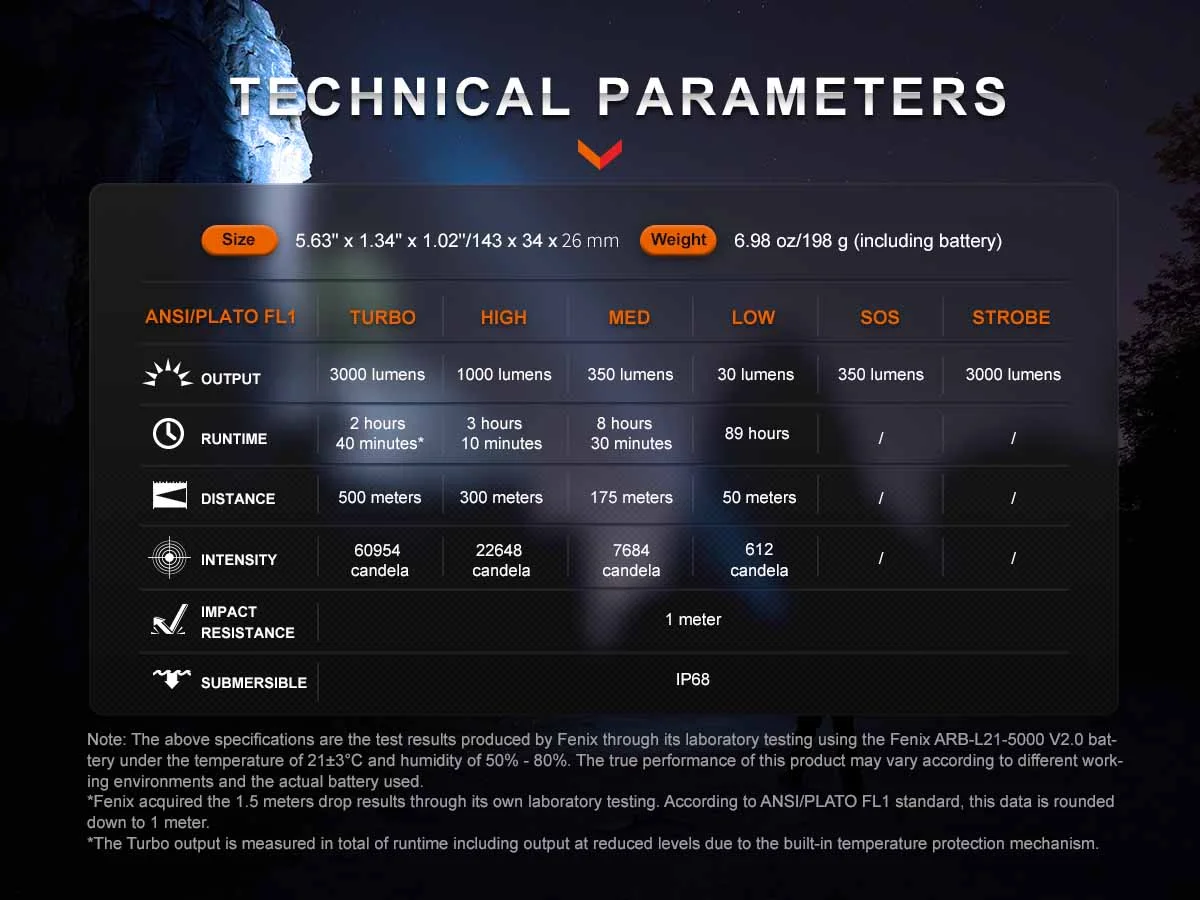
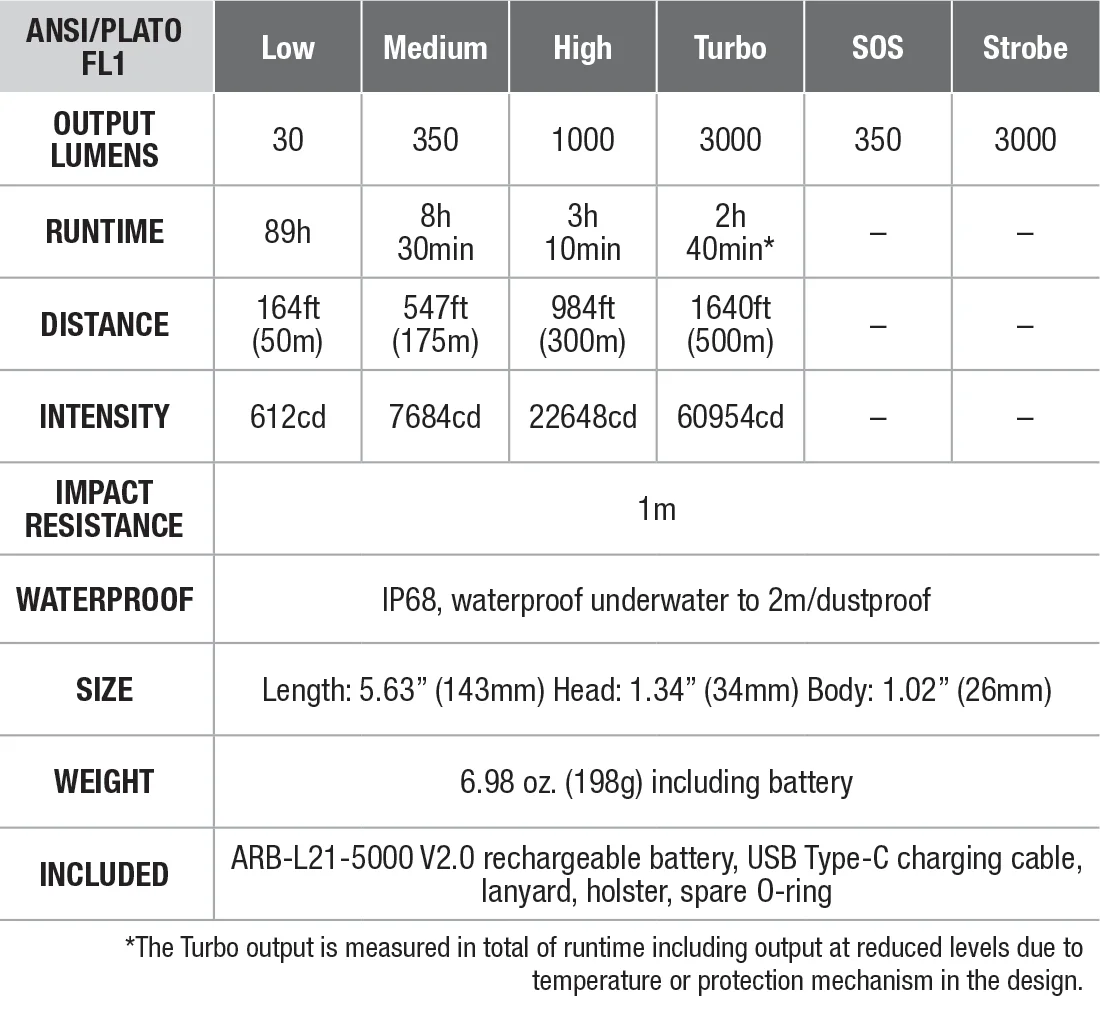
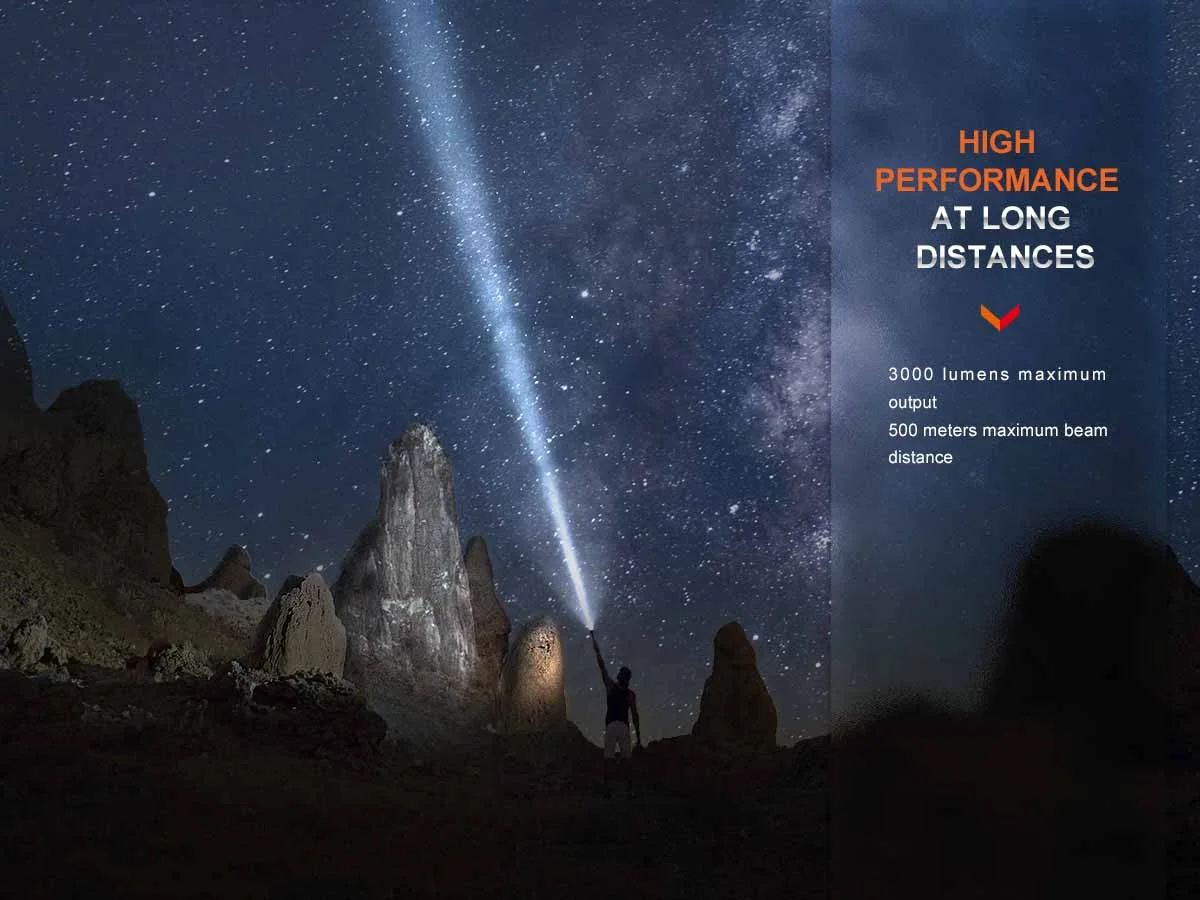
Maximum output is a peak setting. Heat management reduces output during use, and the quoted 89-hour runtime refers to Low. Manufacturer beam photographs and laboratory graphs are reference material, not Findweave measurements or a guarantee of identical conditions outdoors.
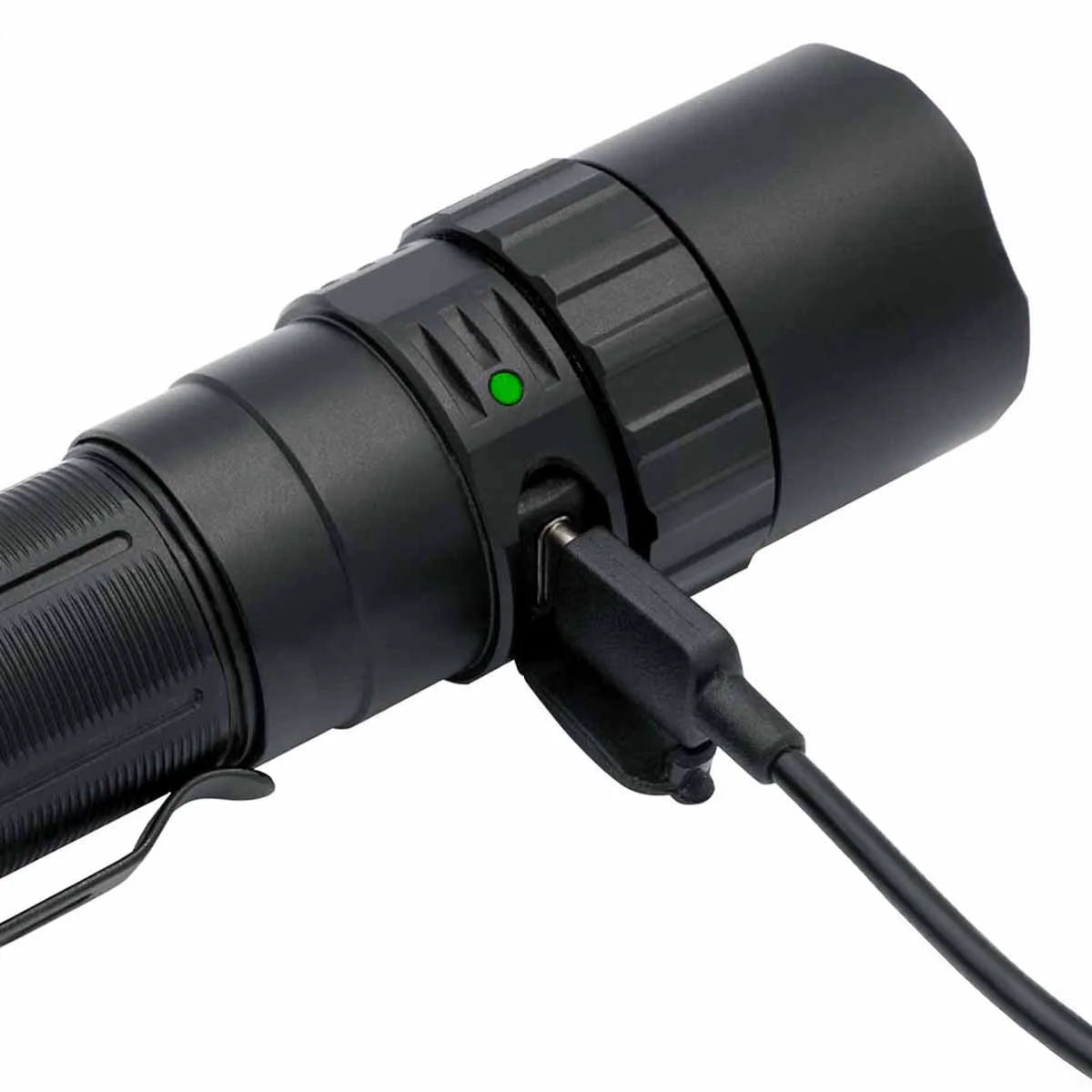
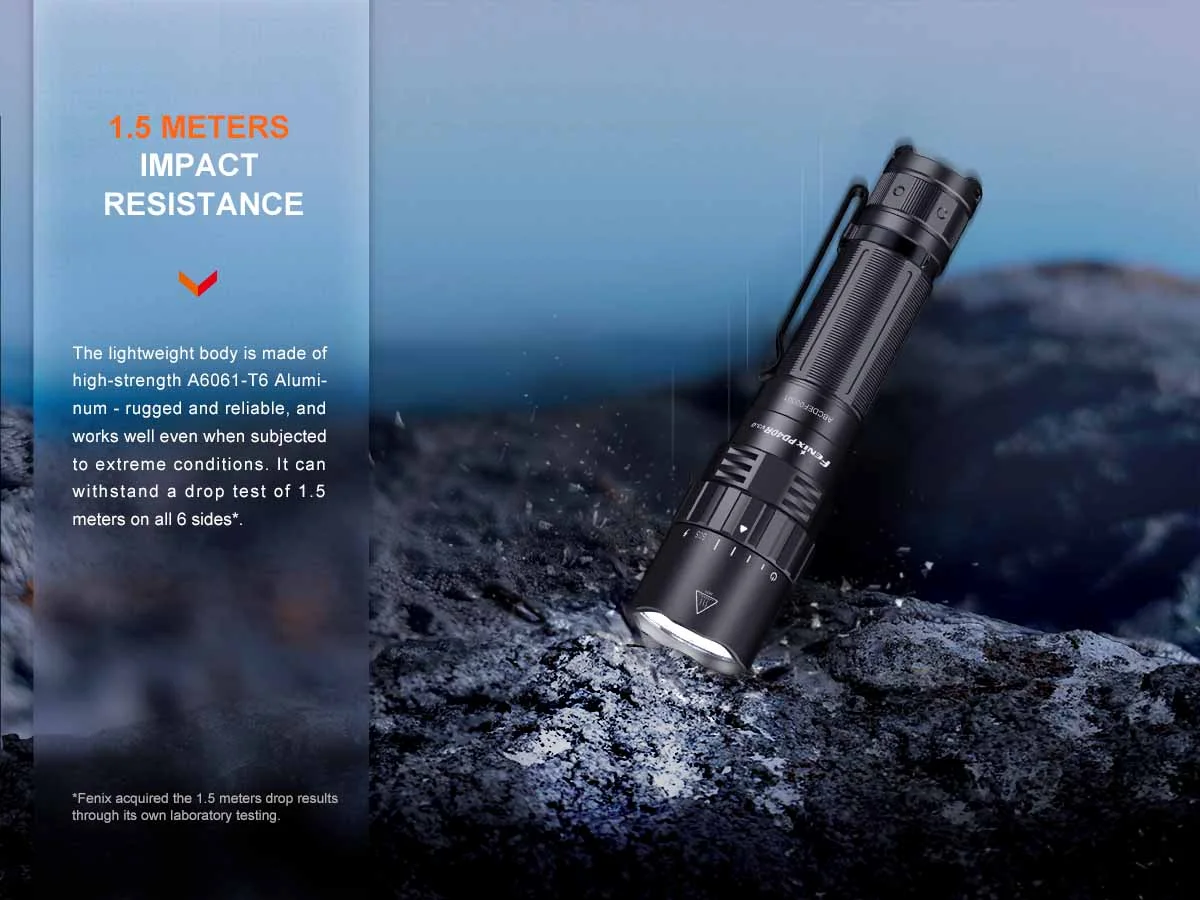
The body weighs about 198 g with its battery according to the maker. Check the pocket, bag or holster where it will actually travel; impressive reach does not make that weight vanish.
Be particular about replacement batteries
Use the recommended compatible battery. The maker warns that older ARB-L21-5000 batteries produced before December 2022 are incompatible, so a shared model-family name is not enough to establish fit. USB-C charging on the light is convenient, but a replacement still needs its own compatibility check.
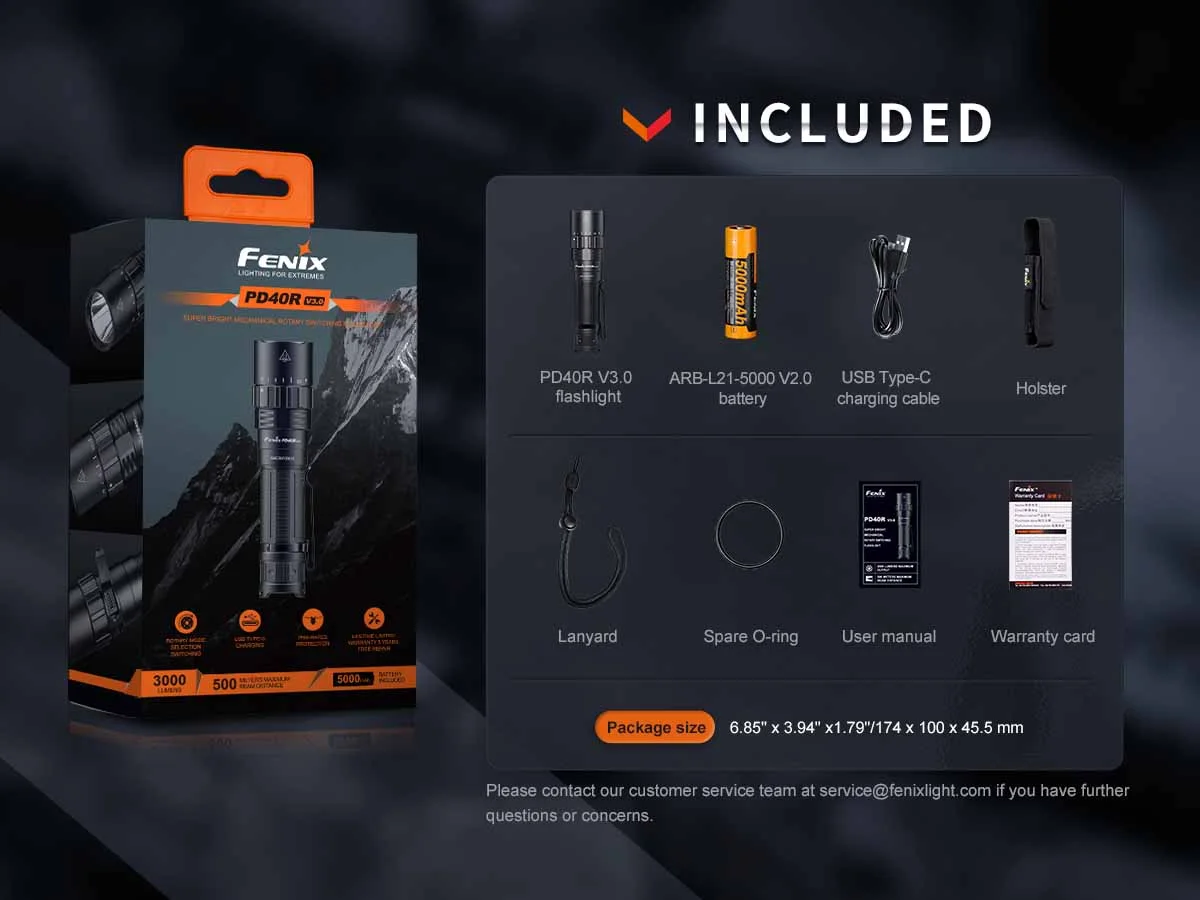
The selected Amazon listing describes the flashlight, USB-C cable, holster, lanyard and Lumentac organizer. Optional decorative body wraps have not been treated as included accessories.
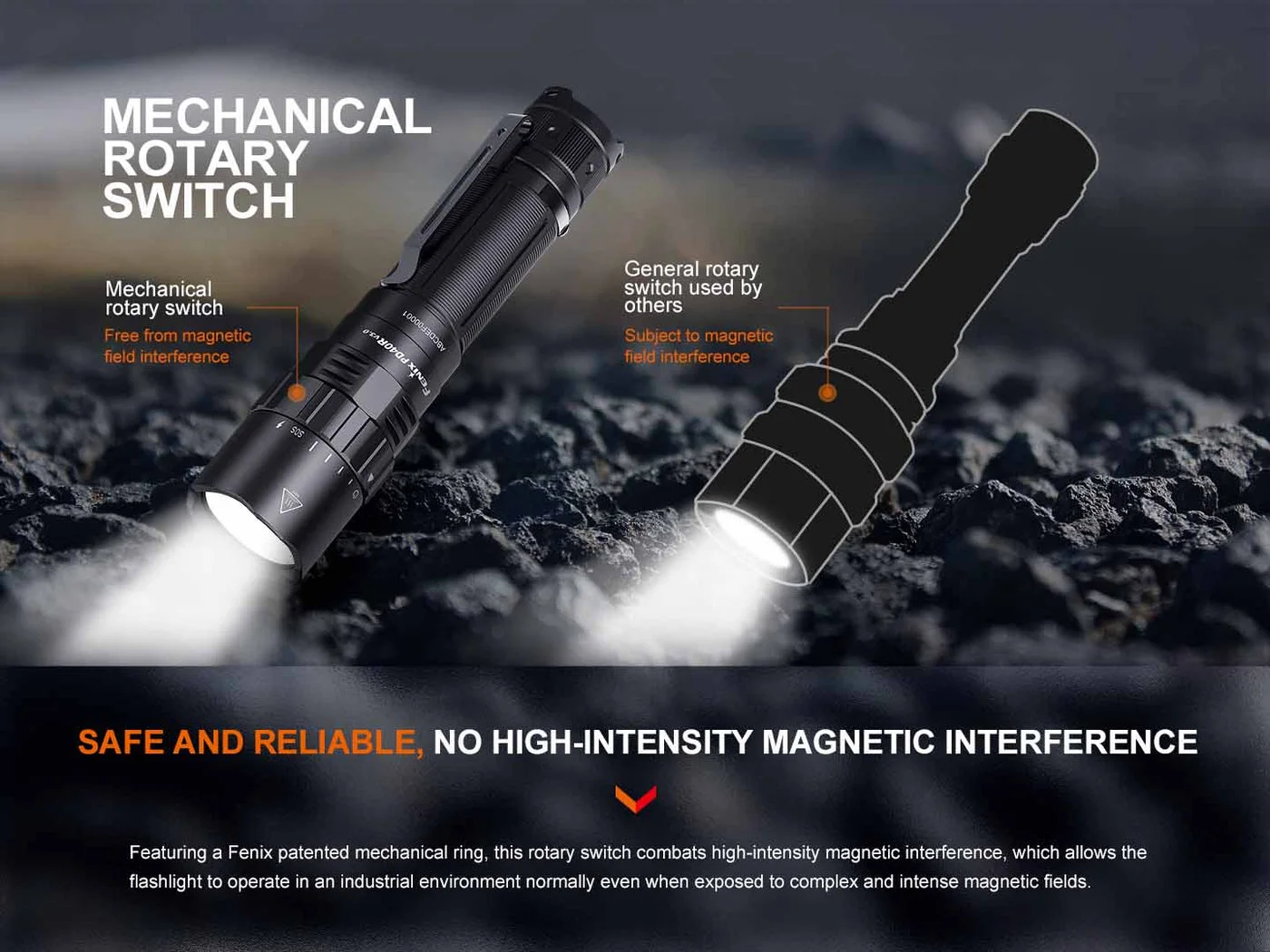
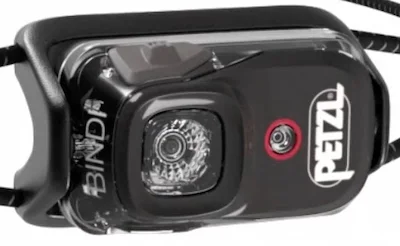
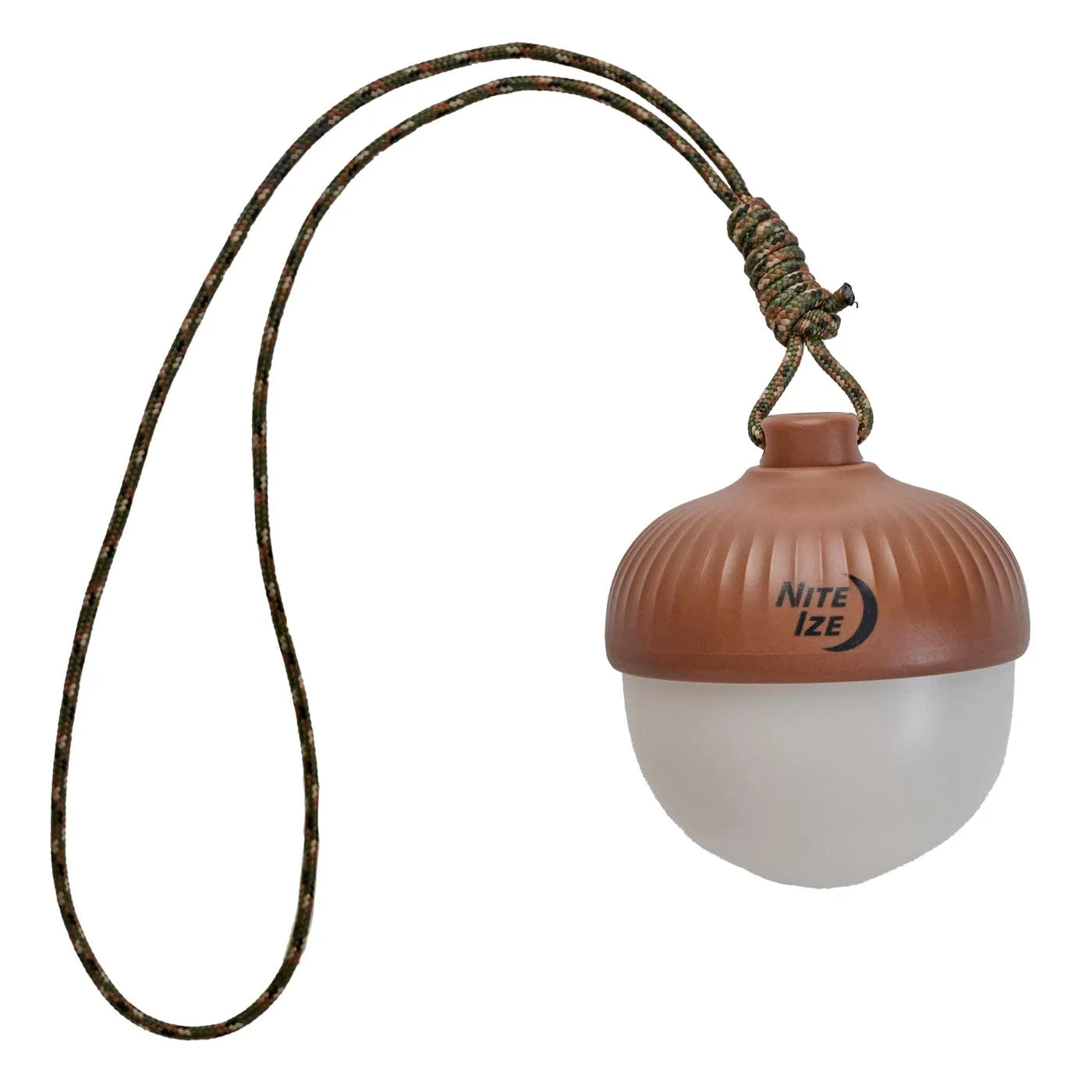
Choose the PD40R V3 for directed illumination and its rotary interface. For close-up cooking, conversation or continuous hands-free use, a lantern or headlamp solves a different problem more naturally. SOS and strobe modes do not guarantee rescue or replace an emergency plan.