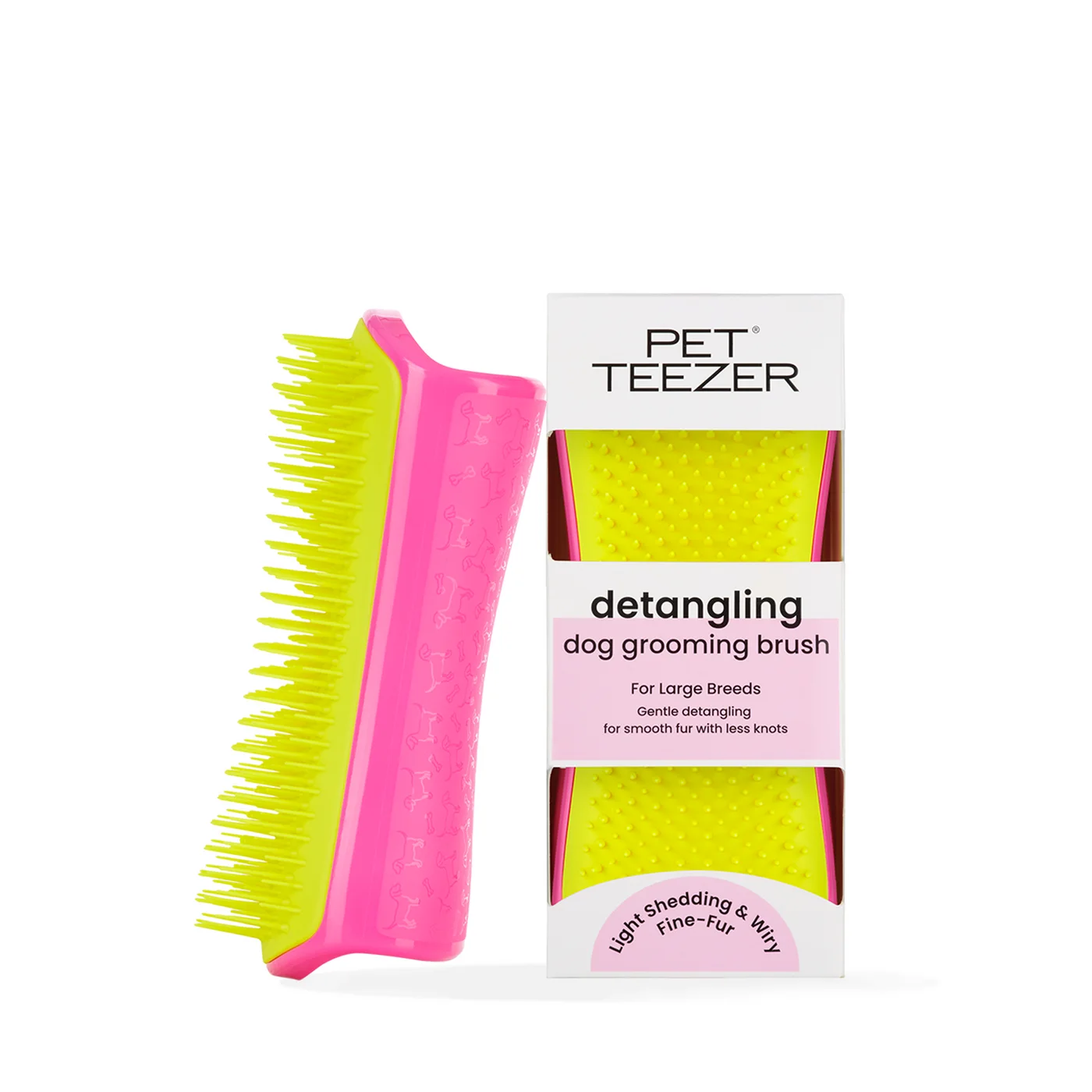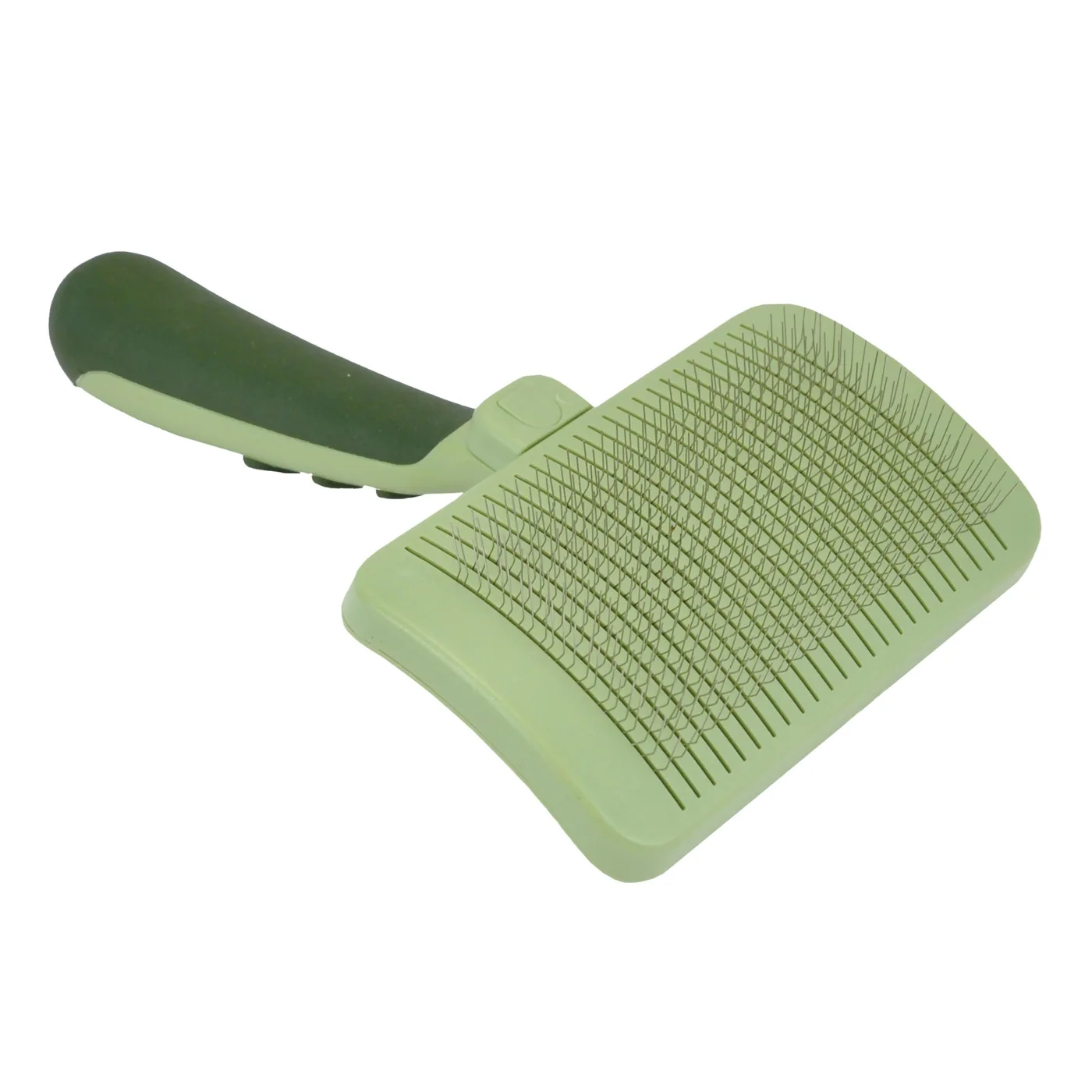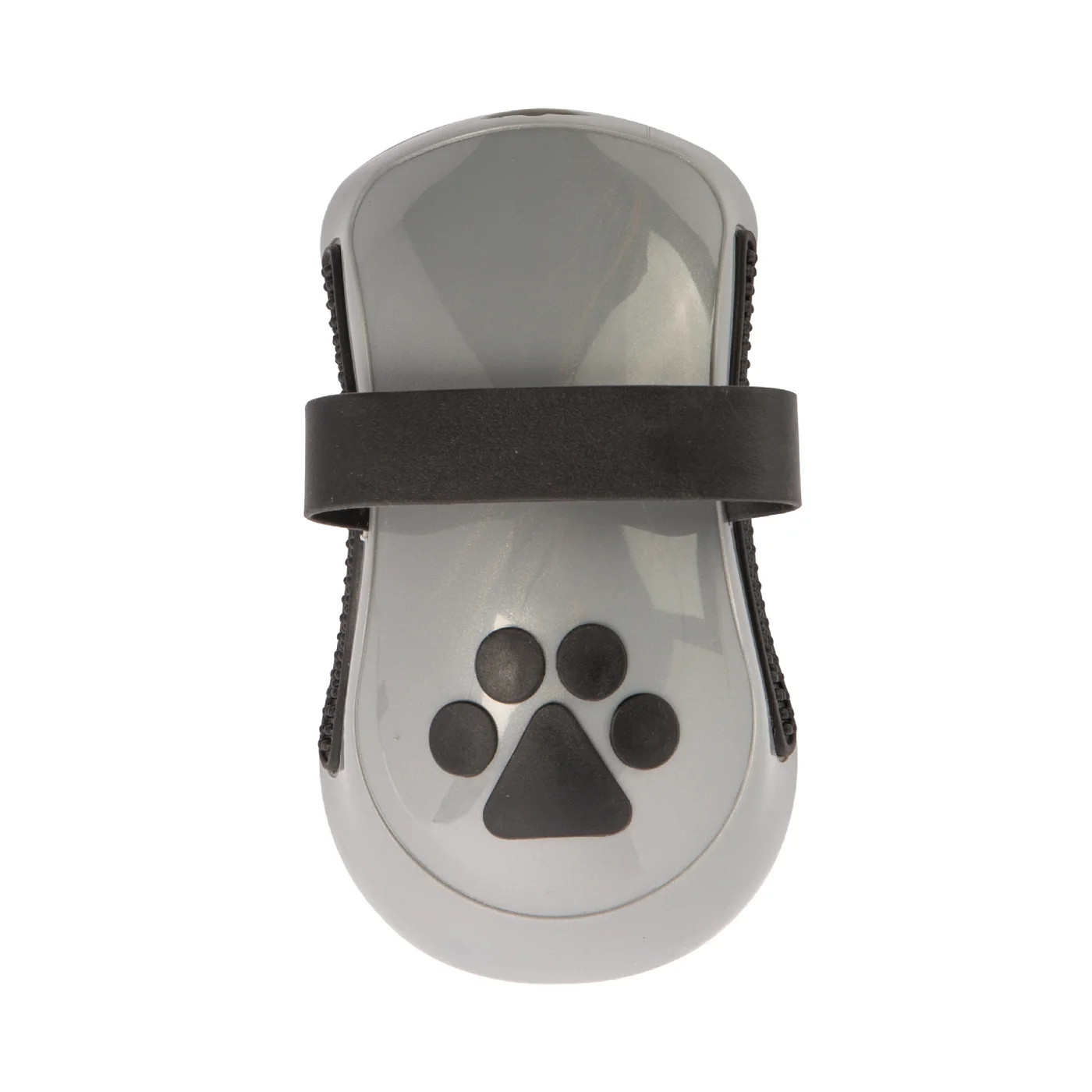
A grooming tool should earn its place by matching the coat, not by promising to stop shedding. The FURminator Curry Comb offers moulded rubber teeth and a strapped palm grip: a different proposition from the brand’s metal-edged deShedding tools.
Look underneath before buying
The underside photograph is the important one. Rubber nubs sit across a broad head, intended for routine surface grooming on short and medium coats. The maker’s animal photographs illustrate use, but cannot establish whether your particular pet enjoys that contact. A short coat on the label is only a starting point.
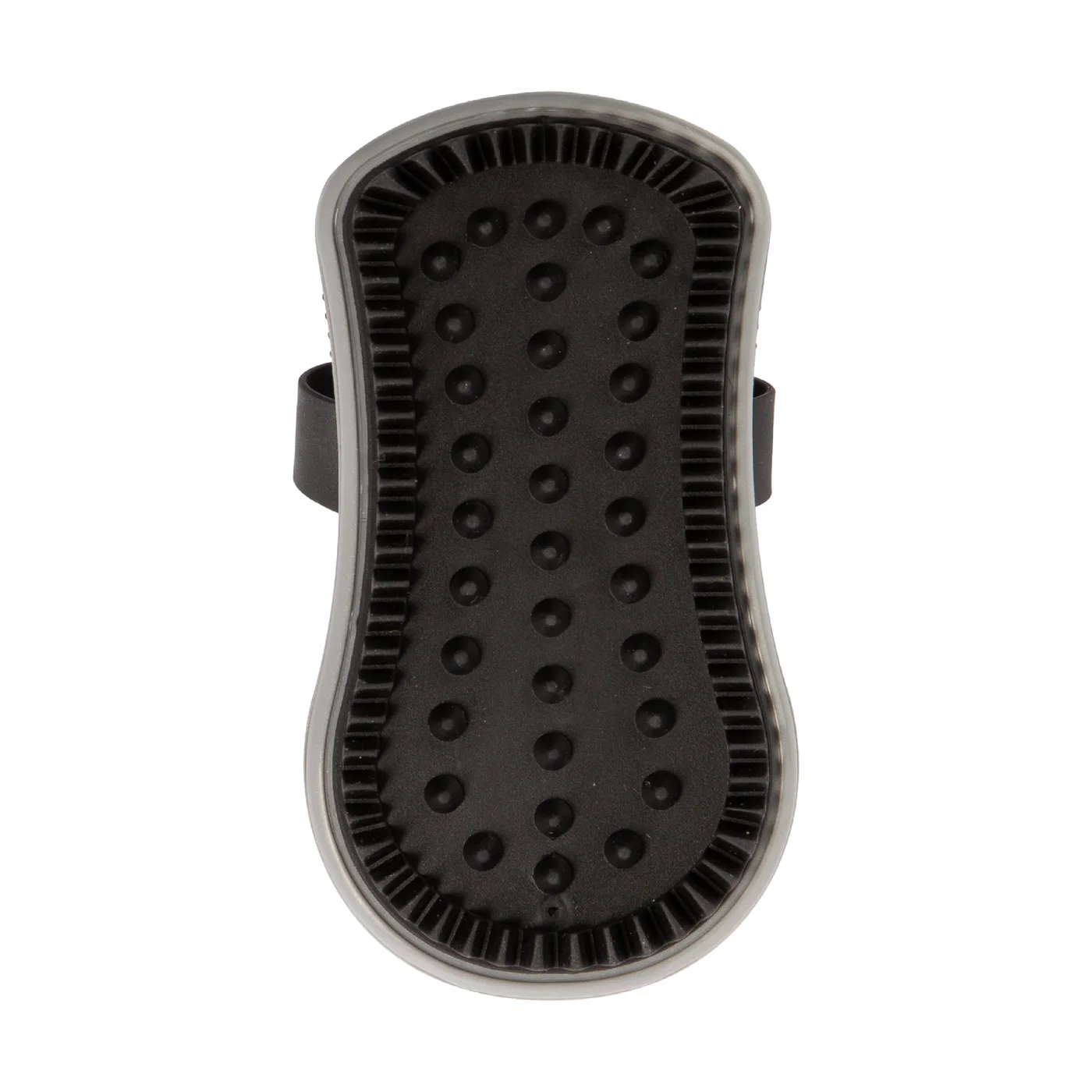
Think about what your current brush struggles with. If loose hair and everyday dust are the job, a rubber comb is worth comparing with your existing grooming mitt. If the problem is deep tangling, this is not a reason to press harder or substitute it for professional help.

Fit the routine to the animal
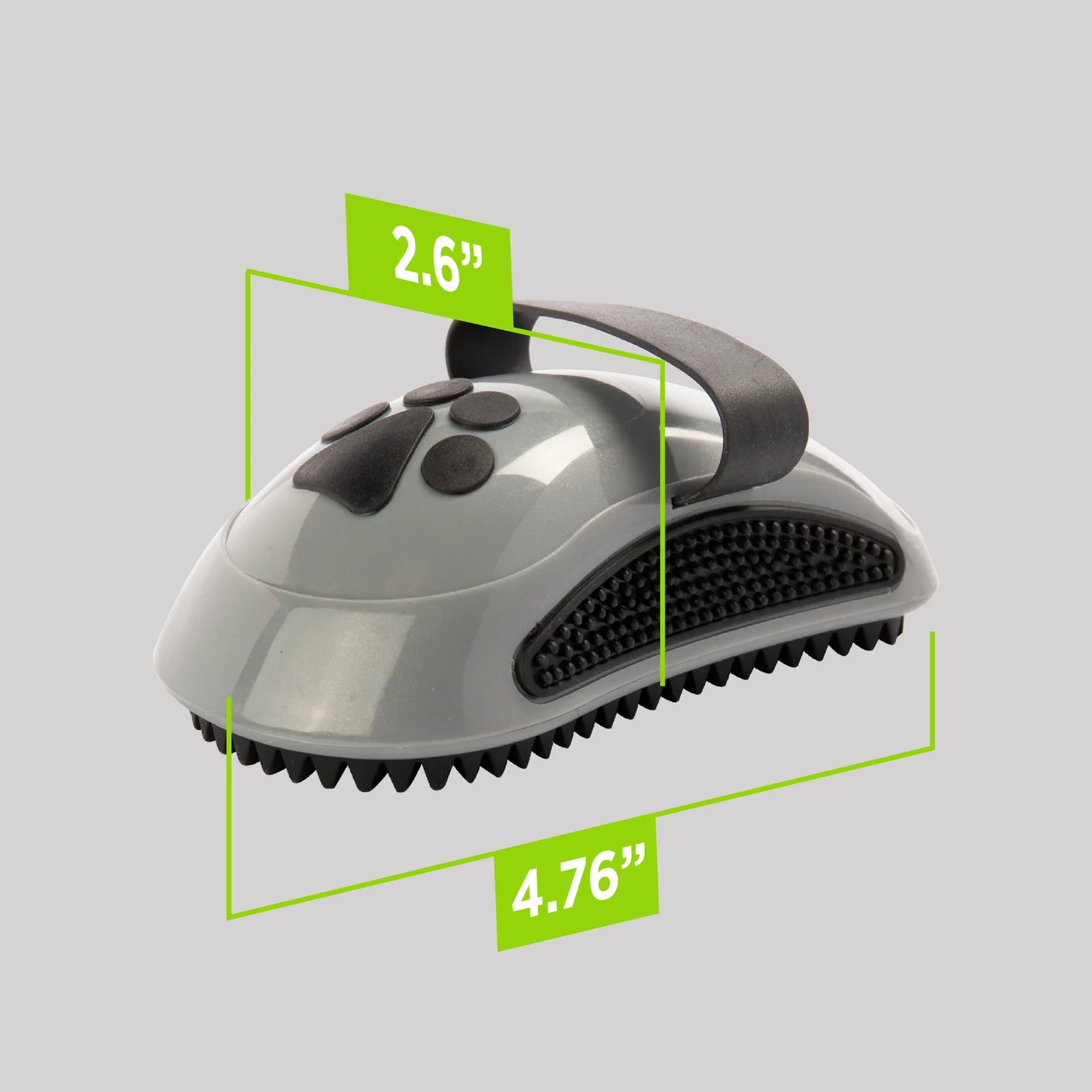
The hand strap offers another way to hold the tool. Check the size illustration against your palm: a grip that feels secure should not encourage heavy pressure. Short, gentle strokes in the direction of hair growth let you observe the animal’s response rather than chase a large pile of removed hair.

Inspect the coat and skin first. Stop for discomfort, irritation or pulling; sores and other skin concerns need veterinary advice before brushing resumes. Tight mats are not a household contest to win. We have not tested this comb on pets and do not endorse the gallery’s broad health-related marketing claims.
A sensible shortlist
Choose it for an appropriate short-coat routine and a grip style you want to try. Skip it if a comfortable rubber brush already does the job, or if the coat needs a different kind of tool. More grooming equipment is not automatically better care.