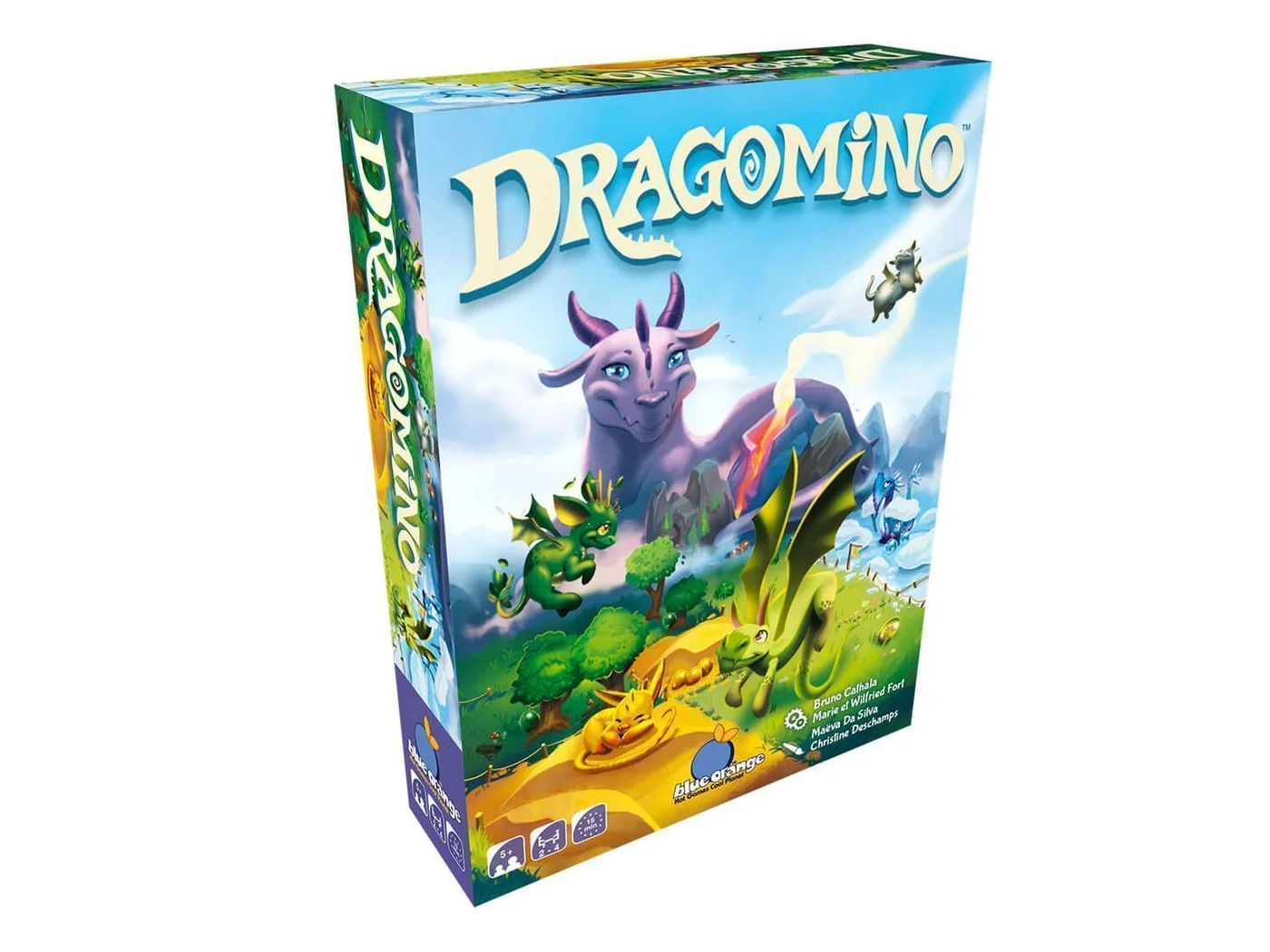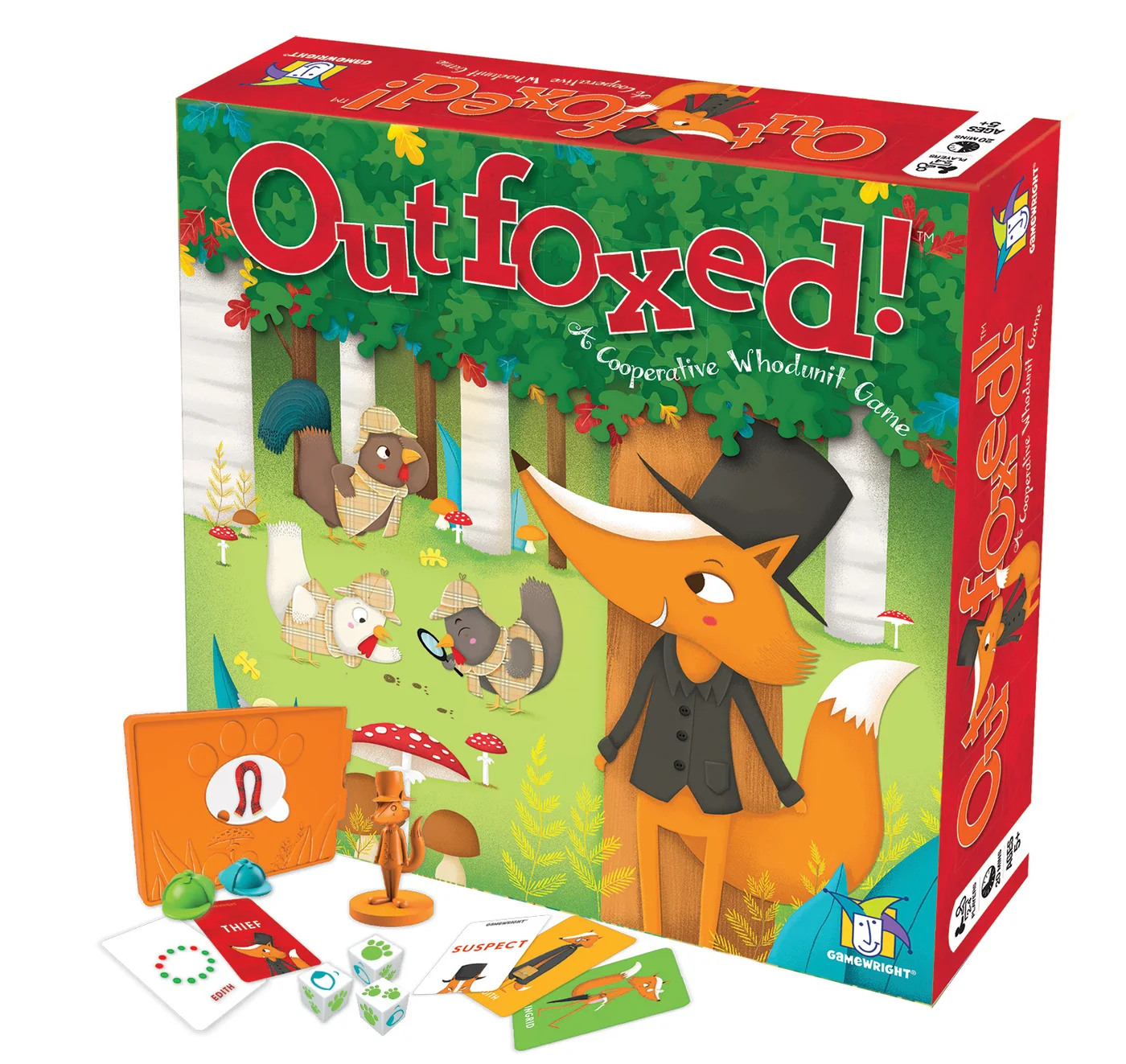
The best part of a family mystery can be the excited announcement: that suspect cannot be guilty. Outfoxed gives younger players that moment through a shared investigation instead of a contest to defeat one another. It suits a household that wants to make deductions together, not merely move pawns until someone wins.
The clue decoder is the hook
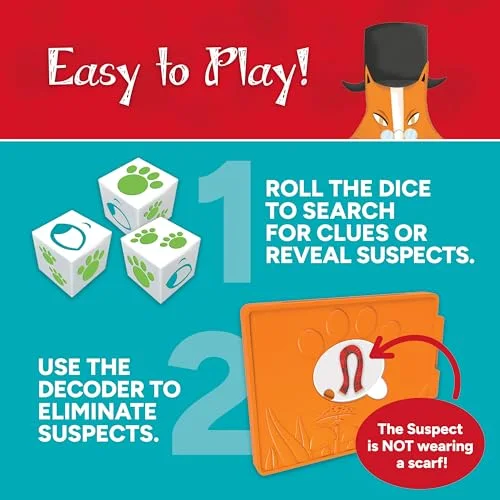
Players gather clues and use the physical decoder to investigate which features belong to the thief. Suspects can then be ruled out. The fox advances toward escape, so the team cannot wander forever collecting information. Dice introduce uncertainty alongside the reasoning.
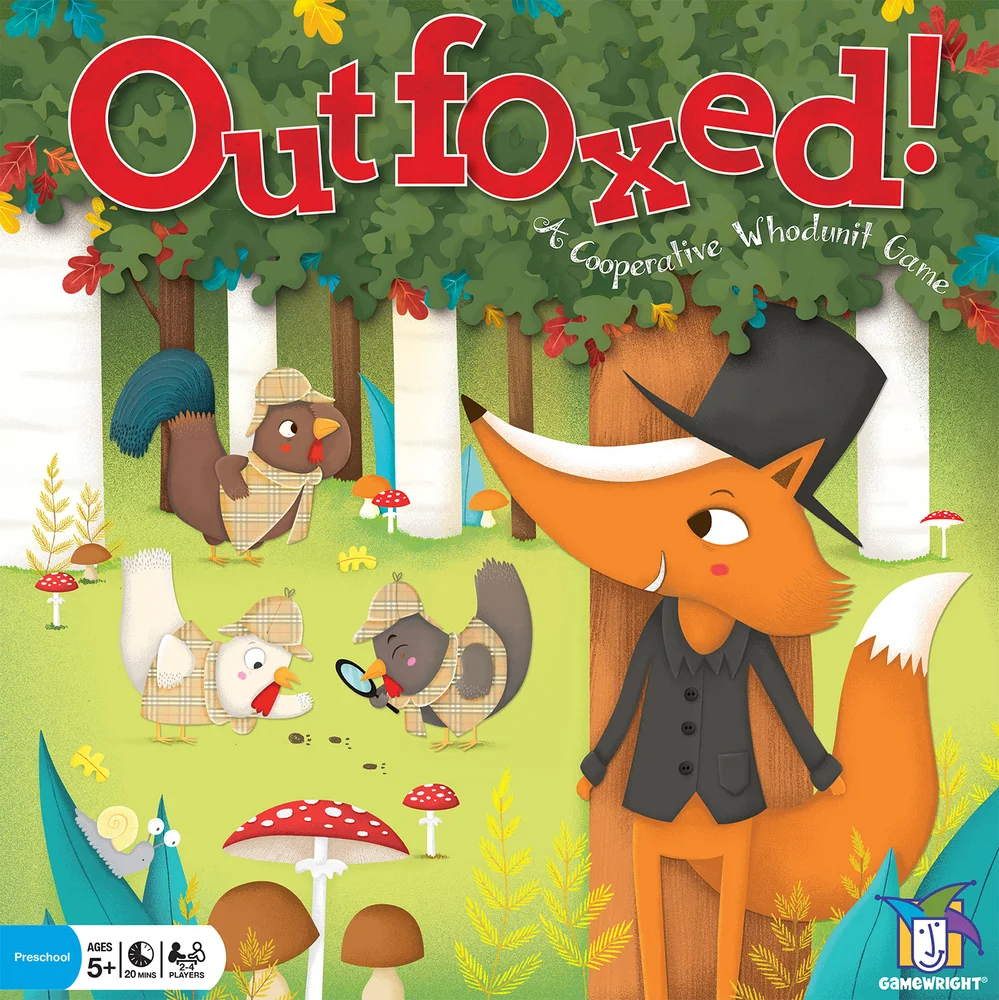
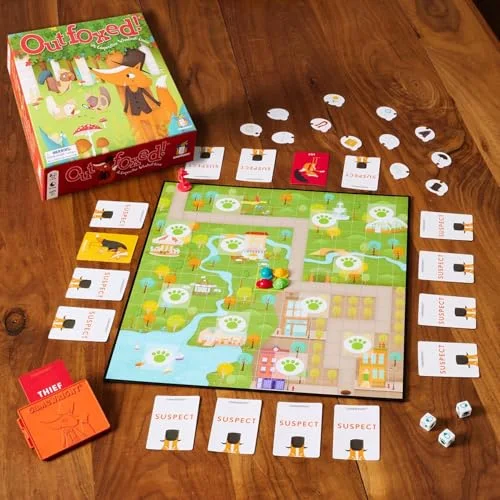
Gamewright specifies ages five and up, two to four players and around twenty minutes. This selected English 418 game includes a board, detective pawns, fox figure, three custom dice and the decoder, plus sixteen suspect cards, sixteen thief cards and twelve clue markers. Check the edition language when ordering outside the US.
Let the smallest detective speak
An adult can explain what a clue means without announcing the answer immediately. Ask which suspect has the relevant feature, then allow the child to eliminate the card. That preserves the pleasure of solving something rather than watching a parent perform the investigation.
Cooperation does not guarantee a win. A run of unhelpful dice or a poor decision can still let the fox escape. Treat the published twenty-minute duration as an estimate; first-game teaching may take longer.
A board, not a pocket deck
Lay out the board and suspects where every player can see and reach them. This is more suitable for a stable table than a cramped car journey. The small components require appropriate supervision around younger siblings.
Choose it for an inviting first deduction game and a shared family result. Skip it for a large group, older players seeking a difficult mystery, or households that want an entirely luck-free puzzle. These observations come from rules and product research, not a personal playtest.