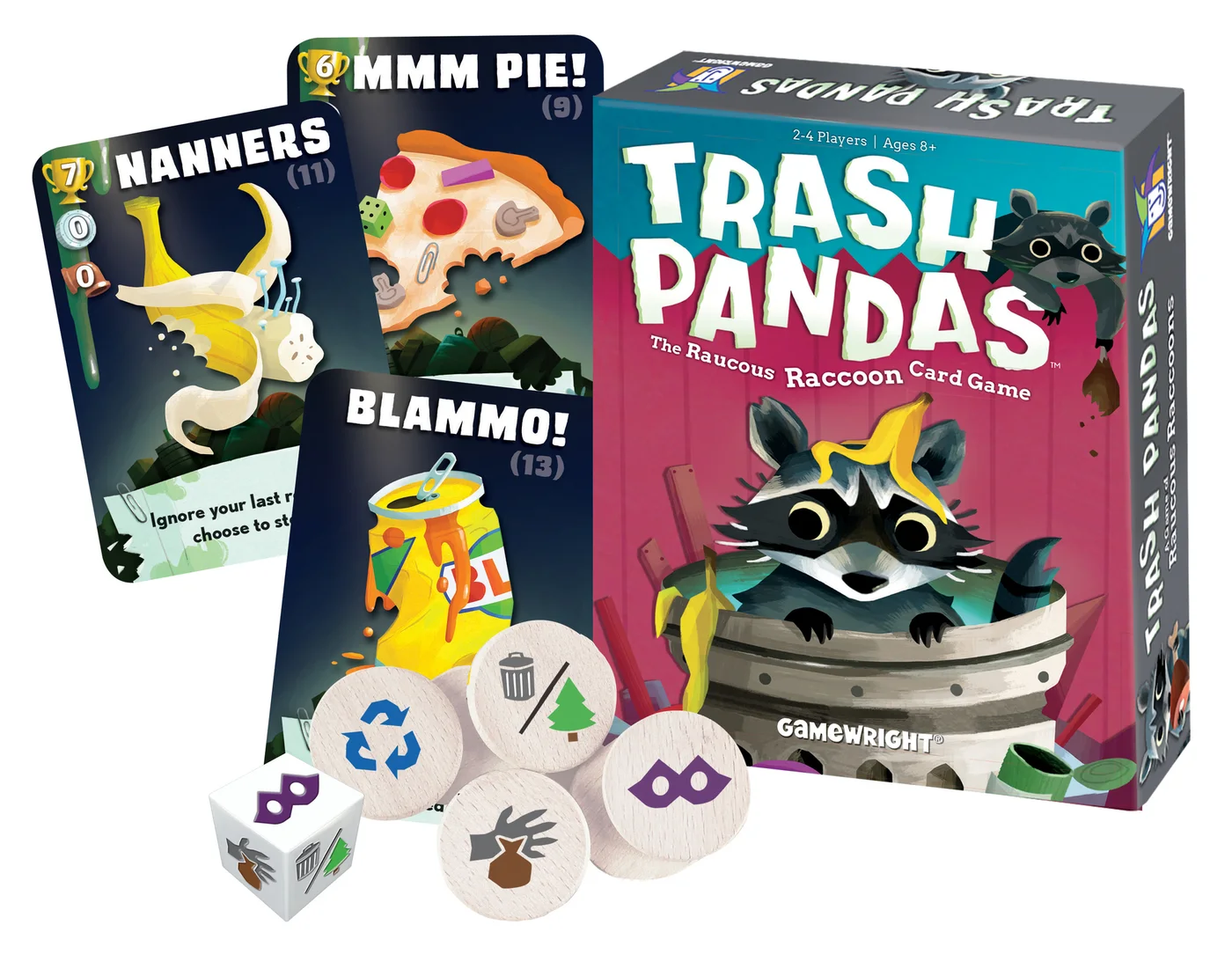
A raccoon hunting yesterday’s pizza is an excellent excuse for an undignified game night. Trash Pandas pairs that silly theme with a recognisable temptation: one more roll could make the turn wonderful, or leave you with nothing. It is a small-box choice for people who enjoy cheering and groaning at a calculated risk.
Greed has a visible cost
The custom die earns action tokens, but repeating a result can bust the turn. Stop while you still have useful actions, or push for more. That decision is the centre of the game; the raccoon artwork makes it funny rather than turning it into a dry probability exercise.
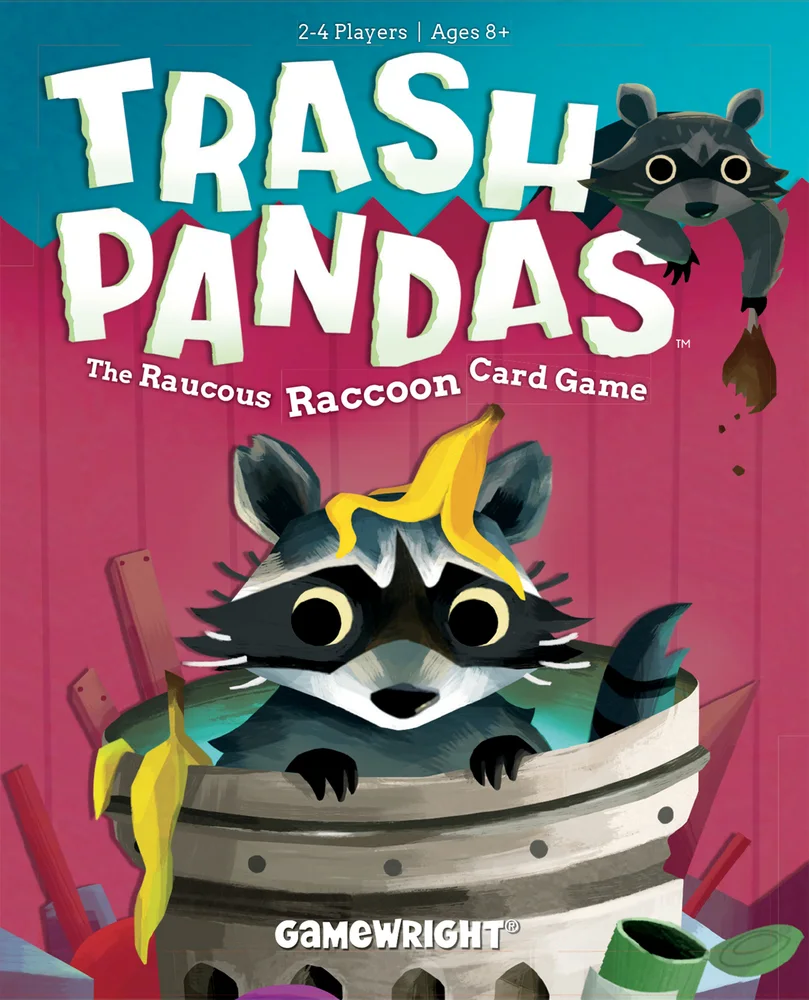
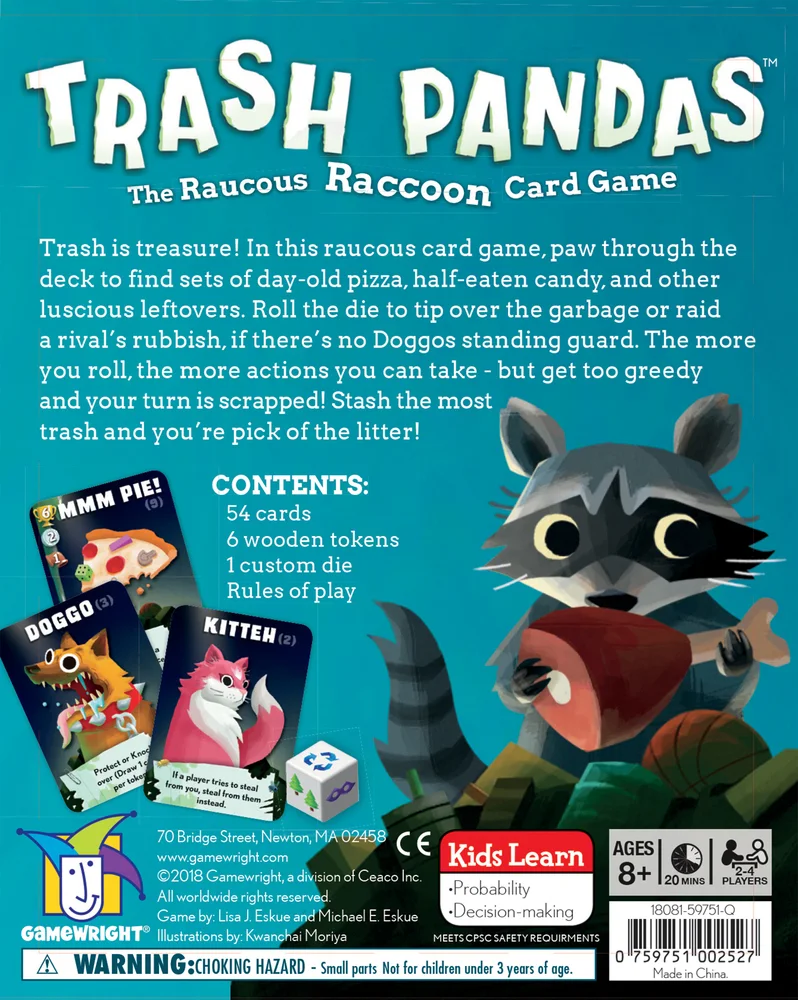
Gamewright’s original 252 edition has 54 cards, six wooden tokens and one custom die. The publisher lists two to four players, ages eight and up and approximately twenty minutes. It is not a game for a six-person dinner table without changing the official player count.
Holding trash is not the same as scoring
Cards can provide useful effects, but stashing them is how you build your endgame position. A hand that looks impressive can be less valuable than it appears if you have not converted it into points. That gives players a second question beyond whether to roll again: spend a card now, or preserve it for later?
Explain those two decisions first, then teach individual symbols as they appear. Rushing through every card at once can make a compact game feel more complicated than it needs to.
Buy for the group, not the mascot
This makes sense for a competitive family break or as an inexpensive-feeling addition to a game collection, without any promise about the future price. Keep the small tokens and die away from very young children.
Skip it if your group dislikes bad luck undoing a turn, wants quiet puzzle-solving, or expects the theme alone to entertain without learning rules. The recommendation is researched, not based on an invented evening of play.