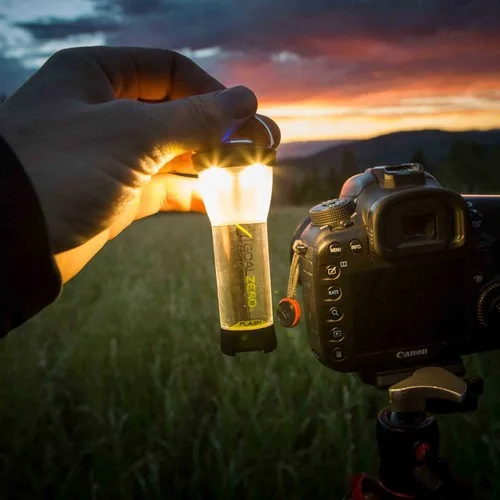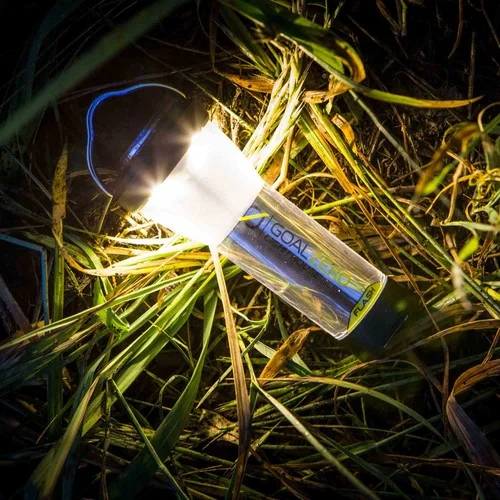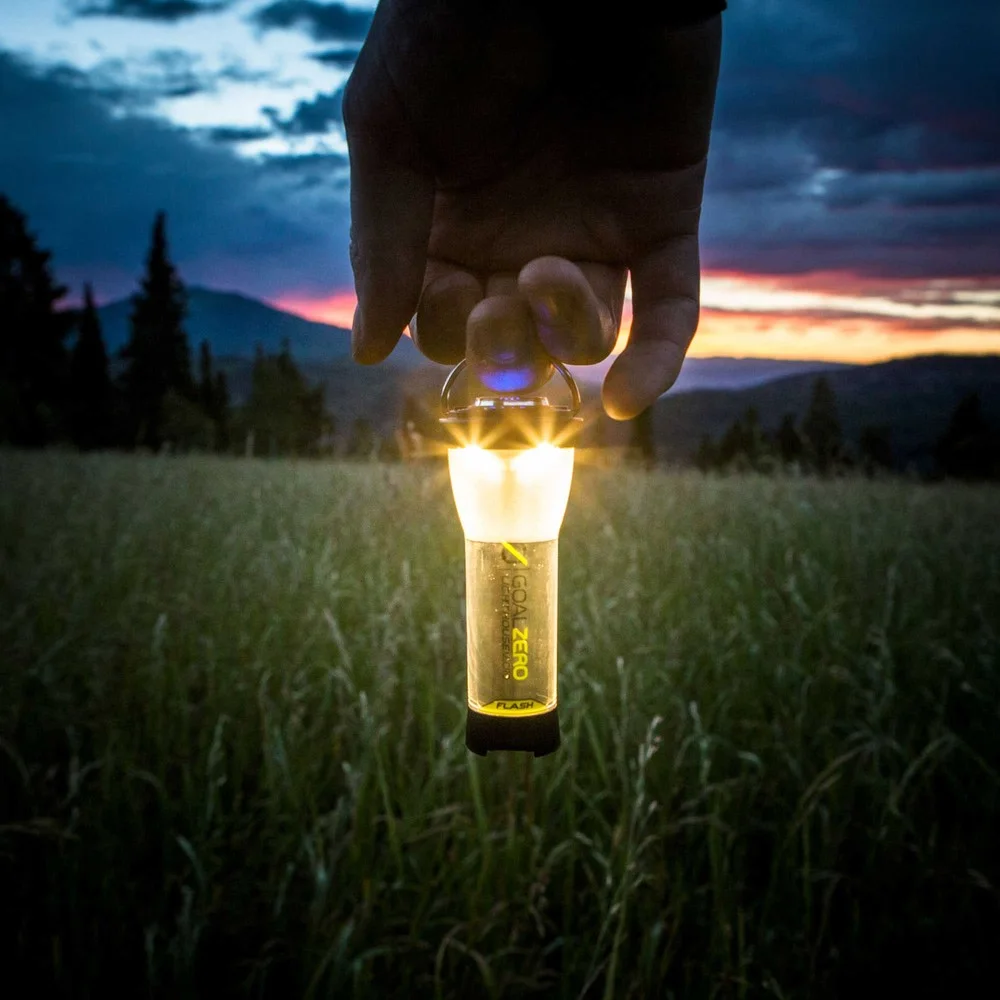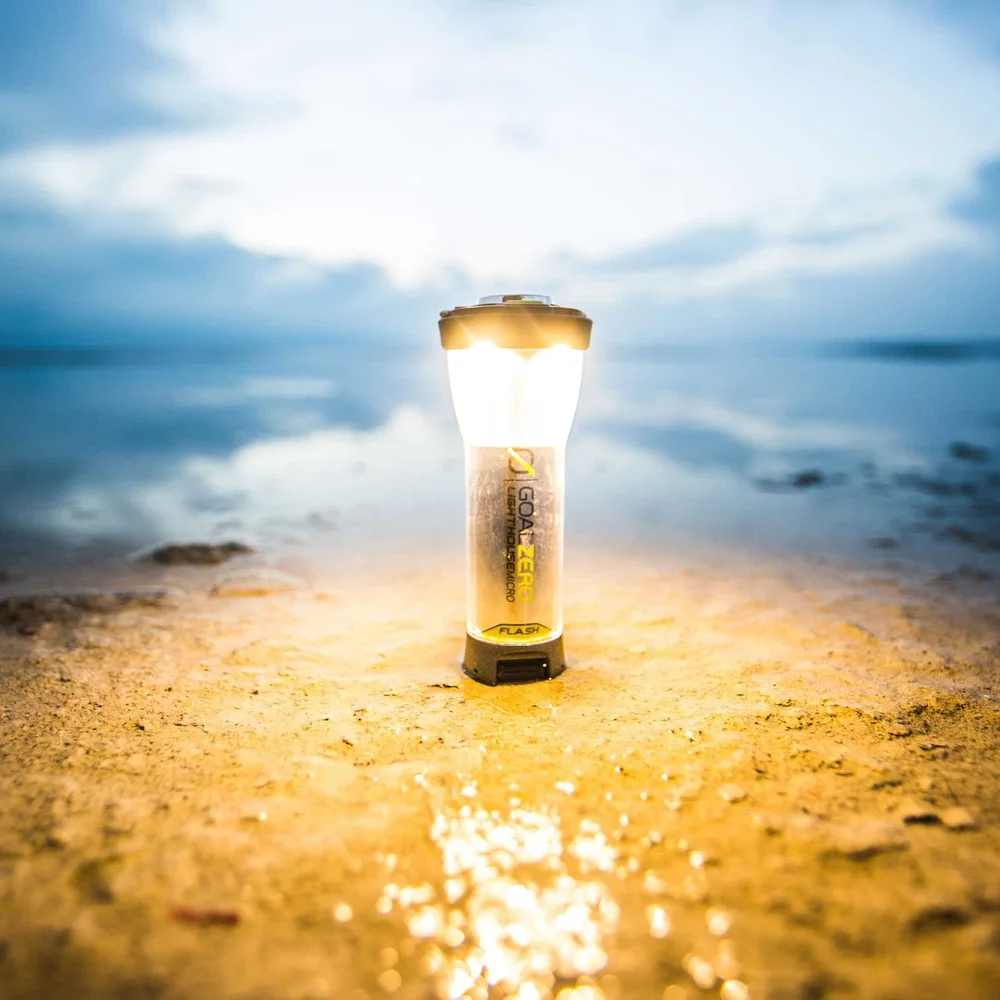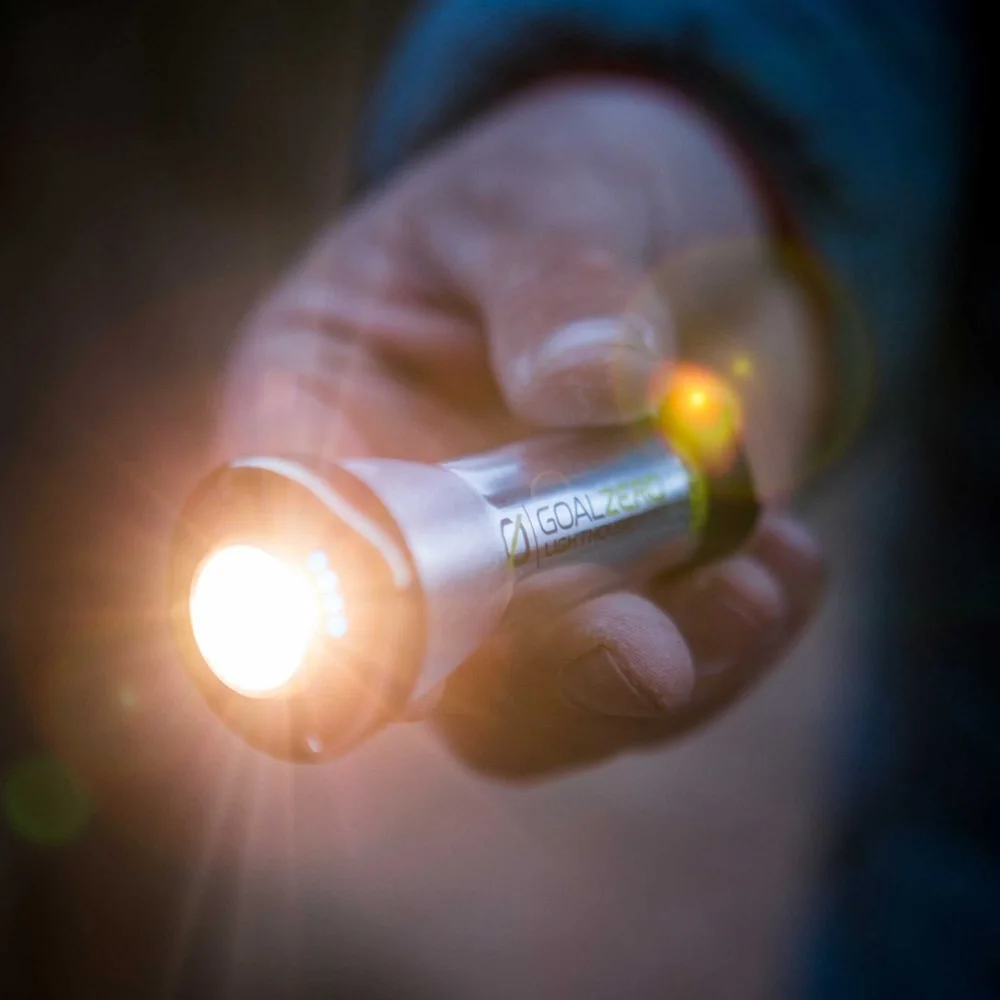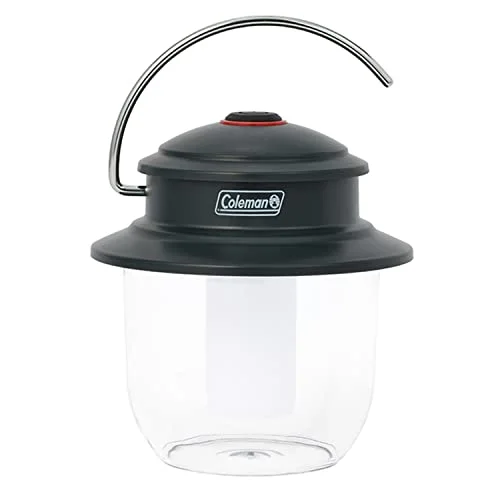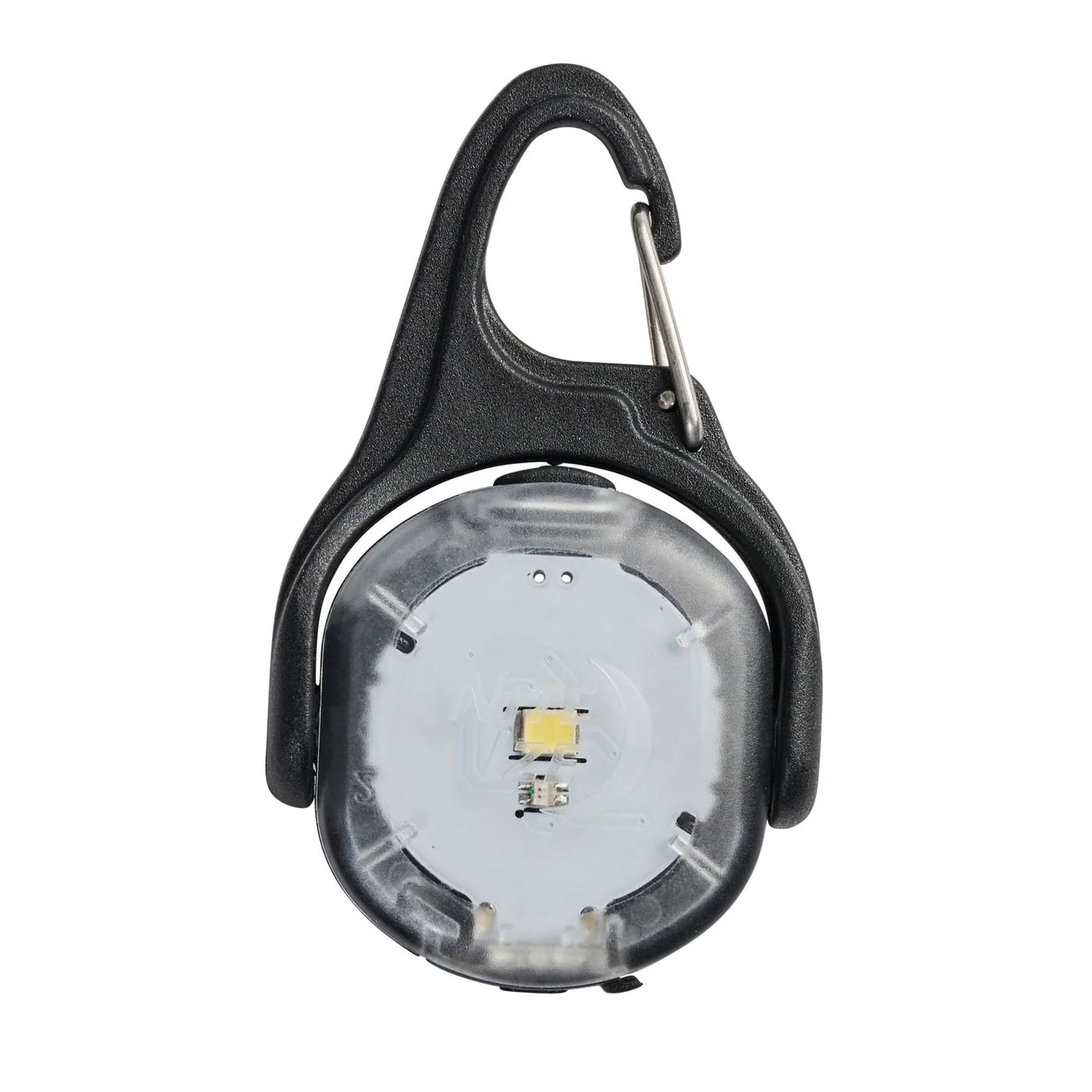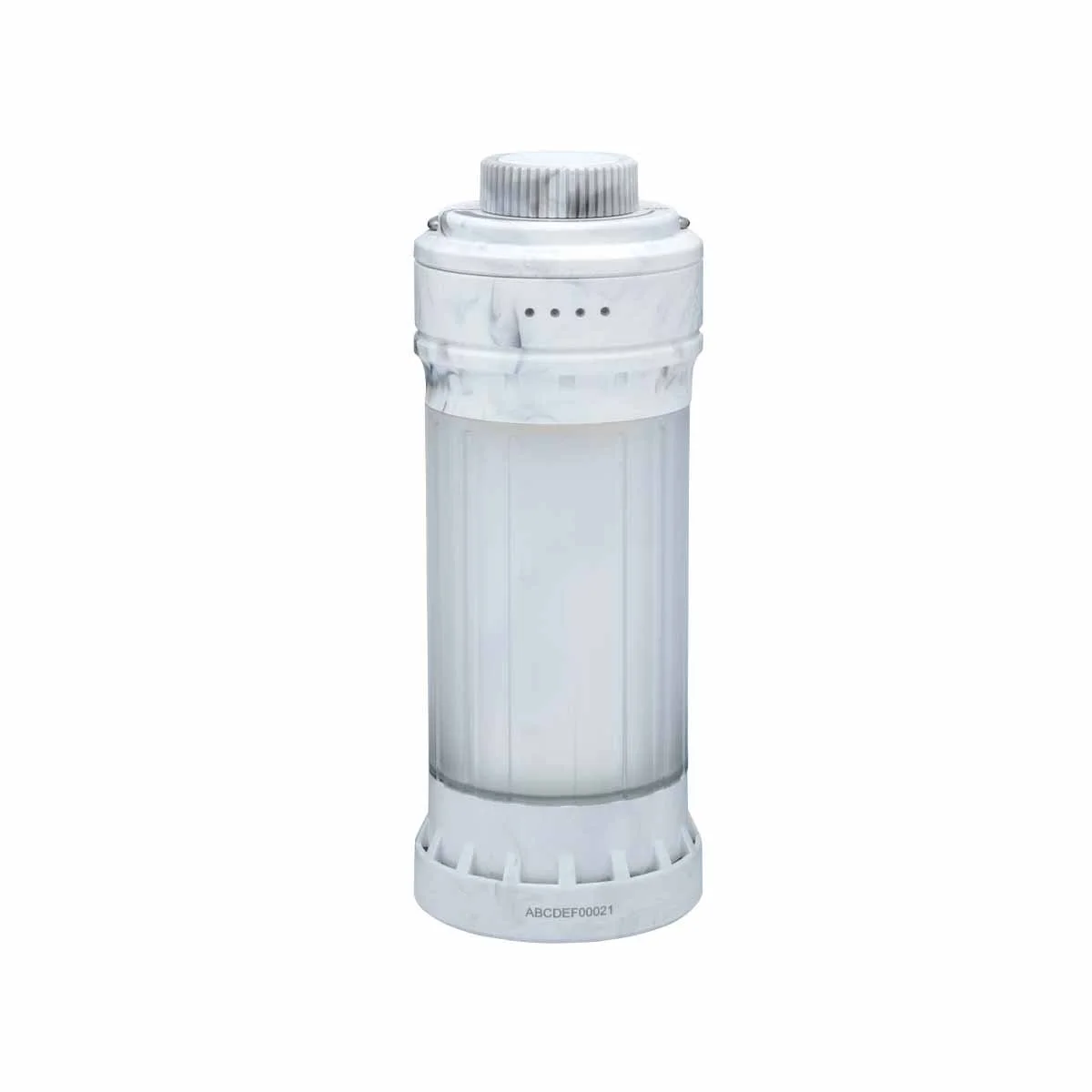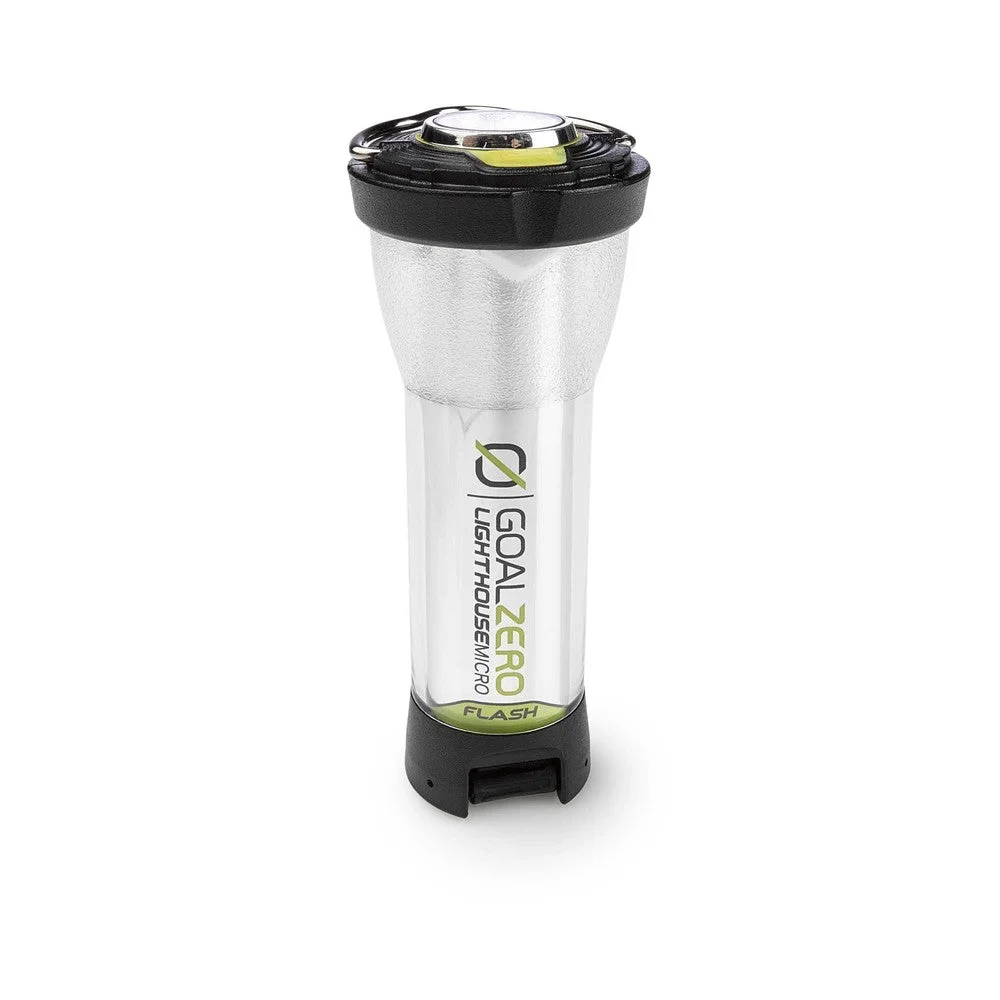
A lantern lights the space beside you; a flashlight helps point your attention somewhere else. Lighthouse Micro Flash puts both functions in a small cylindrical body. It is worth considering when you want an easily packed secondary light rather than another large item in the camping bag.
Start with the charging plug
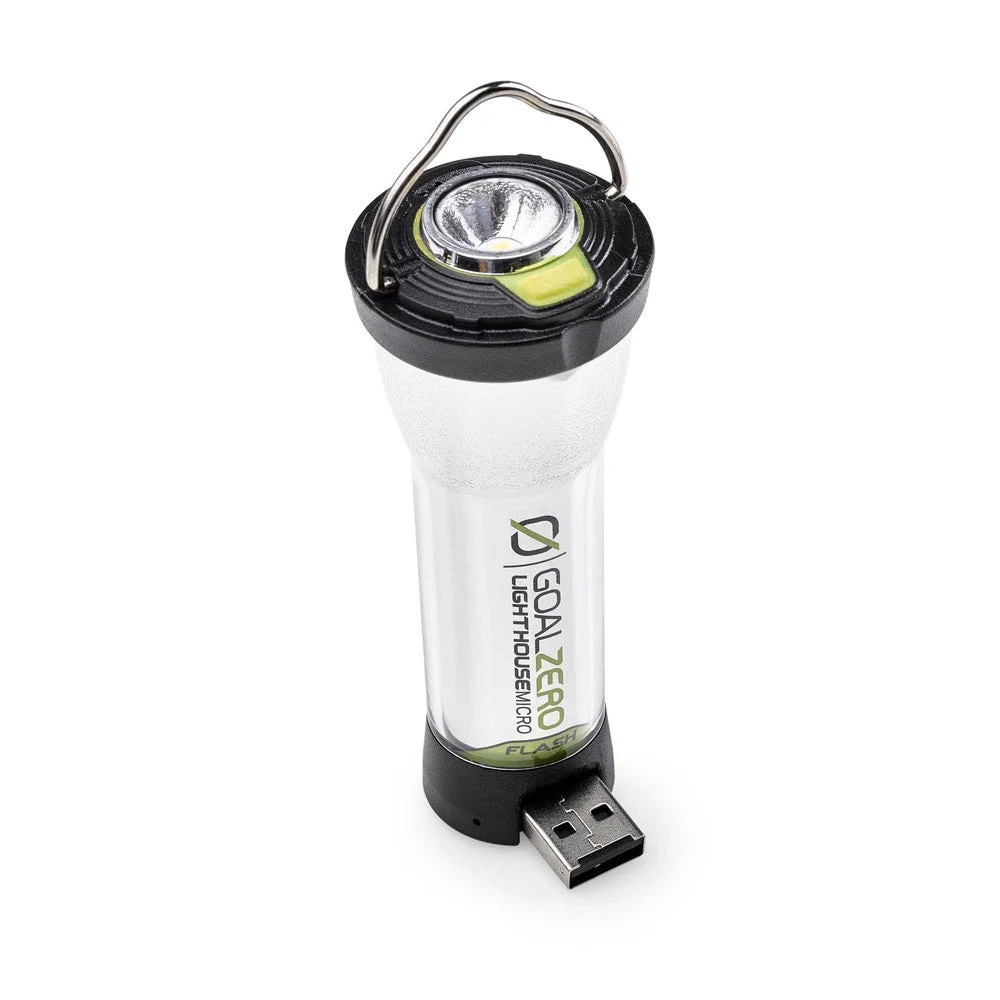
The integrated USB plug folds out for charging. Look at the photograph before assuming this works like a device with a USB-C socket and cable. Check that your power source has a suitable connection and enough physical clearance around the plug.
The Micro Flash name matters. Lighthouse Micro Charge is a different model with a charging-output function. Do not buy this one expecting it to recharge your phone, and do not confuse it with the larger Lighthouse Mini.
A tiny lantern has a smaller job
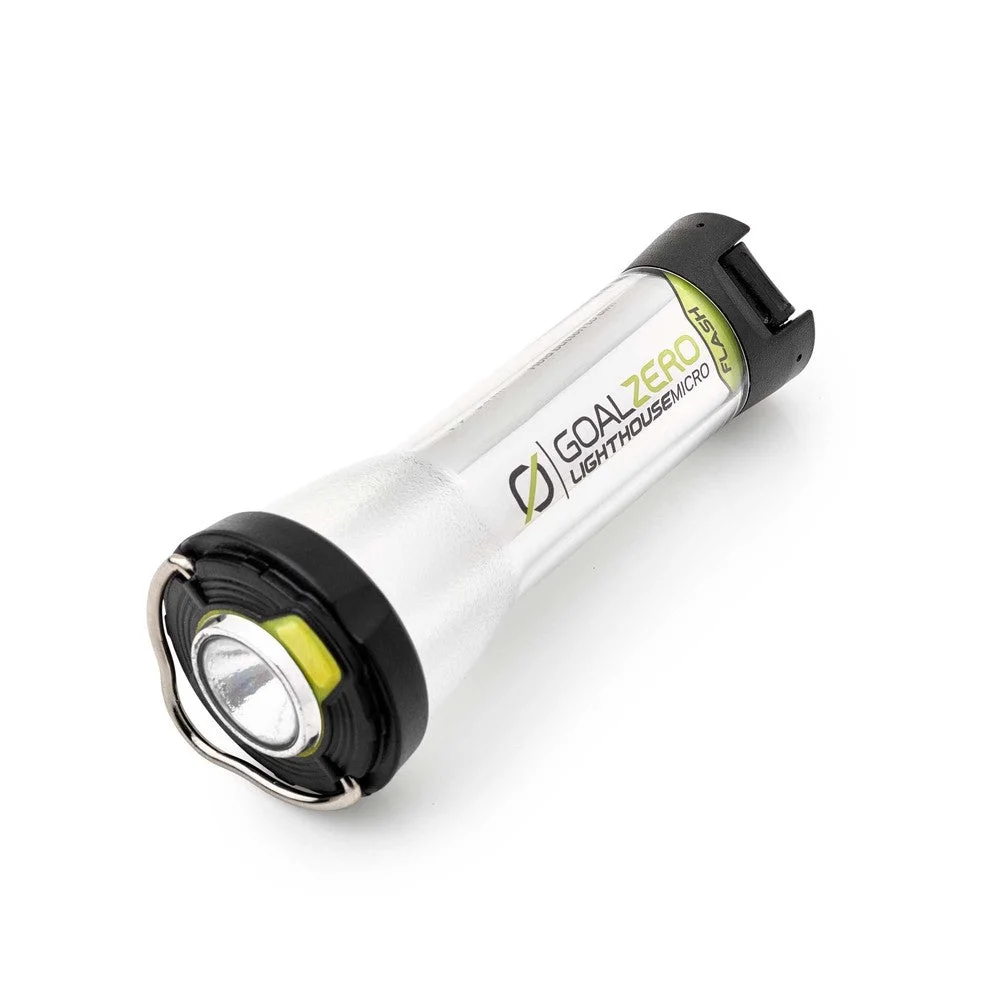
The loop offers a way to carry or suspend it, and the maker photographs show its scale in a hand and standing on a surface. Think about the area you actually need lit: a little nearby illumination is a more realistic goal than a whole campsite.
Brightness selection affects battery use. The longest rated runtime is not the same as endurance at the brightest setting. Charge before travel and retain an appropriate backup when lighting is important.
Weather resistance is not underwater use
Goal Zero specifies IPX6 weather resistance. That is not an immersion rating. Keep the charging connection dry and follow the instructions before connecting power.
Choose Micro Flash for compact lantern-and-beam convenience. Skip it when phone charging, strong area lighting or a hands-free headlamp is the main requirement. This is a specification-led buying guide, not a claim of personal camping use or measured performance.