There is something inviting about measuring beans, turning a handle and brewing without another motor on the counter. The Hario Skerton Pro suits that slower ritual. Before choosing it, though, ask whether grinding is the enjoyable beginning of your coffee or the chore delaying it.
Fresh beans, manual effort
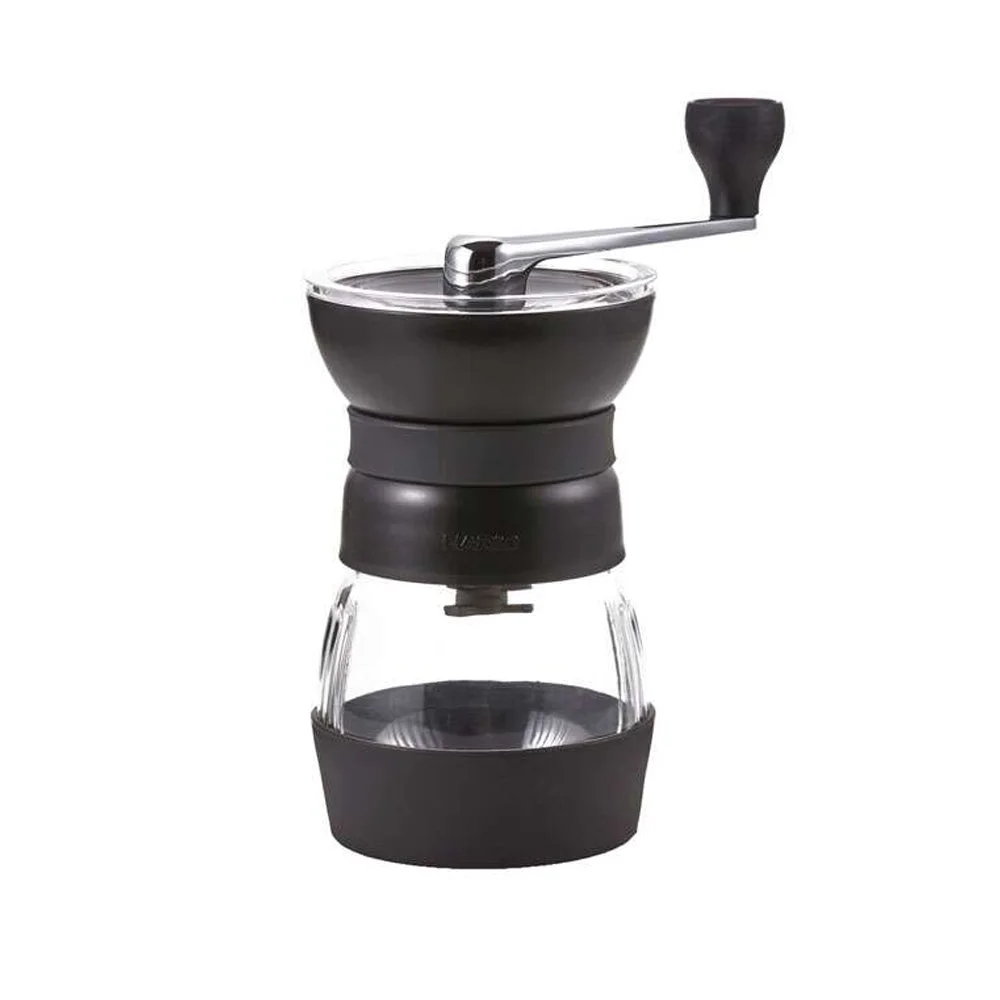
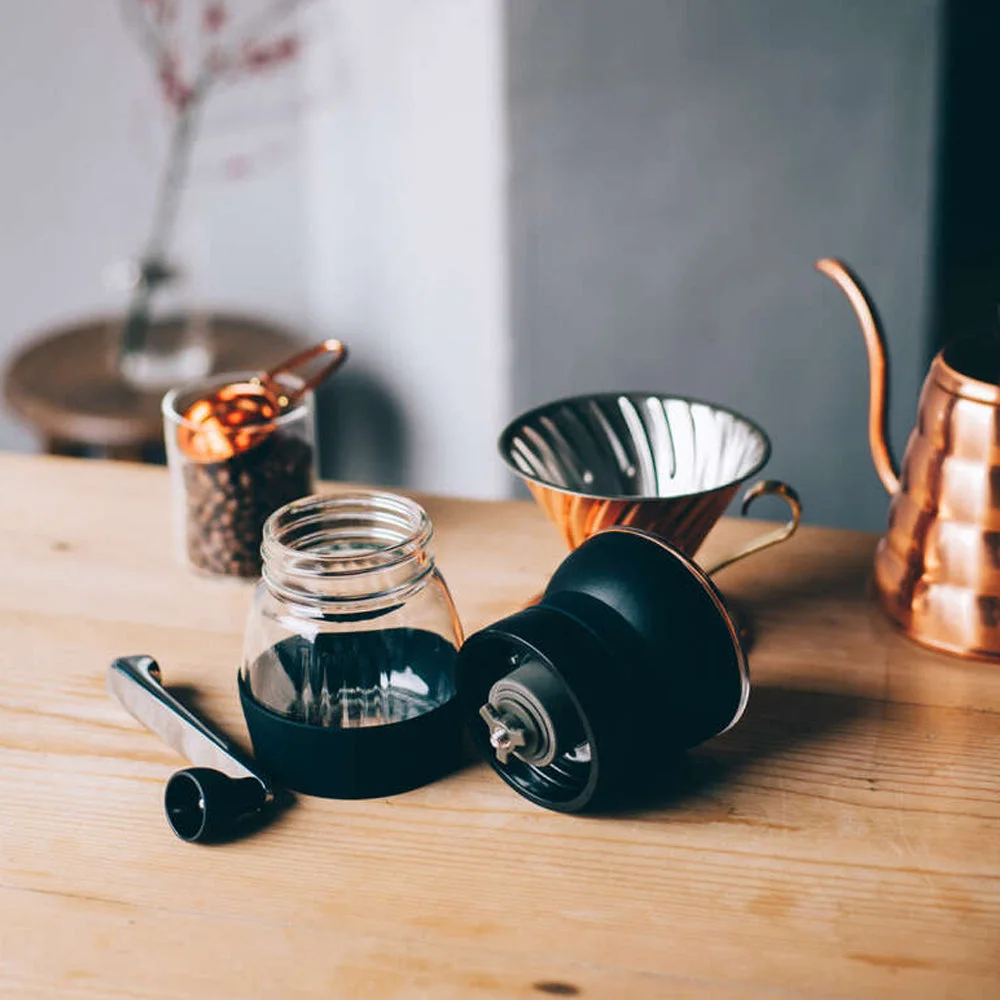
This black MMCS-2B uses ceramic burrs and collects grounds in a glass jar. The handle detaches, the hopper has a lid, and the adjustment sits beneath the burrs. These are useful features for a straightforward, repeatable home setup—not evidence that every grind setting will rival a more expensive precision grinder.
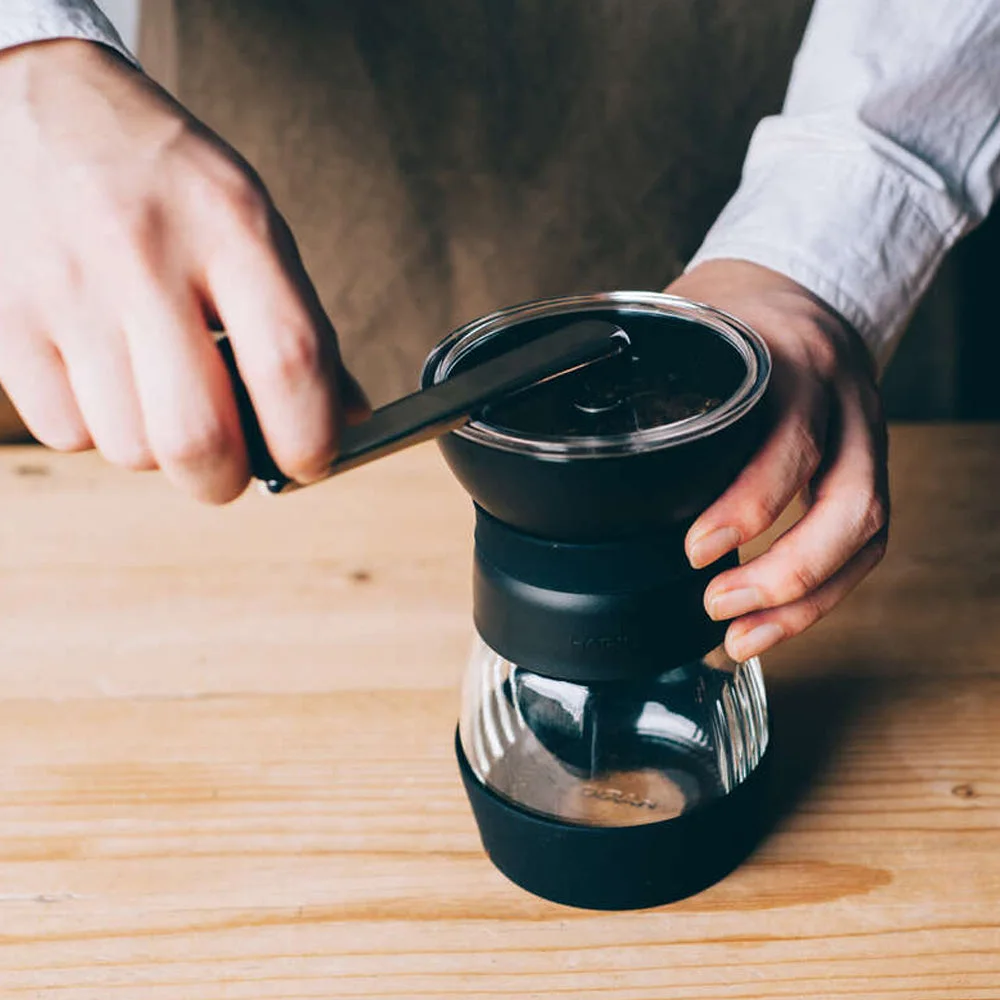
If you make coffee for several people, picture turning that handle for the entire dose before each brew. A large collection capacity does not make hand grinding effortless or quick. For a rushed household, a suitable electric burr grinder may be the better investment.
Make adjustment a controlled experiment
Change one thing at a time: grind setting, coffee dose or water amount. Record the result so tomorrow’s cup has a useful starting point. Avoid treating someone else’s click count as a universal recipe; beans and brewing methods differ.
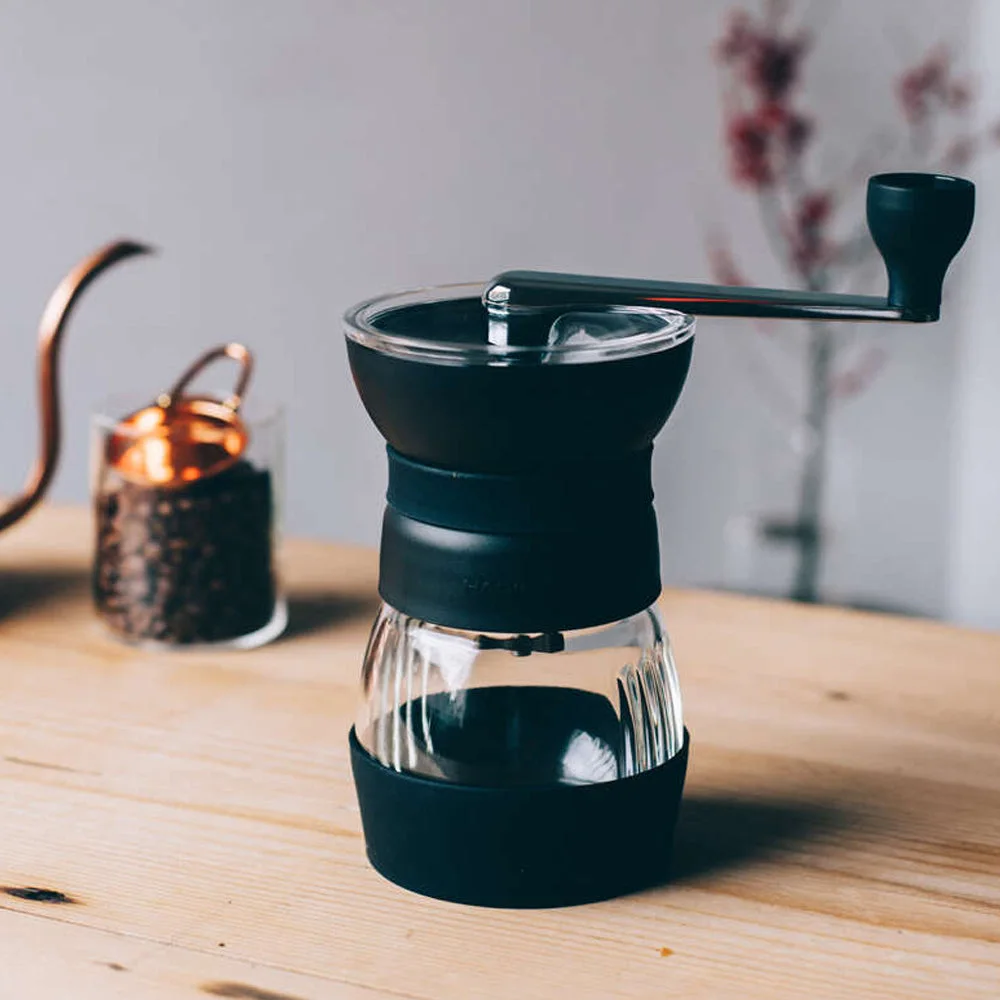
The photos show the grinder assembled, opened and in use. Kettles, drippers, servers and food in the styled scenes are separate items, not a brewing kit included with Skerton Pro.
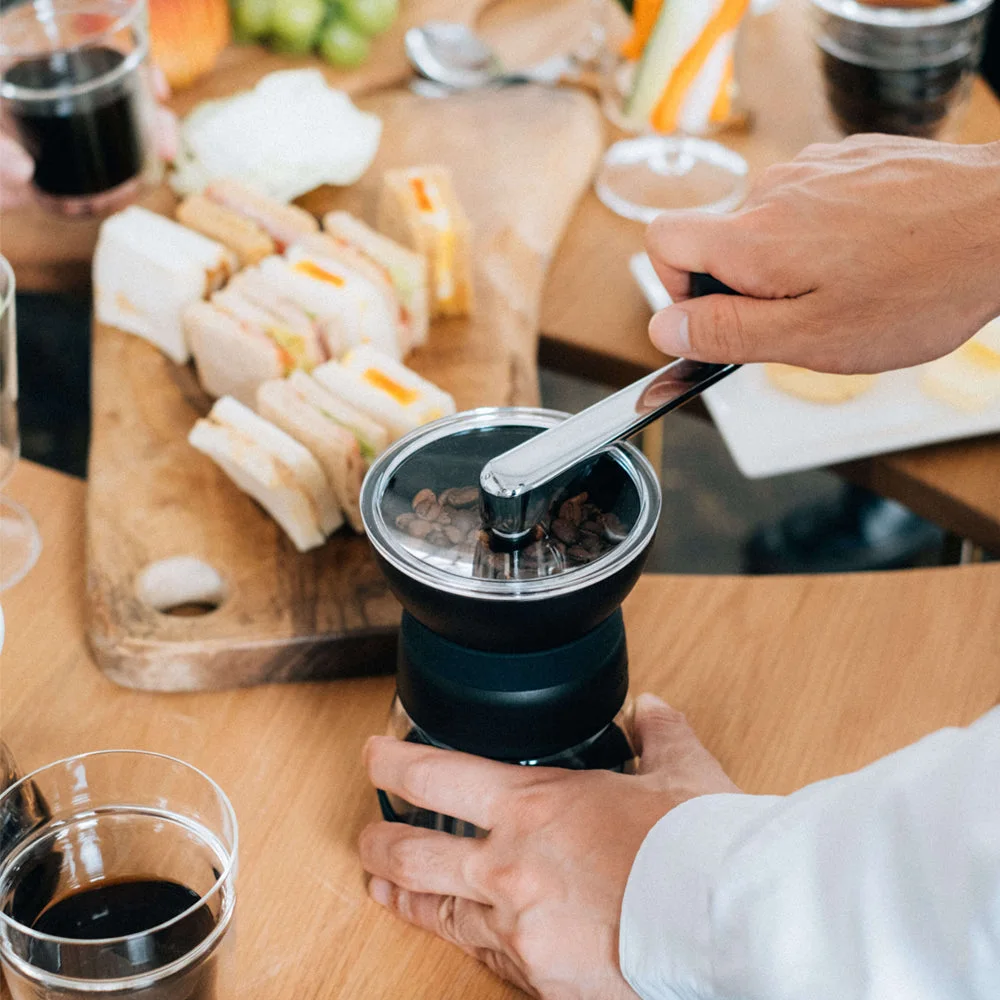
Choose the ritual honestly
Buy it when you value a recognisable glass-and-black countertop object, a manual workflow and small, unhurried brews. Skip it if you primarily need fast batches, very precise espresso adjustment or compact luggage packing. Cleaning also belongs in the routine: follow the maker’s disassembly instructions, keep non-glass components out of the dishwasher, and let washed parts dry fully before reassembly. This is researched guidance, not a claimed hands-on taste comparison.