Flexible makes sense at the transfer step
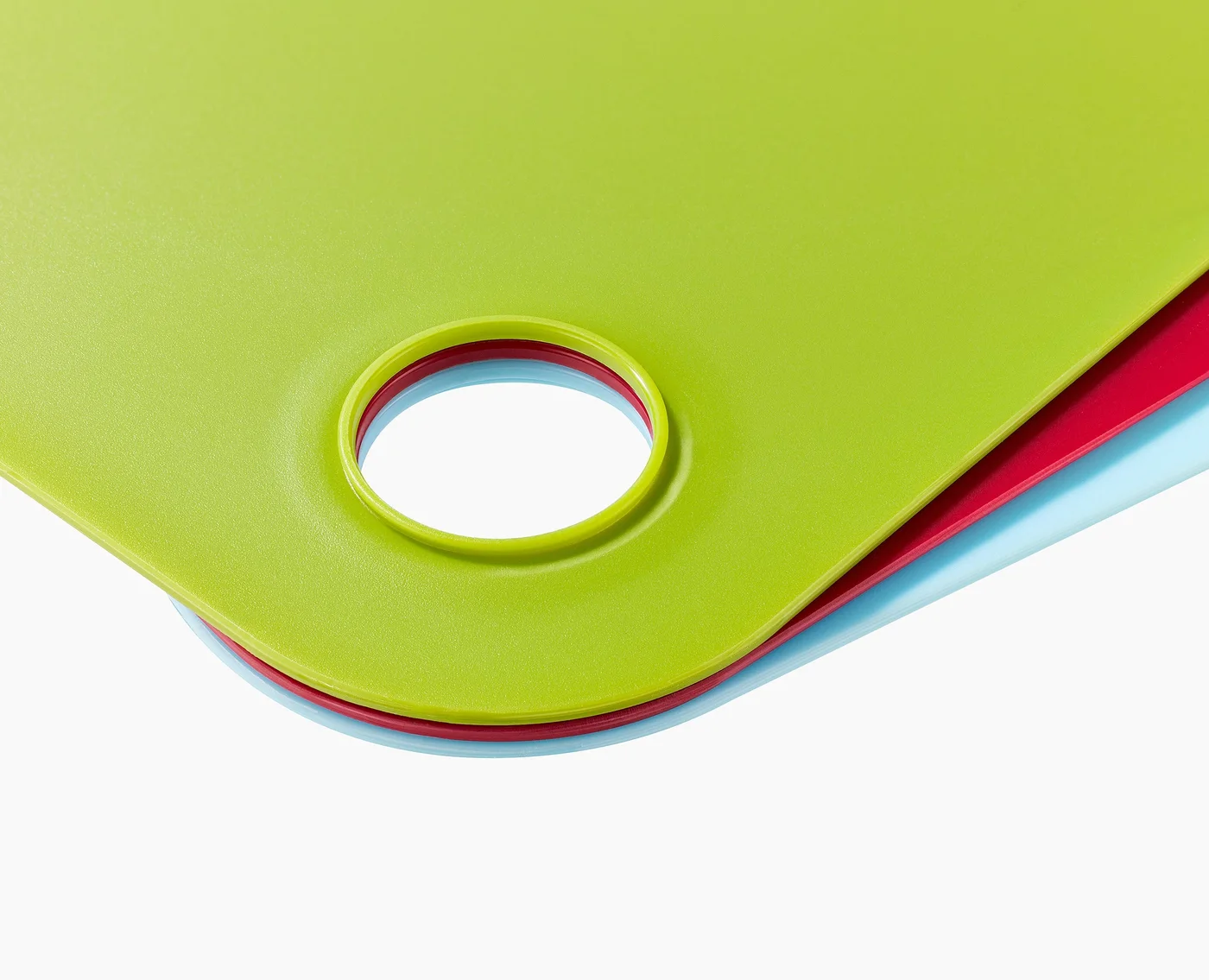
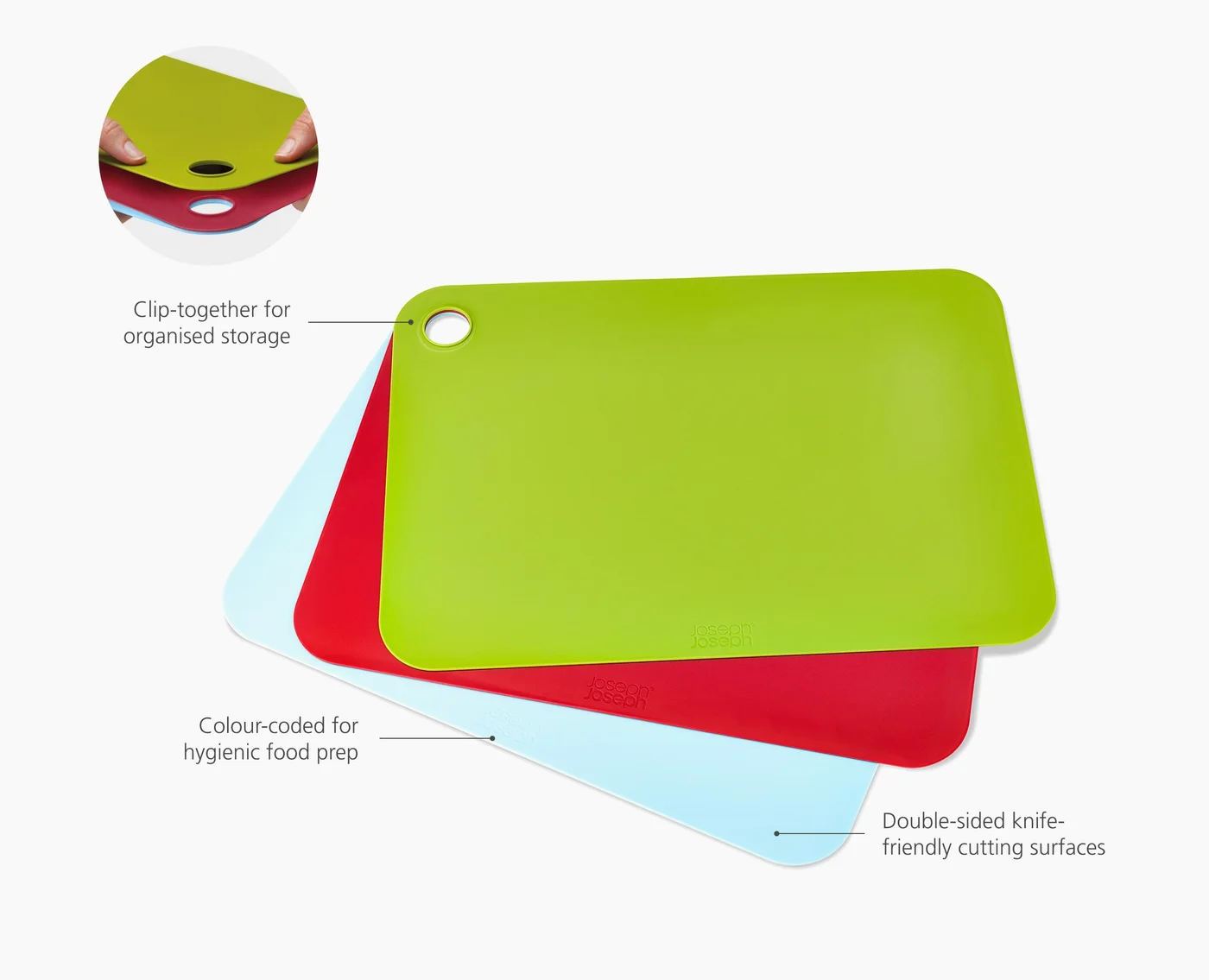
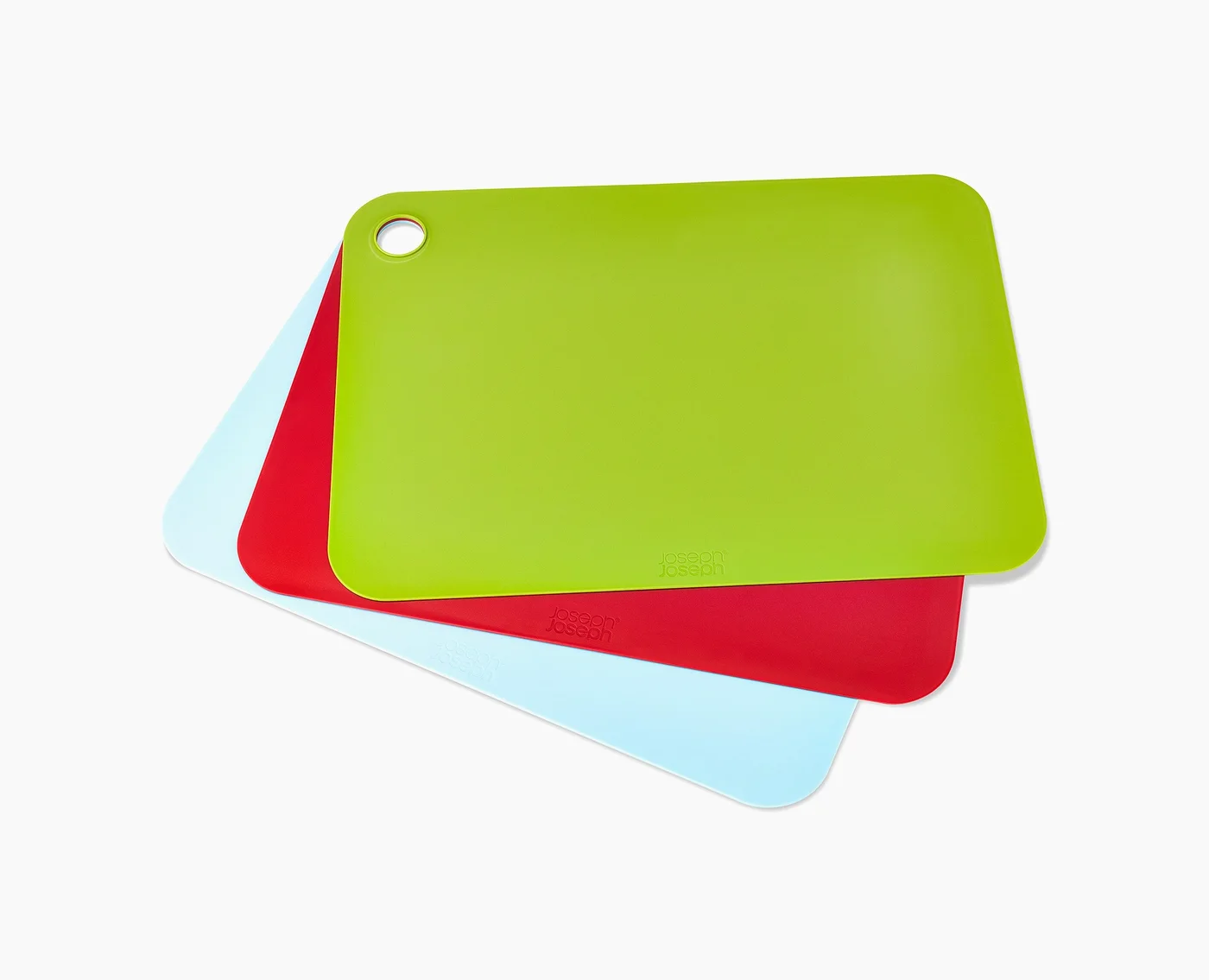
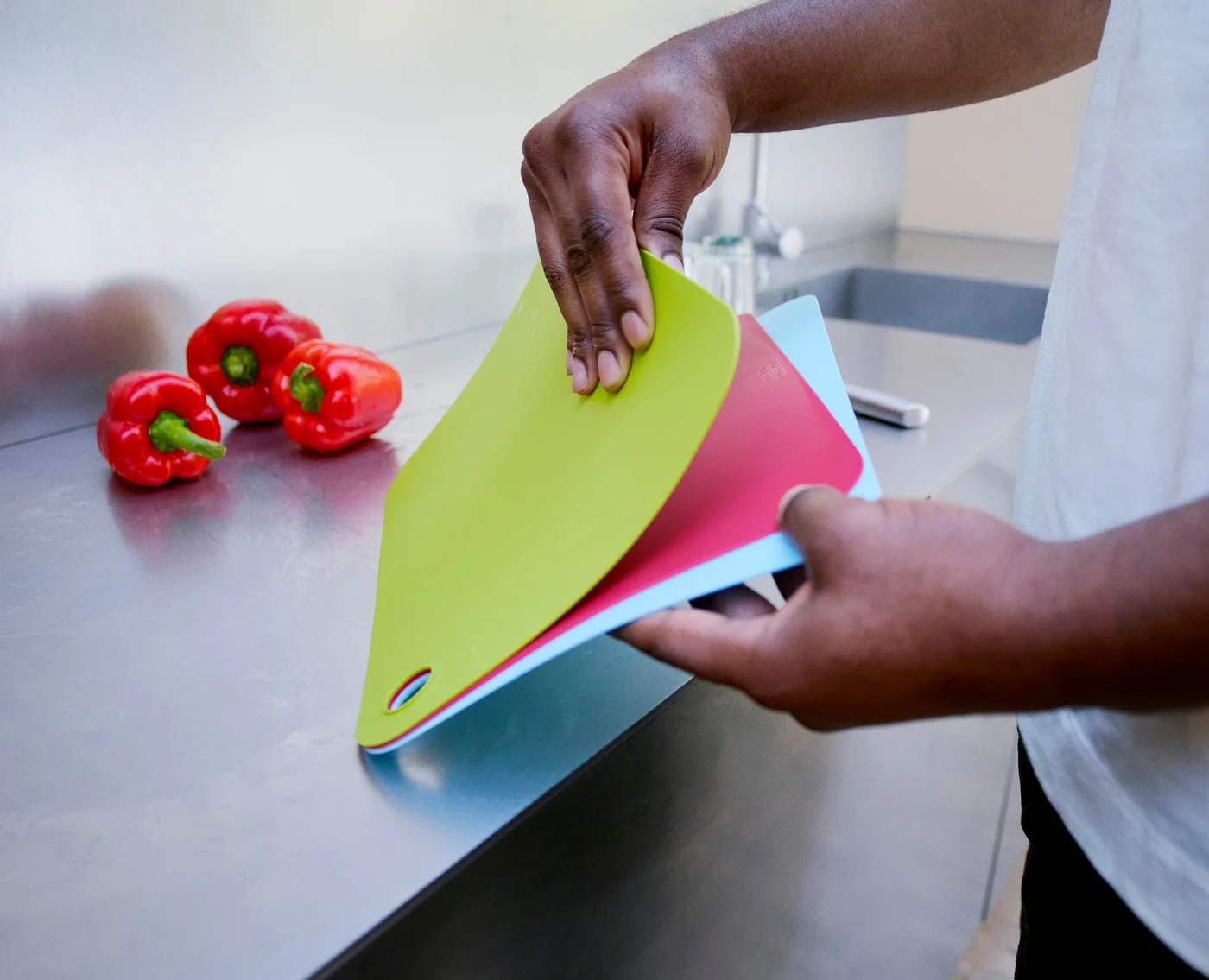
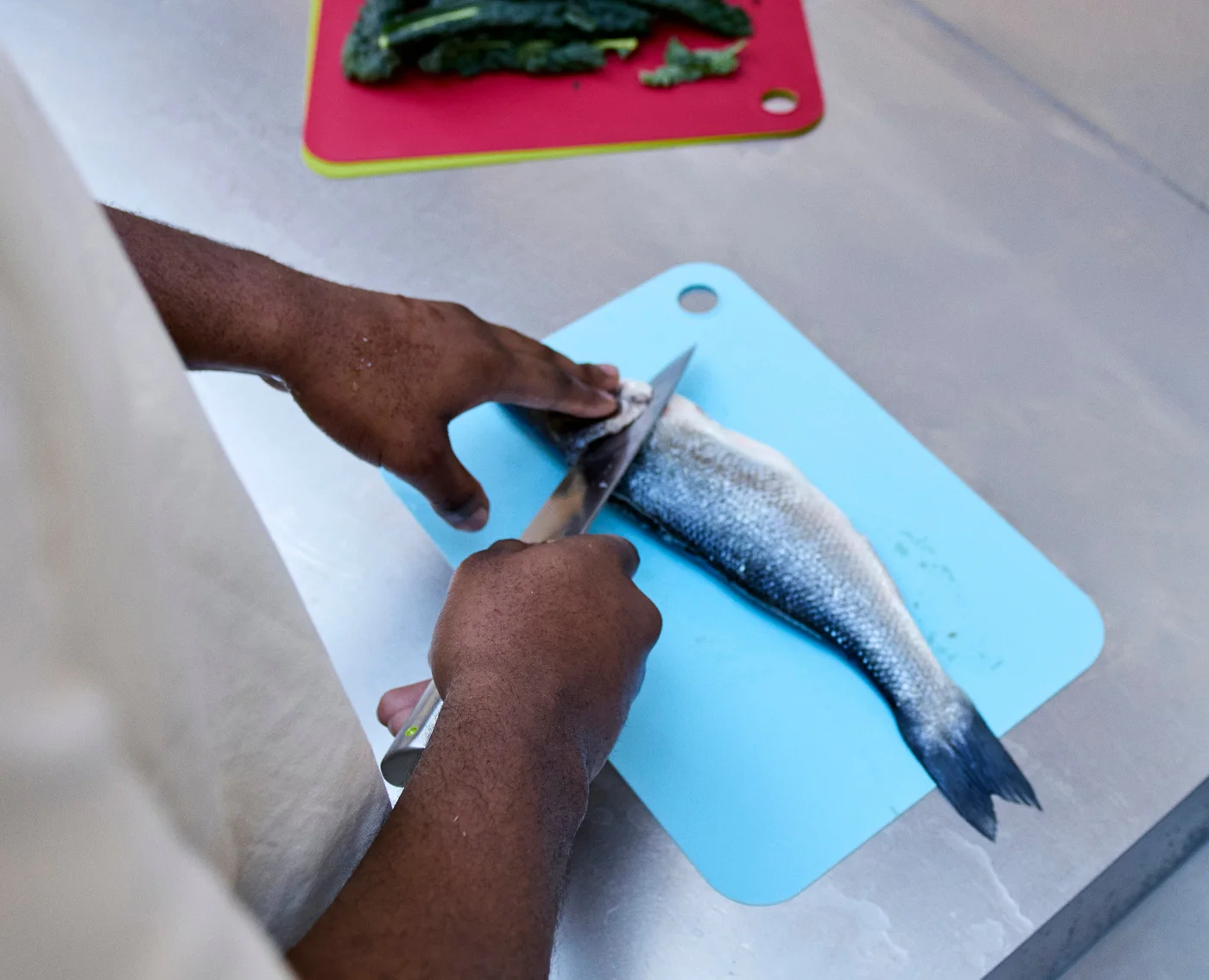
Onions scattered between the chopping board and pan are a small recurring annoyance. Pop’s flexible mats can bend to guide chopped ingredients into the next vessel. The three-piece set also clips together for storage, with the connecting hole providing a hanging point.
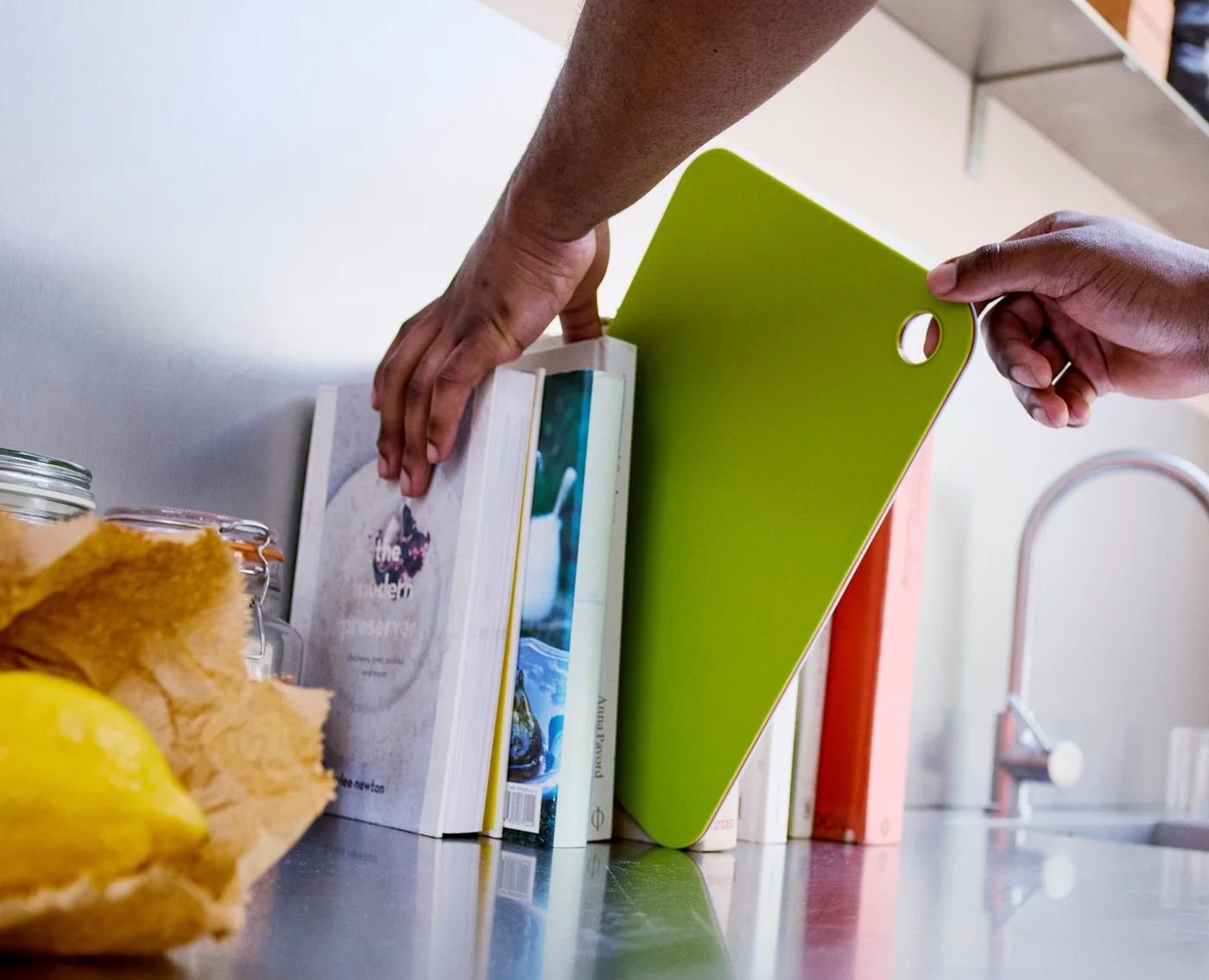
Color coding can help assign mats to different jobs, but it does not prevent cross-contamination by itself. Cleaning, hand hygiene and keeping raw-food tasks separate still determine how the system works. Use the colors as a memory aid, not a safety guarantee.
Choose flexibility over a heavy board deliberately
A mat is an attractive candidate when light prep and easy transfer matter more than a substantial stationary cutting surface. For forceful chopping or a board that must stay especially rigid, compare with a suitable thicker board. Check the care instructions for the exact mats before putting them through a dishwasher cycle. This is a useful space-saving option when each mat has a clear role. Buying multiple colors without changing the prep routine just gives you more surfaces to clean and store.
The decision before checkout
Assign each color a repeatable job and follow cleaning guidance between foods. Bending a mat can make transfer tidier, but flexibility is a tradeoff at the cutting stage. Do not mistake color coding for an automatic cross-contamination control or leave the mats wet in a clipped stack.