At first the board looks generous. A few rounds later, one little corner can feel like the most valuable space on the table. Blokus turns colourful shapes into a surprisingly readable contest: everyone can see the board, but not everyone notices the same opportunity.
One rule gives the pieces their personality
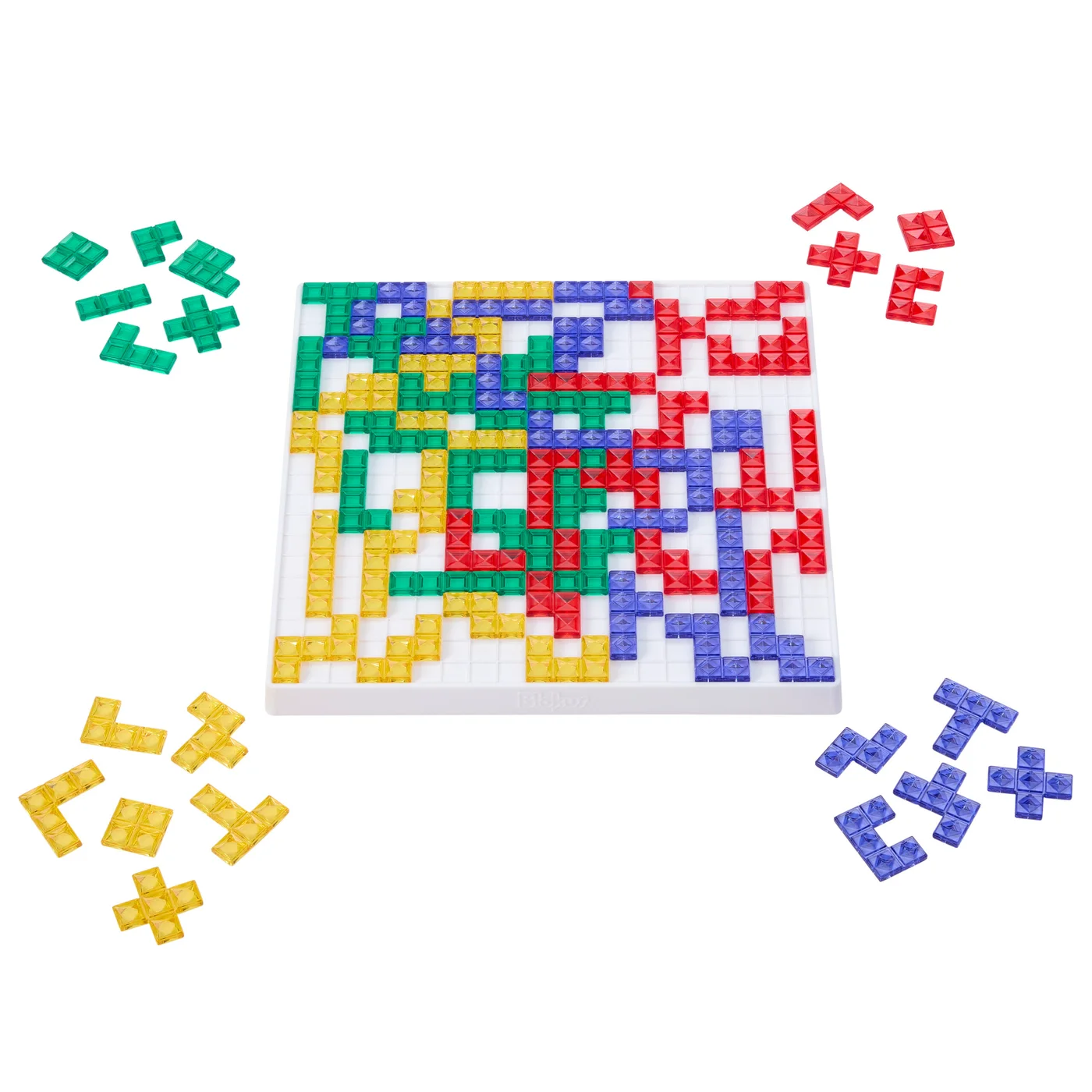
In original Blokus BJV44, pieces of your own colour must connect at corners rather than along edges. Each colour has 21 differently shaped pieces. The aim is to place as many as possible while the shared board gradually becomes crowded.
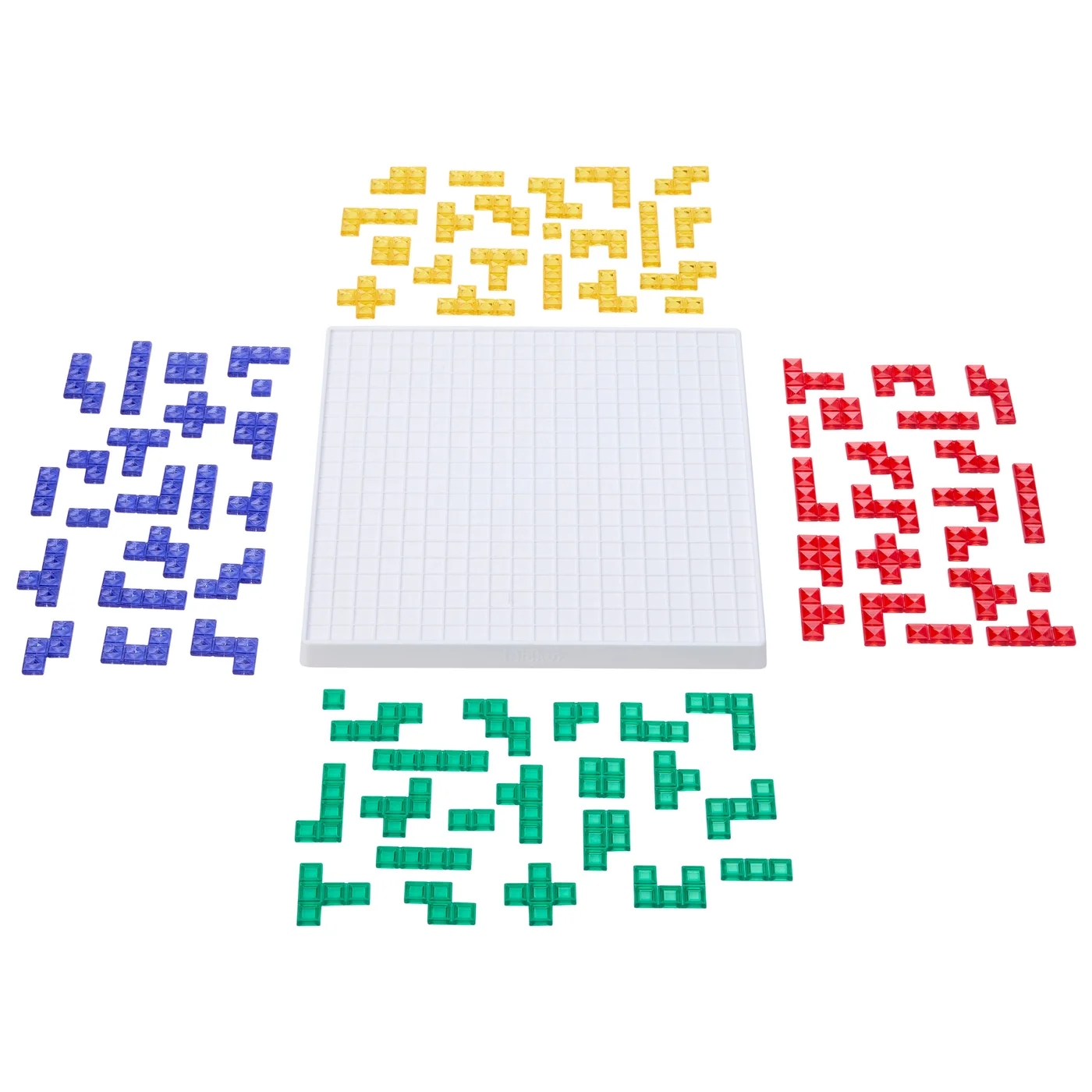
That makes the larger pieces worth considering early. Saving all the awkward shapes until the board is tight can leave you with fewer useful routes. This is a way to think about the game, not a guaranteed winning strategy or a report of our own matches.
Give the board an actual place to live
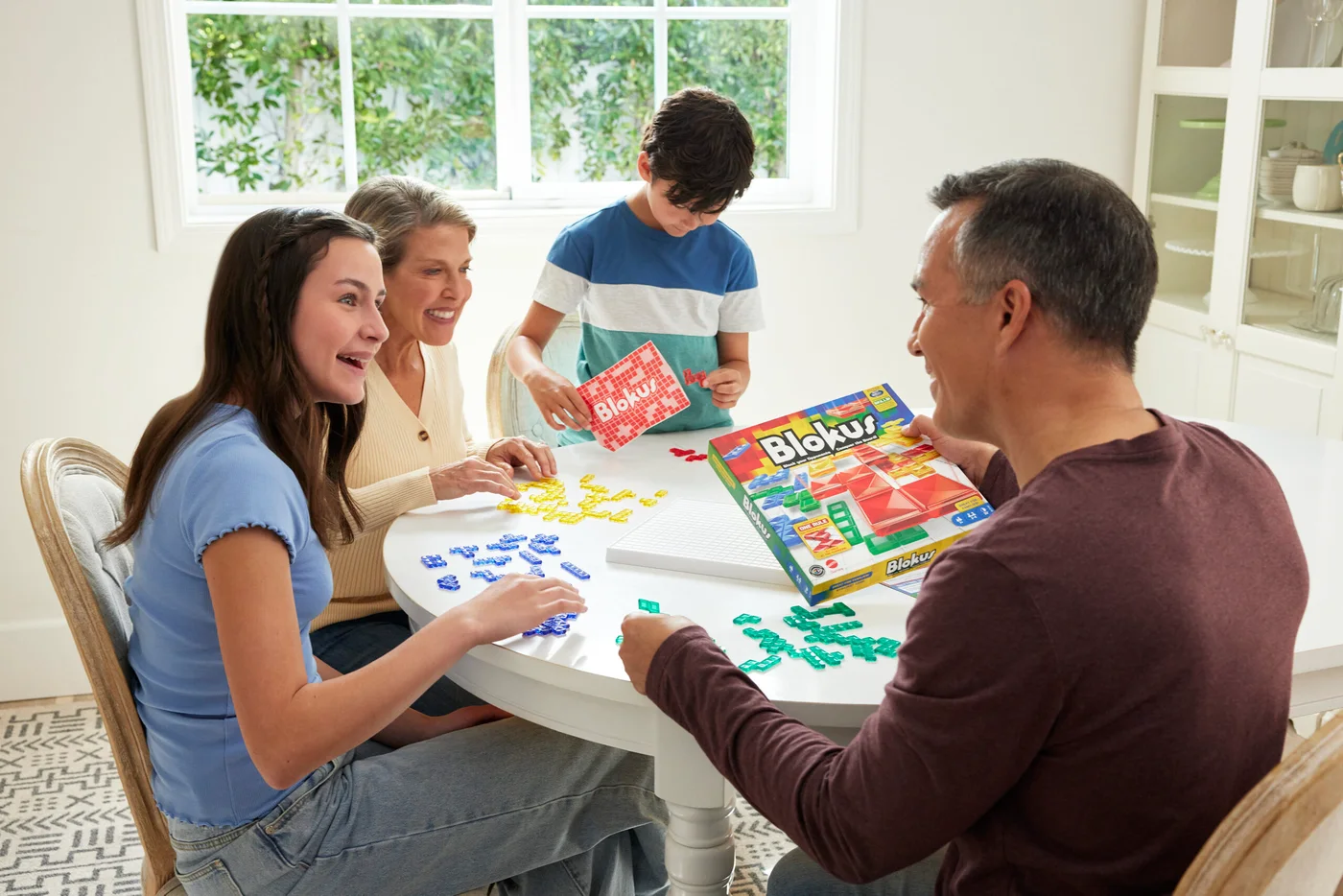
Mattel lists 2–4 players and ages 7+. Read the supplied rules for the setup used at your player count; do not assume every two-player arrangement is identical to a four-person game.
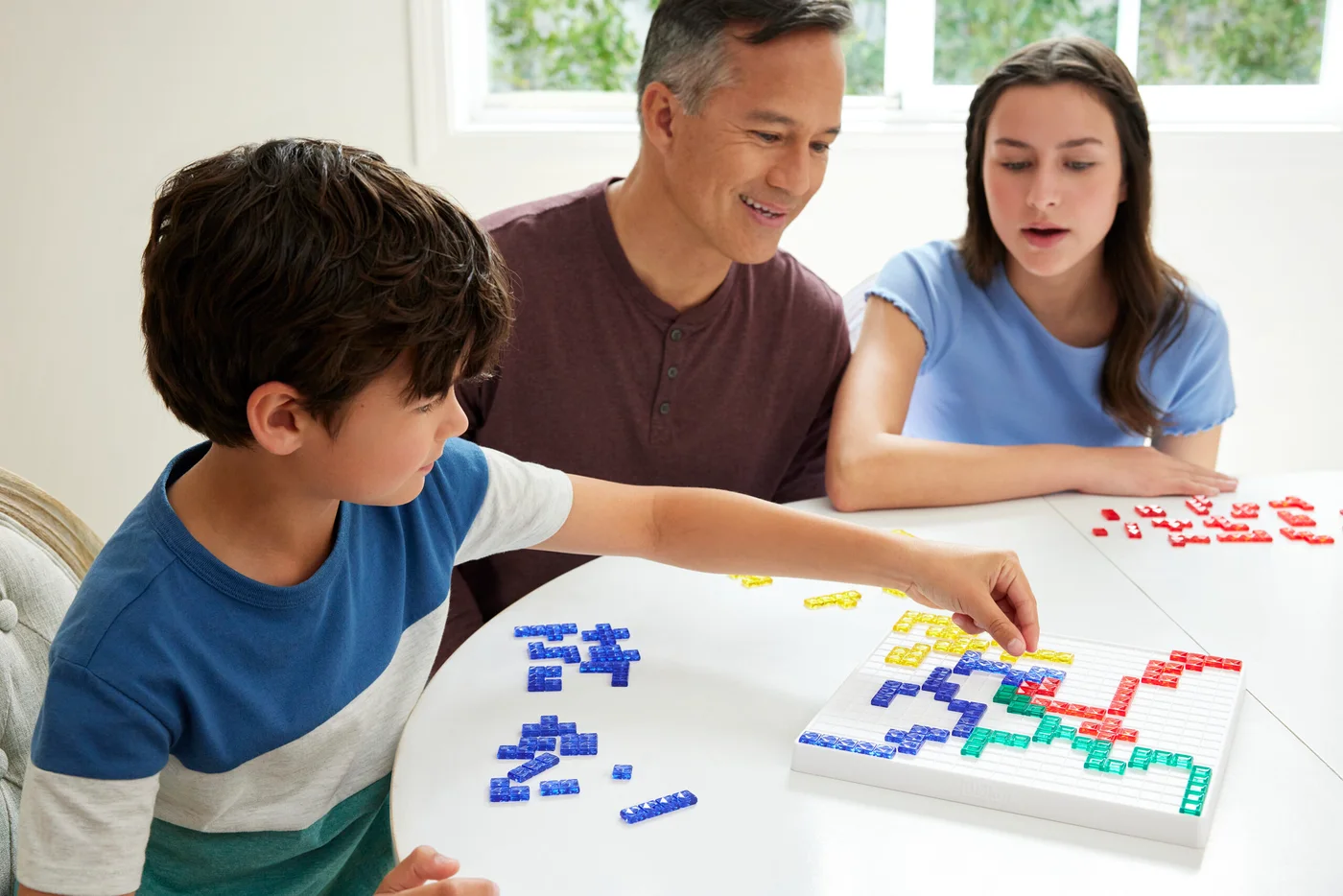
The coloured sets need room beside the board. A small café table may become cramped before play even begins. Keep drinks away from the pieces and check the floor when packing up, especially around small children or pets.
A game-night choice, not just a pretty pattern
Blokus suits people who want visible tactics without pages of setting lore. It still involves blocking and limited space. A player who dislikes having a promising route cut off may prefer a cooperative game instead.
The maker photographs show the board, the four sets and example family play. They come from Mattel’s international BJV44 presentation; local packaging and accompanying extras can differ. The people in the photographs are not FINDWEAVE testers.
Choose it when a shared table and a little friendly competition are part of the occasion. If you mostly play alone, a compact logic puzzle offers a more useful experience than keeping a multiplayer board game for a gathering that rarely happens.