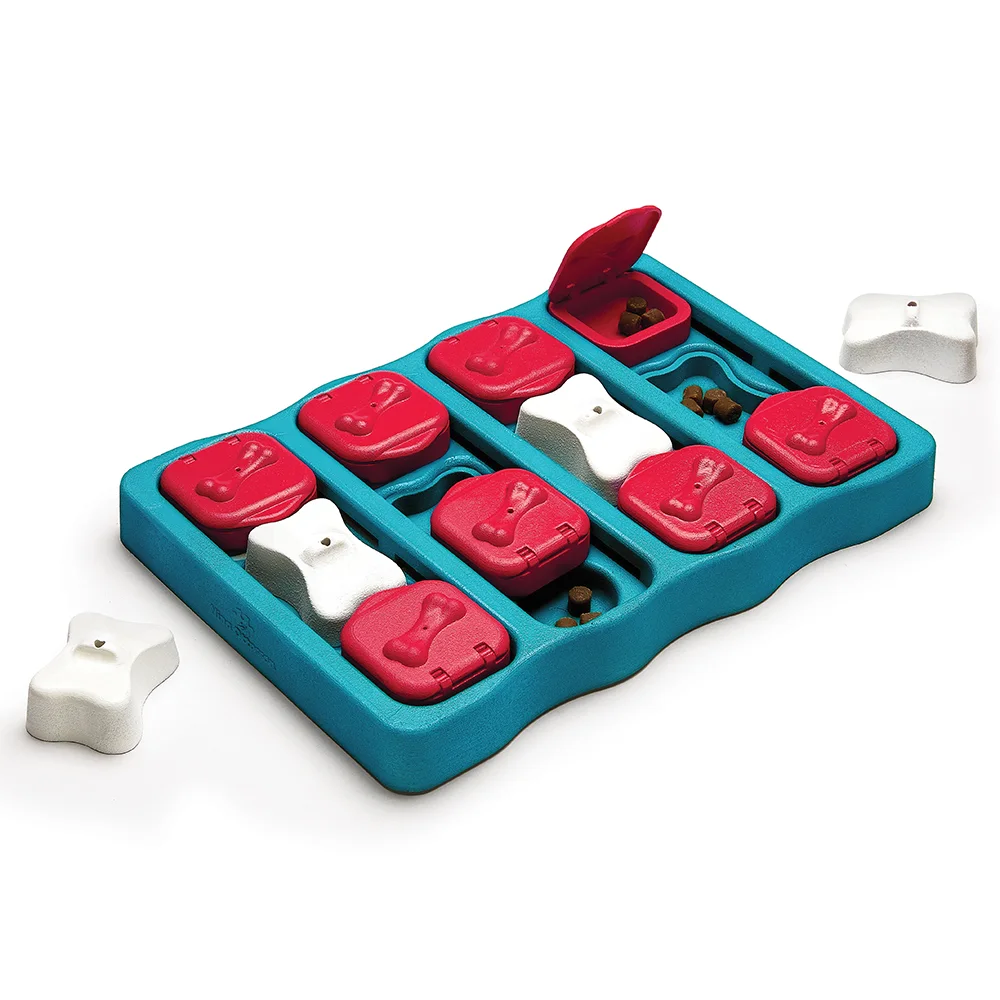
Lift a white bone, flip a red lid, slide a compartment: the Nina Ottosson Dog Brick makes the reward visible enough to encourage curiosity, then gives your dog more than one way to find it. The interesting part is discovering the moves together.
Do not start with every cover closed
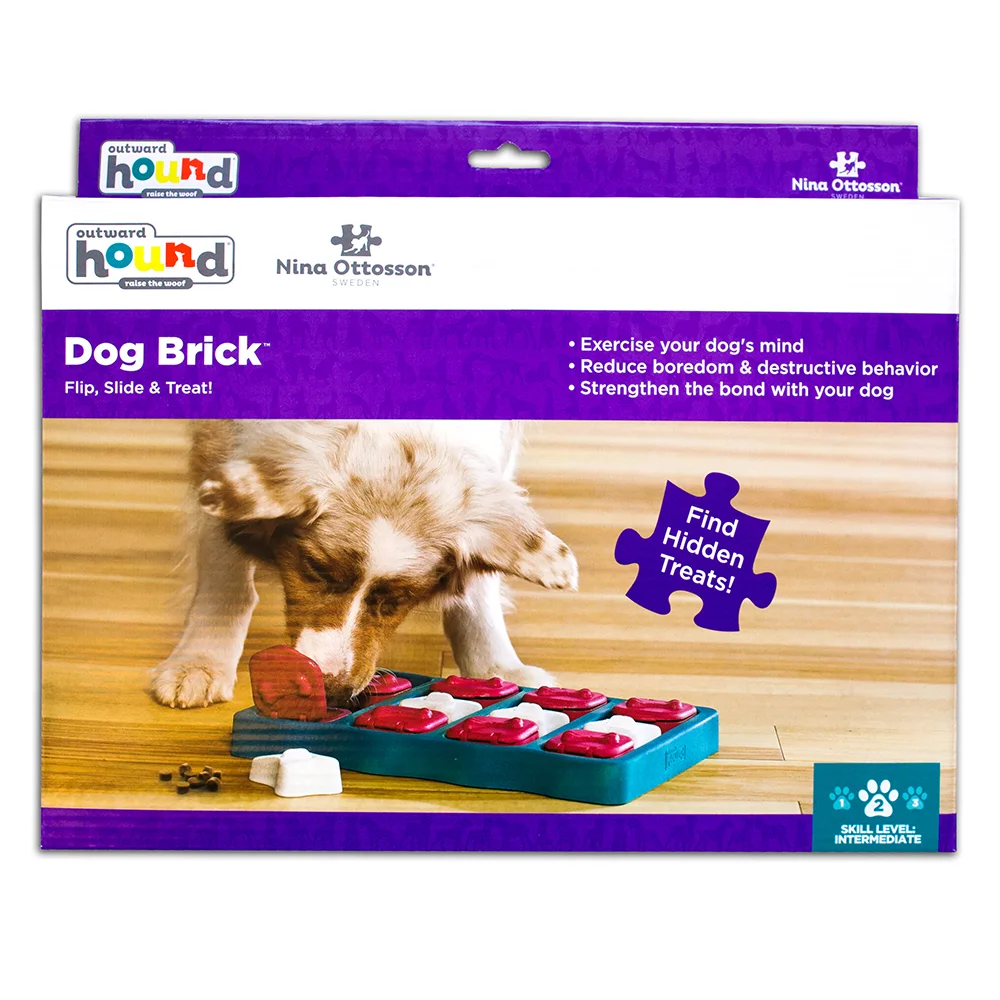
This original blue-and-red Dog Brick is a Level 2 puzzle. Its mix of lids, sliders and removable bone covers offers more steps than a basic open treat tray, but the label is not a test your dog must pass immediately.
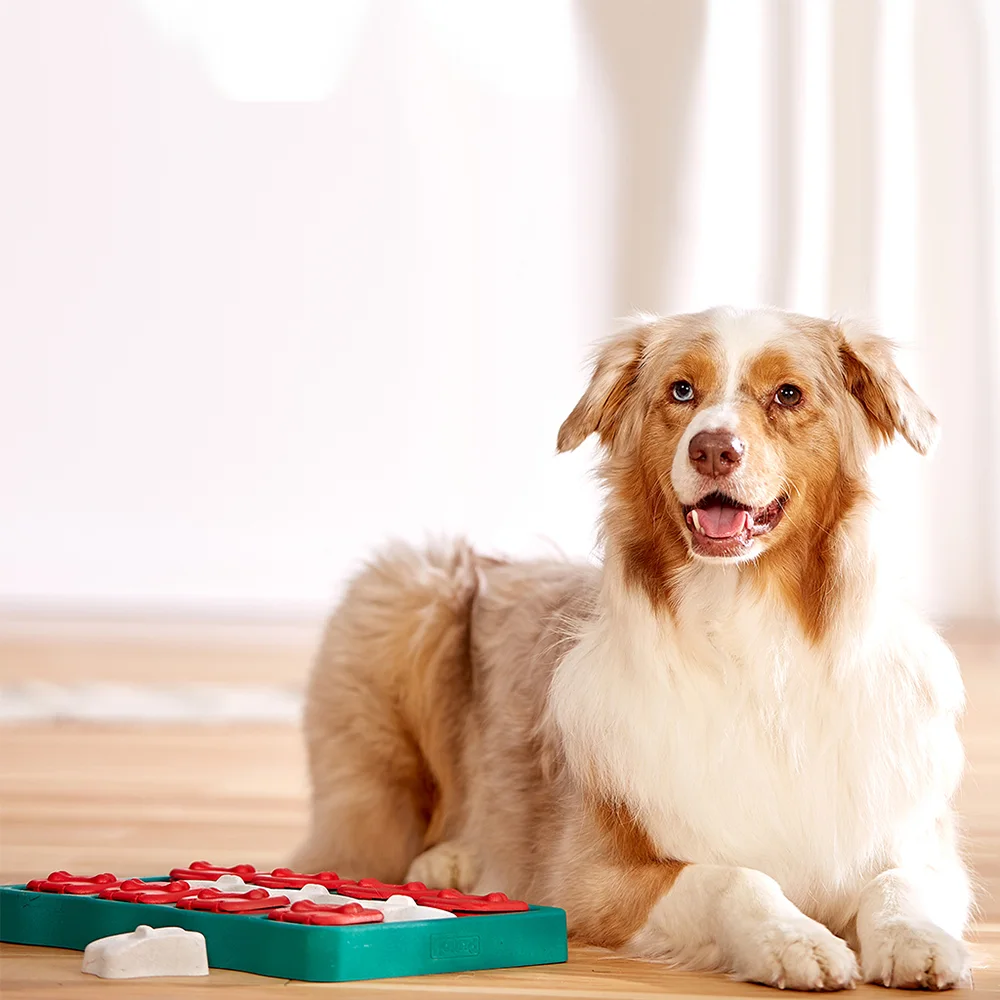
For the first session, leave some compartments open and some bones out. Put small familiar rewards where the dog can find them, demonstrate a movement and add obstacles only after the easy version makes sense. Frustrated biting is a reason to simplify, not evidence that a harder puzzle will work better.
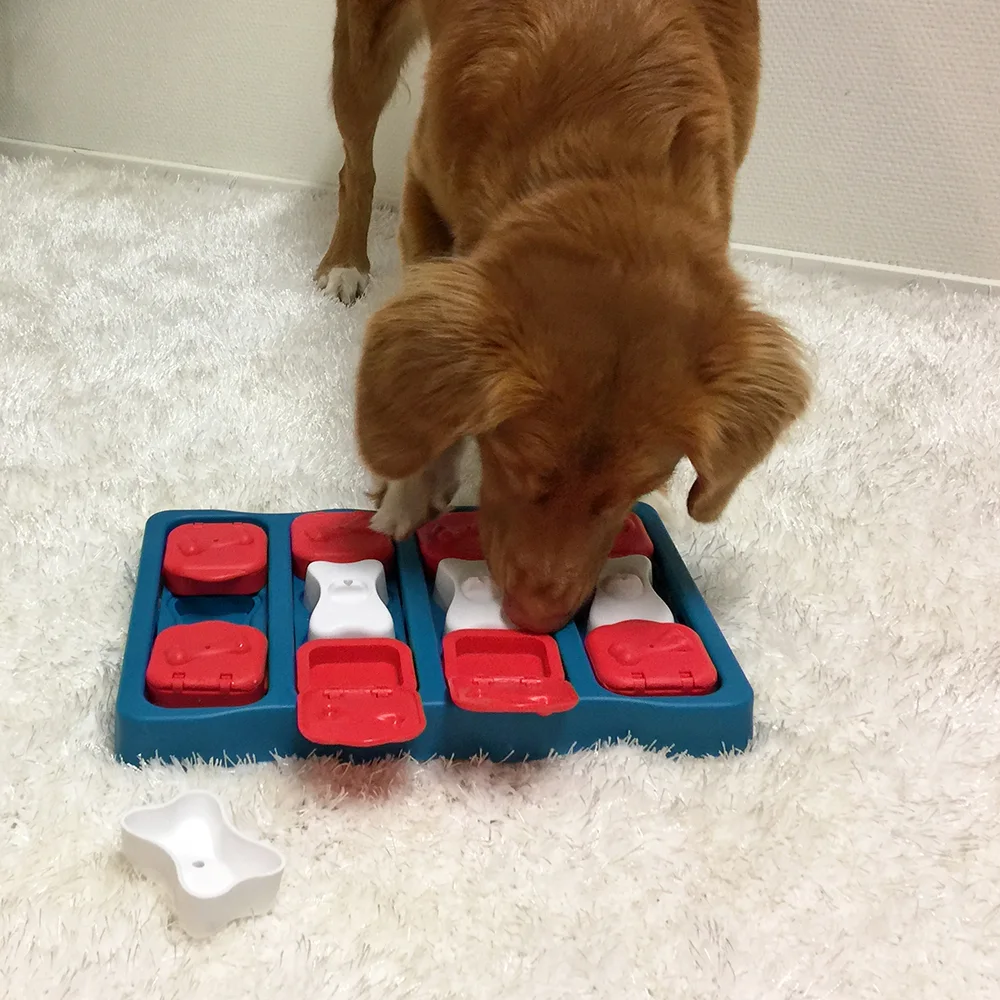
Removable pieces change the rules
Those white bones are part of the mechanism, not disposable packaging. Closely supervise the activity, discourage chewing and put the puzzle away when the food is gone. Inspect the board and parts for damage. Outward Hound specifically says not to leave a dog alone with this treat puzzle.
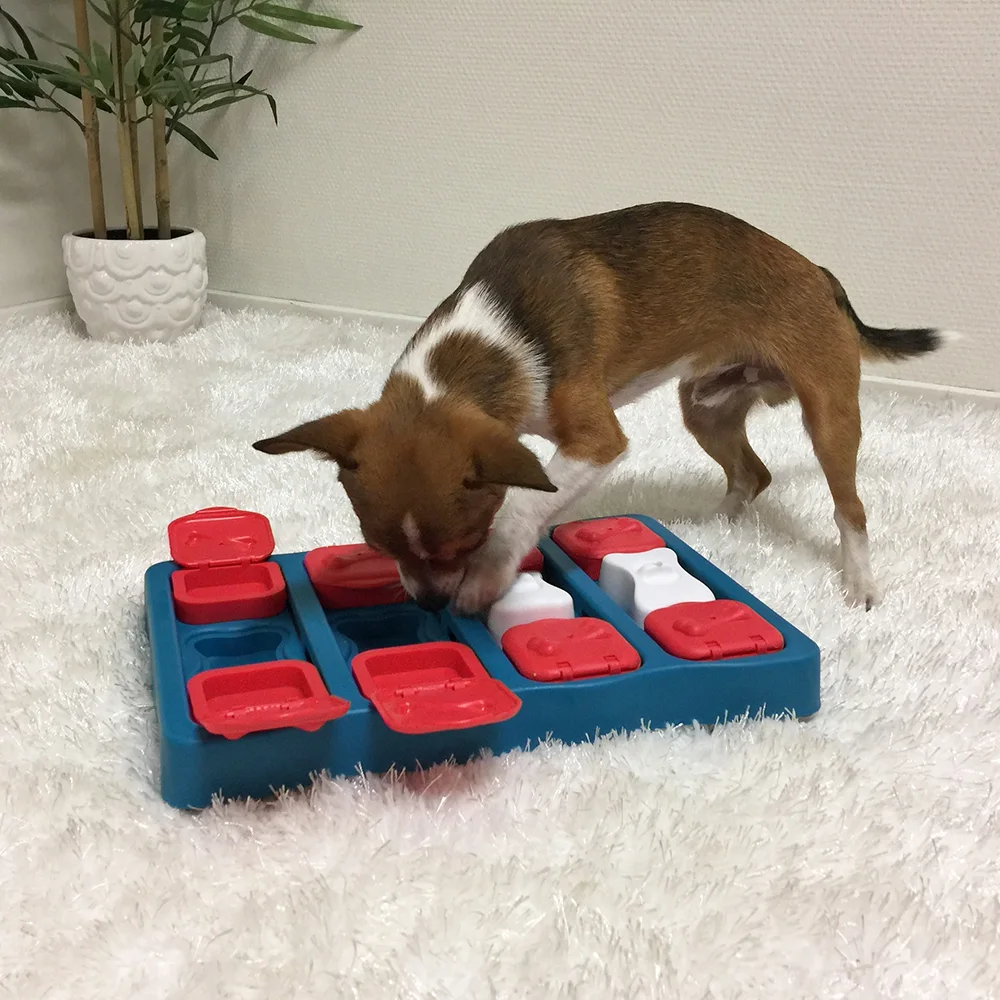
If your dog habitually grabs loose objects and chews them, a design with fewer removable components may suit better. The colourful photograph cannot answer that question; your dog’s behaviour can.
Leave room for the cleanup
Remove leftover food, hand-wash with warm soapy water, rinse and dry before reloading. Keep portions within the normal feeding plan. We omit a capacity claim because the current retailer page gives inconsistent figures.
Choose Dog Brick for a short, shared problem-solving activity. Do not buy it expecting hours of guaranteed occupation or treatment for anxiety. The reward is a sequence of little discoveries you can adjust to the dog in front of you.