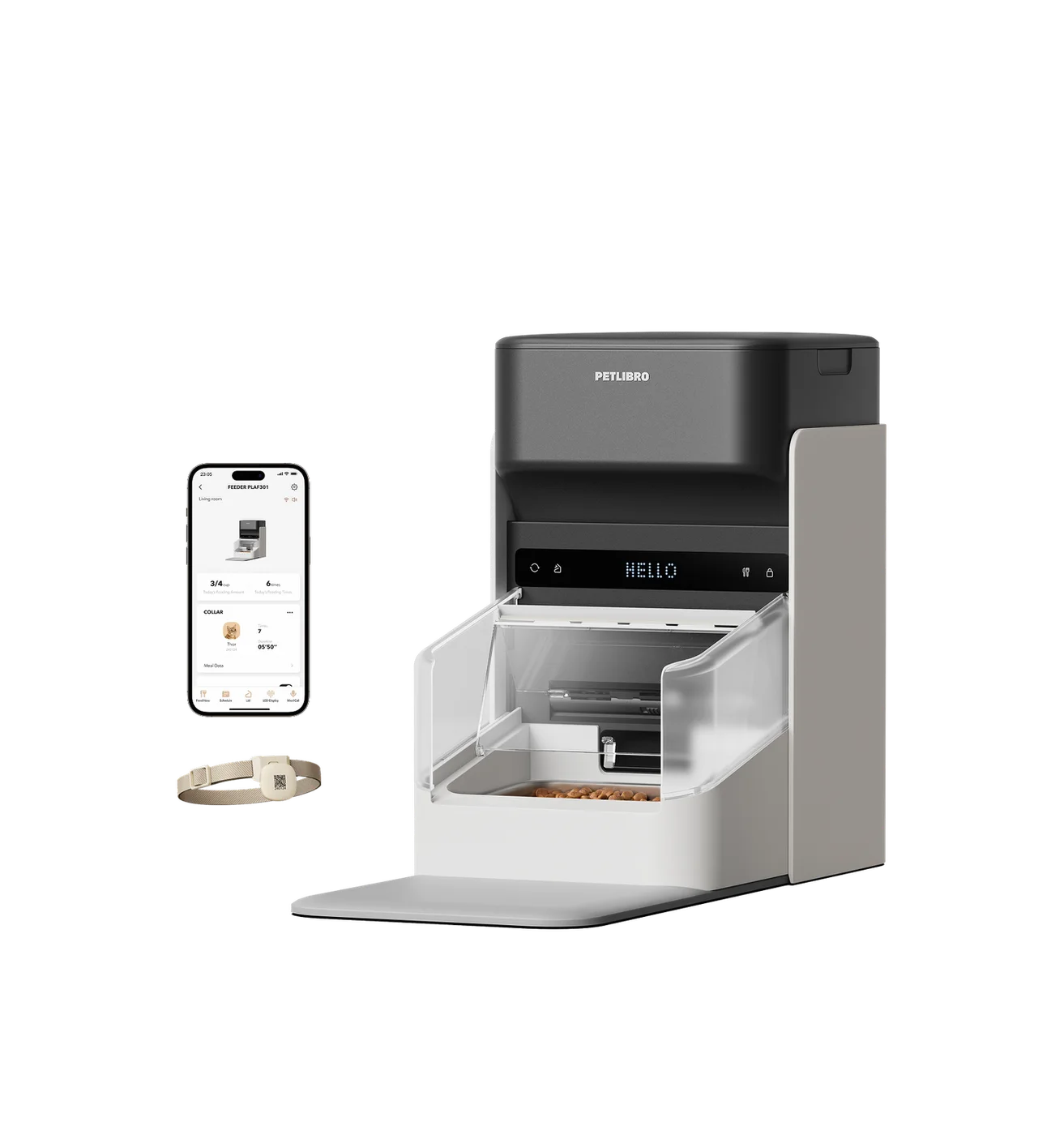
One bowl is empty. The other cat looks pleased. When pets need different food, the useful upgrade is not another feeding timer—it is a door that opens for the right cat. The PETLIBRO One RFID feeder makes that distinction, provided your cat will wear its supplied tag.
A private place at the table
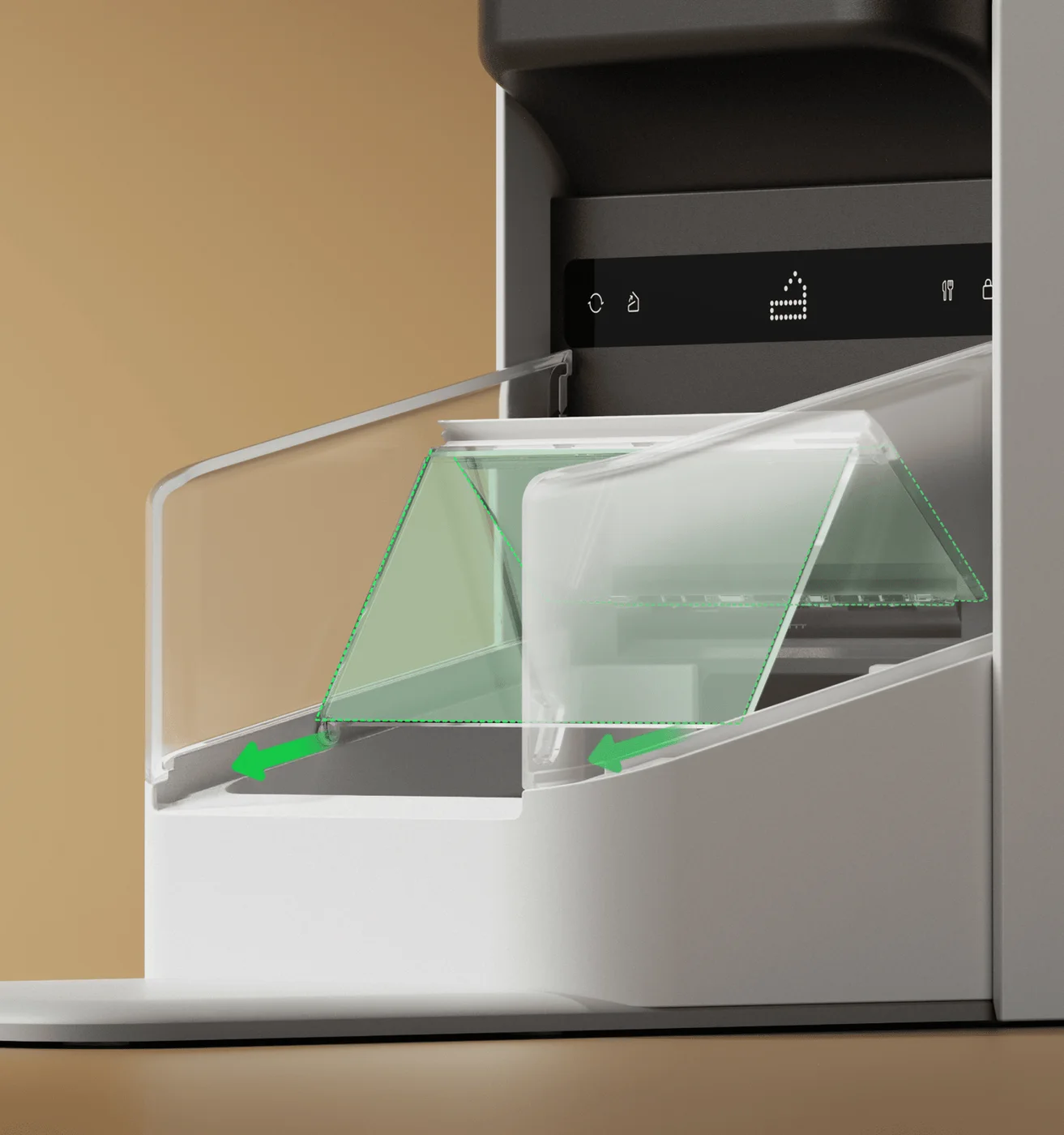
This white 3 L model releases dry kibble on a schedule, then restricts bowl access through a collar-triggered lid. It can make separate diets easier to manage without immediately splitting pets into different rooms. Adjustable closing speed offers a gentler introduction for a cautious eater.
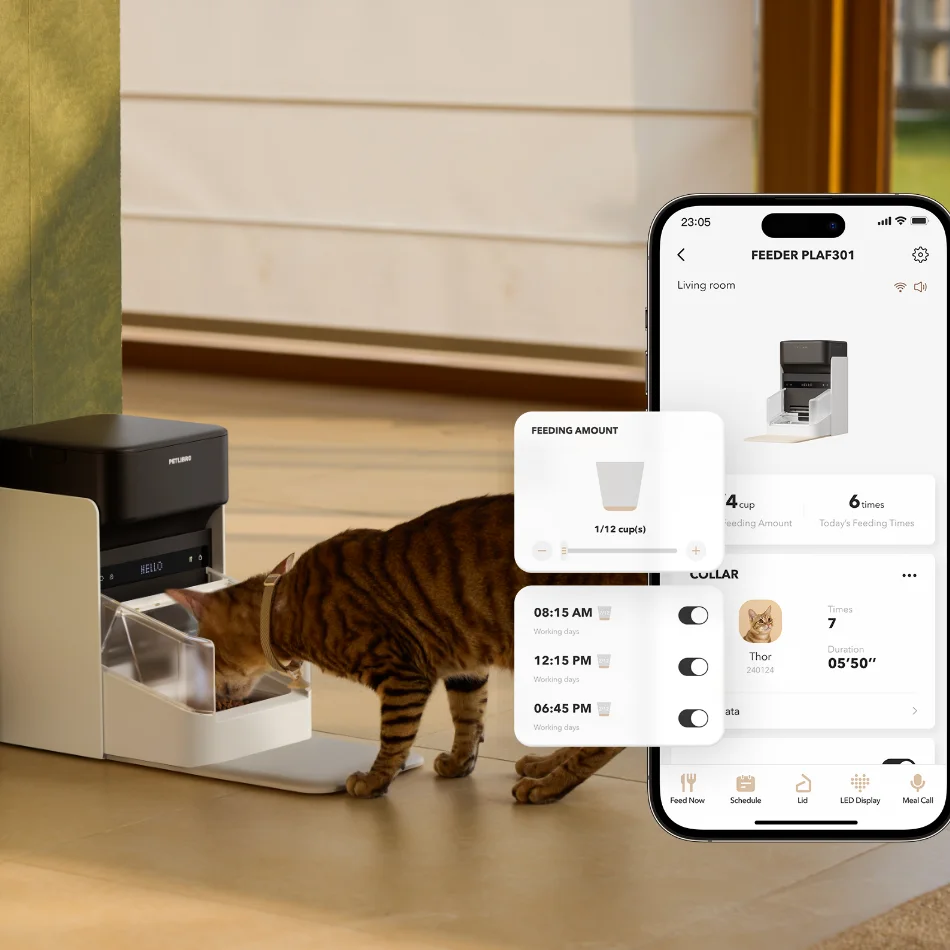
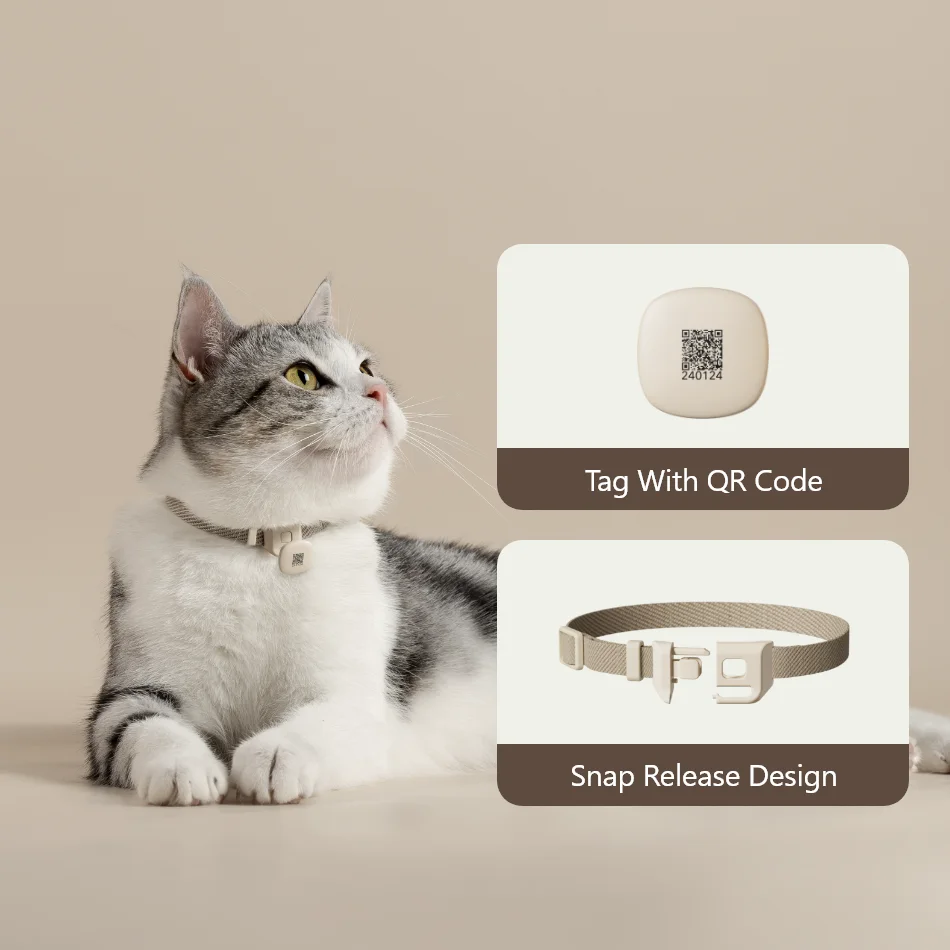
The crucial detail: it reads a compatible collar tag, not your cat’s implanted microchip. Each feeder pairs with one tag. Buying one unit does not create individually portioned meals for every cat in the house.
Start with the cat, not the app
Before spending, ask whether the intended eater comfortably tolerates a collar. Introduce the feeder while you can watch: first let the cat investigate, then observe approach, opening and retreat. A determined food thief may still crowd the authorised pet; access control is not a substitute for seeing how your particular pair behaves.
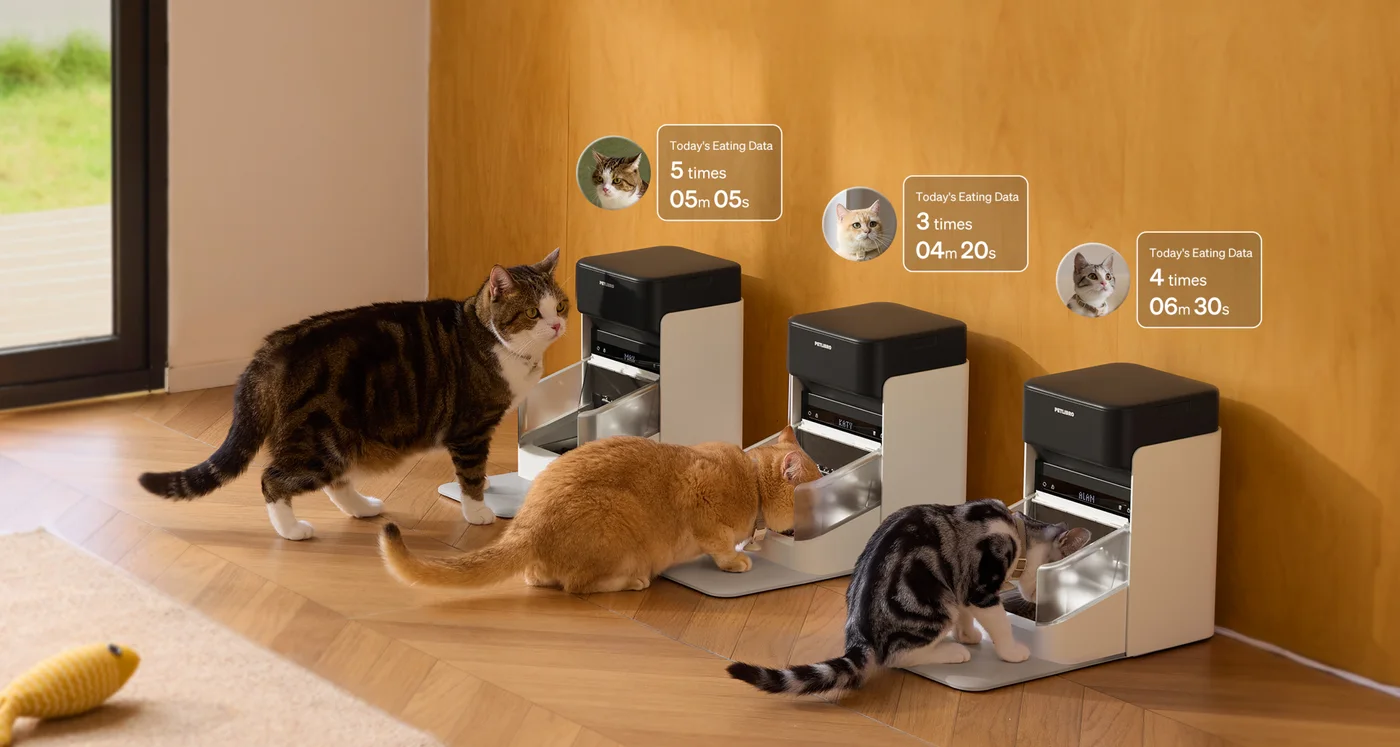
The app adds meal scheduling and feeding-pattern information. Treat those records as clues, not proof that every dispensed piece was swallowed. Set initial portions using your actual kibble and an independent measure rather than assuming a portion setting equals a fixed dietary quantity.
What ownership involves
Allow space for the extended bowl area, a nearby socket and regular washing. The hopper takes dry kibble within the maker’s size guidance; it is not a wet-food dispenser. Emergency batteries are extra. Saved feeding schedules are useful, but someone still needs to check food supply and animal welfare.
Choose the One when food access is the recurring problem. If both cats share the same diet happily, a simple bowl or basic scheduled feeder avoids the collar, moving lid and extra cleaning surfaces. This is research-based guidance, not a hands-on test.