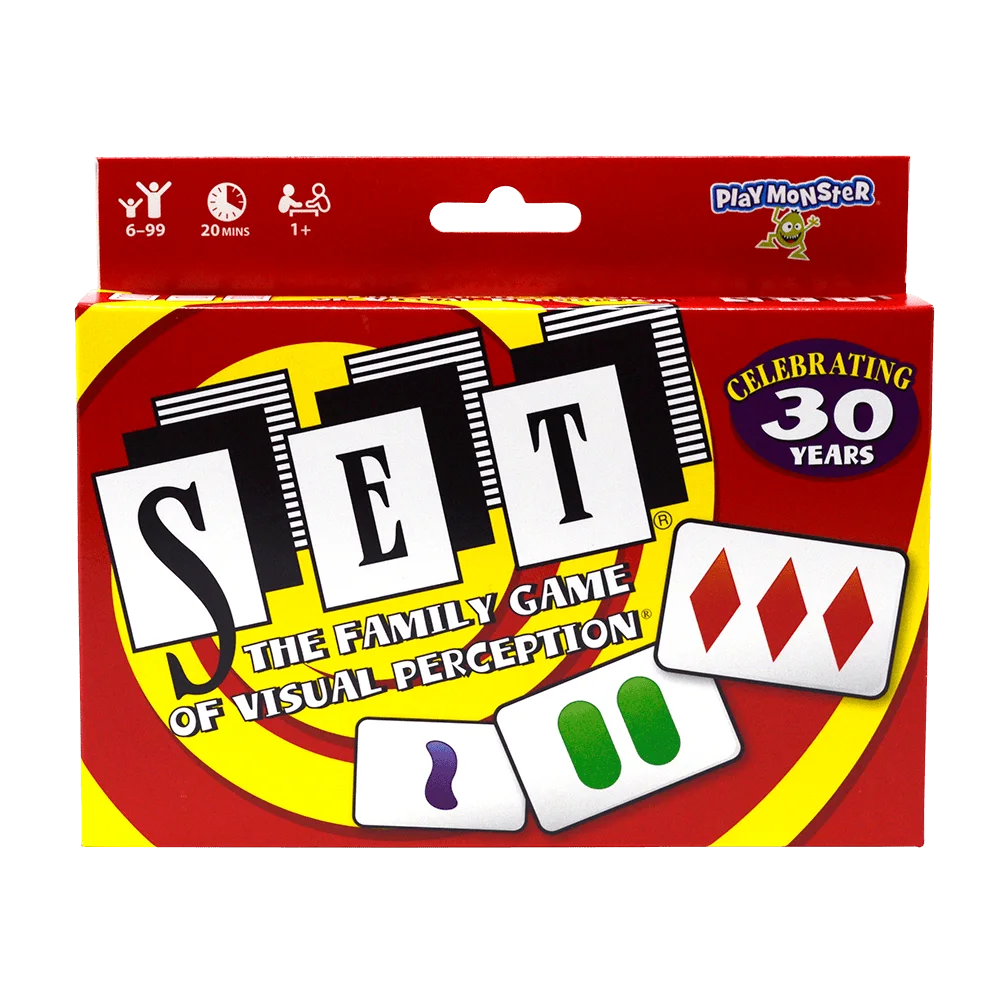
Twelve cards on a table can look almost too simple to be a game. Then you try to pick three that satisfy SET’s rule, and the obvious-looking answer falls apart on just one detail. The attraction is that brief shift from seeing a pattern to understanding why it works.
Four features, one rule
A SET contains three cards whose color, shape, number and shading are each either all the same or all different. You check every feature separately. Two alike and one different fails for that feature, even when the other three seem perfect. The original 1000 deck contains 81 cards and instructions; Junior, giant cards and waterproof editions are different purchases.
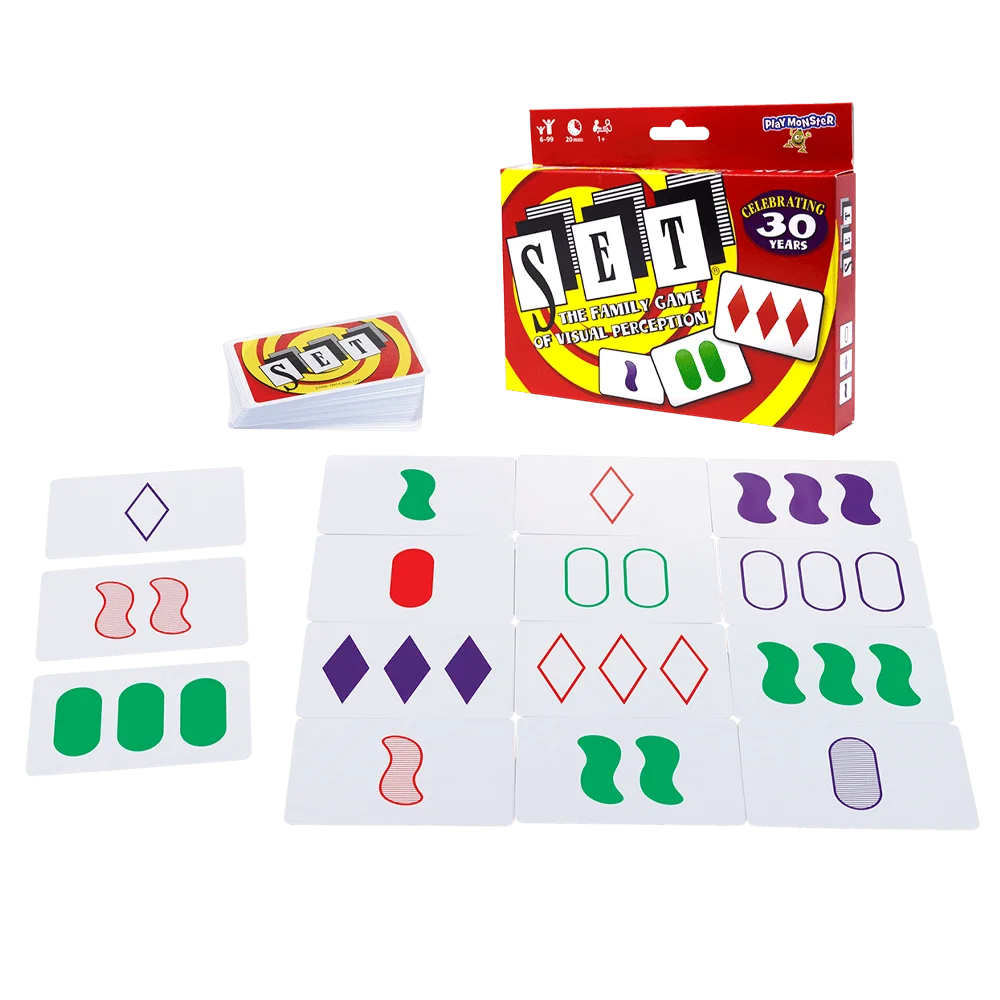
Group play is simultaneous rather than turn-based. Someone calls SET when they spot a match, and collecting the most sets wins. Solo play is also possible, so the box can offer a quiet visual puzzle as well as a competitive table activity. There is little dependence on English vocabulary, although understanding the instructions and explaining a valid match still matter.

Give new players a chance to see it
A practiced player may spot combinations much faster than a newcomer. That makes SET lively for an evenly matched group, but potentially discouraging when one person collects everything before others understand the rule. Begin with worked examples and let each person explain a match before expecting a full-speed race. That is an introduction choice, not a claim that the official game guarantees balanced skill levels.
Color and shading distinctions are essential to identifying cards. Readers who find those differences difficult should inspect the card examples before buying; the game is not automatically accessible to every visual need.
Three checks before choosing the deck
Check the edition, the card size and the age information. The current publisher page lists ages six and up, while the selected Amazon listing says eight and up. Follow the supplied packaging rather than treating that discrepancy as proof that every younger child is ready.
Choose SET for the satisfying click of a visual rule becoming clear, in a box small enough for repeat play. Skip it if the table mainly wants storytelling, negotiation or relaxed turns. It is a compact puzzle race, not a miniature version of those experiences.