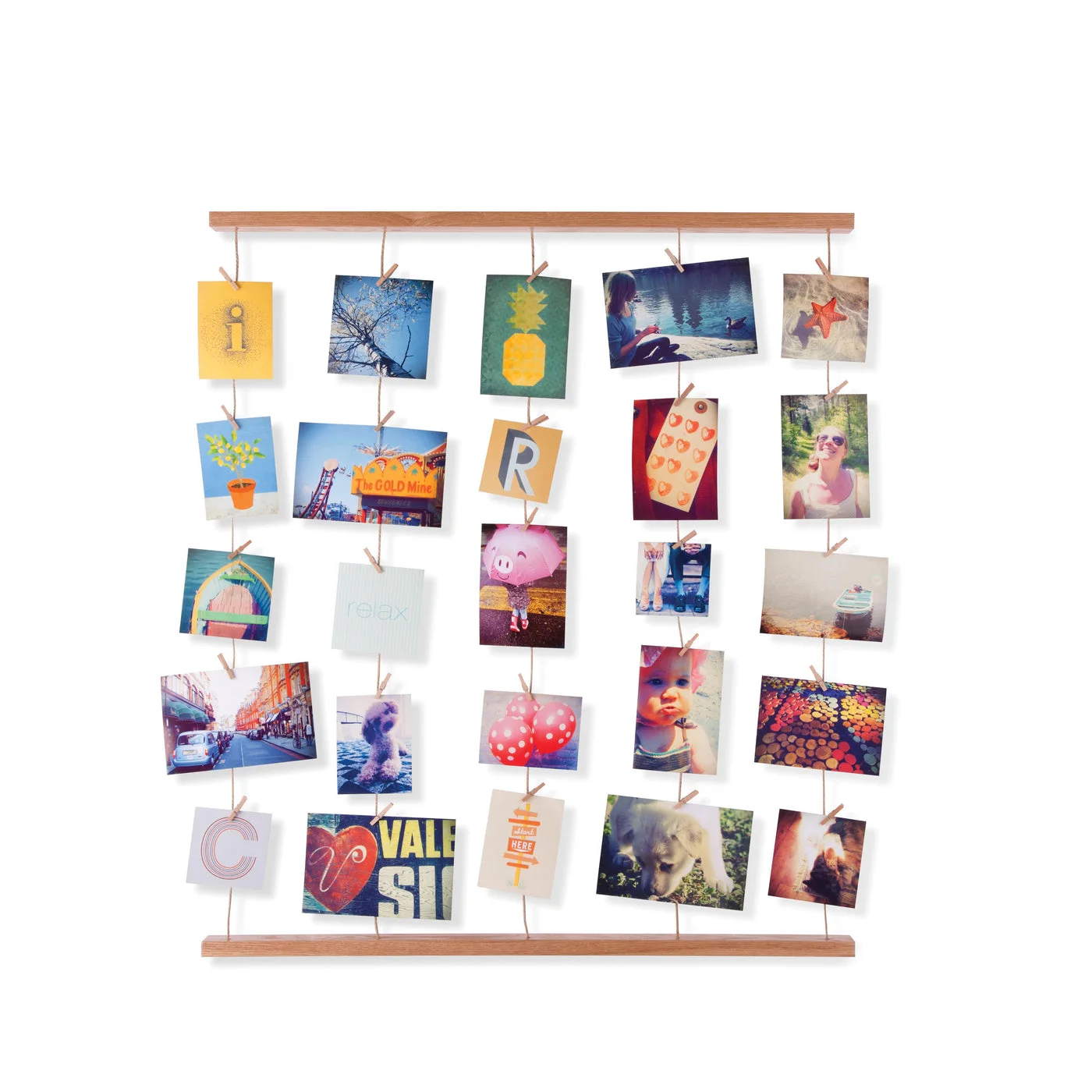
Hundreds of photos on a phone can become a collection you barely visit. Umbra Hangit gives a few of them a visible place: a holiday snapshot, a postcard, an ordinary afternoon worth remembering. Its clipped-paper format is deliberately casual. You can replace one picture without reopening a frame or redesigning the whole wall.
Pick a small story first
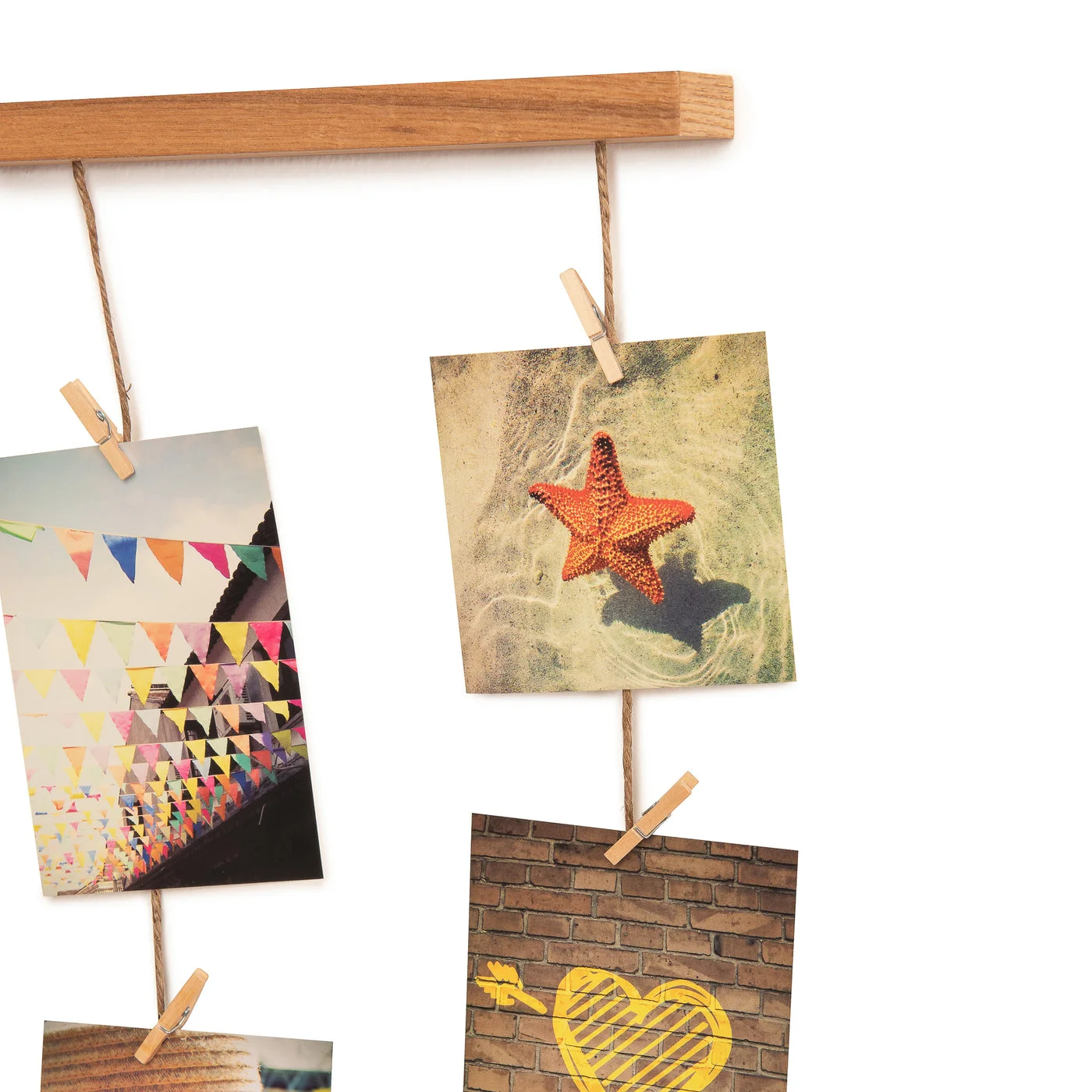
The Natural version uses wooden side bars, five rows of twine and 40 clips. Start with a limited selection rather than trying to fill every clip immediately. A travel row, family row or collection of favourite colours can make the display feel coherent; forty unrelated pieces may recreate the clutter you wanted to escape.
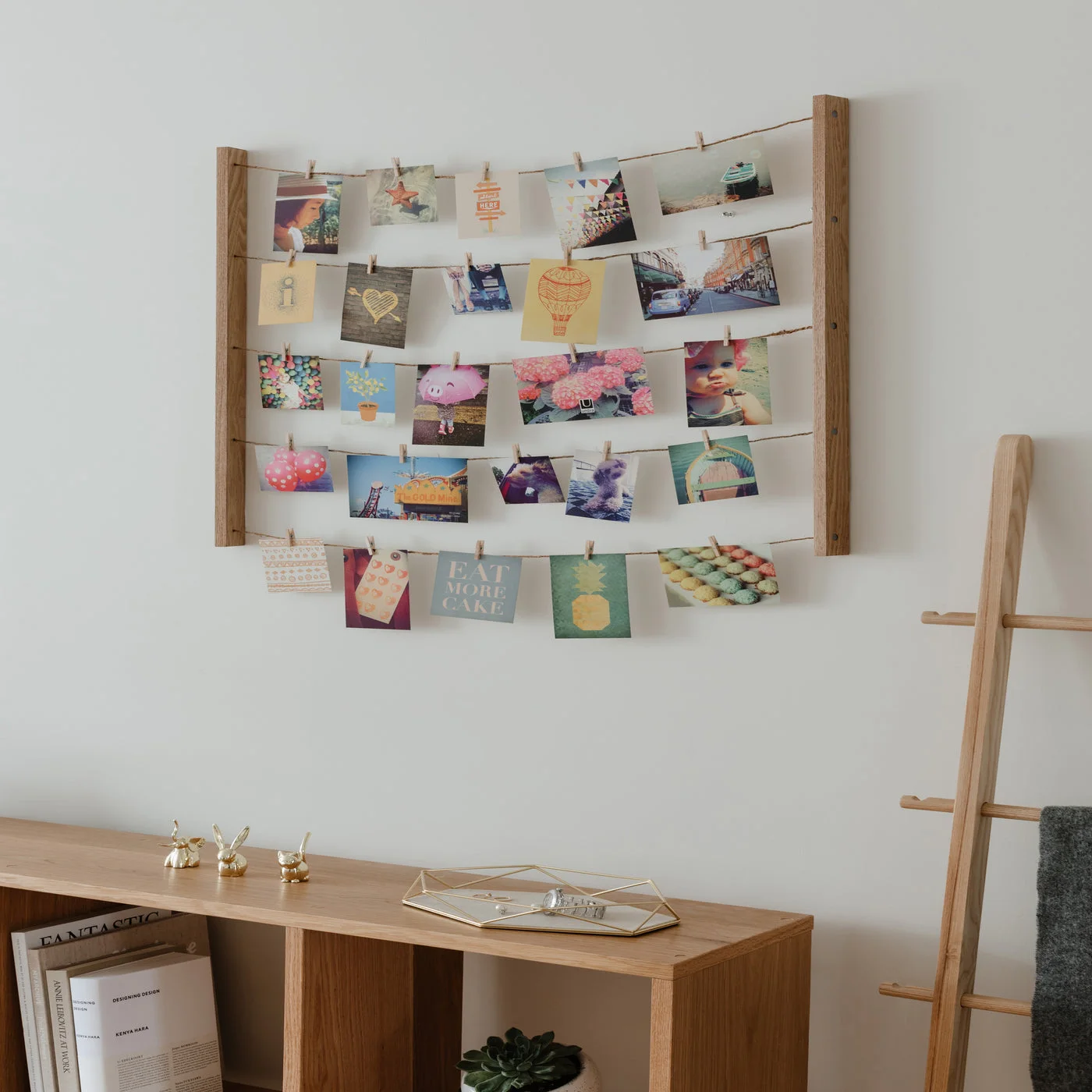
Photographs and postcards shown in the reference images are styling examples, not included keepsakes. You will need prints or other lightweight paper items of your own. Check the size of those prints and leave enough spacing that one row does not cover the one beneath it.
Measure the wall, not just the empty corner
The maker’s illustrated layout is roughly 76 cm wide and 66 cm high, with about 4 cm depth. Hangit needs a suitable wall and appropriate installation; it is not a freestanding desk frame. Plan the position where you will actually notice it, then consider the wall surface and any rental restrictions before buying.
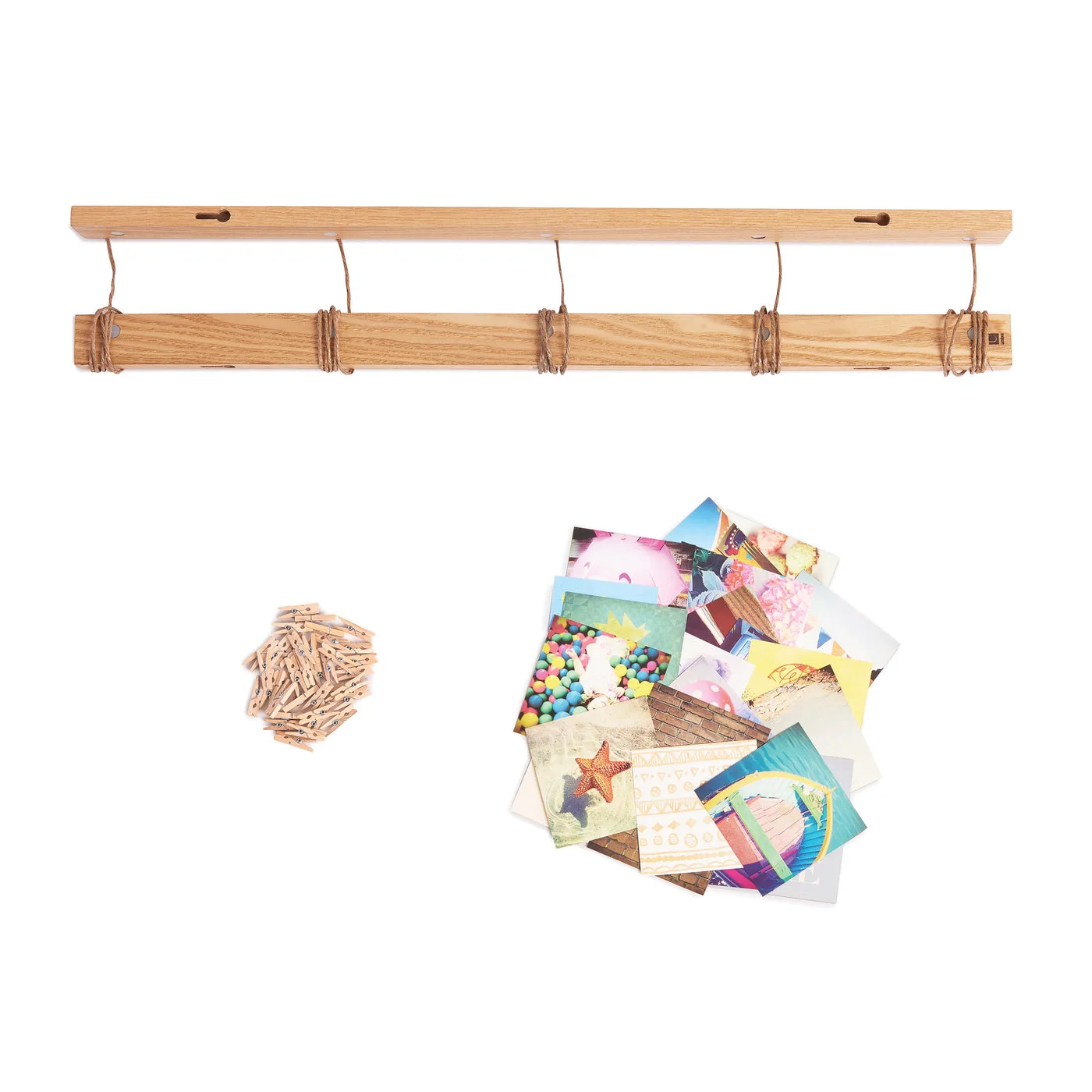
Exposed prints are easy to change, but lack the glass protection of conventional frames. Keep them away from splashes, frequent handling and intense direct sunlight. A frame is the better choice for an irreplaceable original that needs careful protection.
When it earns its space
Hangit makes sense for a person who likes changing displays and has a genuine collection to put on it. It is a thoughtful gift only if they enjoy printing pictures or already have paper mementoes. The useful emotional payoff is not extra storage. It is seeing a few meaningful moments every day instead of leaving all of them inside a camera roll.