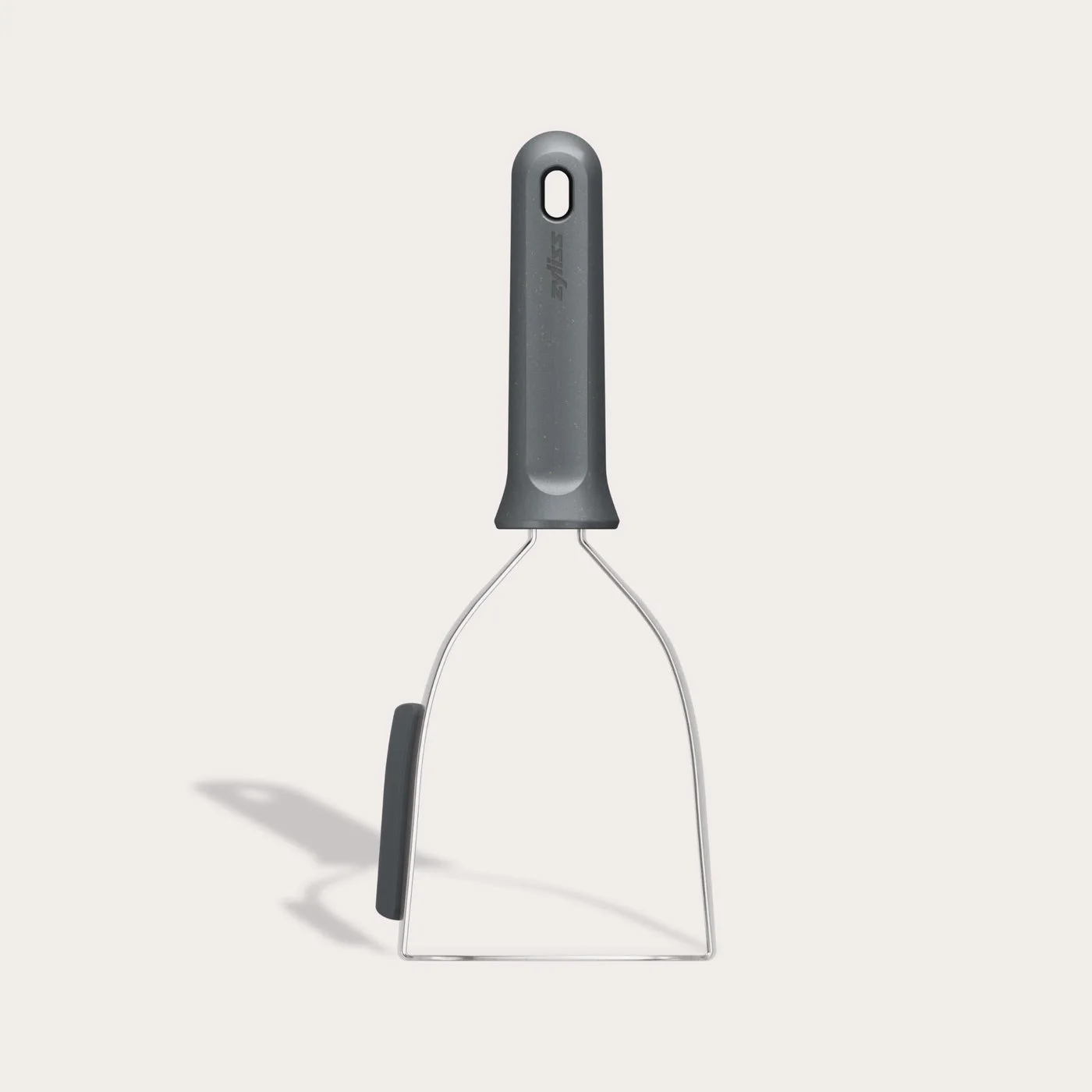
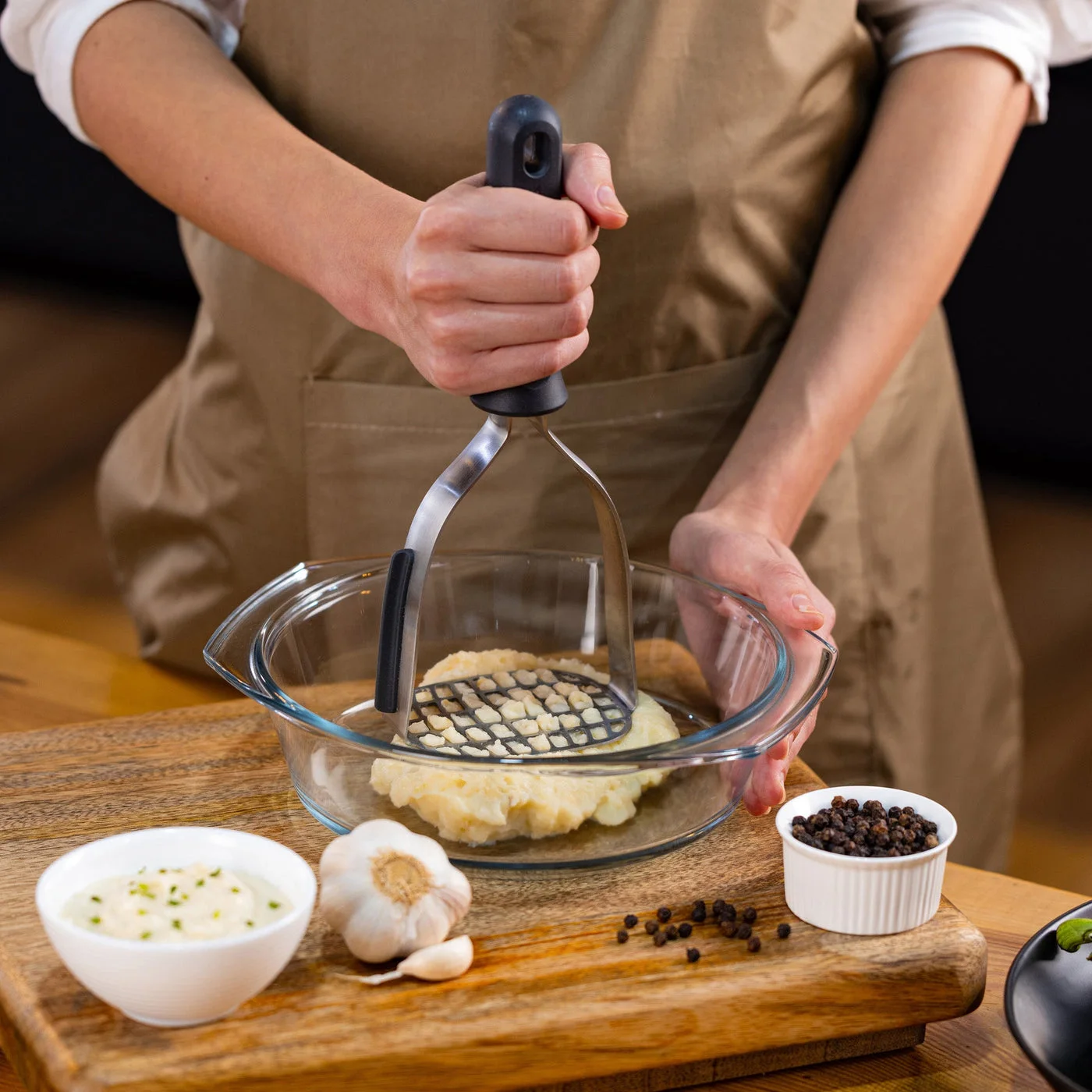
A bowl of mash has two jobs: crushing the cooked potatoes and gathering the portion smeared around the sides. This ten-inch Zyliss masher puts a silicone scraper beside a stainless-steel mashing head. That small addition is more relevant than another promise of perfectly creamy potatoes.
Texture begins before the tool
The head is designed for soft cooked foods such as potatoes, carrots and peas. Start with ingredients cooked until suitable for mashing. A metal grid cannot turn a hard, undercooked centre into a pleasant texture, and raw tough vegetables are not the intended task.
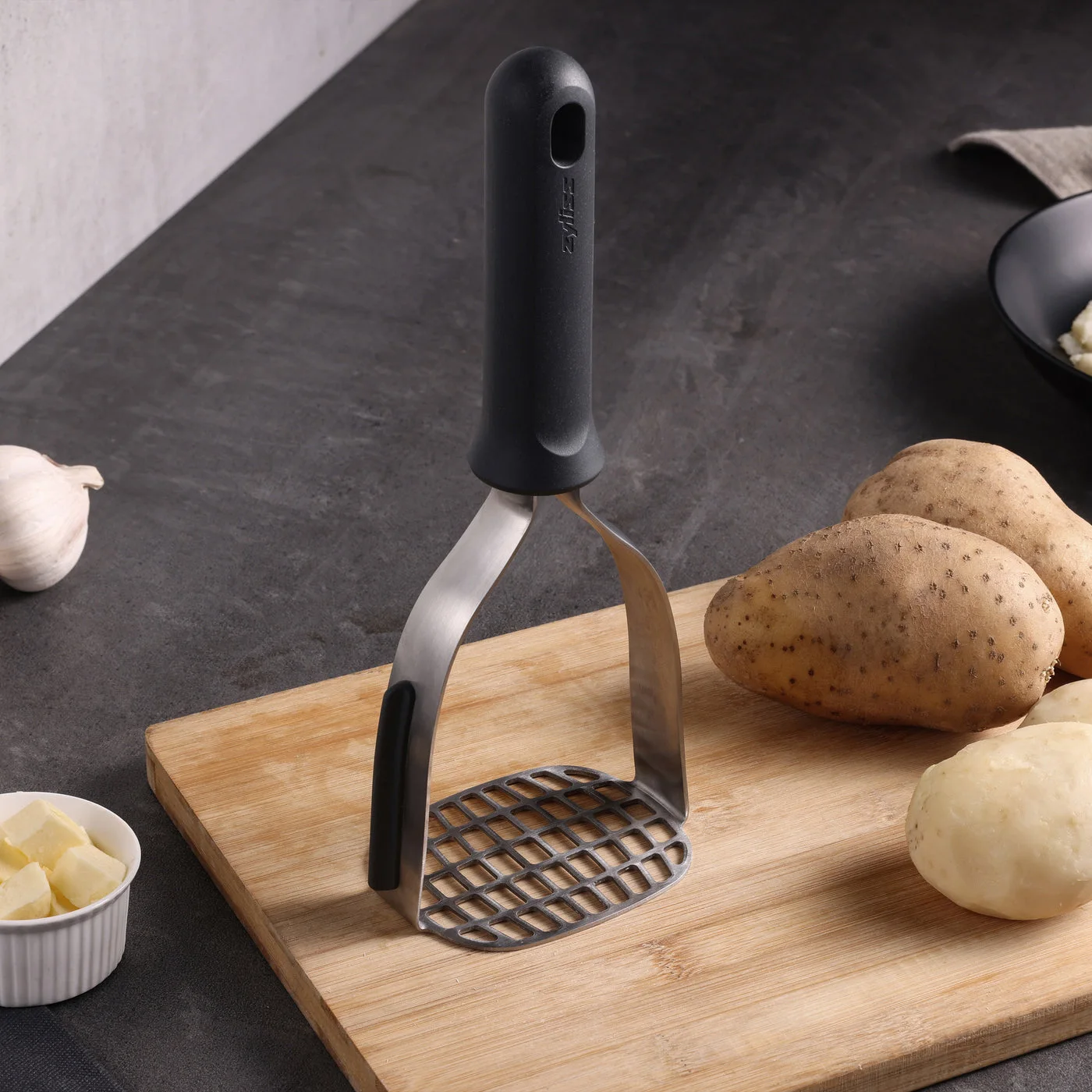
Decide what you enjoy eating. A hand masher gives you control over how much texture remains. If you want a particularly fine, even result, a ricer is a different tool worth comparing. More force or endless working is not automatically the route to better potatoes.
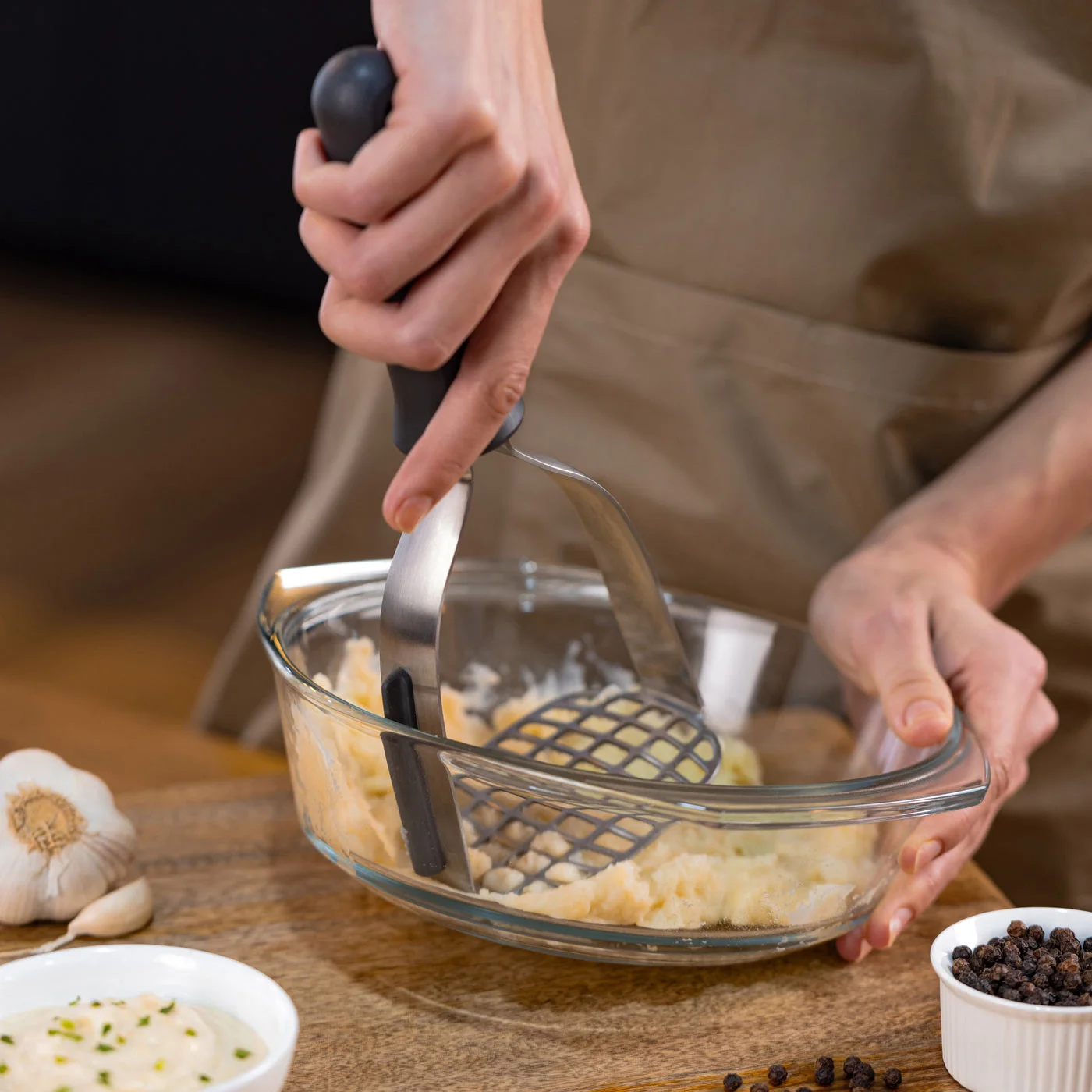
The scraper changes the last step
The flexible silicone edge collects mash from the side of the bowl or pot. That lets the same utensil handle pressing and gathering instead of reaching for a separate spatula. It is useful when those last spoonfuls are what normally stay behind.
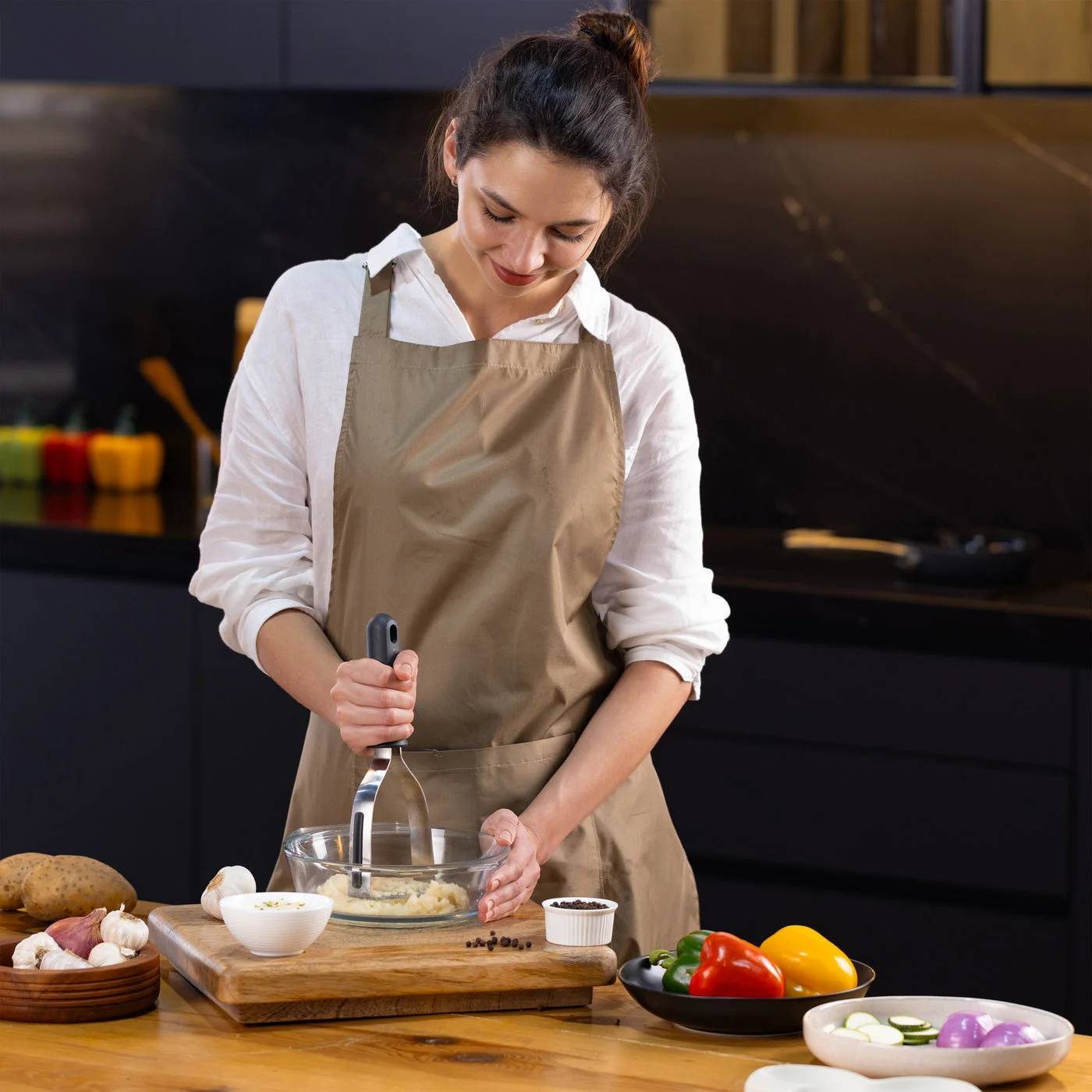
The steel head remains exposed, however. A silicone side does not make the whole tool suitable for every delicate non-stick coating. Check the cookware’s instructions, avoid scraping metal across vulnerable surfaces and use a separate bowl if necessary. Do not assume the pictured glass bowl makes every bowl equally suitable.
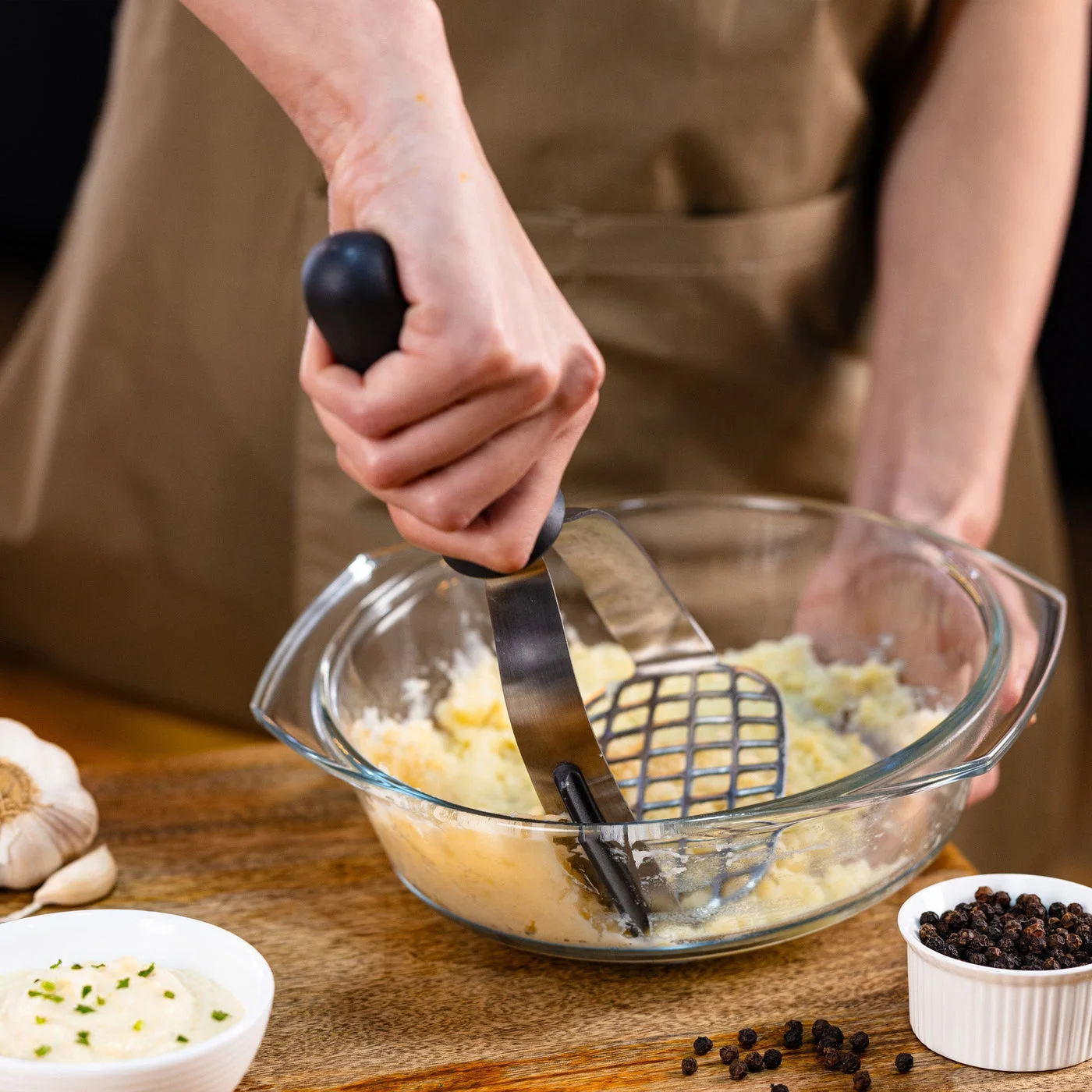
Check reach and storage together
The selected model is about25.4cm long, with a roughly10.4-by7.5cm head. That is a broad shape to accommodate in a utensil drawer. Check the opening and consider the hanging hole if you already use a rail; no storage hook is included.
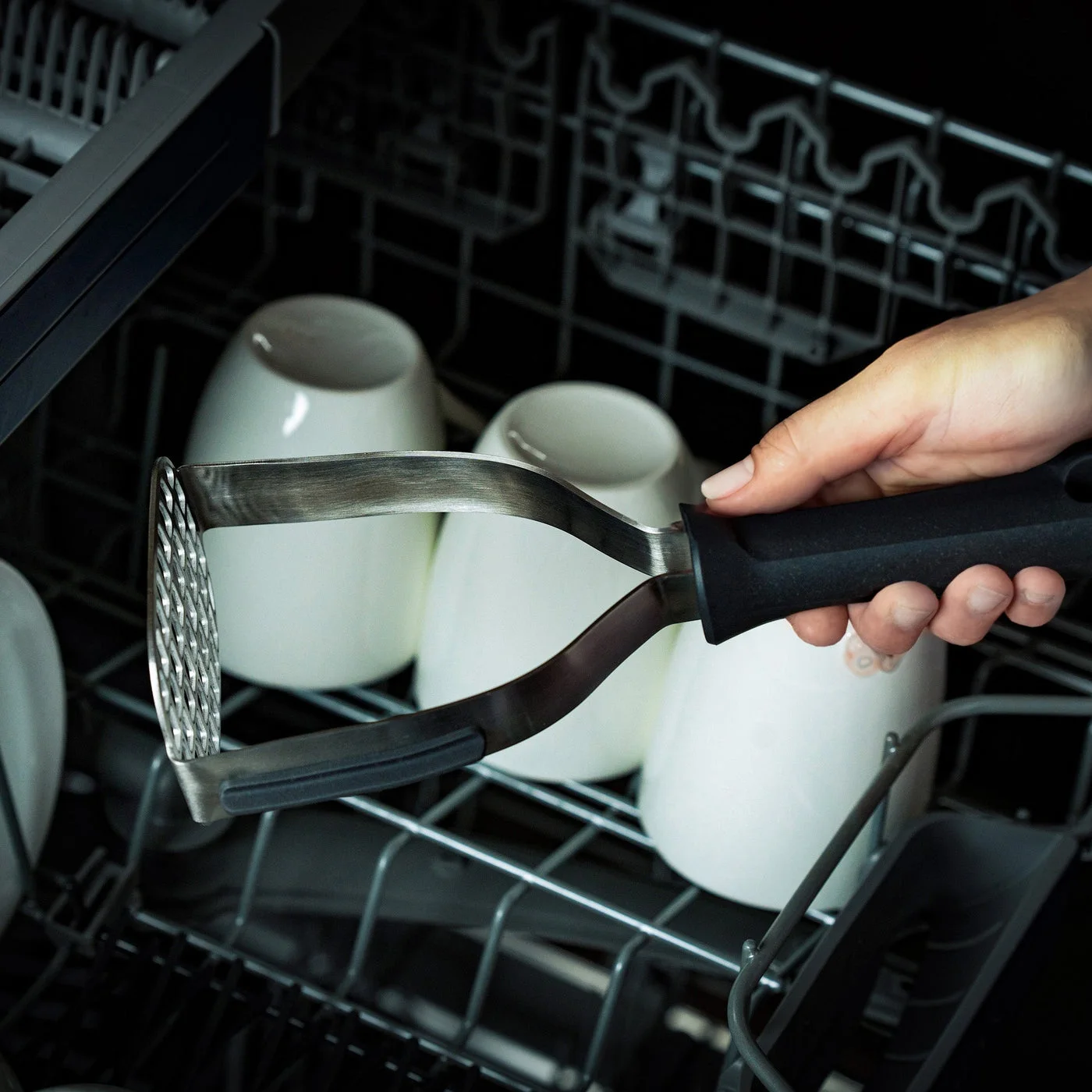
The maker lists dishwasher care, with handwashing recommended to prolong its life. Rinse trapped food before it dries, clean around both the grid and scraper, and dry before storage. The wheat-straw-plastic handle is a material choice, not evidence that this purchase has a smaller total environmental impact than keeping an existing masher.
Choose it when you regularly make textured mash and want an integrated gathering edge. Skip it when a current masher and spatula already work well or silky riced potatoes are the real goal. Food, boards and bowls in the photographs are separate props.