The Bellroy Slim Sleeve belongs on your shortlist if you want to reconsider what goes in your wallet, not simply squeeze the same contents into a smaller one. The most useful first step costs nothing: empty your current wallet and identify what you genuinely use.
This is a research-based buying guide rather than an ownership review. Bellroy supplied the product photography through its public press library. We have not measured this wallet’s loaded thickness or tested its leather, and our current retailer link does not earn commission.
Audit your wallet before choosing its replacement
Make three groups: items used most days, items needed occasionally and things that no longer belong there. Expired cards and old receipts should not influence the size of the next wallet. Necessary identification still needs a reliable home even if you seldom take it out.
Carry the reduced set in your existing wallet for several days. Notice what you miss and what you never touch. This is a more useful fit test than estimating the number of cards you think a minimalist routine ought to require.
Count physical thickness as well as the number of cards. Embossed cards, folded paper and receipts can behave differently from a neat stack of flat plastic. We have not established the usable capacity of the Slim Sleeve with your particular mix.
Think about access, not just a slim profile
Bellroy’s design article describes the Slim Sleeve’s pull-tab approach to card access. That gives you a feature to evaluate, not proof that it will suit every person. Think about how often you alternate between payment, transport and identification cards.
If you use one card almost everywhere, frequent access to the entire stack may matter less. If you switch cards repeatedly, study the product photographs and decide whether the arrangement is intuitive for your routine. Do not assume an attractive closed-wallet photograph tells you enough about opening and retrieving items.
Cash habits can change the answer
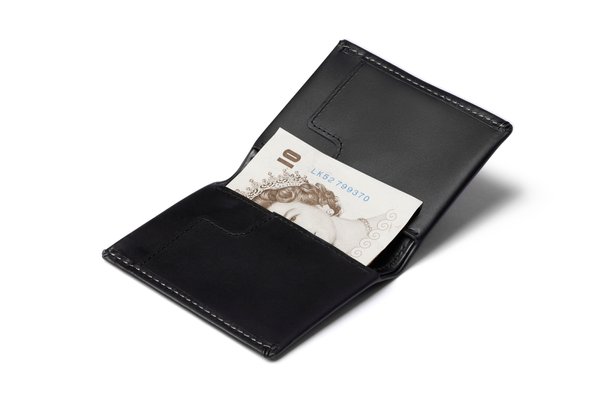
A compact wallet can be appealing for a card-first routine. Regular cash use introduces a different set of questions: where notes go, how they are folded and whether you can retrieve them without disturbing your cards.
Check the current listing against the currency you actually carry. Do the same for coins and receipts; do not assume storage exists simply because the product is called a wallet. A larger format can be the more practical choice if it avoids constantly rearranging the contents.
Consider the pocket you actually use
Take measurements of your current wallet and compare its shape with the selected model’s published dimensions. Think about the trousers, jacket or small bag in which it normally travels. An empty product photograph cannot tell you how a loaded wallet will feel in that space.
If comfort is the reason for changing, distinguish bulk caused by the wallet from bulk caused by its contents. Reducing redundant cards may solve the problem without replacing anything. Our buying-shortlist guide offers a way to keep these requirements separate from styling preferences.
Check the exact version before purchase
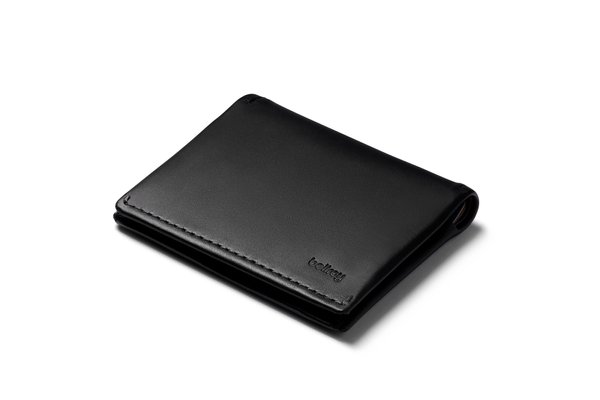
The official image shown here is a black Slim Sleeve. Bellroy has produced different materials and related wallet designs, so confirm the selected product rather than transferring specifications from another listing. In particular, do not assume RFID protection from the brand name alone.
We cannot judge long-term stretching, card retention or finish from press photography. Check current specifications, available options and return conditions at the retailer before ordering.
If your reduced daily carry suits this style, read our Slim Sleeve product notes for the ordinary purchase link. If you regularly need a large collection of cash, receipts and cards, prioritize a layout designed for those contents rather than slimness as an end in itself.