Imagine settling into a café with a laptop ready to go—then emptying half your bag to find the cable that actually fits. A pouch can put those loose pieces in one place. The more useful question is whether it makes the right piece easier to reach, or simply gives the tangle its own zipper.
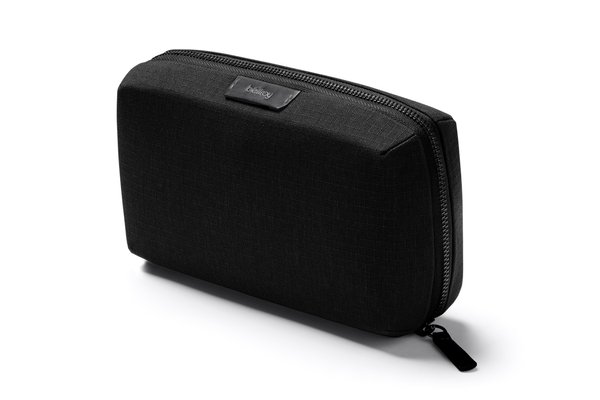
The Bellroy Tech Kit belongs on your shortlist if the same charging accessories regularly move between your desk, bag and destination. If you carry only a charger and a spare cable, start with a pouch you already own. Below, we look at the packing decisions that make a dedicated cable organizer useful—and the situations where it is one more thing to carry.
This is a research-based buying guide, not a hands-on review. The photographs are supplied through Bellroy’s official press library. We have not tested this pouch, and the ordinary purchase link currently earns us no commission.
Start with the journey, not the pouch
Put the tech you used during your last normal working day on a table. Separate equipment that stays plugged in at home from things that travel. A desk charger that never moves does not need to occupy space in your everyday bag.
Next, identify your recurring route. If you move between a home desk, office and train, carrying the same small set together may prevent repeated packing decisions. If everything already lives in one accessible bag pocket, a second container may just introduce another zipper to open.
Bellroy positions the Tech Kit as storage for small tech accessories. Our reason to shortlist it is the possibility of keeping a repeatable kit together—not a claim that it will improve productivity or fit every charger.
Check the largest awkward object first
A charging brick, a rigid plug or a mouse is usually a more demanding fit question than a coiled cable. Measure that item in the orientation in which you plan to pack it. Include protruding pins and any cable you leave attached.
On the retailer page, check the selected version’s measurements and interior photographs. Overall dimensions are not the same as usable compartment space. If a particular accessory must fit and no useful internal measurement is provided, ask the retailer before ordering.
Avoid buying to an imagined future setup. Start with today’s essentials and a small allowance for an occasional extra. Filling every available pocket can create a kit that looks organized but is unnecessarily heavy.
Access matters as much as capacity
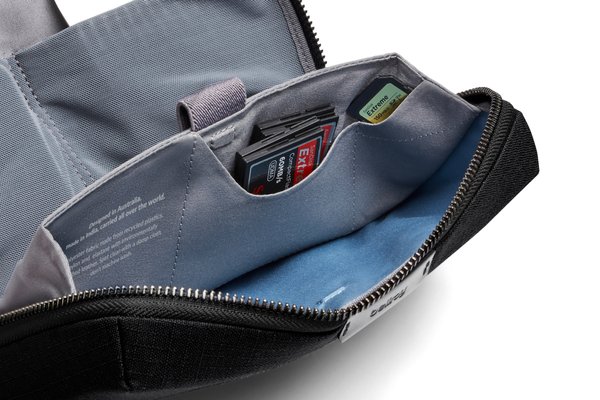
Think about the first thing you reach for when sitting down. It should be accessible without unpacking unrelated items. Then consider whether you normally have a desk on which to set the pouch or need to retrieve a cable while the bag stays on your shoulder.
These are different tasks. A layout that is convenient on a table may be less convenient in a cramped seat. Product photographs help you understand the layout, but they cannot establish how it feels with your own hands and equipment.
When a simpler pouch is the better purchase
If your entire carry is one charger and two cables, first try a pouch you already own. Use cable ties you have, remove redundant adapters and give the setup a week. The experiment reveals whether the problem is loose items, excess items or a poor bag layout.
Keep occasional spares separately. Our guide to storing spare cables explains the distinction between accessible everyday equipment and a home reserve. Do not carry the reserve just because it fits.
Is the Bellroy Tech Kit right for your everyday carry?
Check the current color, dimensions, delivery market and return conditions on Bellroy’s site. The photograph here shows a black Tech Kit; available options and prices can change. We do not have evidence for long-term zipper wear, loaded capacity or water protection and do not rate those qualities.
Picture packing tomorrow’s bag. If that means collecting the same charger, cables and adapters from several places, keeping a dedicated kit together could solve a real inconvenience. Our Bellroy Tech Kit product notes put the reference details and retailer link in one place so you can compare them with the equipment you actually carry.
If your existing bag pocket already does that job, keep it. The aim is to make your next departure easier, not to find another pocket to fill.