The annoying part of a travel wash kit often arrives before breakfast: the toothbrush is under a tube, the small item you need is somewhere at the bottom, and the sink ledge is already occupied. A bigger bag can carry more products. It cannot, by itself, make the routine less awkward.
The standard Bellroy Toiletry Kit is worth considering for a different reason: separating the things you use every morning without turning your wash kit into a miniature suitcase. Its most distinctive detail is a toothbrush sleeve with a magnetic closure. The useful question is whether that detail—and the surrounding layout—matches the way you actually get ready.
This guide covers the standard kit pictured here, not the Plus or the Hanging Toiletry Kit. It is based on product research and attributed photography, not our own stay in a hotel or a leak test. Our retailer link currently earns no commission.
Begin with one morning, not your entire bathroom
Pack the products you would use during a normal morning and evening away. Then put the occasional extras beside them rather than automatically adding them. The difference between those groups is often more important than the difference between two bags.
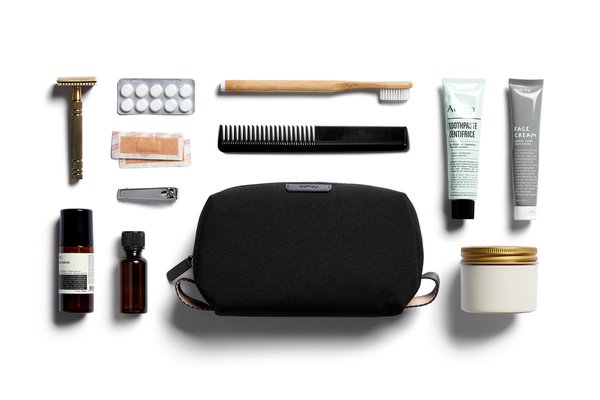
Give each item a reason to travel. A product used once during a long trip may deserve space; one included only because the bottle looks small may not. For prescriptions, specialist products or anything with specific storage instructions, keep the original guidance in view rather than treating repacking as an automatic improvement.
Next, identify the largest rigid item. It may be a deodorant, an electric toothbrush case or a particular bottle. That object sets a more meaningful fit requirement than the count of items in a promotional photograph. Check usable fit with the retailer if it is close; exterior measurements do not describe the space inside a curved pouch.
Our starting recommendation is a compact routine with some small loose items to organize. If you need several full-sized containers, a different size or format is likely to deserve attention first.
The toothbrush sleeve is useful only if your toothbrush belongs there
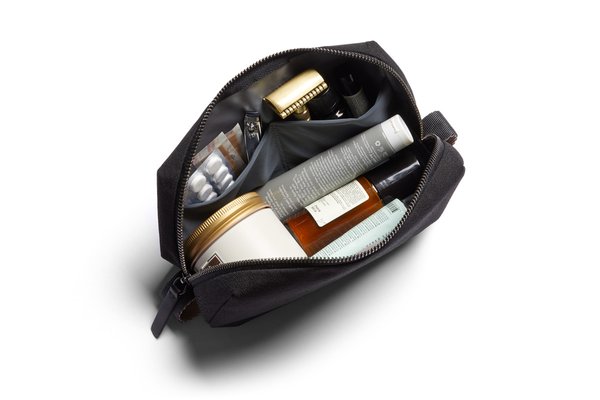
Bellroy’s standard-model feature list specifies a magnetic-closure toothbrush sleeve. In the press photograph, a manual toothbrush sits across that separate area. This gives a clear illustration of the intended organization, but not a universal fit promise.
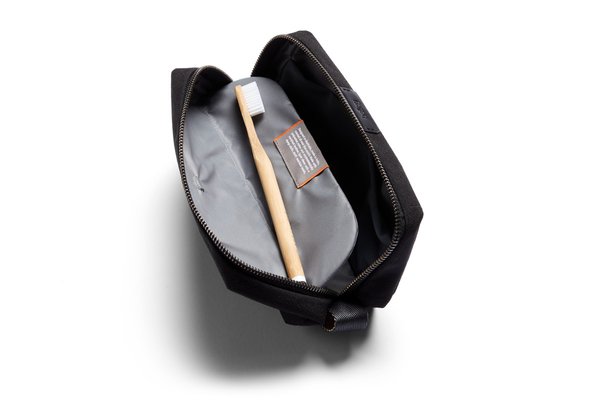
For a manual-brush traveler, the appeal is straightforward: one familiar place to look, separated from the main cluster of products. If you use an electric toothbrush in a rigid case, that feature may be less valuable. You would be buying the overall pouch, not necessarily getting the full benefit of its most distinctive detail.
Pack Hacker’s hands-on review found the separate sleeve useful and described leaving it open while a damp toothbrush dried. That is a reported experience with its sample, not a hygiene claim from Findweave. A fabric sleeve is not a sterilizer, and we have not tested drying time or cleanliness.
The broader lesson is to choose a bag around your equipment rather than changing a working daily routine to justify a pocket.
Mesh for the little things; open space for the awkward ones
The standard kit has internal mesh pockets and a flexible body. The pockets make sense for items that otherwise disappear among larger bottles. The central space gives you more freedom over the awkward shapes.
Try assigning items by sequence: what you reach for first, what you use together and what can remain untouched until the end. For example, keep a small grooming tool from migrating under a bottle, but do not divide a compact routine into so many sub-pouches that every step requires another zip.
There is also a practical limit to softness. A flexible pouch can adapt to neighboring items inside a travel bag, but the bottles themselves do not become flexible. If closing the wash kit requires forcing containers into an unstable arrangement, remove something or choose a different format rather than using the zipper to compress the load.
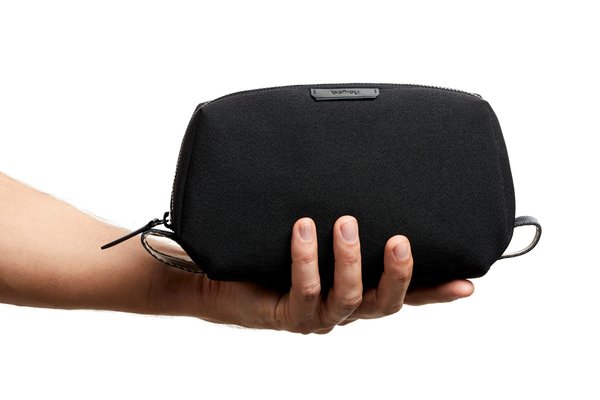
On a short trip, consider keeping the wash kit near the top of your overnight bag. It should come out as one item without exposing all your clothing on a bathroom floor. Our Lite Duffel guide explains a clothing-first packing routine, but you do not need a matching bag to use the same idea.
A wipe-clean lining is not a leakproof promise
Bellroy describes the lining as water-resistant and easy to wipe down. That is a cleaning feature worth distinguishing from containment. The photograph shows droplets on the lining; it does not tell us how the entire bag behaves when a cap loosens in transit.
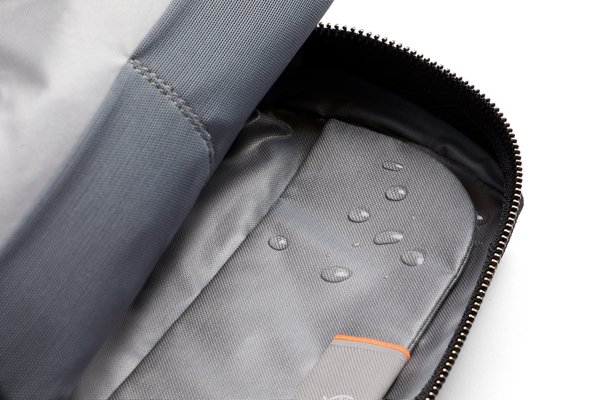
Close bottles carefully and give anything prone to leakage suitable separate containment. Do not rely on mesh dividers to stop spilled liquid moving through the kit. After use, inspect and clean the lining according to the manufacturer’s care guidance, and let damp items dry before prolonged storage.
For flights, treat liquids screening as a separate requirement: check the current instructions for your departure and transfer airports. An opaque toiletry organizer should not be assumed to replace any required transparent liquids bag. Keeping that bag accessible may matter more than fitting everything into one pouch.
A crowded sink may need a different kind of bag
There are two different problems that often get called “bathroom organization.” One is finding your things inside a pouch. The other is having nowhere to put the pouch once it is open.
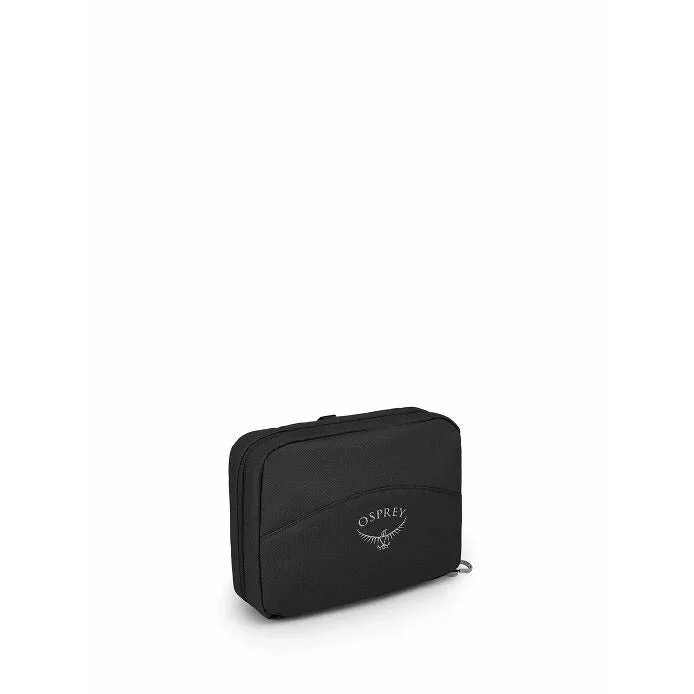
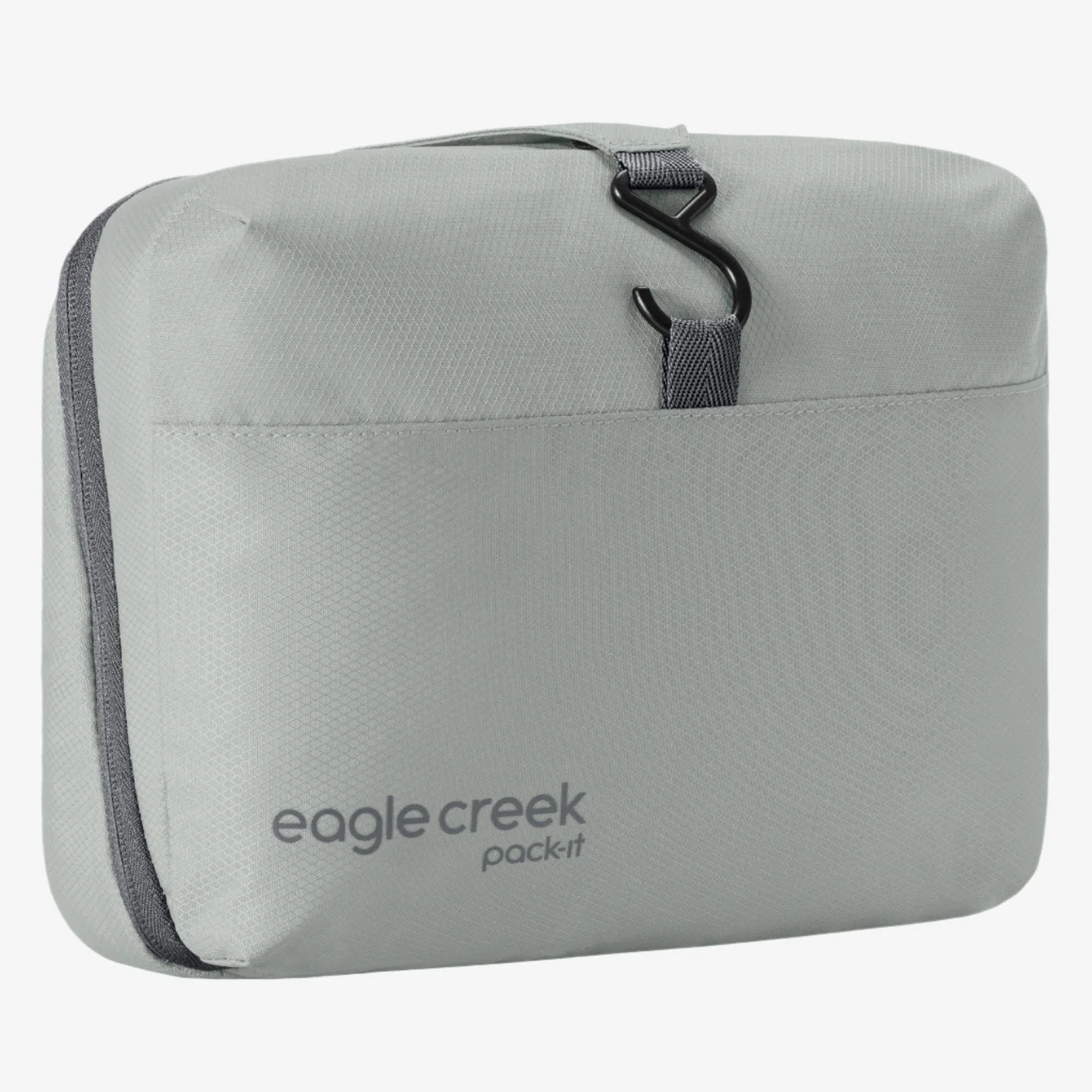
The standard Toiletry Kit addresses the first more directly. If you regularly use shared bathrooms, tiny sink ledges or facilities without a useful countertop, compare a purpose-built hanging organizer. Carry loops alone are not proof that a pouch will stay conveniently open with all its contents accessible while suspended. Pack Hacker also noted that belongings could shift when hanging its reviewed kit.
Conversely, a hanging organizer can be unnecessary bulk if you mostly stay somewhere with a dry counter and carry only a few products. A simple washable pouch you already own may then be the better-value answer. Do not pay for a new layout unless it improves a repeated part of your routine.
The no-shopping trial: use your current pouch for one morning
Place tomorrow’s routine in the pouch you already own. Keep it beside the sink and use only that kit the next morning. Note what you could not find, what you had to remove to reach something else and what never came out.
If small tools disappear among bottles, organization is the problem the Bellroy layout may address. If a large toothbrush case occupies most of the pouch, verify that object’s fit before paying for a separate sleeve you may not use. If there is nowhere dry to put an open pouch, investigate a hanging format instead.
Those are three different buying decisions. Extra pockets do not solve a lack of countertop space, and a bigger pouch does not automatically make a compact routine easier. The best outcome of the trial may be a shorter packing list and no new purchase.
Our recommendation: pay for a better routine, not more pockets
Shortlist the standard Toiletry Kit if you have a restrained set of travel products, want small-item organization and can use the separate toothbrush area. Compare something else if your priority is full-sized bottles, a large electric-brush case or hanging access in a cramped bathroom.
You can check the standard Toiletry Kit product notes and retailer link before deciding. Match the selected size and interior to the photographs; the same product family includes different layouts. The purchase should make tomorrow morning easier—not give you another reason to pack the whole bathroom.