Imagine packing for a Friday that ends somewhere other than home: work first, the gym afterward, then a train to a friend’s place. Your shoes need space. Your clean shirt needs protection from those shoes. Your keys need to stay findable when everything else comes out.
A duffel seems like the obvious answer—until one cavernous compartment turns into a pile of clothes. The Bellroy Lite Duffel takes a relatively simple approach: a wide-opening main space, smaller places for loose essentials and a detachable shoulder strap. The interesting question is not how much you can squeeze in. It is whether that arrangement suits the way your trip unfolds.
Our recommendation is strongest for clothing-first loads and short carrying stages. If the journey includes a lot of walking, or the most important thing inside is a laptop, we would start with a different bag format. This is research-based guidance; we have not carried or tested this duffel. The purchase link is currently non-commissioned.
Pack for the return journey, not just the departure photo
A neatly packed outbound bag hides the difficult part of a gym-and-weekend routine. After the first use, some items are damp, some are dirty and the clean clothes still have a job to do. Your storage needs change even though your bag does not.
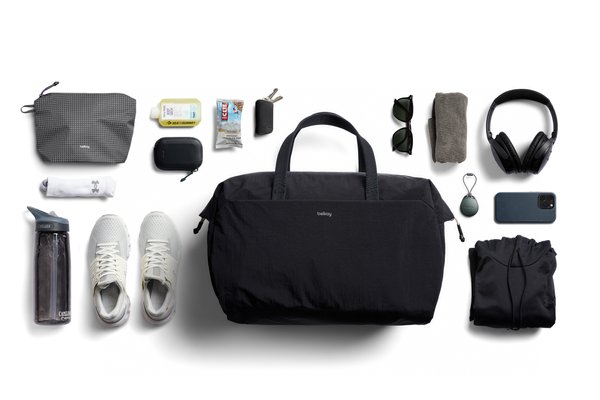
Plan three groups before choosing a bag: clean clothing, footwear or used clothing, and things needed while traveling. A lightweight shoe bag can stop soles rubbing directly against a shirt; a separate container for damp items serves a different purpose. Neither should become an excuse to leave wet clothing packed for longer than necessary.
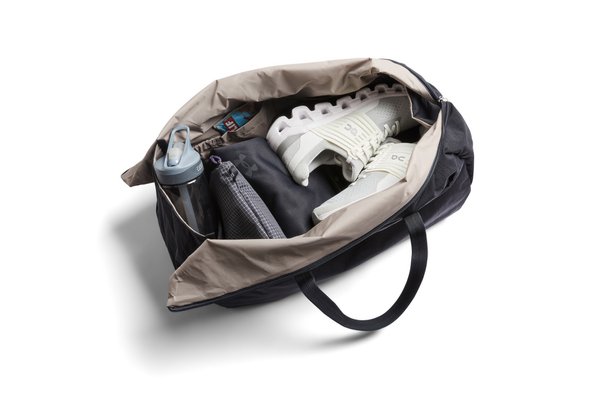
We would not infer a sealed shoe or wet compartment from the product photographs. In the illustrated layout, shoes occupy the main space. If a built-in separate shoe section is your reason for replacing your current gym bag, choose around that requirement rather than hoping an open duffel will behave like a compartmentalized one.
An ordinary tote or the duffel you already own may be sufficient if your routine is just a change of clothes and a towel. The case for this Bellroy is stronger when its opening and smaller pockets solve an access problem you actually notice.
The wide opening is the part to pay attention to
Bellroy describes a zipper that opens from both ends and a reinforced rim intended to help with zipping. The purpose is easy to see: the opening gives you a view across the main space instead of asking you to work through a narrow slot.
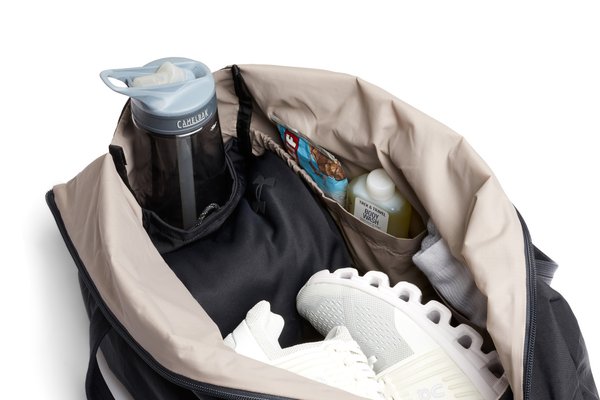
That makes this an interesting choice if you like to see your belongings at once. It does not mean you need to fill each pocket. Keep the items you will use first near the opening and avoid putting a small essential underneath the largest clothing bundle.
For the Friday scenario, the evening change belongs where you can reach it before unpacking the entire weekend. Your wash kit should lift out as one unit. A packing cube can make sense for clean clothes, but filling every gap with another organizer adds both weight and another opening step.
The standard Toiletry Kit guide examines that separate decision. A coordinated set is optional; a small pouch that already works is just as valid.
Keep the journey pocket separate from the destination gear
The external zip compartment includes a key clip and smaller slip pockets, according to Bellroy. That is the logical home for things you need while the main load stays packed. Think of it as a journey pocket rather than overflow space.
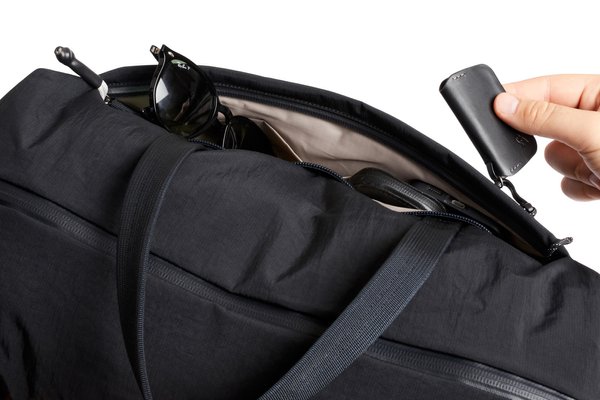
Decide which two or three items belong there before leaving. If you add receipts, snacks, loose cables and every object removed from your pockets, you have recreated the problem in a smaller space. Keep scratch-sensitive objects separate from exposed keys.
This is also where an existing bag deserves a fair comparison. If yours has an accessible pocket and the main opening works well, there may be little practical benefit in replacing it. A purchase should remove a recurring friction, not simply match a photograph.
Short transfers and long walks are different buying decisions
Bellroy provides hand-carry handles and an adjustable, removable padded shoulder strap. Switching between those options could be useful for moving from car to room or station to taxi. It does not establish comfort during an hour-long walk.
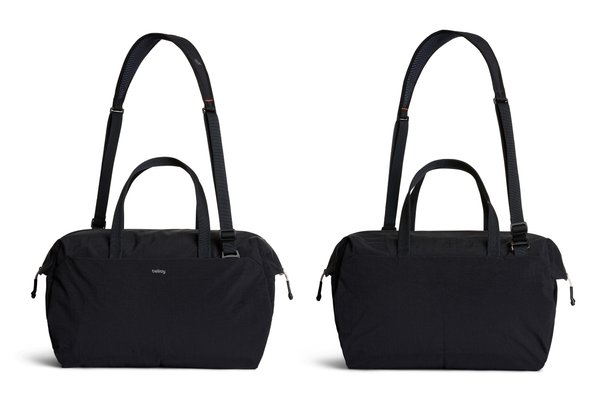
Write down the longest uninterrupted carrying stage of your usual trip. Five minutes from a parking space and forty minutes across a city are different requirements. If you can try the bag, use a representative load and walk, turn, climb a few steps and put it down. A comfortable empty-bag try-on does not answer the same question.
For trips with substantial walking, our default comparison would be a two-strap travel backpack. For heavy loads over suitable surfaces, wheeled luggage may be worth the added bulk. Neither is universally better; the route decides.
The limits that matter more than a feature list
Electronics need their own decision. Do not assume a soft clothing bag provides the structure or impact protection your laptop or camera requires. If protective cases and sleeves become the largest part of the packing plan, reconsider the bag category.
Weather resistance is not a dry-bag guarantee. Bellroy describes a water-resistant zipper. We have not performed a rain or leakage test, and we would not use that wording to promise protection during sustained exposure.
A flexible bag still occupies real space when full. Before flying or fitting it into a locker, compare the selected version’s dimensions—and your packed shape—with the actual allowance. We do not label it universally cabin-approved.
The purchase price is only justified by use. Compare the current delivered cost with keeping your present bag and adding one simple organizer. No discount is needed to make a good recommendation, and no discount fixes the wrong carry format.
Try the Thursday-night packing test
Before replacing a bag, set out one realistic weekend: the clothes you will change into, the shoes you will take off, your wash kit and the few things needed on the journey. Do not judge the bag using a perfectly folded departure load alone.
Repeat the exercise as if you were coming home. Move the used clothing into a separate bag, put the shoes where they will not touch a clean shirt, and leave your keys accessible. If this second arrangement requires another large bag, the issue is your separation plan—not necessarily a shortage of liters.
Finally, consider the longest carry rather than the shortest one. A car-to-room trip favors a different bag from a walk across town. If your current duffel already passes both the return-packing and carry tests, keeping it is a credible alternative to this purchase.
When the Lite Duffel earns a place
We would shortlist it for someone who wants an uncomplicated, flexible clothing bag, values a broad view of the contents, and usually carries it in relatively short stages. We would pass if separate wet storage, dedicated electronics protection or long-walk comfort is the central requirement.
If the first description sounds familiar, the Lite Duffel product page brings together the key considerations and a direct retailer link. Before buying, do the return-trip packing exercise once. A bag that works after the gym is more useful than a bag that only looks organized before you leave.