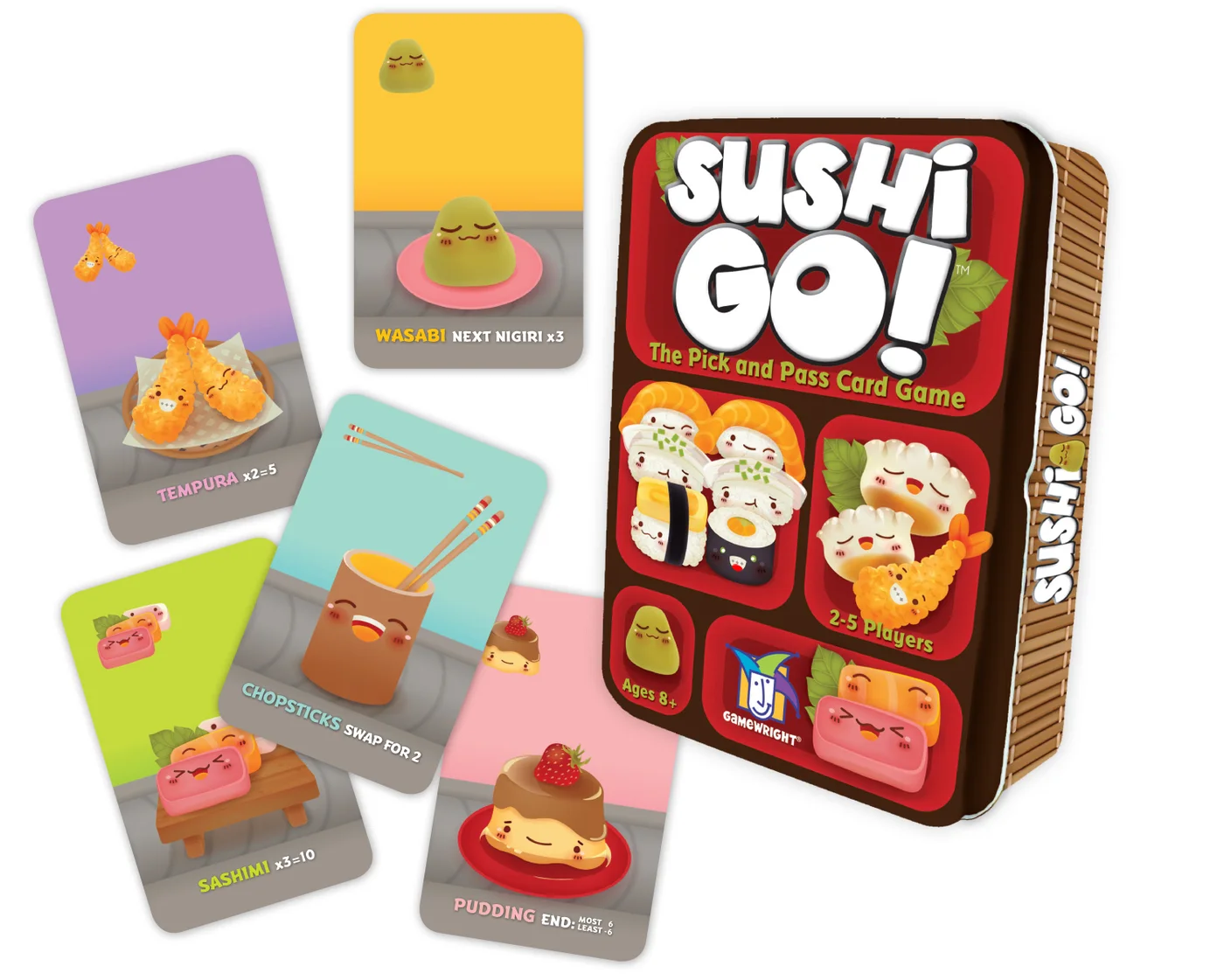
Keep the sashimi card, take the tempura, or claim a pudding for later? Sushi Go turns those tiny decisions into a quick shared meal of a game. Its friendly food illustrations make it inviting, while passing the rest of your hand gives every choice a consequence for the next player.
Pick one then pass the possibilities
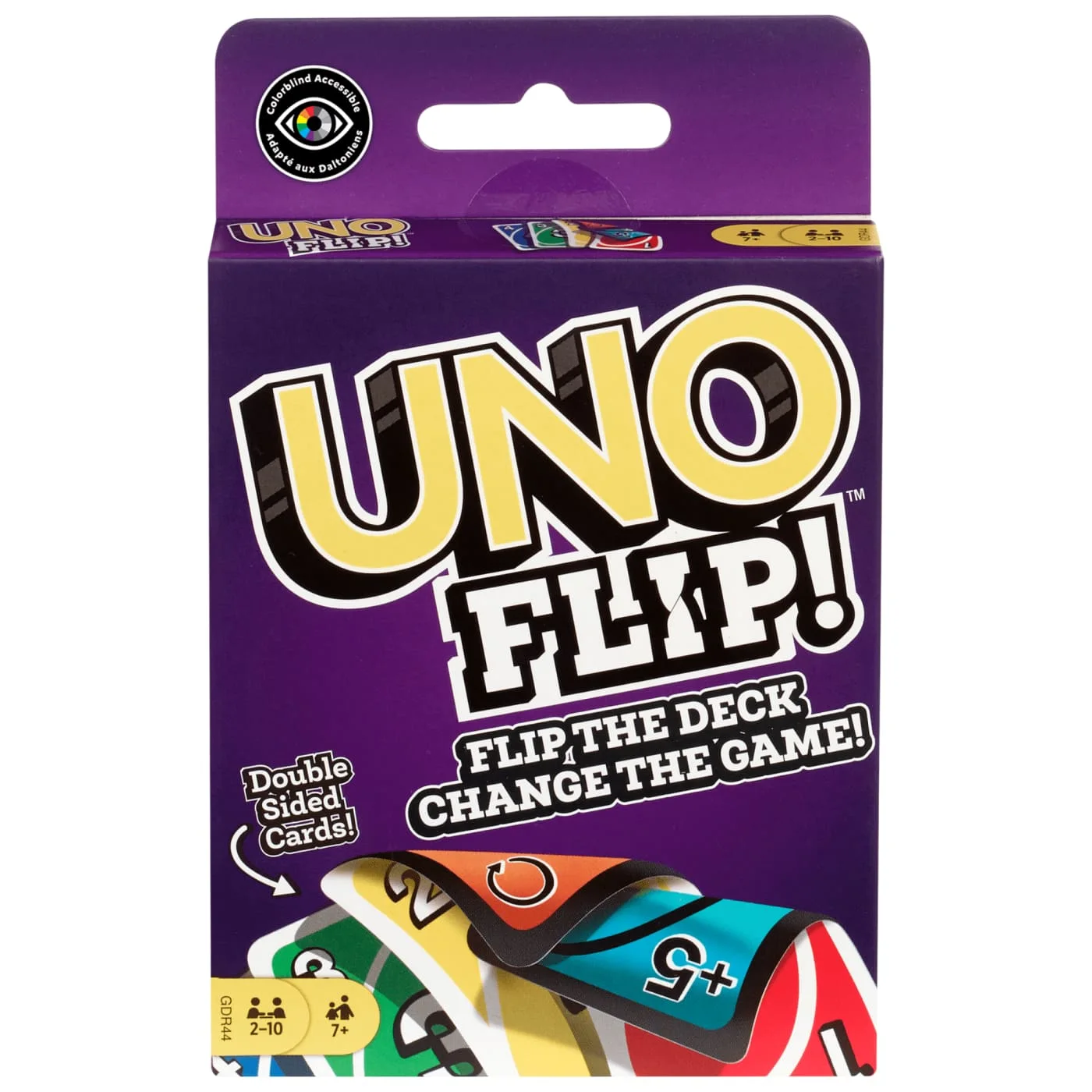
Players choose a card from a hand and pass the remaining cards along. You are building scoring combinations, not trying to discard your hand first. That difference matters if you are buying it as an alternative to UNO.
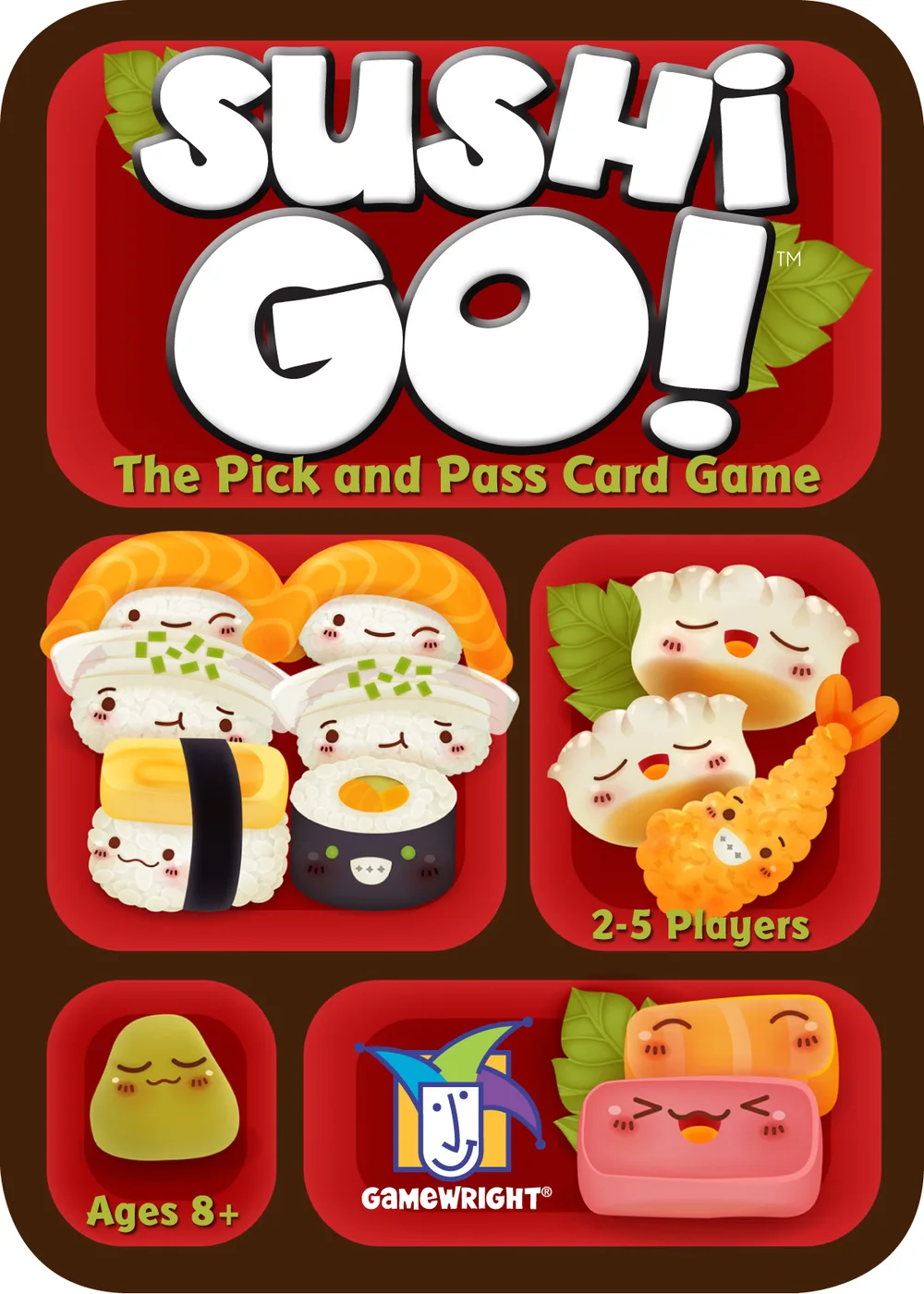
Some dishes reward sets, while others score differently; the included scoring reference deserves a minute before play. You also watch what nearby players collect. Taking a useful card can strengthen your meal and leave someone else with a different decision, without needing a dramatic attack card.
The cute deck still needs attention
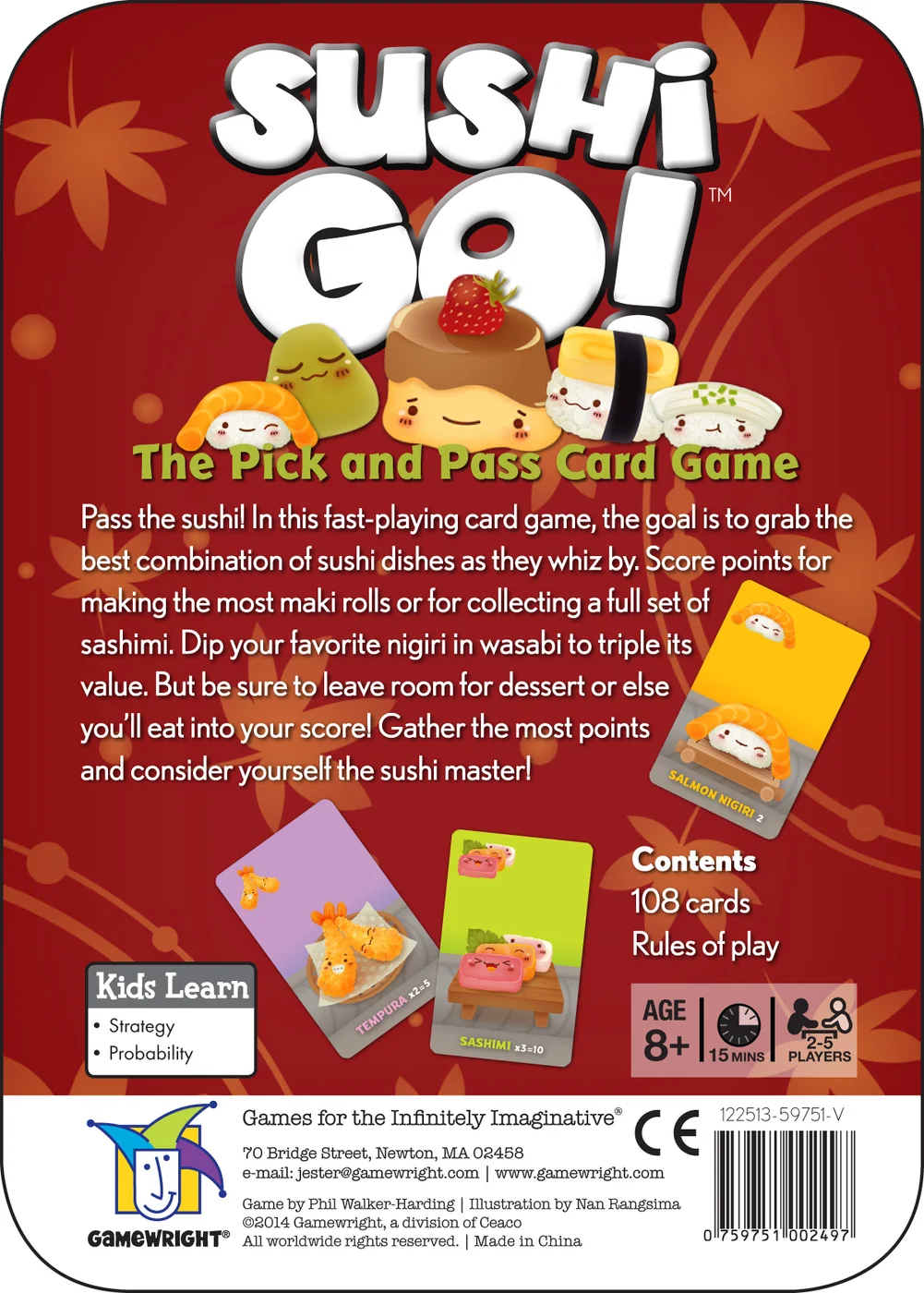
The original Gamewright set has 108 cards, with guidance of ages eight and up, two to five players and approximately 15 minutes. Treat that duration as an estimate: a first game includes learning and scoring, especially when people are still checking how the dishes work.
Pudding is a reason to think beyond the immediate round. Keep the relevant cards and score them at the correct point in the game, rather than clearing everything away together. A practice selection with the cards visible can make the drafting mechanism easier to understand.
Original is the compact starting point
This is Sushi Go, not the larger Sushi Go Party set with a customisable menu and additional components. The original is worth choosing when you want a compact introduction and your usual group fits within five players. Choose a different edition if larger gatherings or changing the menu are the priority.
It suits a table that enjoys light decisions together. It is not a reflex game, an elimination contest or a promise that cute artwork removes the need to learn scoring.