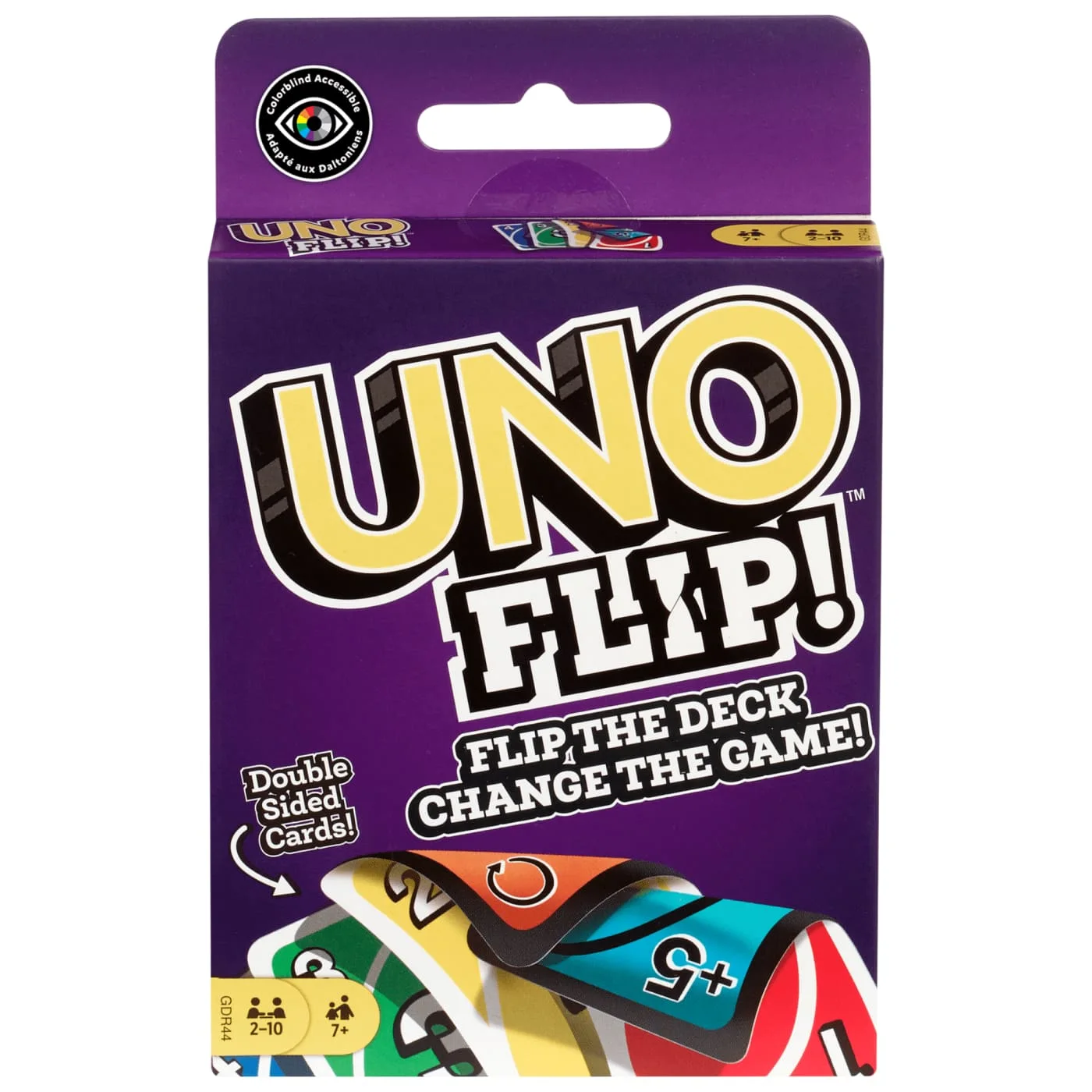
You have nearly arranged the perfect UNO hand—and someone plays a Flip card. Now everyone turns their cards over, and your tidy plan has a different set of colours and penalties. That shared surprise is the appeal of UNO Flip, not just a purple box around the original game.
Two faces change what you are planning
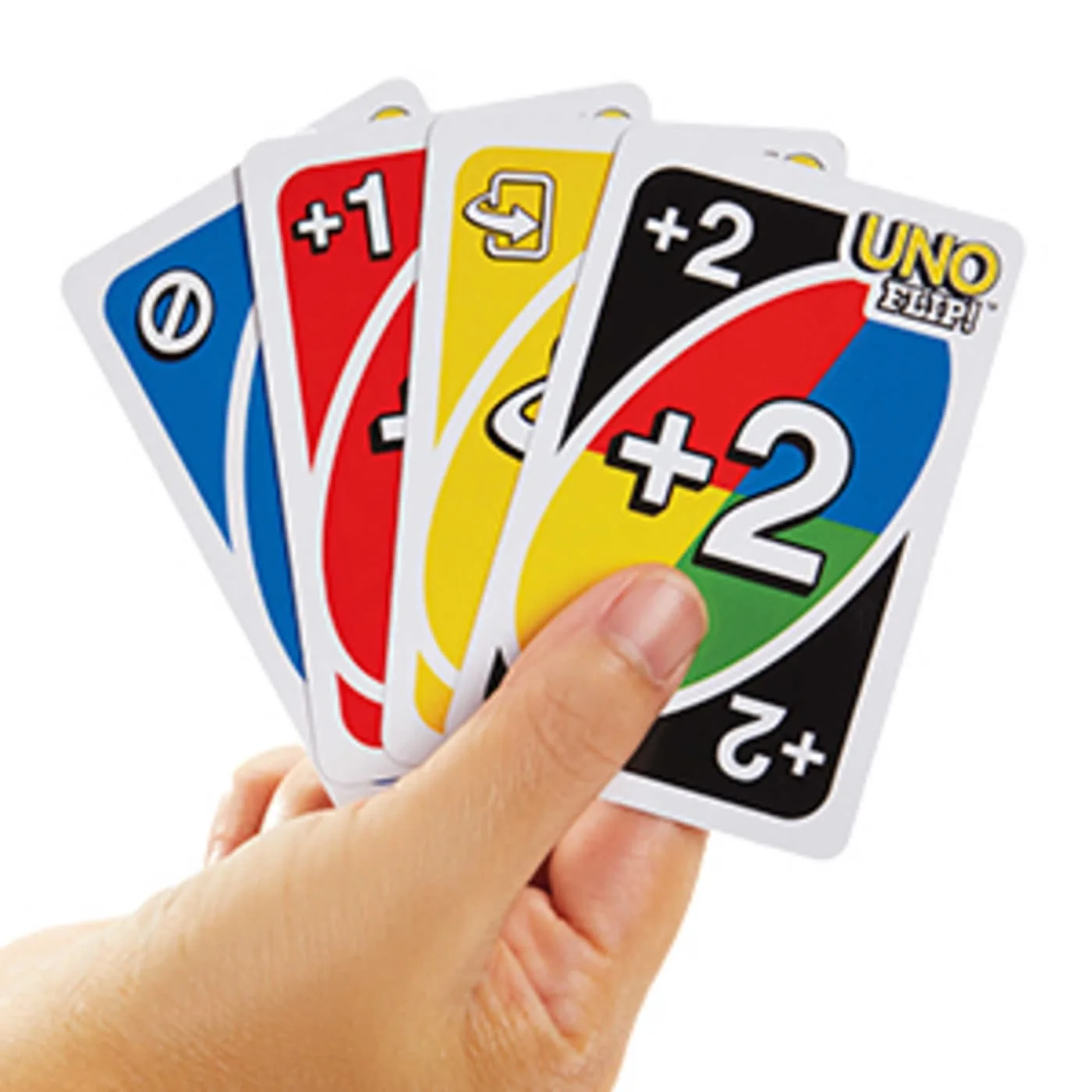
The double-sided deck moves between a lighter side and a tougher dark side. The switch applies to everyone’s hands and the table piles, so it is more disruptive than reversing the direction of play. Dark-side actions include Draw Five and Skip Everyone.
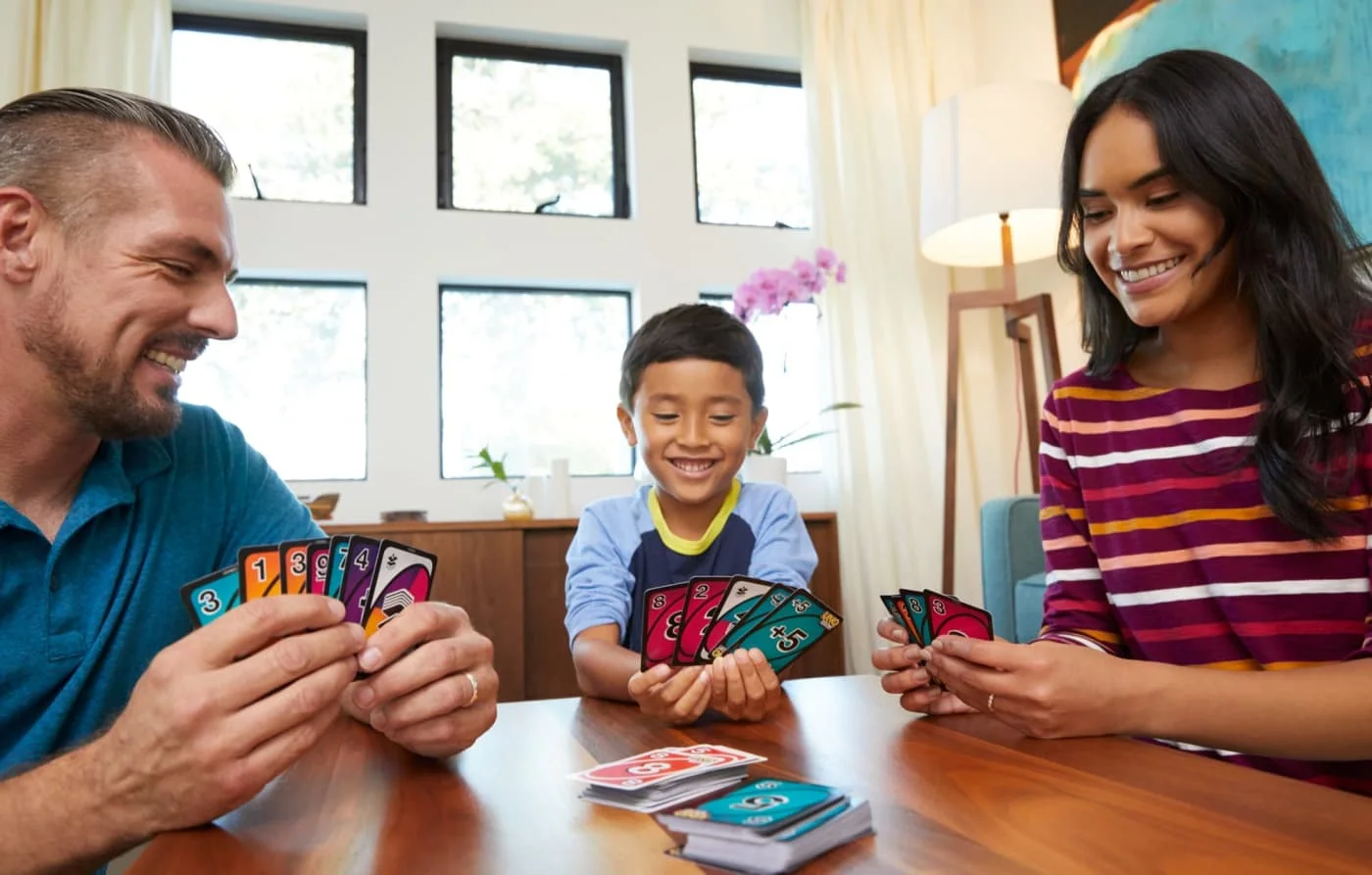
That makes a small group more interactive, but also less predictable. Choose it if the table enjoys a sudden reversal. Someone who mainly likes classic UNO because it feels gentle and familiar may prefer the original rather than stronger penalties.
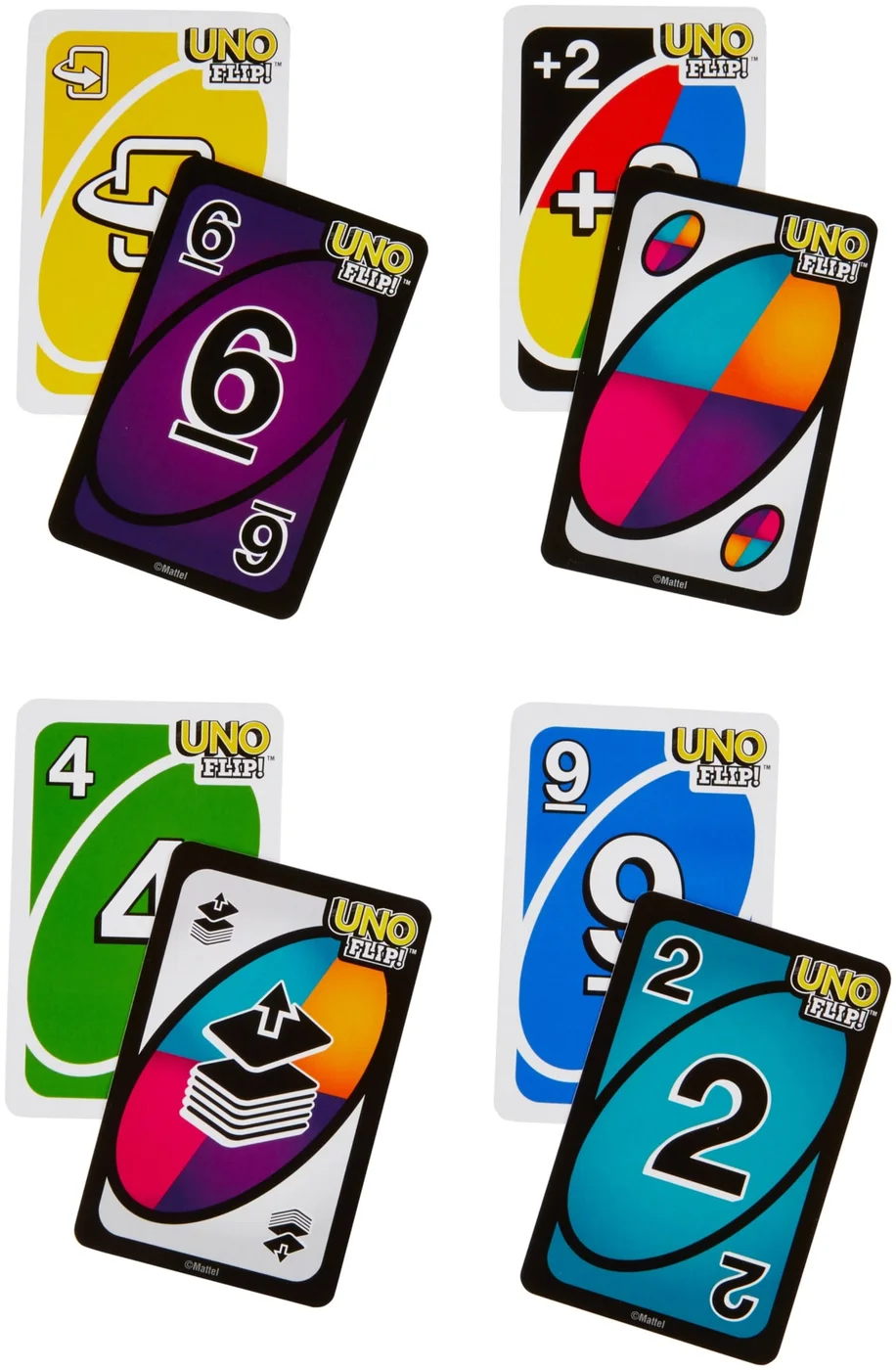
Familiar does not mean identical rules
Read the included Flip instructions together. Classic UNO house rules about drawing, stacking or ending a round should not silently become the rules of this edition. A brief demonstration of changing sides makes more sense than explaining only after the first dispute.
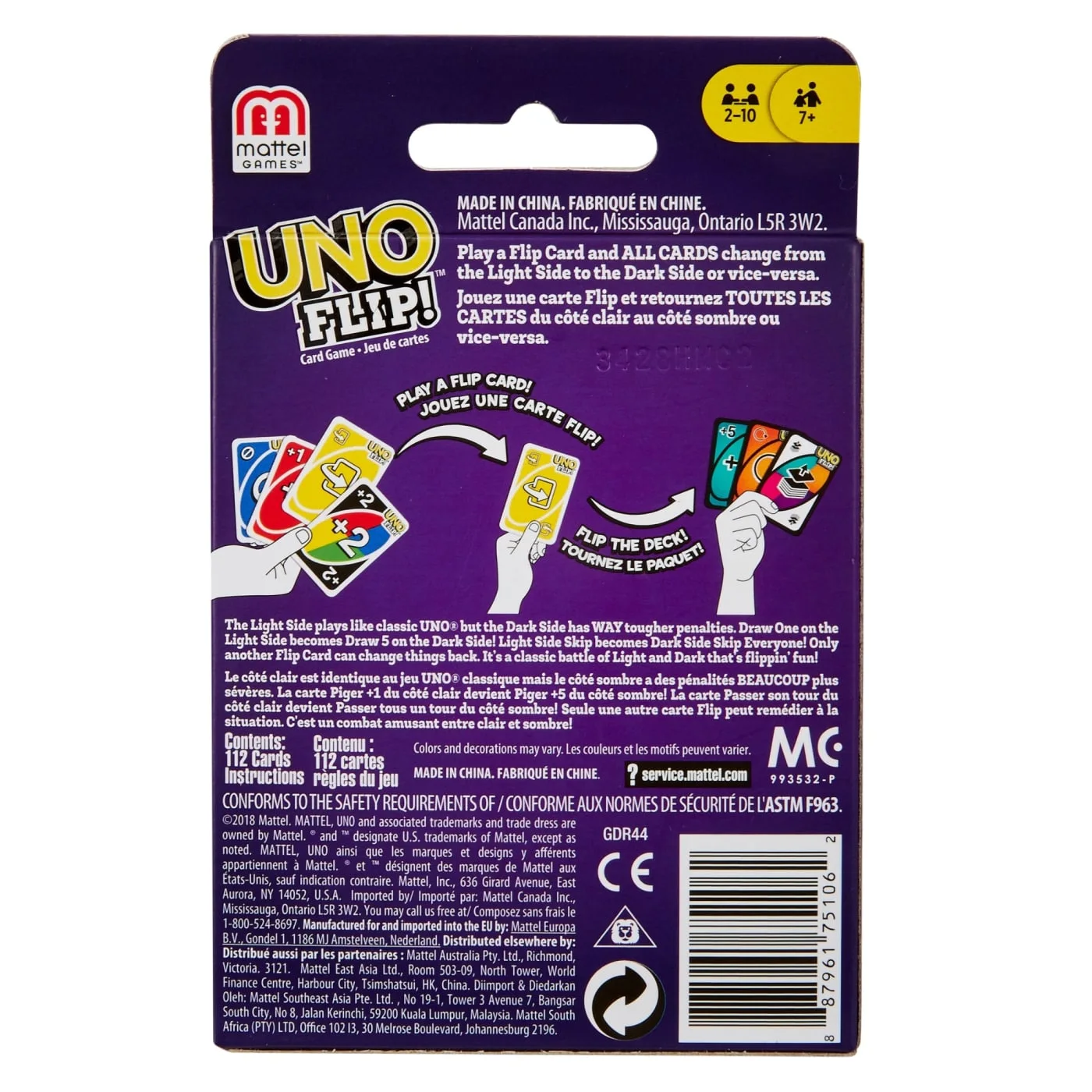
Mattel recommends ages seven and up and two to ten players. With a bigger group, allow space for everyone to turn and hold the double-sided cards without revealing an entire hand by accident. The current maker deck uses graphic symbols for colour identification; check the actual seller’s release when accessibility is a priority.
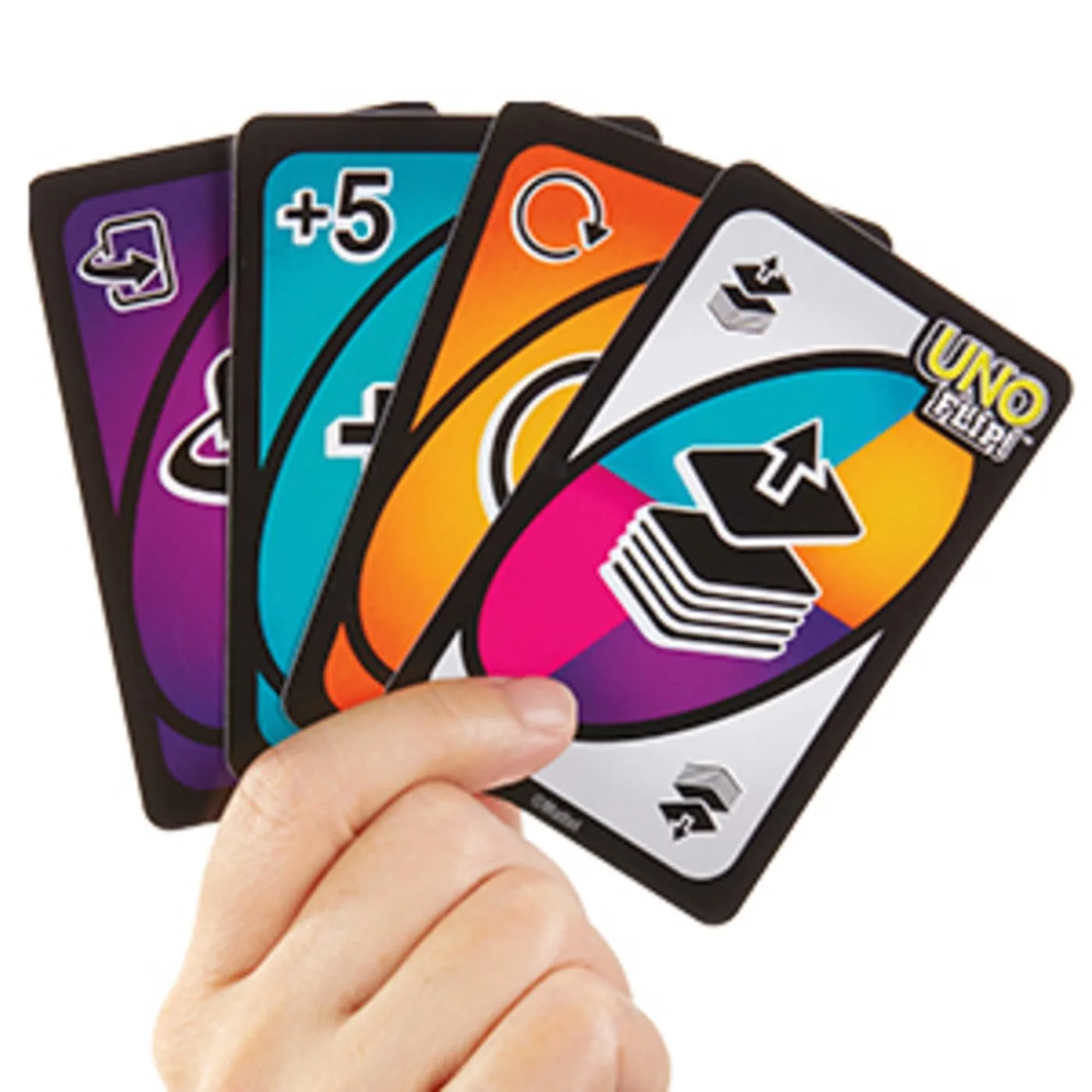
Buy the deck you mean to buy
The selected GDR44 is the standard 112-card game, not UNO Flip Attack with a launcher. Maker wording sometimes mentions tin packaging, but do not assume a tin comes with this standard listing. Confirm the box contents before treating it as a travel gift.
Choose Flip when you want an easy-to-recognise game with a more surprising middle. You still shout UNO when one card remains; everything before that can change in a single turn.