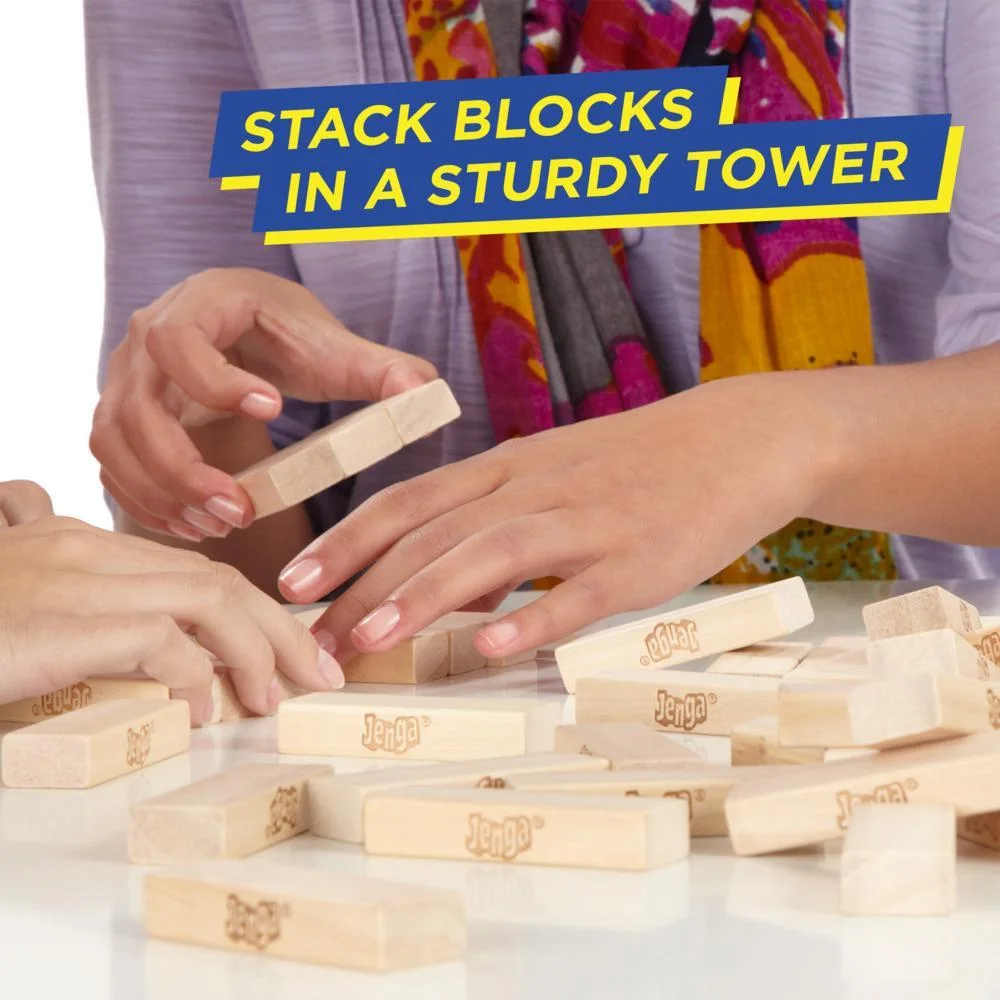
The conversation pauses. Someone has found a loose-looking block, but the tower leans when they touch it. That little moment is Jenga Classic’s appeal: one person’s turn becomes something everyone can follow, without learning a hand of cards or studying a board.
What earns its place on the table
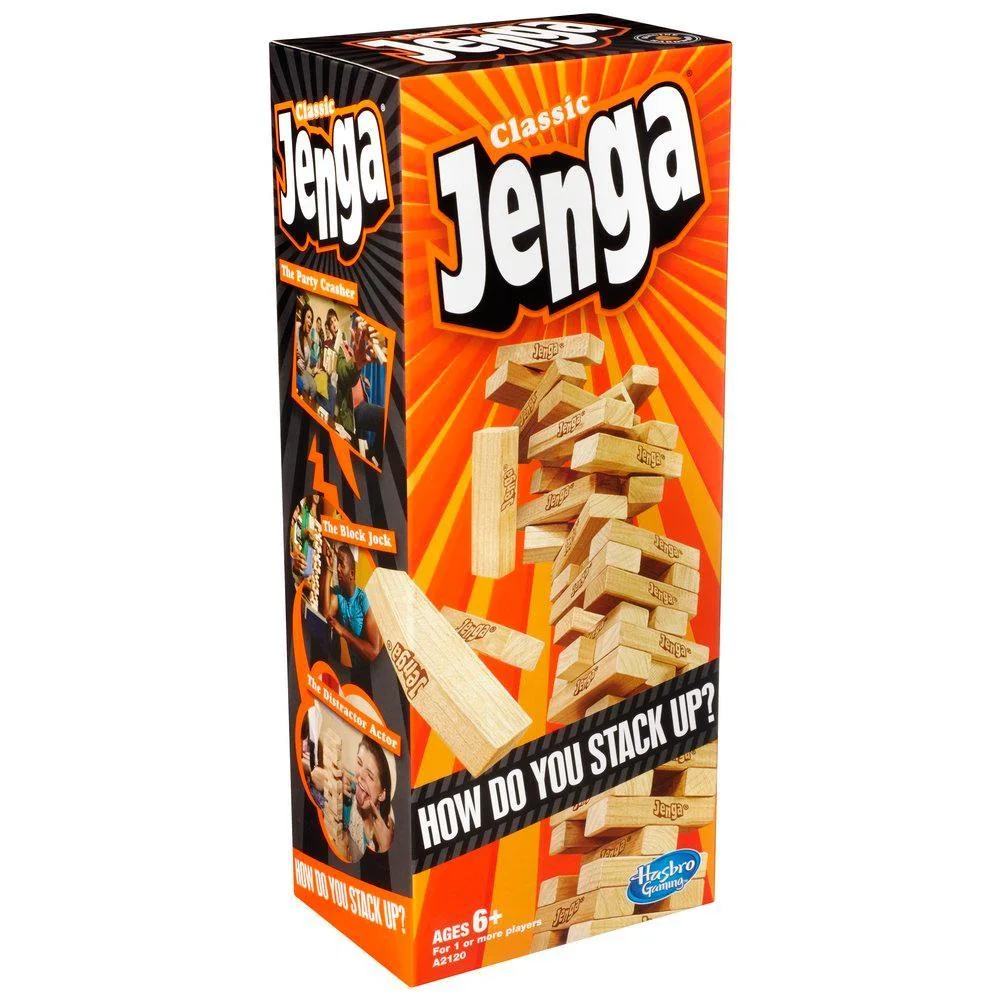
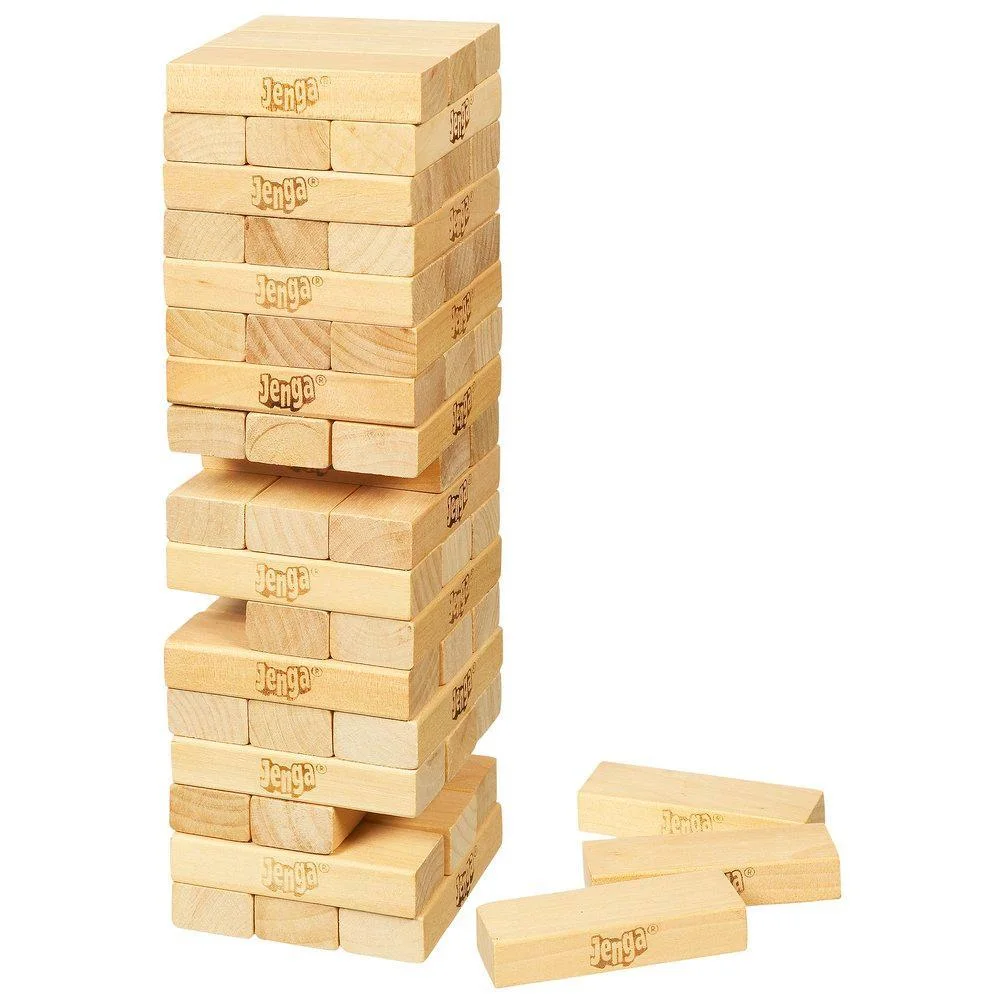
This is the original-sized Hasbro A2120 game, with 54 hardwood blocks and a stacking sleeve. Players remove a block and add it to the top, making the structure less forgiving as the game continues. There are no batteries, app downloads or scores to keep. Hasbro lists it for ages six and up and for one or more players.
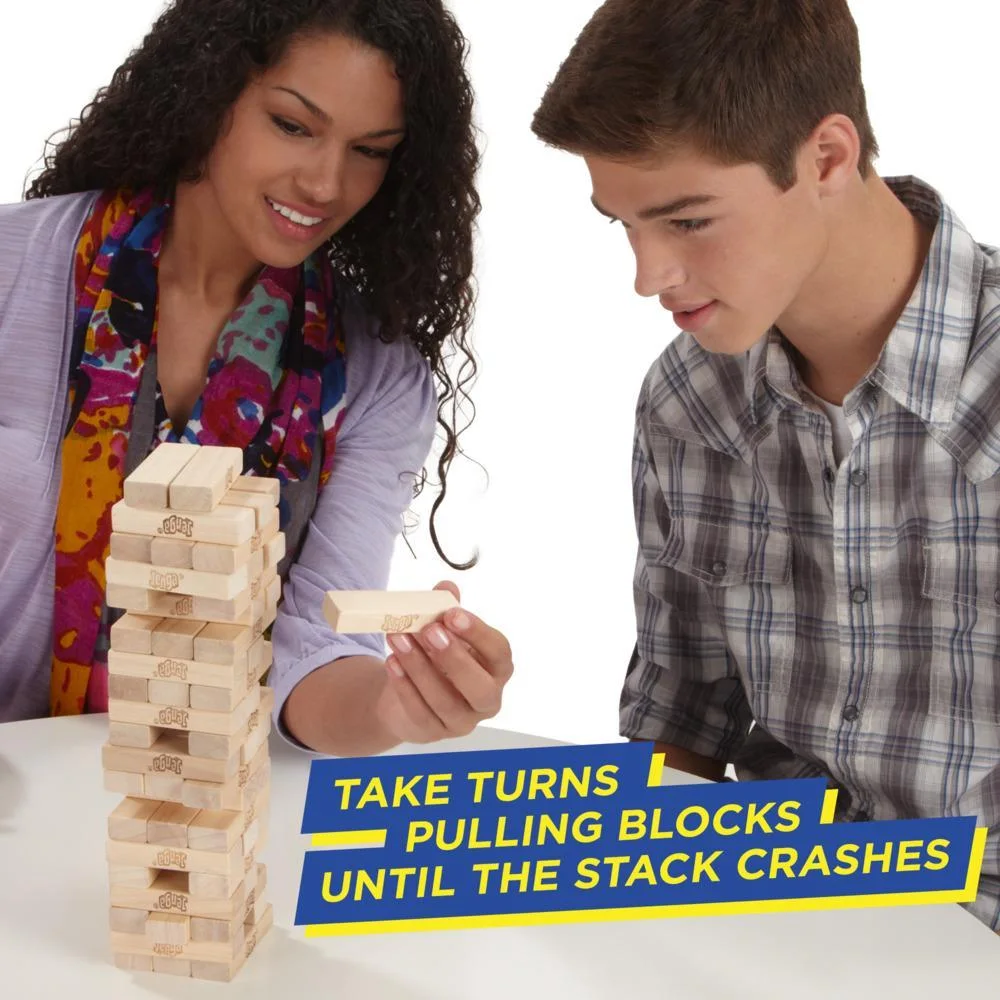
The advantage over a complicated party game is visible participation. A newcomer can understand the aim by watching a turn. The attraction is anticipation rather than a guaranteed funny outcome; some groups will enjoy that shared silence more than others.
Set up the evening, not just the tower
Choose a firm, level surface with room around it. A wobbly picnic table changes the challenge, and a crowded drinks table puts glasses in the landing zone. Clear those first. Leave enough room for players to approach different sides rather than making everyone lean across the same place.
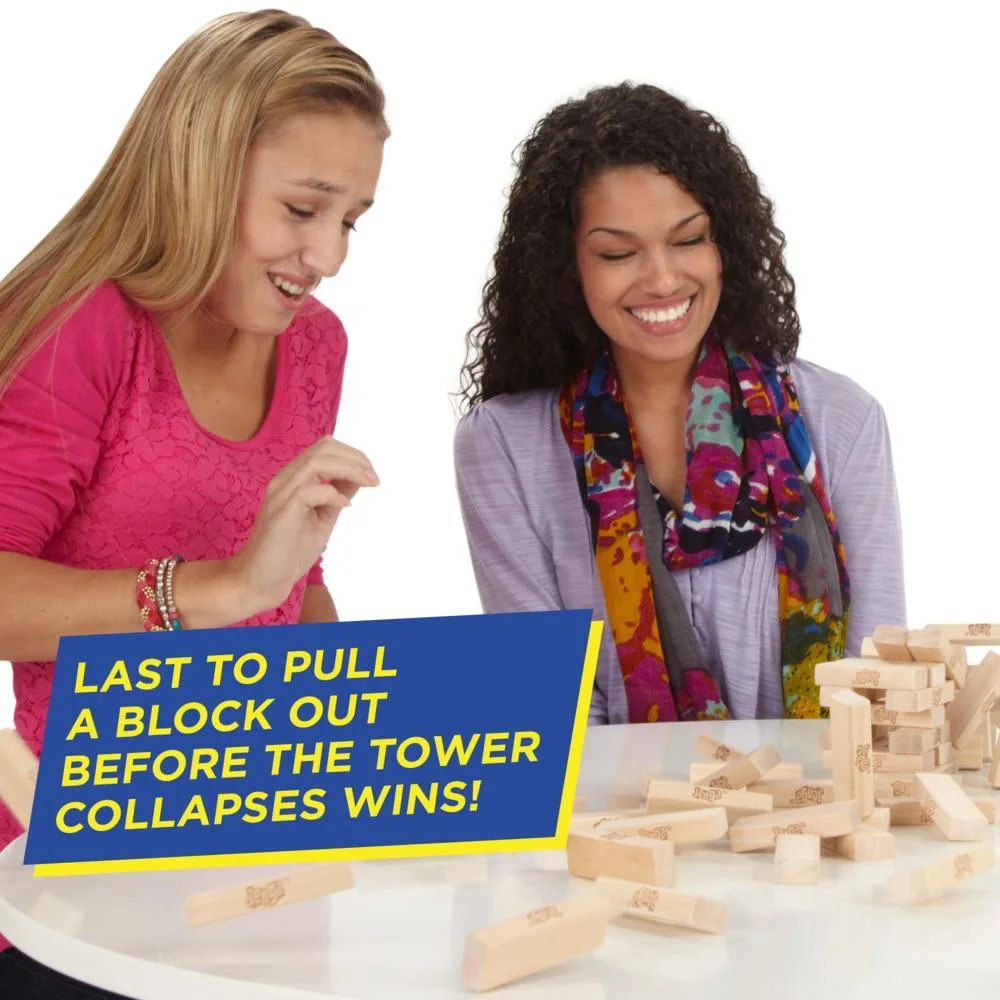
The sleeve helps rebuild the starting stack, but rebuilding and collecting fallen blocks are still part of each round. If repeated resets frustrate your group, a card game is a more continuous choice. Store all the blocks together rather than leaving the tower standing where children or pets can knock it down.
Is Classic the right version?
Do not confuse this compact tabletop set with Jenga Giant. Choose Classic for a shelf-friendly family game or a small gathering; choose a suitably sized outdoor edition only if large-scale play is what you actually want. Buy it for the shared suspense, not for deep strategy. Check the selected listing includes the hardwood-block Classic game and sleeve, rather than a miniature, themed or imitation tower.