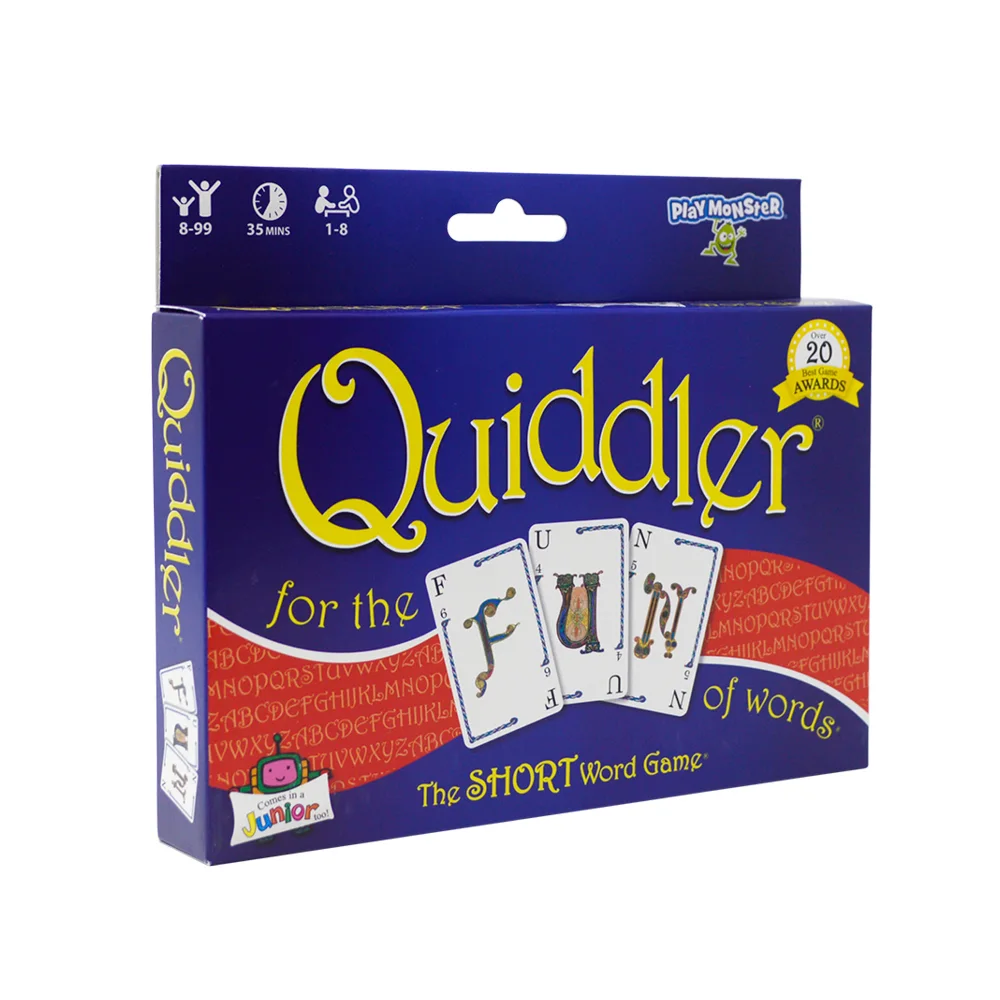
You do not need a sprawling board to enjoy the feeling of finding a word nobody else noticed. Quiddler deals the puzzle into your hand: a few letter cards, a draw pile and the question of whether to settle for several small words or pursue something longer.
The hand gets bigger as the evening goes on
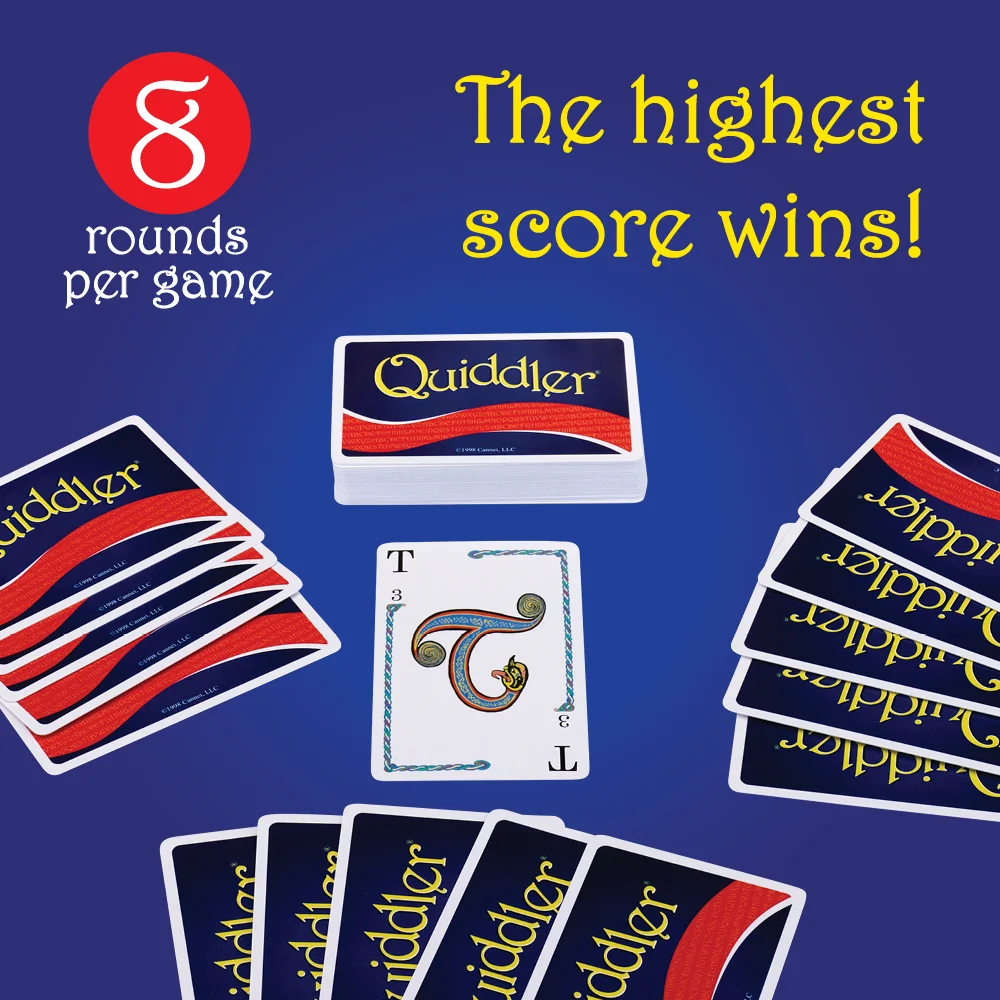
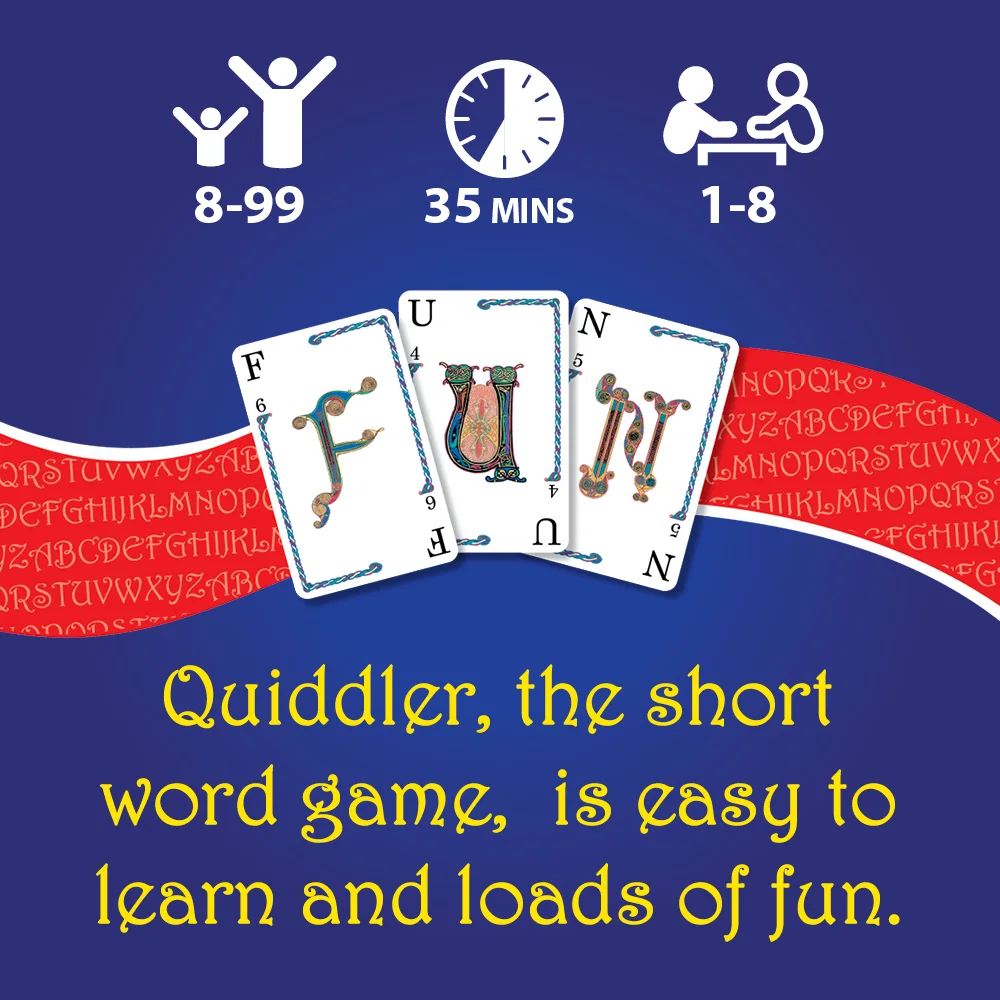
The original 5000 box contains 118 cards and rules. A full game runs eight rounds, starting with three cards and ending with ten. Letter cards have point values, and special double-letter cards add combinations such as QU and TH. High score wins, but valuable letters still in an unfinished hand can hurt rather than help.
There are bonuses for the most words and the longest word. That means a short, ordinary word can belong to a useful strategy; this is not simply a spelling contest won by whoever knows the longest vocabulary. Still, it would be misleading to call the game equally easy for every English speaker. Vocabulary familiarity and confidence arranging letters affect the experience.
Agree on the dictionary before the first deal
The publisher’s rules ask players to choose their dictionaries in advance. Proper nouns, abbreviations and several other word types are excluded. Each word must use at least two cards, which is not identical to merely containing two letters when double-letter cards are involved. A minute spent agreeing on allowable words prevents the table from turning into an argument about a convenient new definition.
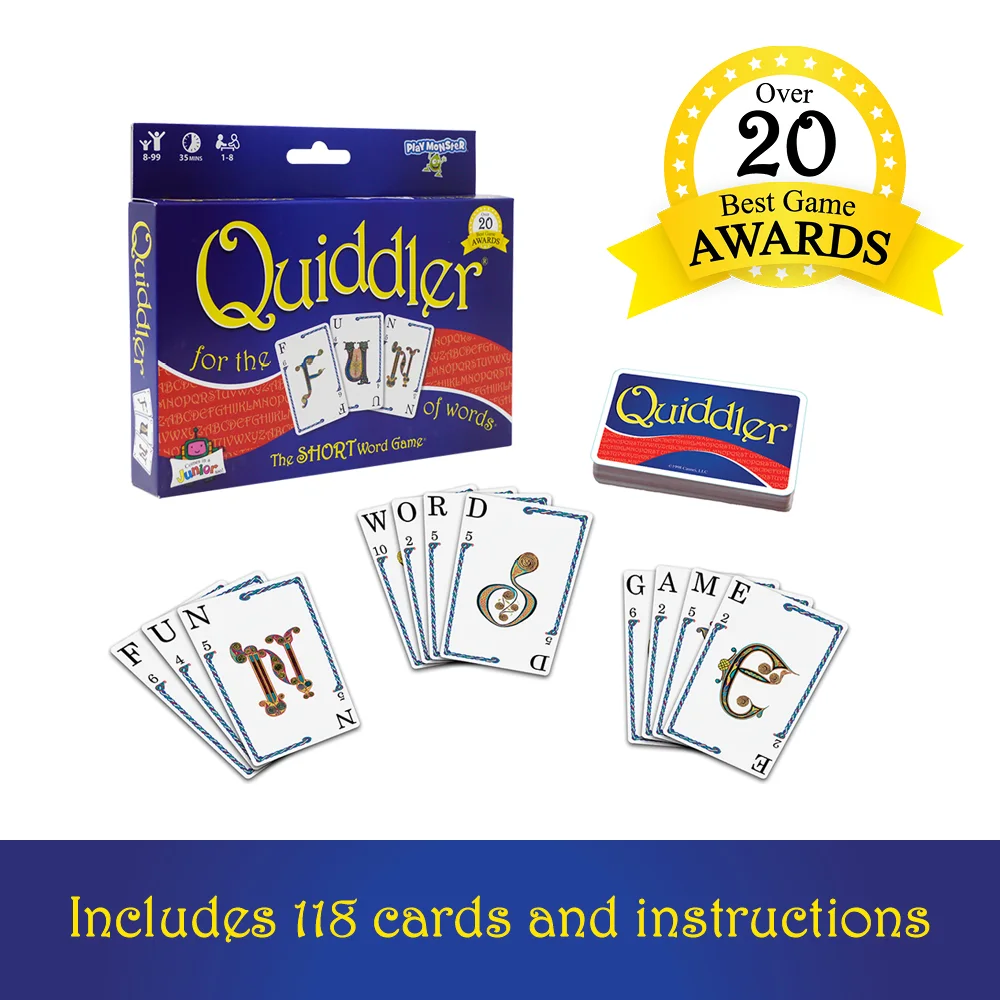
The published range is one to eight players, ages eight and up. Solitaire is a separate option, not a substitute for the back-and-forth of group play. For two players, the official rules say to choose just one of the two bonuses before starting.
Choose it for the pleasure of rearranging
Quiddler makes sense for a reader who likes word puzzles but wants a portable, sociable format. Check that the listing is the original deck rather than Mini or the collectors tin, and leave room to lay out finished words and keep scores. A dictionary is not listed among the included components.
Skip it for a mixed-language gathering expecting everyone to compete on equal terms without preparation. Choose it for a table happy to hunt for overlooked little words—and to enjoy the moment a messy hand suddenly makes sense.