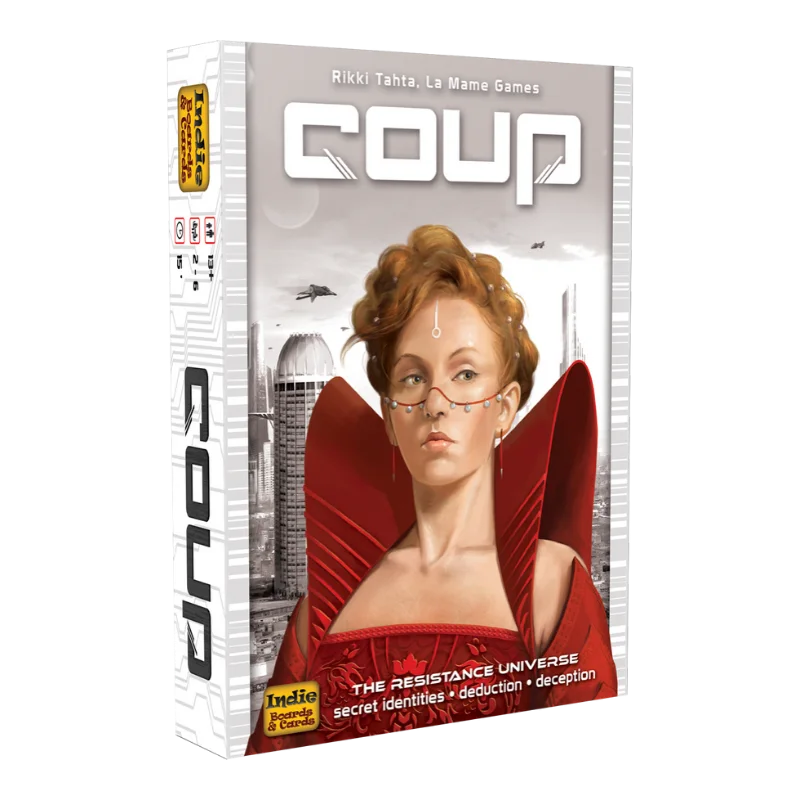
The box is small; the accusations need not be. Coup turns a few concealed character cards into a contest of claims, challenges and changing loyalties. It is an appealing choice when your group likes reading people more than studying a sprawling board.
Ask one question before giving it as a gift
Does this group enjoy bluffing? Players can claim abilities they may not actually possess, and other players decide whether to challenge them. That tension is the attraction, not an unfortunate interruption to otherwise peaceful play.
The publisher lists two to six players, ages 13 and up, and about 15 minutes. Different player counts change the social dynamic. A two-player session is not the same experience as several friends reacting to each other’s decisions.

Small does not mean rule-free
Character abilities, coins and reference cards keep the physical footprint manageable. The photographs show the roles and action references, worth understanding before the first round. A short explanation of legal actions helps avoid disagreements about what a player is allowed to claim.
Players can lose their influence and be eliminated. That may be acceptable in a short game, but it still matters if someone dislikes watching the rest of the table finish. Do not present Coup as universally family-friendly just because it fits in a bag.

The right kind of table drama
Consider the original English Coup for friends comfortable with direct challenges and playful deception. Skip it when you want a gentle cooperative game or a gathering without elimination. Reformation is an expansion, and other Coup titles are not interchangeable with the original box linked here. Our recommendation concerns the format and audience fit; we are not claiming hands-on play or that every group will love the confrontation.