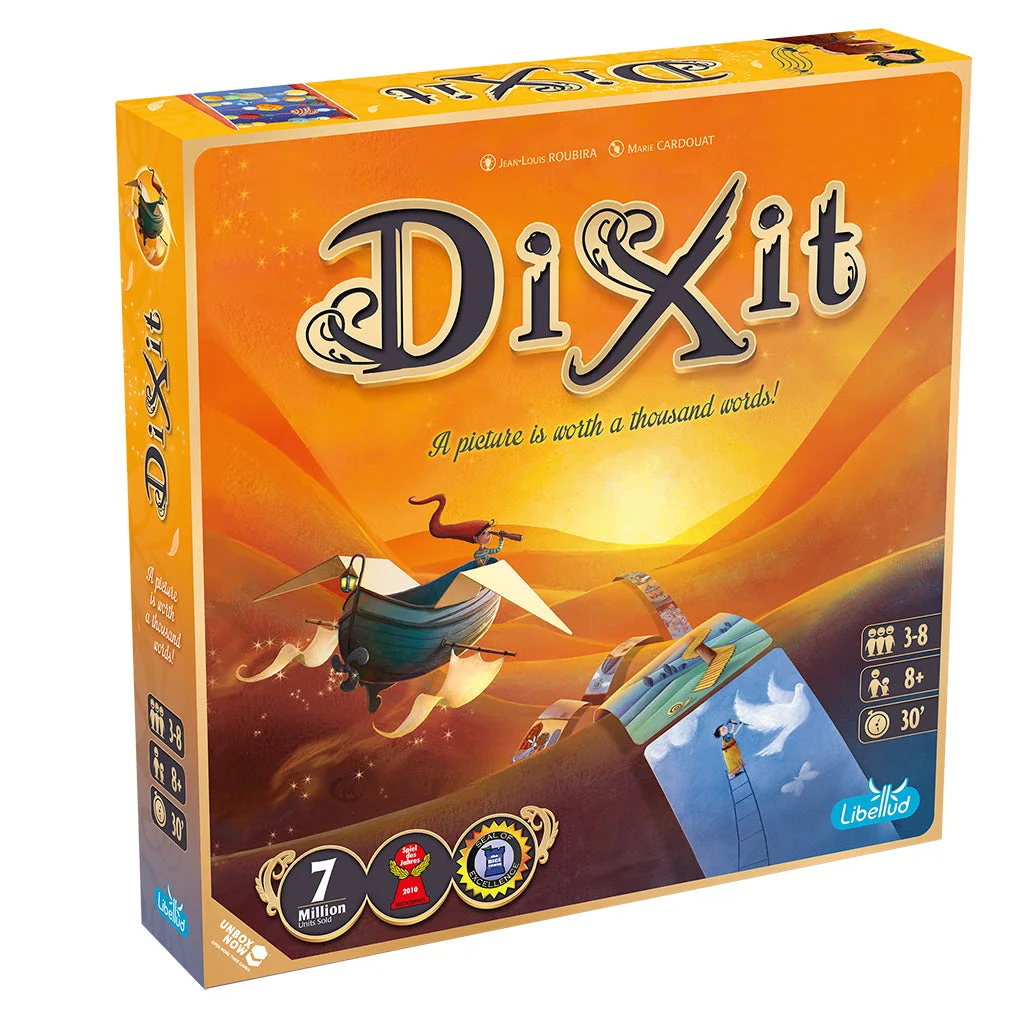
One person sees a holiday in a dreamlike illustration; another sees the start of a mystery. Dixit gives those differences somewhere to go. Instead of testing trivia knowledge, this picture-led party game asks your group to recognize a hint without making that hint too obvious.
A clue should open a door, not give away the answer
On your turn as storyteller, choose a card and offer a clue: perhaps a short phrase, a word or a familiar reference. Other players contribute cards that could fit, and everyone tries to identify yours among the resulting pictures. The delightful part is seeing why someone chose an image you would never have associated with your clue.
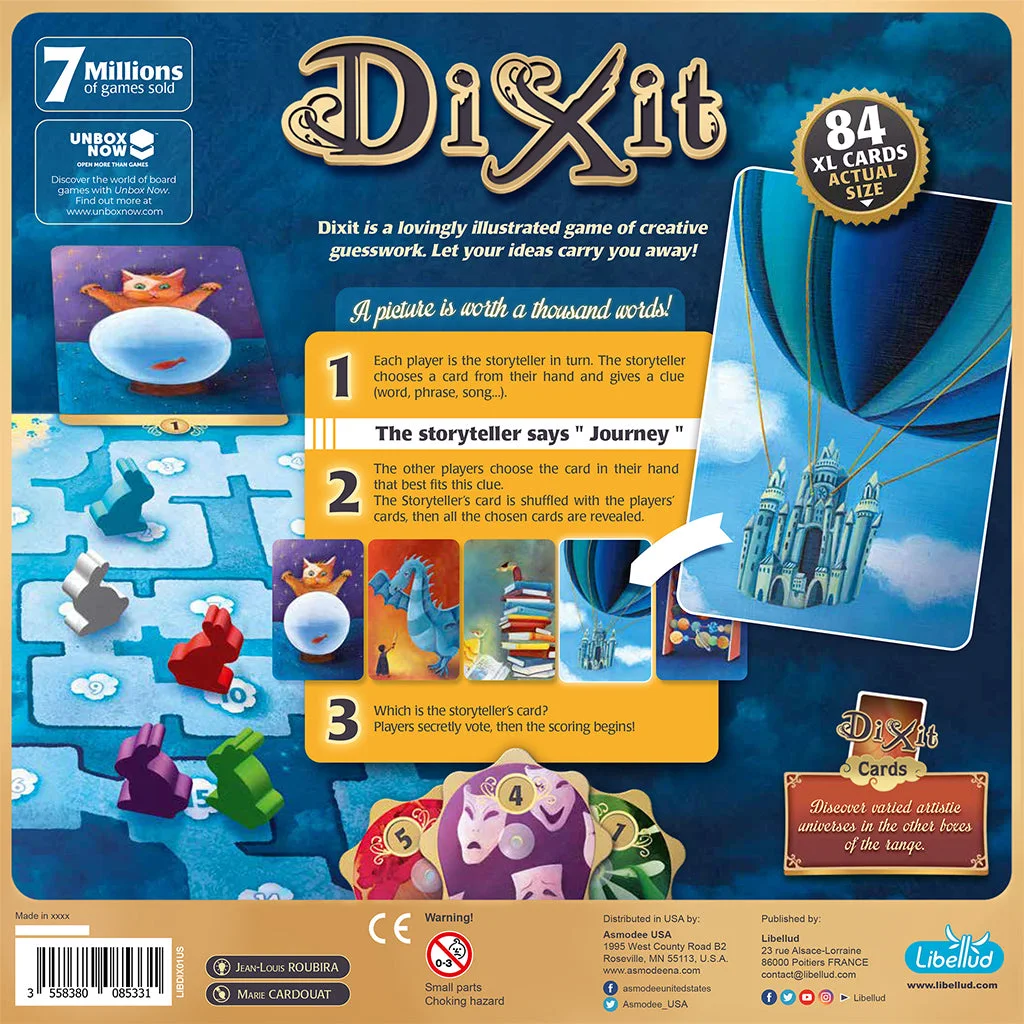
It is not a contest to write the longest or cleverest speech. In fact, a clue that everybody immediately solves defeats the storyteller’s scoring aim. An overly private clue can fail in the opposite direction. The sweet spot is inviting some of the table into the same imaginative space.
Who will actually enjoy the gift?
Think of friends who pause over illustrations, enjoy odd associations or would rather laugh about a misunderstanding than calculate an elaborate strategy. That is a better match than buying it simply because the box looks beautiful.
Shared cultural references are also a limitation. If one part of the group continually uses inside jokes or unfamiliar films, newcomers can feel excluded. Everyday images and broad clues make a more welcoming starting point. Young players may need an example round; check the age guidance on the supplied box rather than treating pictures as a guarantee of effortless play.
Match the edition before ordering
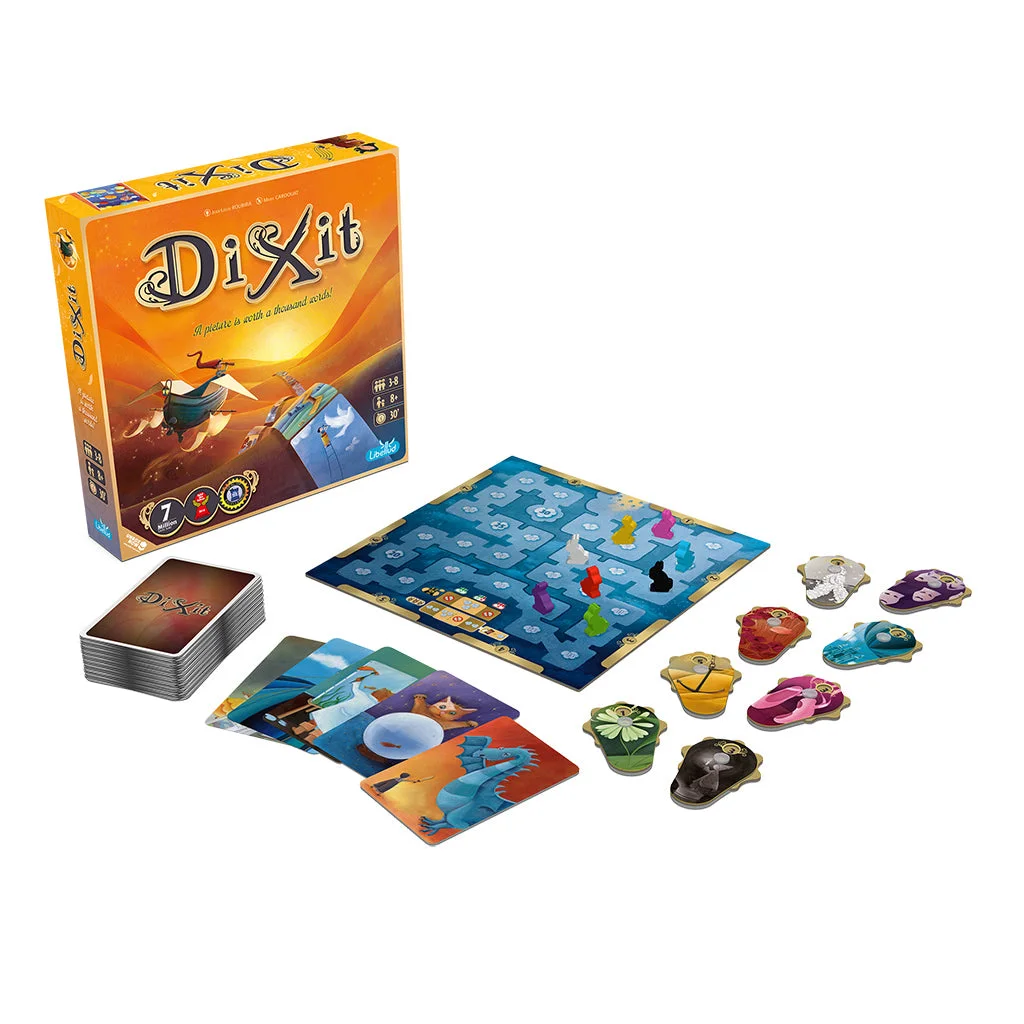
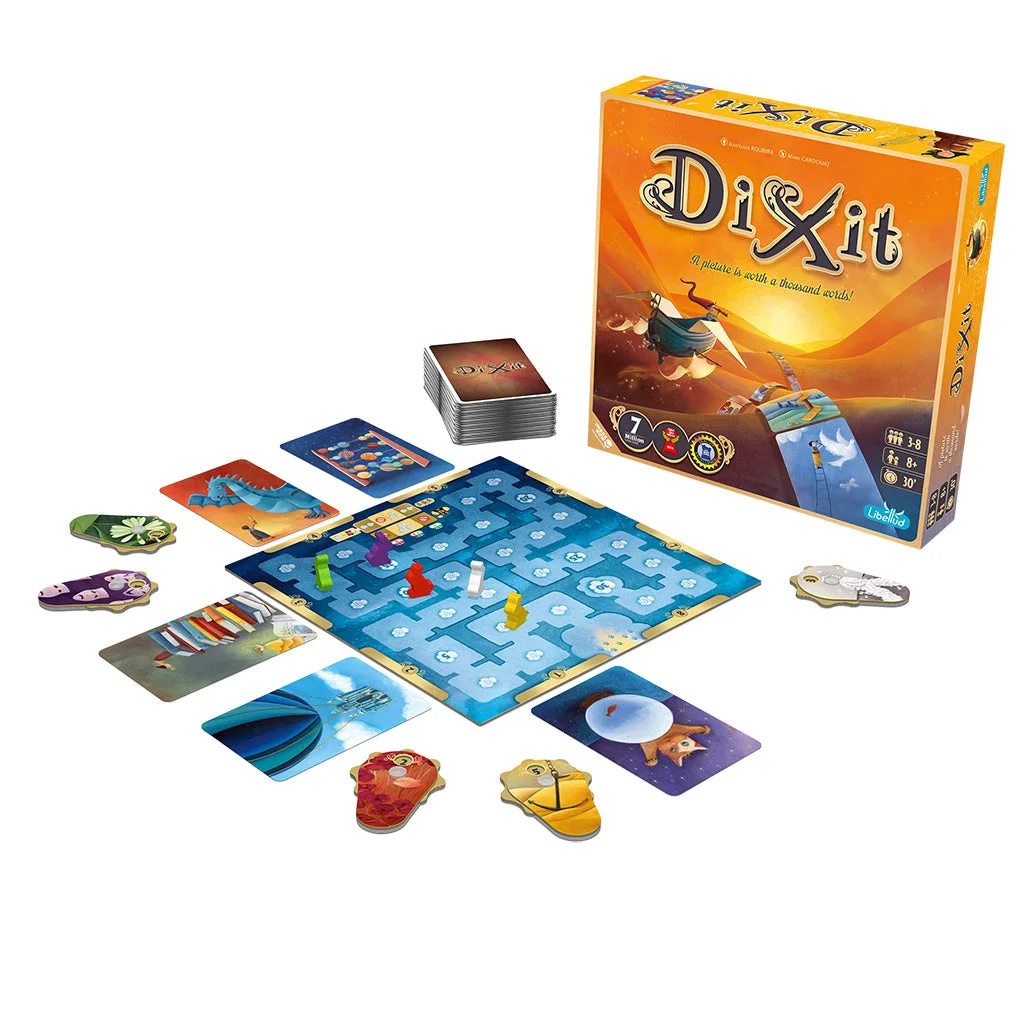
The selected DIX01N is the 2021 refresh base game. Publisher information describes three to eight players, around 30 minutes, illustrated cards, voting dials and rabbit-shaped scoring pieces. Some retailer text still mentions three to six players, so verify the actual edition and contents if eight-player support matters to you. Odyssey, Disney editions and card-only expansions are different purchases.
The supplied photographs show the art, voting components and scoring board together. An expansion of more illustrations is not necessary to try the game: discover whether your group enjoys giving clues before buying extra decks.
Worth considering for an art-loving social group that can gather at least three people. Not the right pick for a two-person evening or someone who wants objective, unambiguous answers. We have researched the edition and rules; we are not claiming a personal playtest.