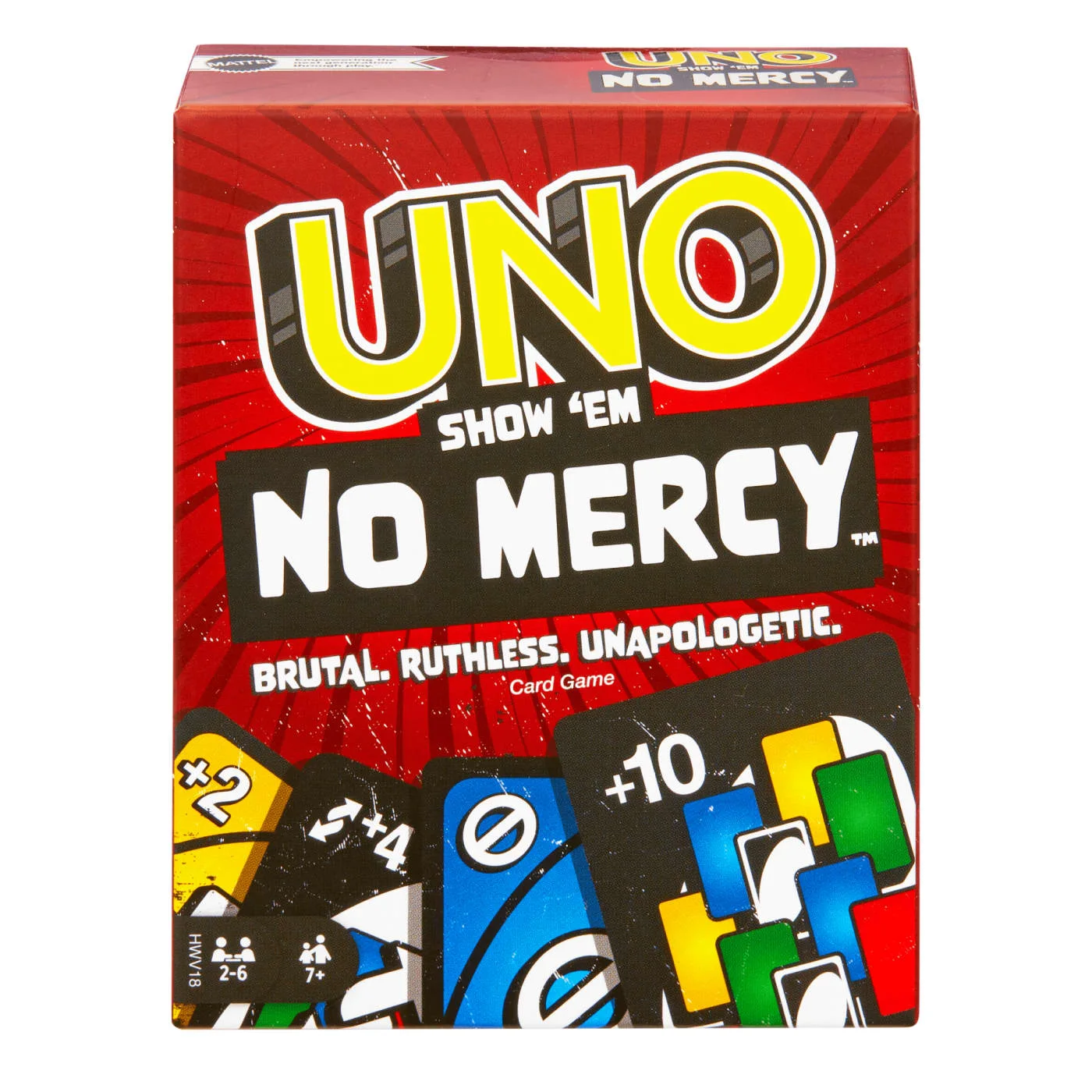
Some groups turn an ordinary Draw Four into the story of the evening. UNO Show Em No Mercy gives that kind of table a much larger vocabulary of setbacks. It is a deliberately competitive version of UNO, so the useful buying question is whether your group enjoys being on the receiving end too.
Bigger penalties are the point
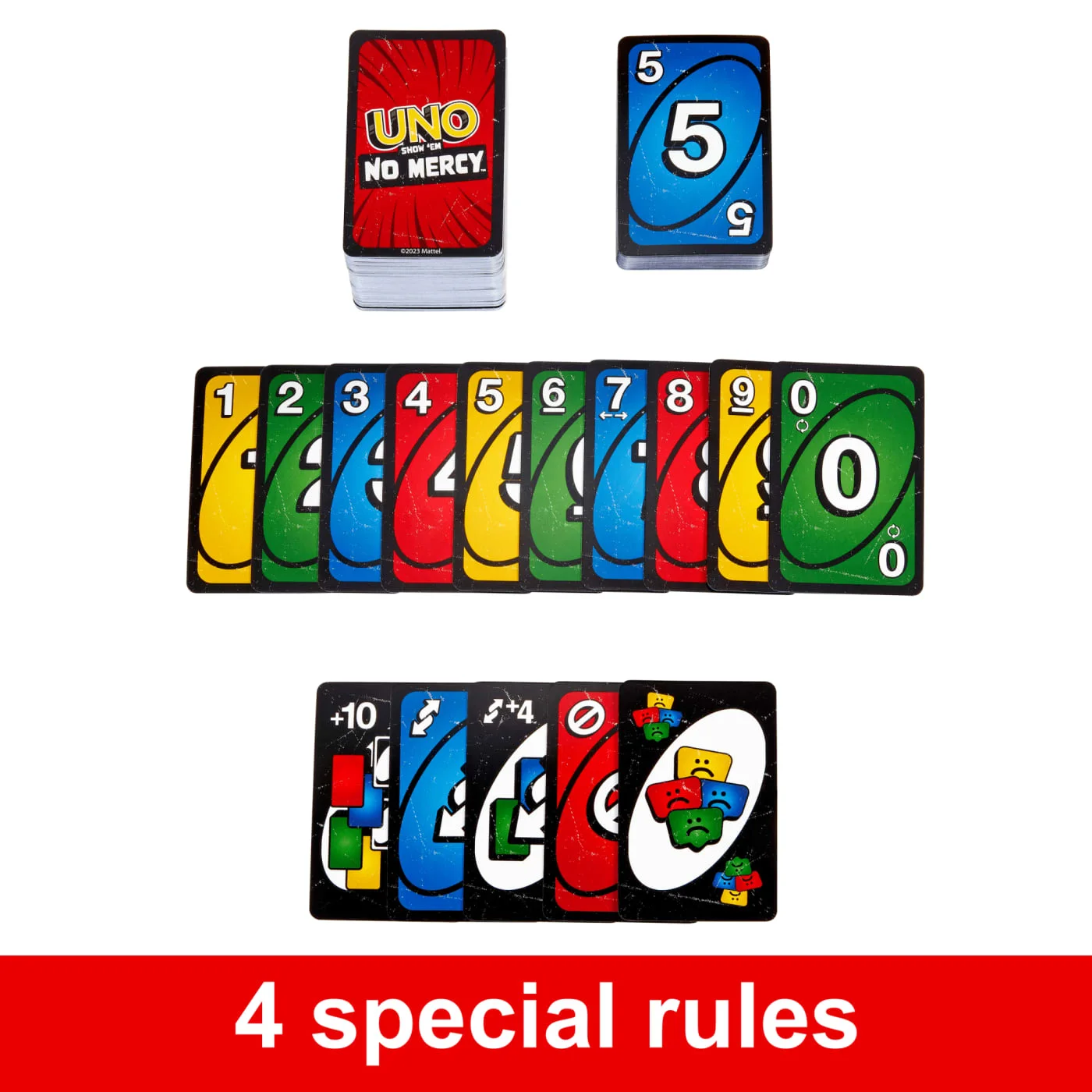
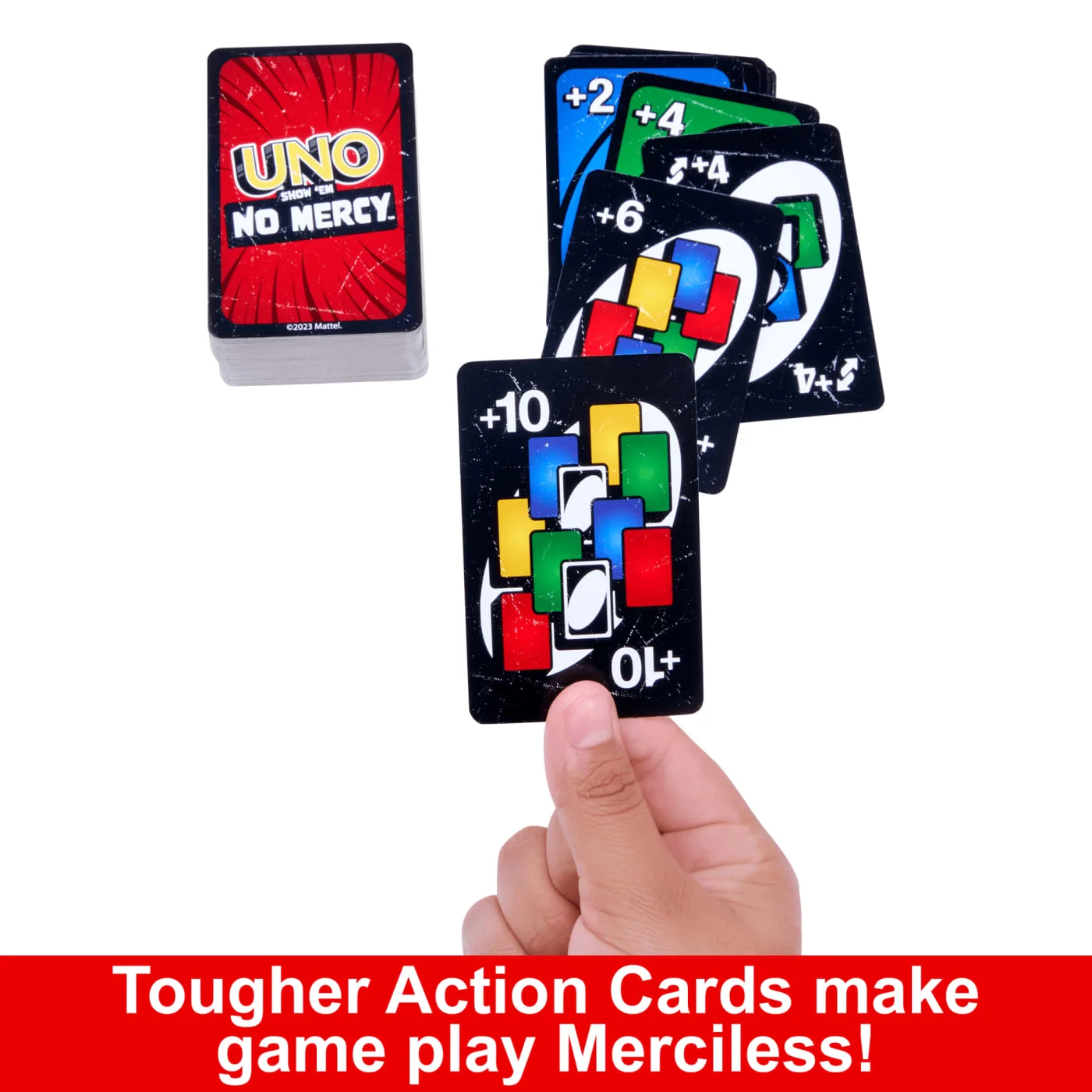
The 168-card deck adds actions such as Wild Draw Six and Wild Draw Ten. Its permitted stacking rules can build a penalty until a player cannot pass it on. Read those edition-specific rules rather than importing a house rule from another deck.

Hand swaps also interrupt carefully saved cards. That makes the experience less about protecting a comfortable hand and more about coping with a changing one. Fans of unpredictable retaliation may enjoy the idea; players seeking calm, controllable strategy have better options.
Elimination changes the social experience
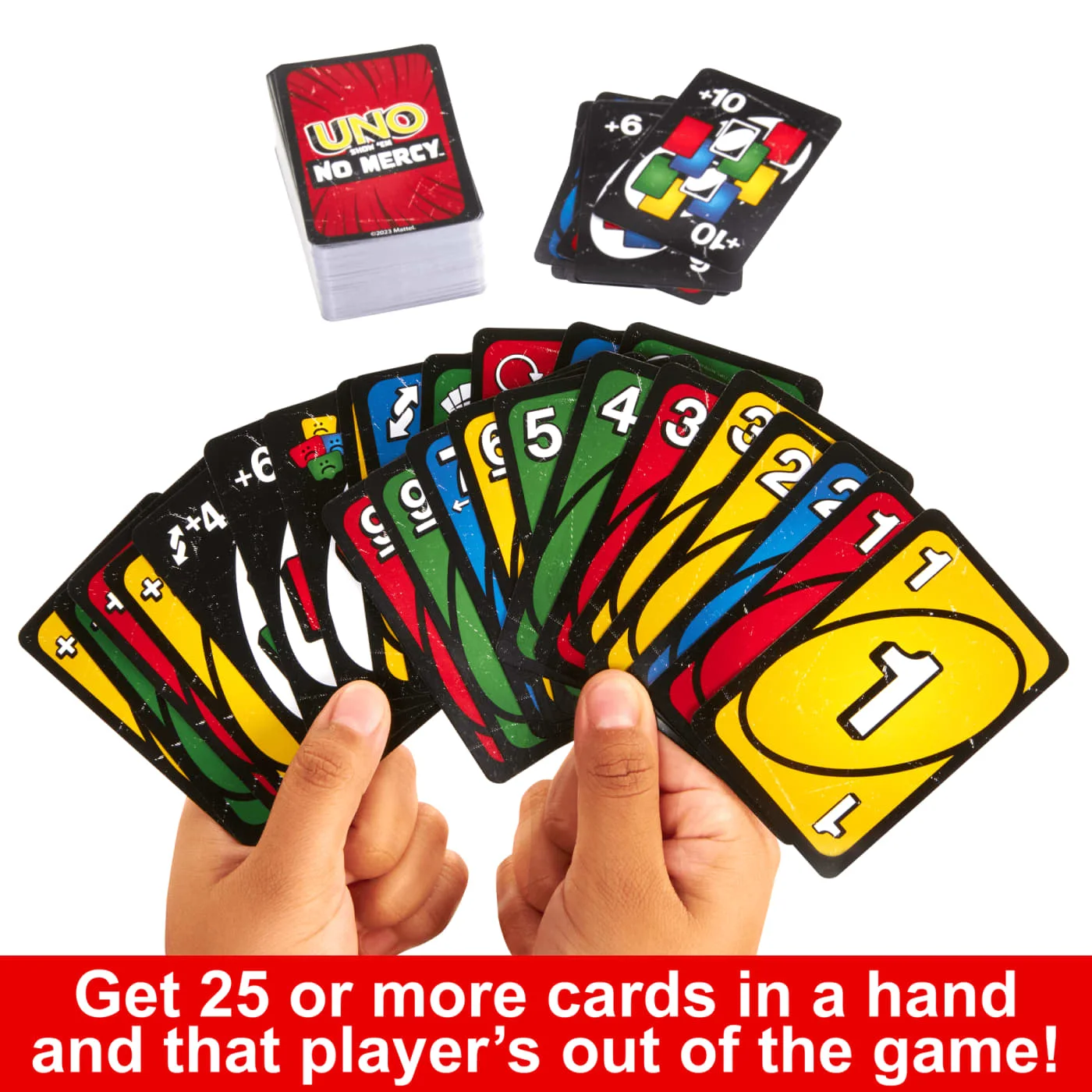
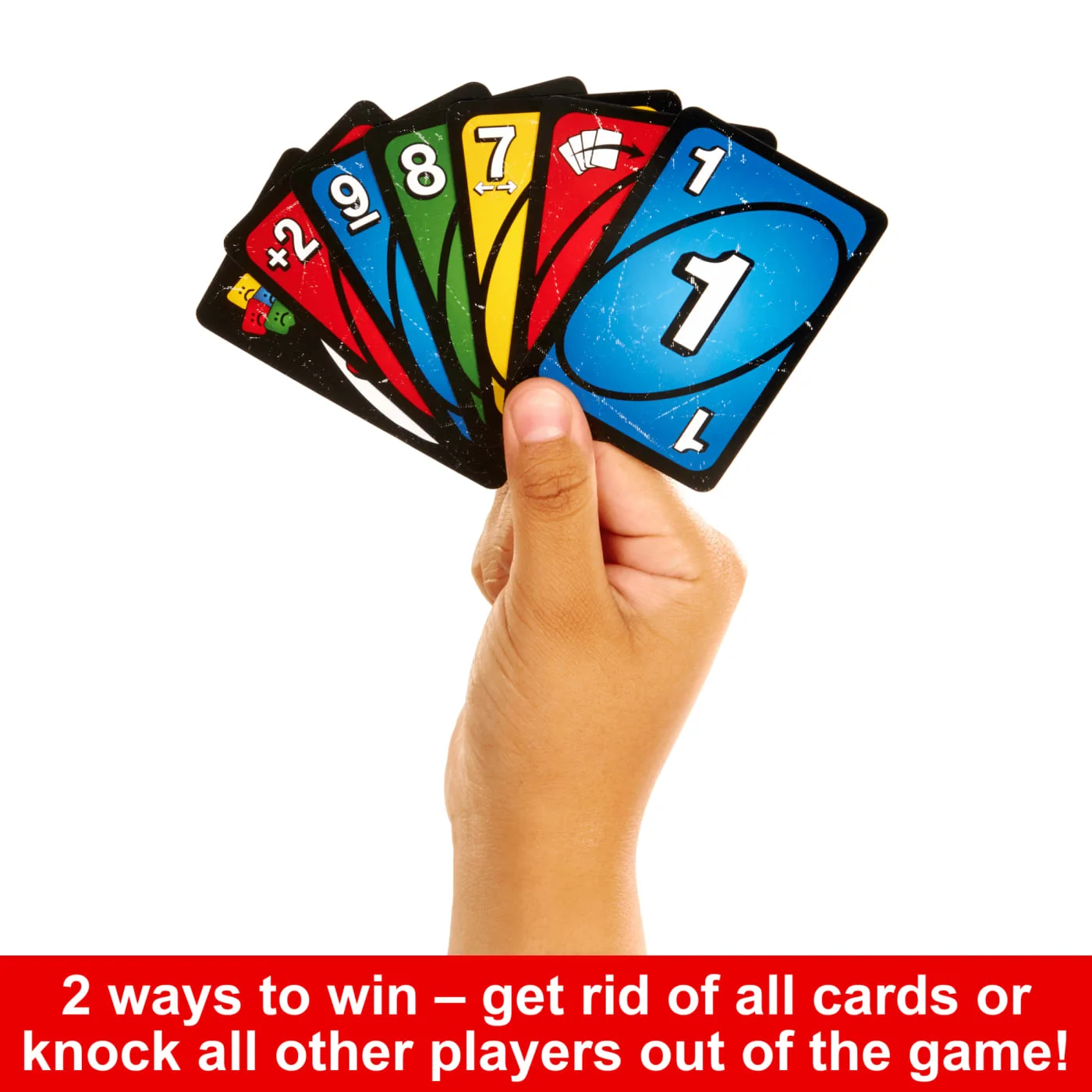
Under the Mercy Rule, a player who reaches 25 or more cards is out. You can win by emptying your hand or by being the last remaining player. These are concrete differences from a casual classic-UNO session, not just extra card artwork.
Consider the people at the table before buying. Being eliminated while friends continue can be frustrating, especially for a younger or less experienced player. Agree on the official rules, demonstrate the special cards and give everyone a practice hand before making the competition serious.
A specific mood not an automatic upgrade
The selected HWV18 is the standard No Mercy game for two to six players, with maker age guidance of seven and up. It is not the similarly named Plus or themed editions. Check packaging and language when ordering internationally.
Choose it for a small group that genuinely wants stronger penalties and accepts losing dramatically. For a mixed family gathering where keeping everyone involved matters more than escalation, standard UNO—or a cooperative game—may create a better evening.