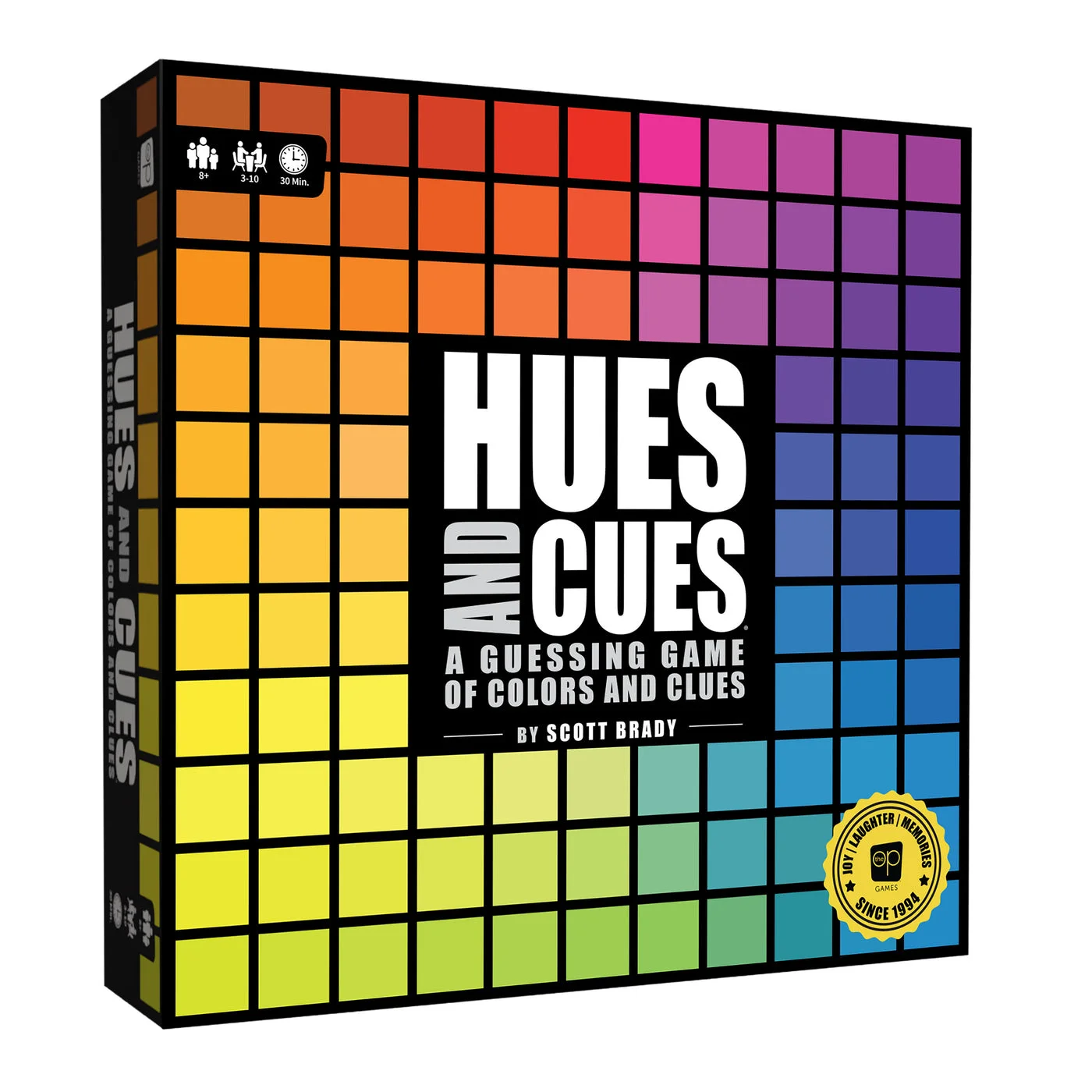
Say “peach” and a table can imagine several different colours: fruit skin, flesh, a summer dress or an old kitchen wall. Hues and Cues turns that gap between pictures in people’s heads into the game. The board looks immediately inviting, but the useful buying question is whether your group would enjoy explaining colours with words.
A colourful board with a simple job
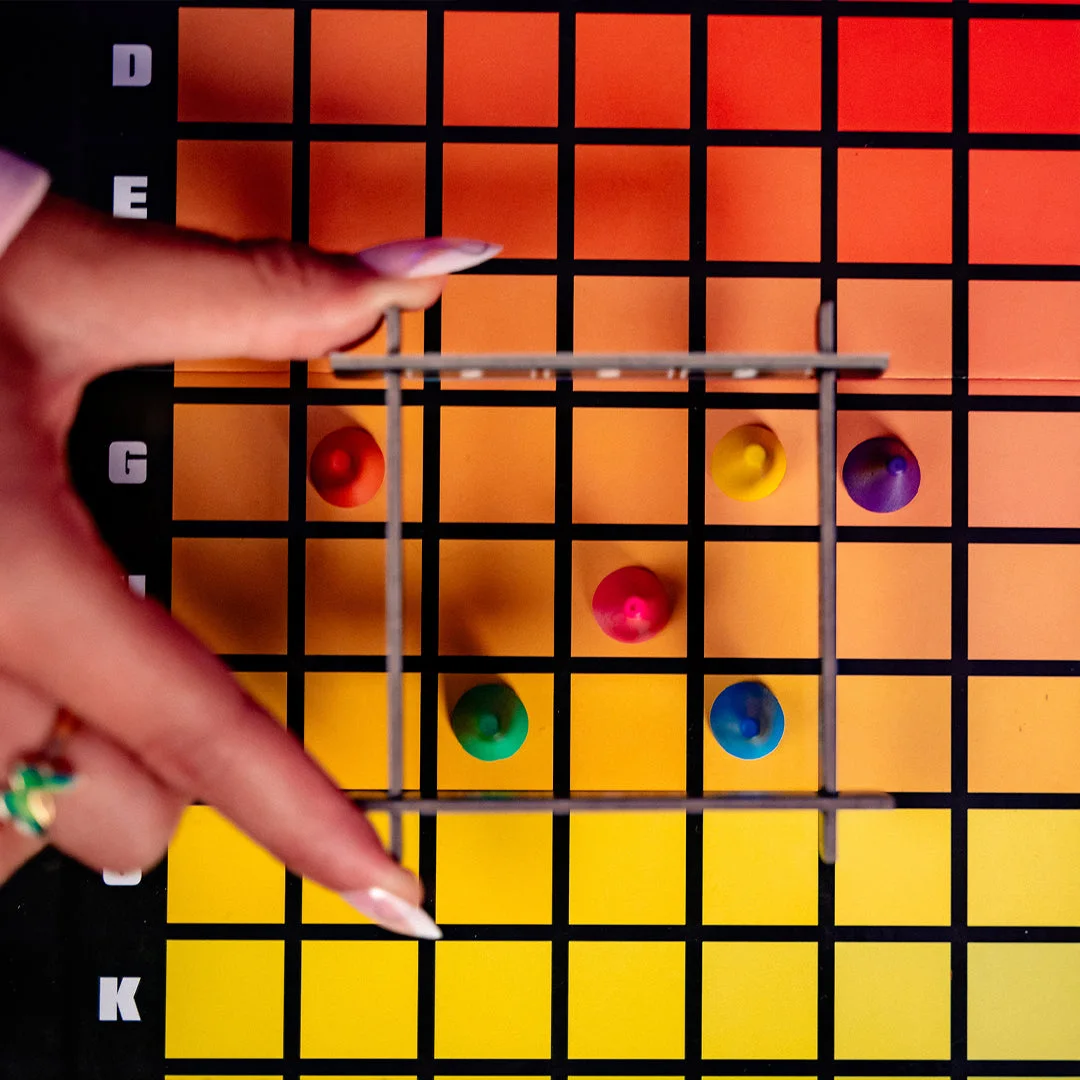
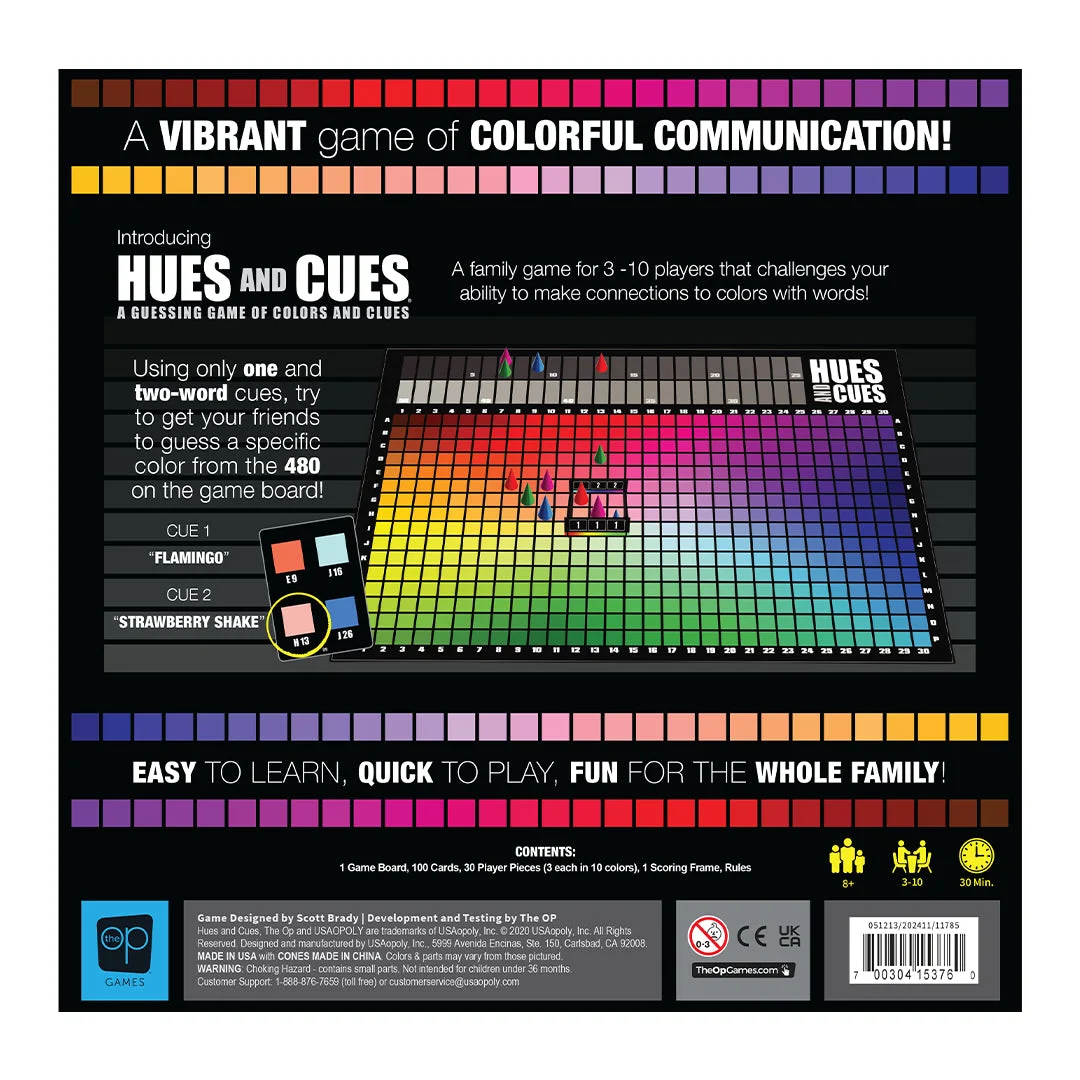
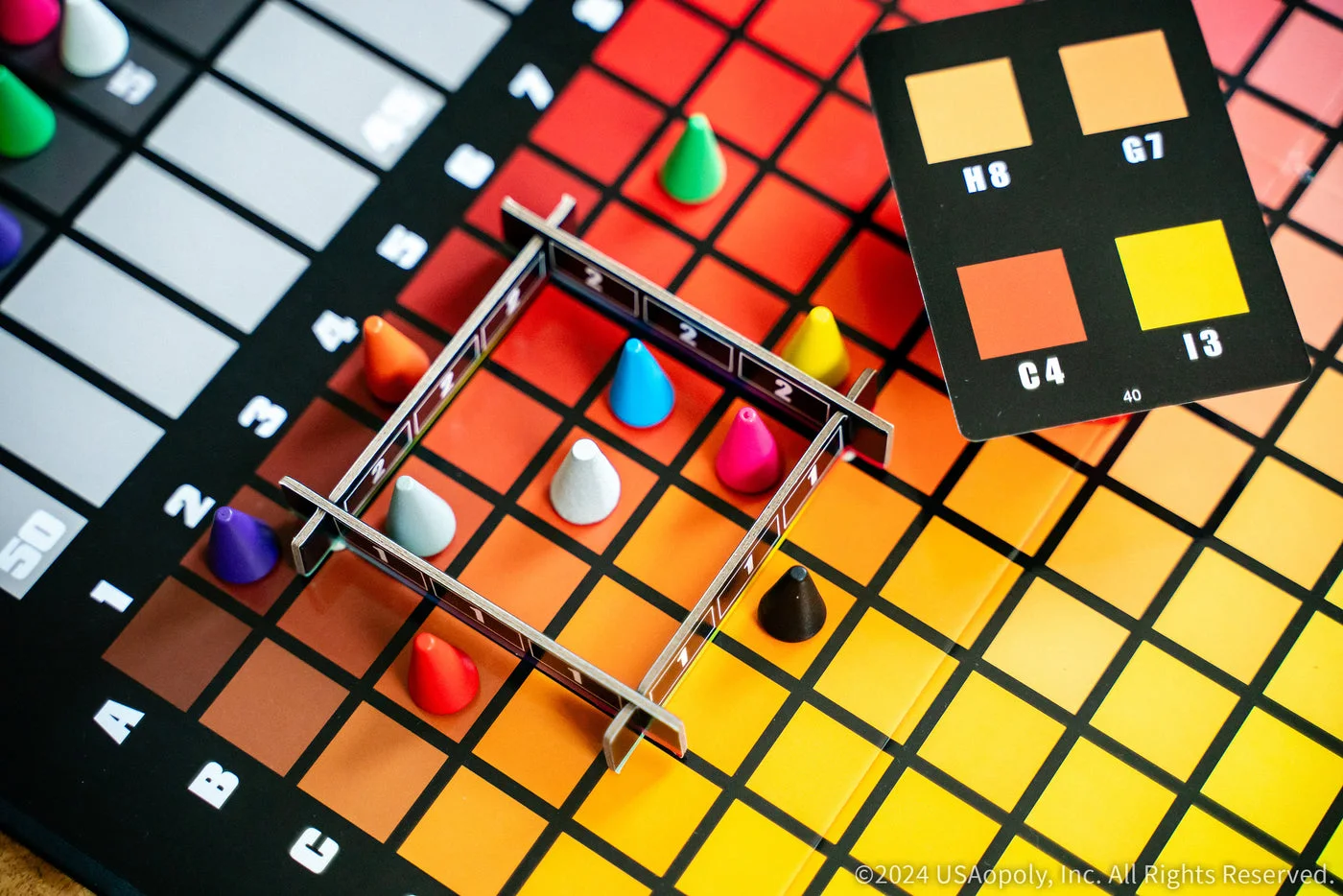
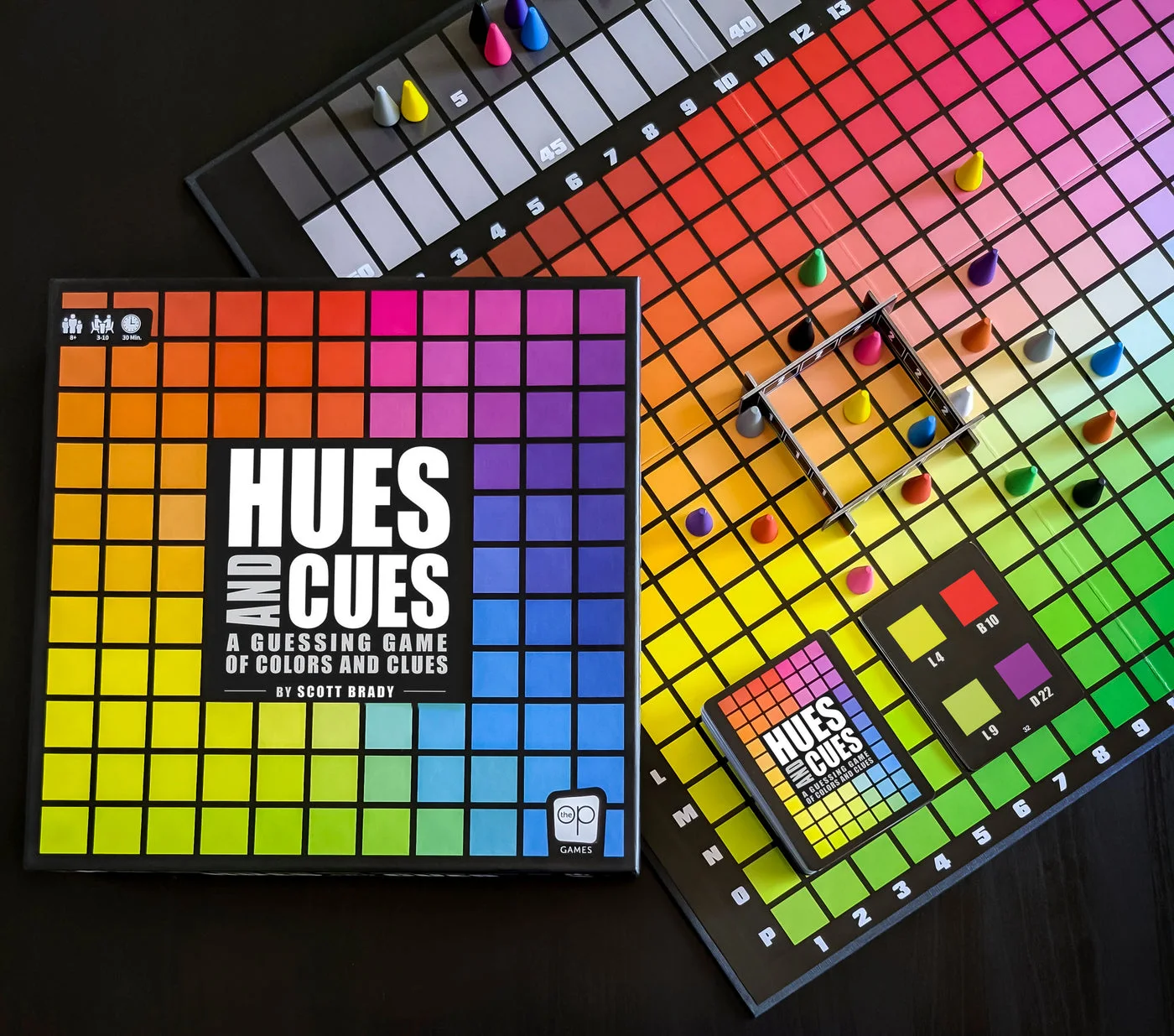
One player selects a hidden colour and gives one- and two-word cues. Other players place their pieces on the 480-colour grid, trying to land close to that target. The scoring frame makes closeness visible. You are not learning paint codes or proving that your interpretation of a colour name is correct.
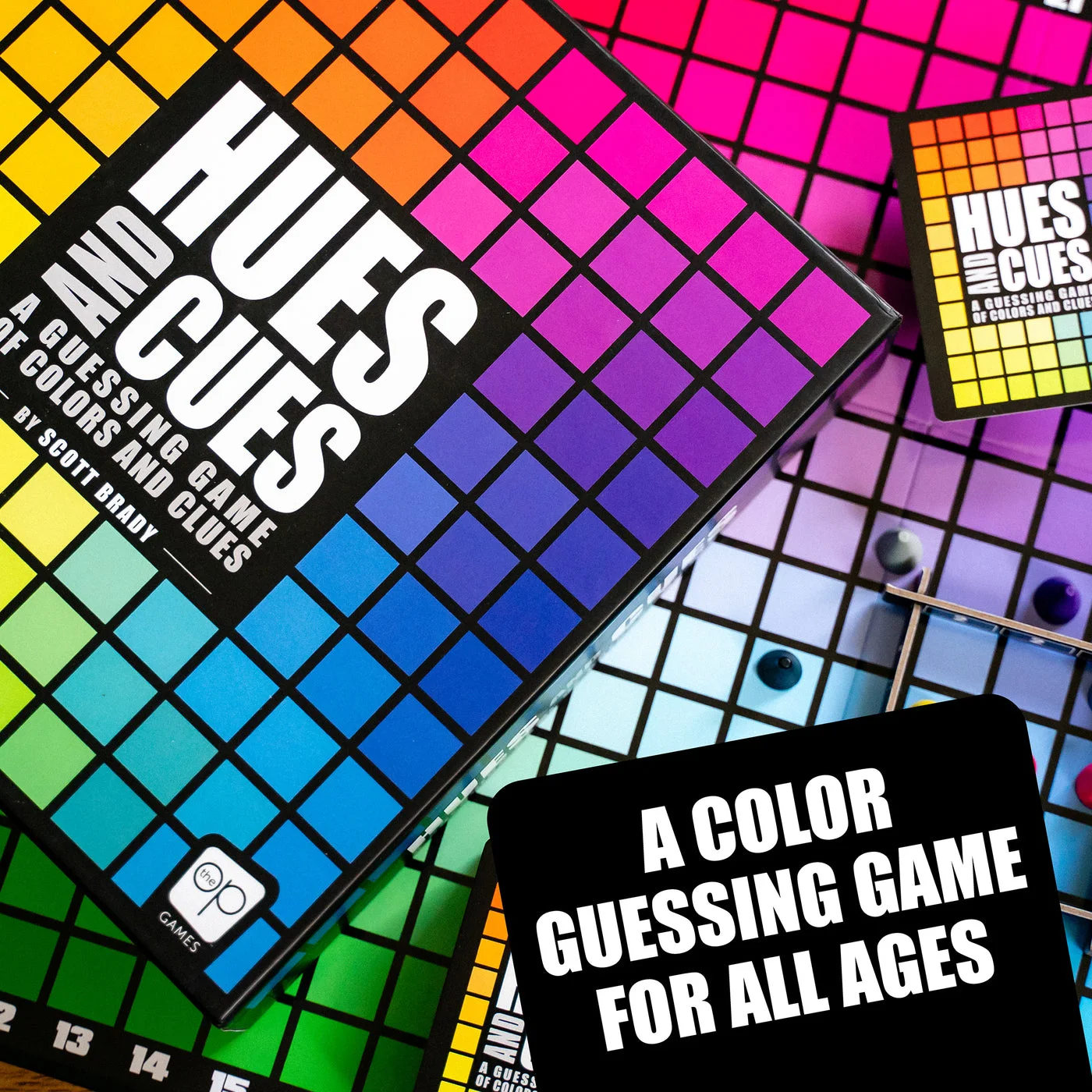
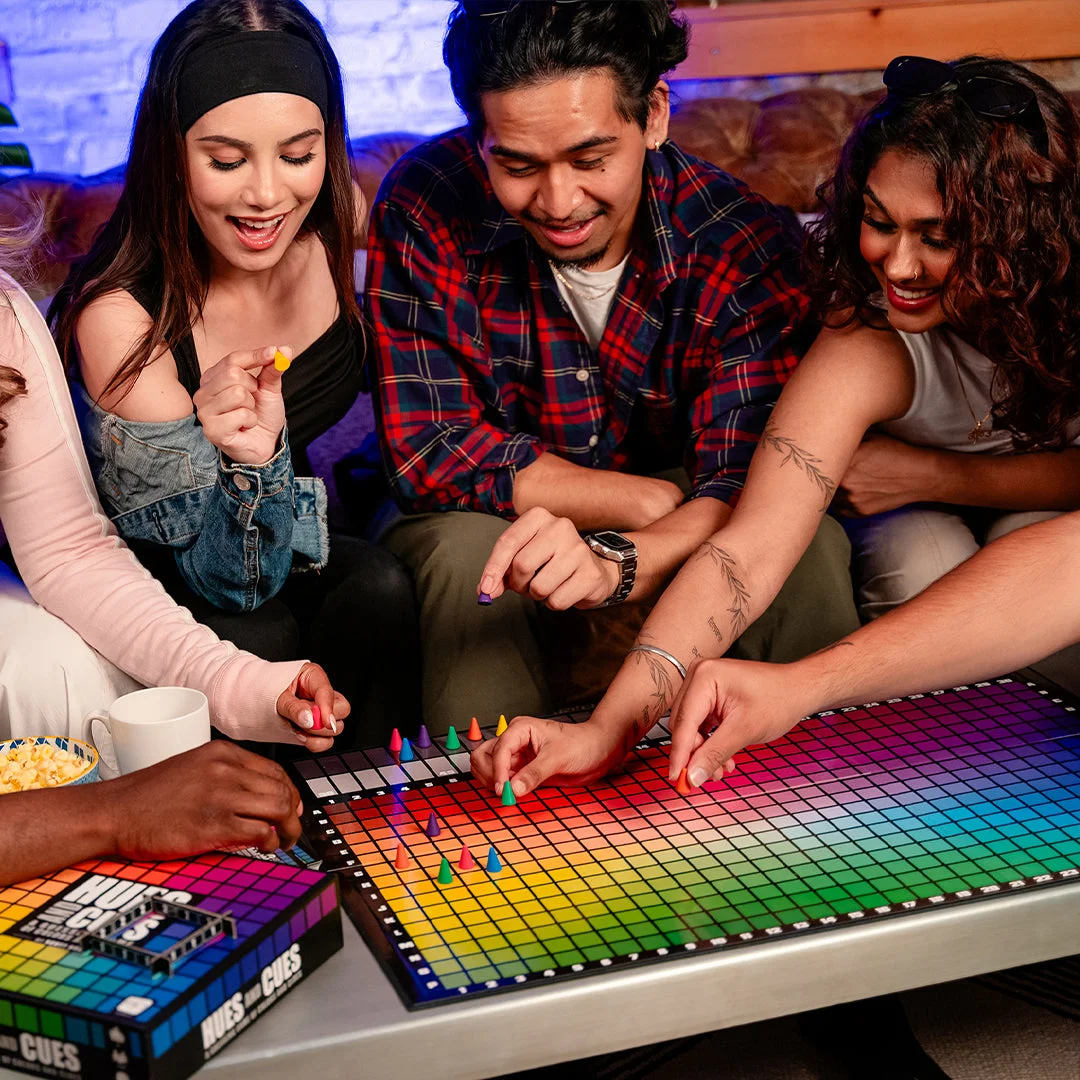
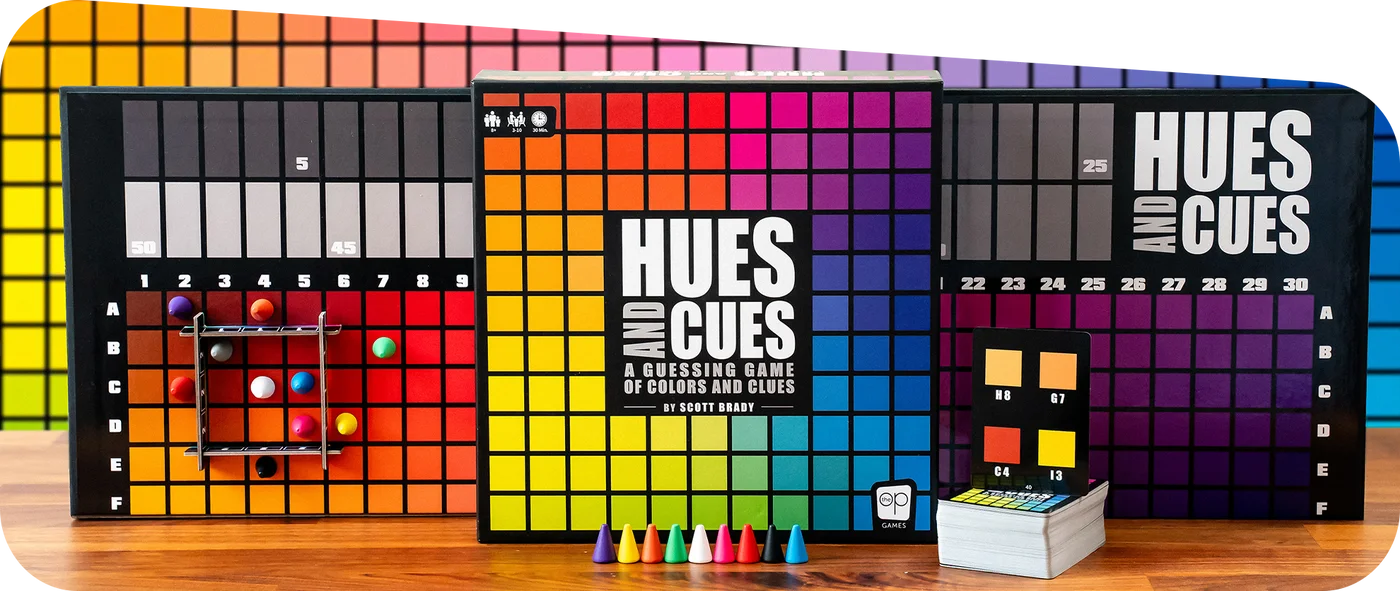
The maker photographs show the board, colour cards and scoring frame at different scales. Notice how much space the unfolded grid occupies before planning to play on a crowded coffee table. Everyone needs a fair view of the colours, not just a glimpse past a bowl of snacks.
More useful than another trivia quiz?
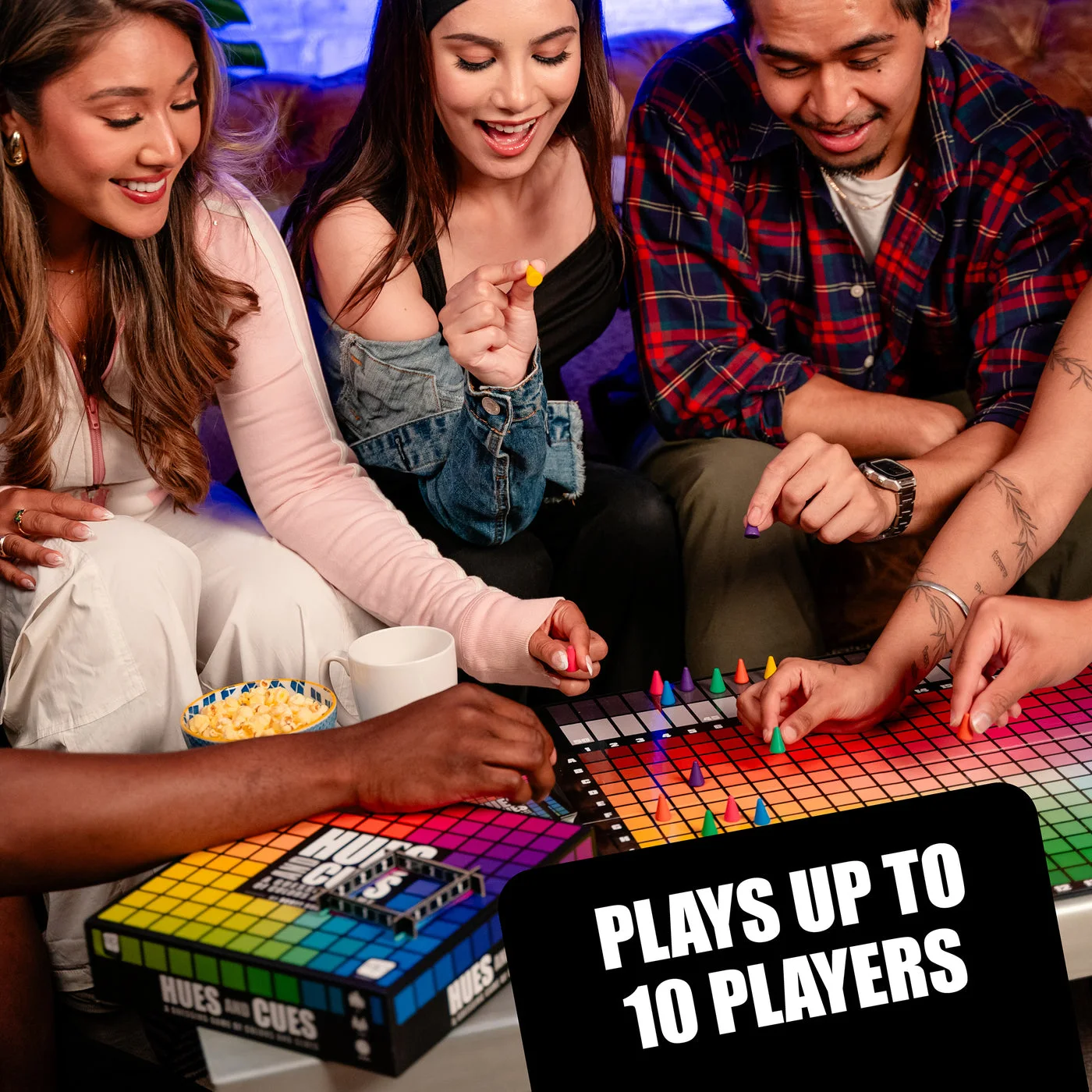
The standard game supports 3–10 players, is marked ages 8+ and has a maker estimate of 30 minutes. It can be attractive for a mixed group that does not want specialist knowledge questions or a long strategic build-up. People still need to understand each other’s cues, however, and familiar references will make a difference.
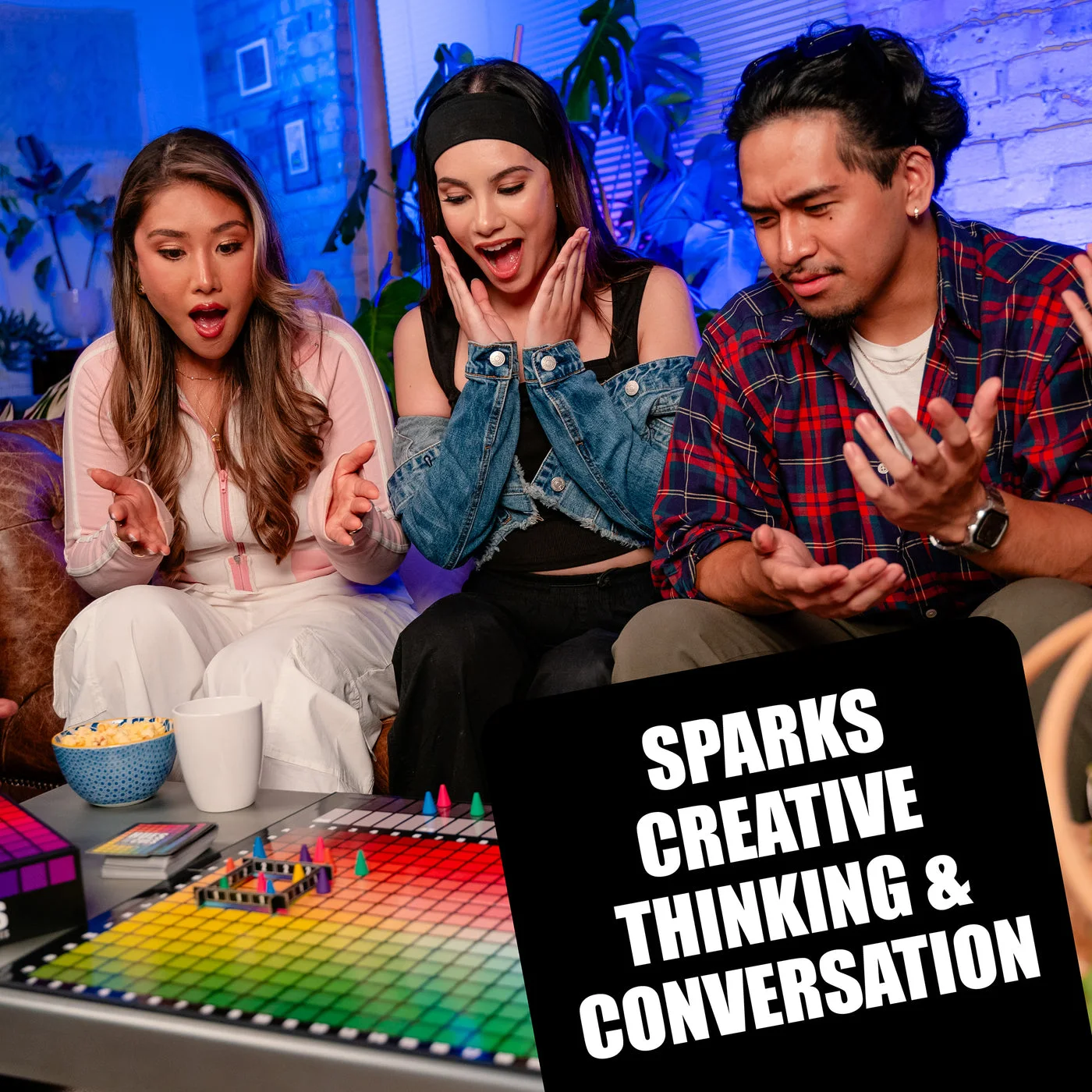
Colour discrimination is central. Do not treat the bright presentation as evidence that the game is equally accessible for every player with a colour-vision difference. Room lighting also affects what people see. If identifying nearby shades is uncomfortable for someone in the group, choose a different activity rather than make them struggle.

Buy the evening you can actually picture
This English standard box includes the board, 100 colour cards, 30 pieces, scoring frame and rules. It is not a collection of the other games shown in occasional brand advertisements. The gallery here excludes those cross-product promotional pictures.
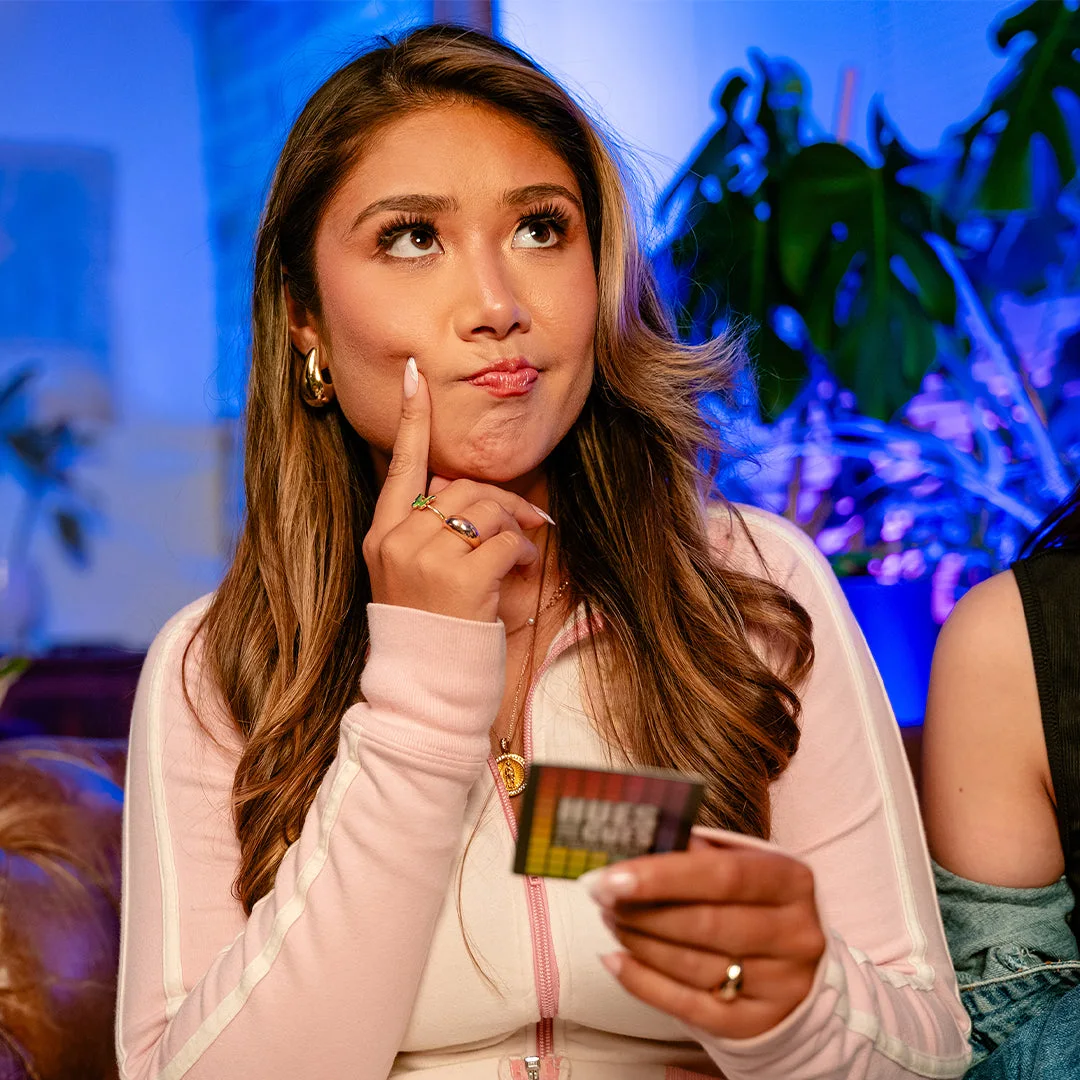
Choose Hues and Cues if a playful debate over the colour of a familiar object sounds like your kind of evening. Skip it for a two-player night or a group that prefers definite factual answers. We have researched the product and rules; the illustrated scenes are the maker’s, not a claim of our own game-night testing.