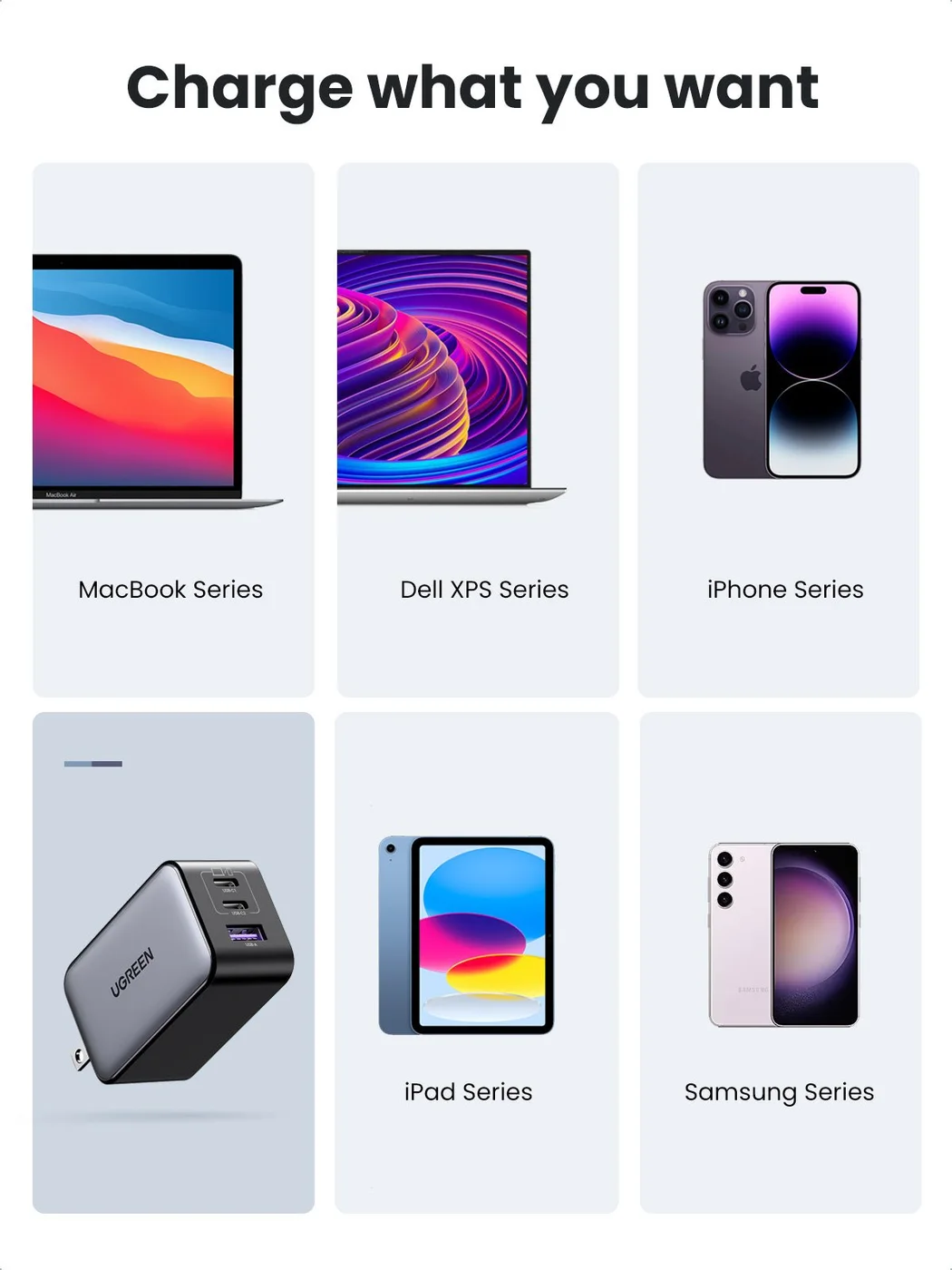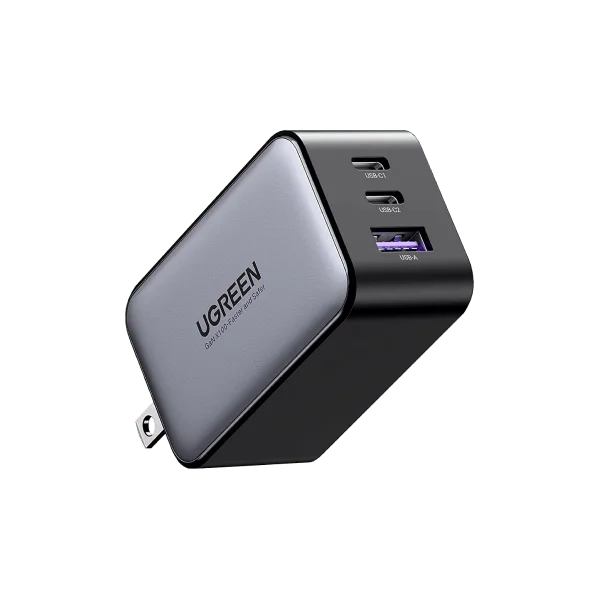
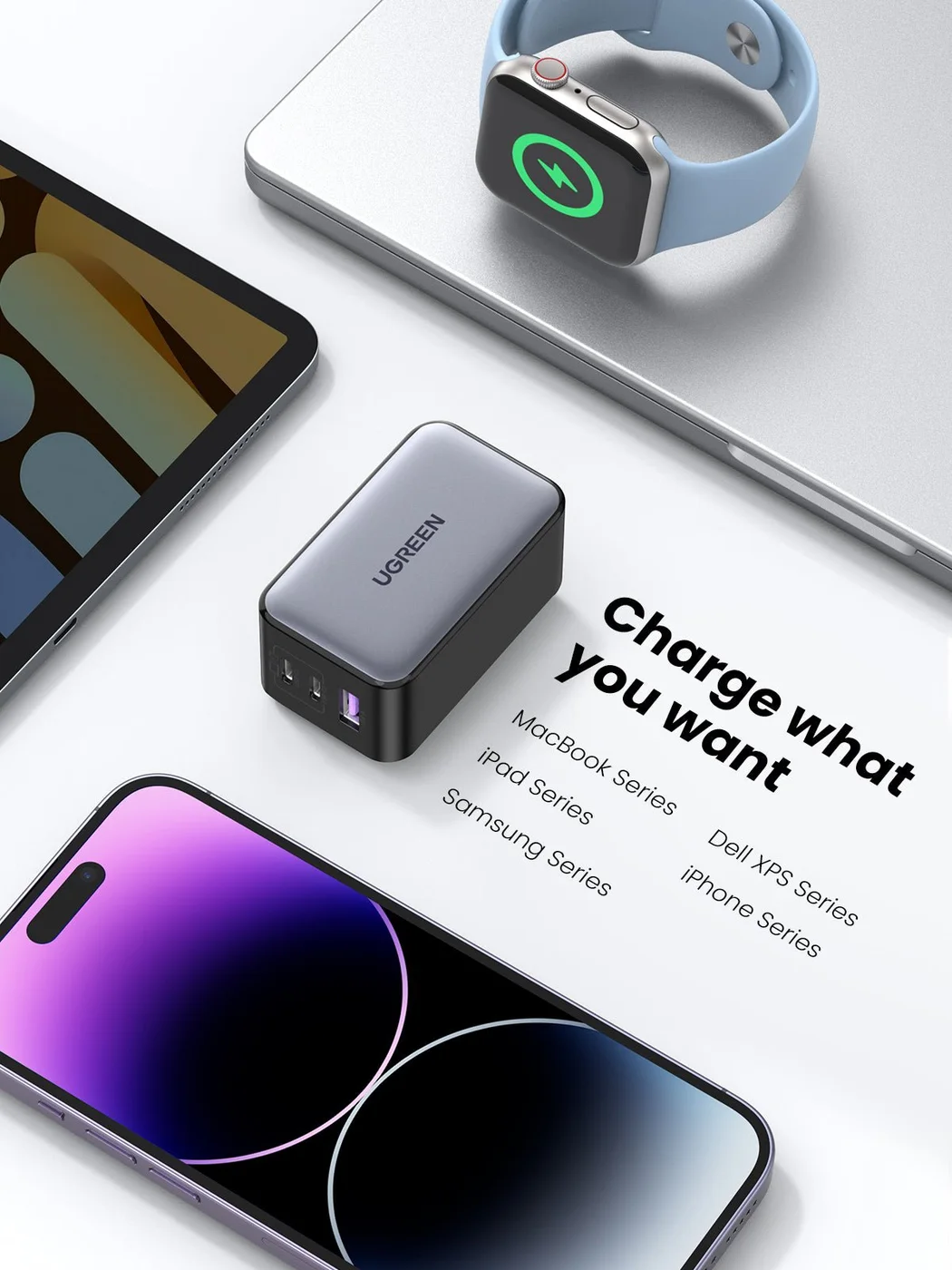
The charging pouch grows one adapter at a time: laptop brick, phone plug, then something for headphones. The black UGREEN Nexode 65W three-port charger offers a simpler arrangement. Two USB-C connections and one USB-A connection share a compact wall unit, which can make packing easier without pretending every port has its own 65W supply.
Decide what needs the fastest charge
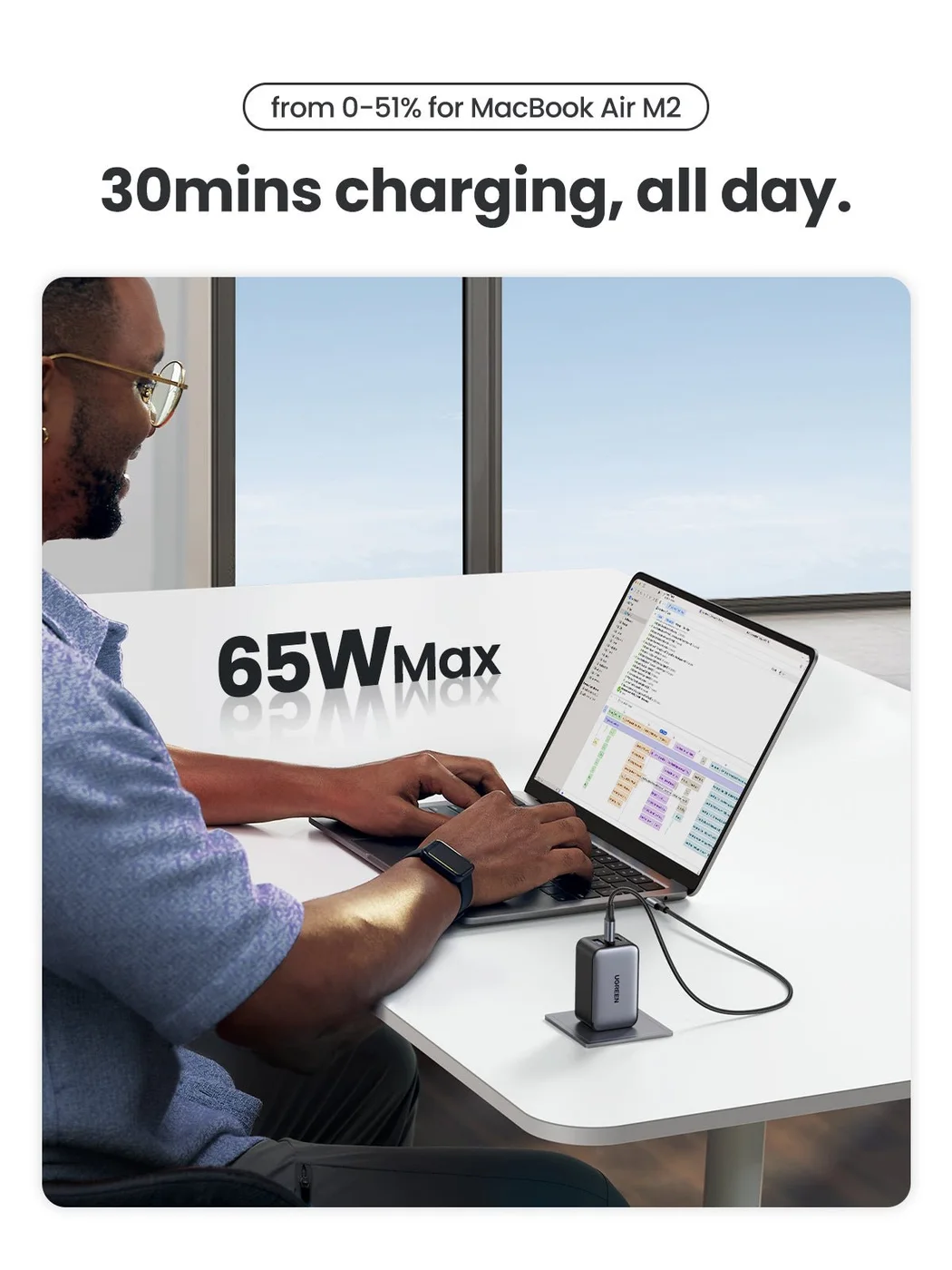
With one compatible USB-C device connected, output can reach 65W. Add more devices and the available power is redistributed. A useful routine is to give the laptop its main charging window first, then connect smaller devices when speed matters less.
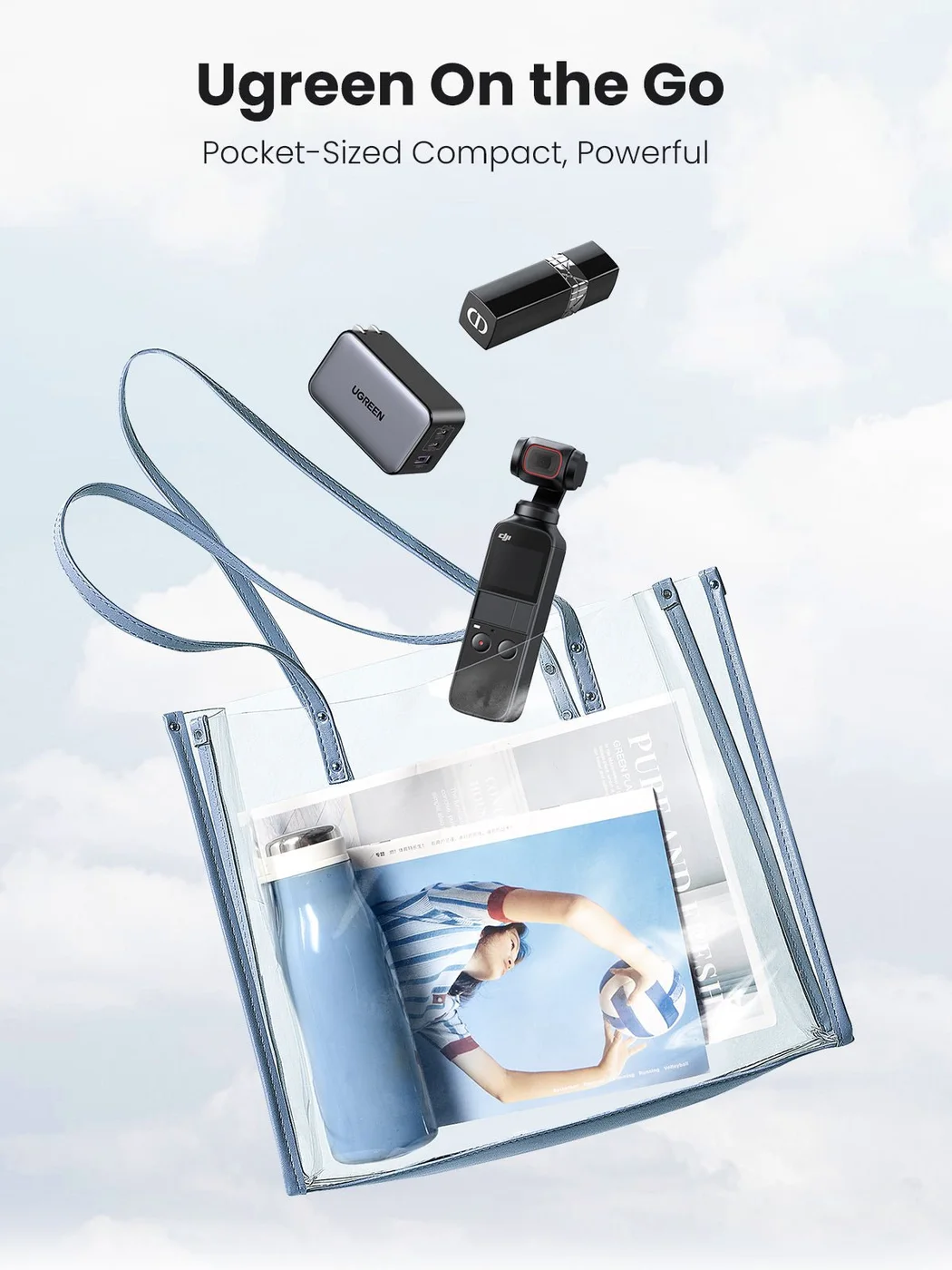
That distinction is important if the laptop’s normal charger exceeds 65W. A compact adapter may be adequate for light work or recharging while closed, but it is not automatically a replacement for a higher-power workstation supply. Verify the machine’s USB-C charging support and its power requirement before buying.

One legacy port can be enough
The USB-A connection keeps an older charging cable useful while the two USB-C ports serve newer devices. That can be more convenient than carrying an extra adapter just for headphones or another small accessory. It does not make incompatible cable ends interchangeable, and the cables themselves still take space.
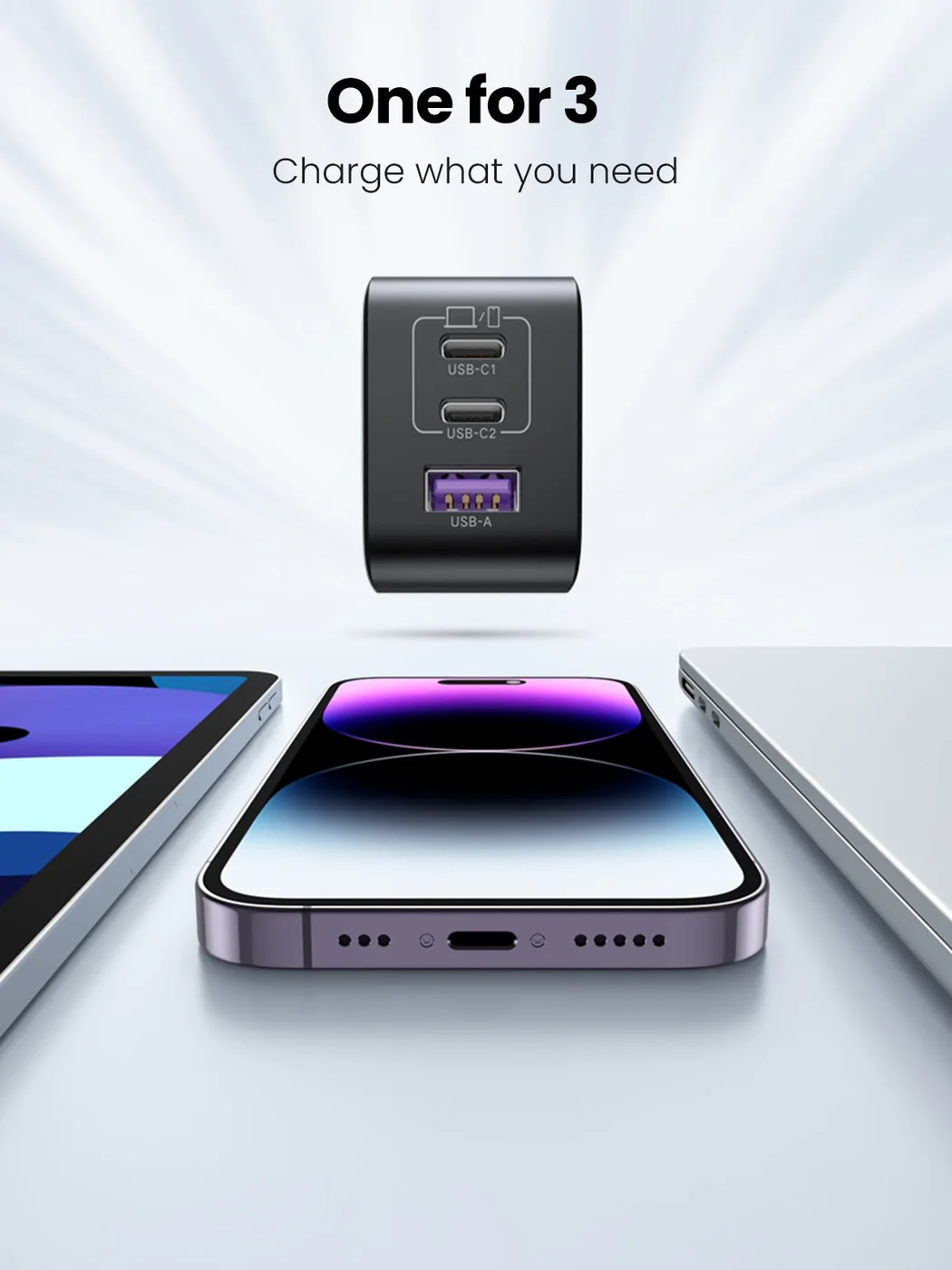
Look at the actual cable set on your desk. If everything is already USB-C, a different port layout might suit you better. If you need one older USB-A lead, this arrangement has a clear reason to exist.

Folding prongs are not a universal plug
The selected version has folding US-style prongs. They tuck away for packing, but other socket types can still require an appropriate adapter. Check the electrical label and local socket arrangement instead of assuming every overseas listing contains the same plug.
This unit has no battery: it simplifies access to a wall socket, not charging away from one. Choose it to reduce separate bricks when your devices fit a shared 65W budget. Skip it if several demanding devices must charge at full speed together. Our assessment is based on the selected listing and maker information, not measured temperatures or a personal charging test.