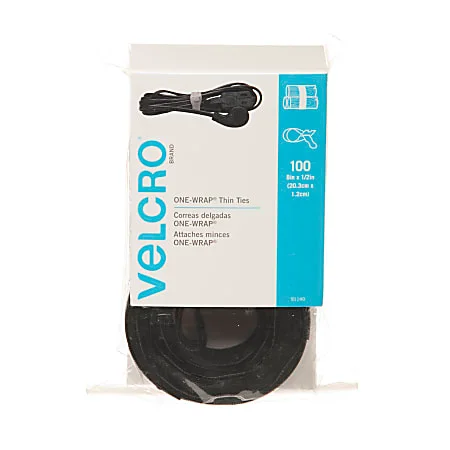
The trouble with tidying cables is that you need one of them again tomorrow. VELCRO Brand ONE-WRAP thin ties make the tidy version reversible: bundle the cable, peel the strap open when needed, then wrap it back up. The useful upgrade is not a showroom-perfect desk. It is retrieving a charger without untying the whole drawer.
The slot is the detail to notice
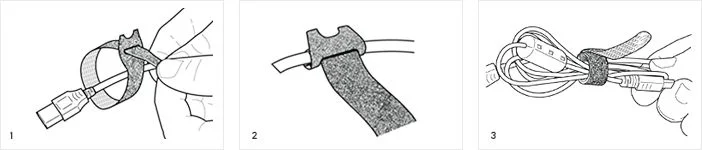
The selected 91140 pack contains 100 black pre-cut ties, each 8 inches by half an inch. Thread the narrow end through the slot to attach a tie to an individual cable, then coil that cable loosely and wrap the remaining strap around the bundle. The manufacturer’s instruction diagram shows the sequence. Keeping the tie with the cable means it is less likely to disappear when the cord is in use.
Organize for retrieval, not tightness
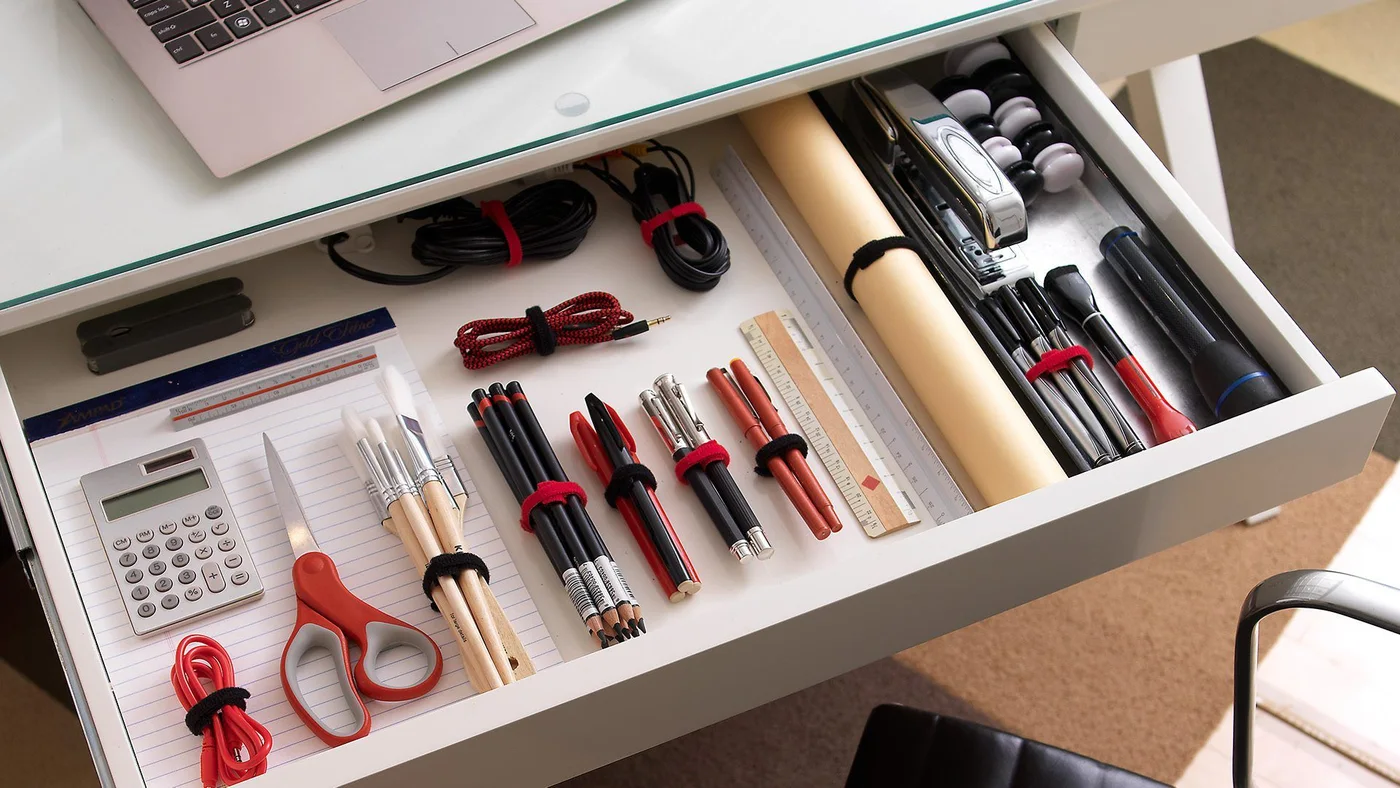
Start with the handful of cords you repeatedly untangle. Separate chargers, display leads and spare cables so a useful bundle does not become another anonymous knot. Leave connectors visible and respect the cable maker’s bend guidance. You need a neat coil, not a sharp fold or a strap pulled as tightly as possible. A worn or damaged electrical cable should be replaced appropriately, not made to look better with a wrap.
Is a hundred really the right quantity?
The bulk pack makes sense for several devices, family storage or repeated cable changes. If you have only three cords to tidy, a smaller pack or ties already included with your equipment may be enough. Check the selected pack size carefully: continuous rolls, garden ties and heavy-duty straps are different products, even under the same brand.
Know what these ties do not do
These are light cable-management fasteners, not load-rated cargo restraints, electrical insulation or a way to mount heavy equipment. They also cannot fix awkward outlet placement or hide an overflowing power strip. Choose them when opening and redoing bundles is part of your routine. Skip the bulk purchase if you cannot name the cables it will improve. Retailer package photography and maker usage illustrations are references; this is not our installation test.