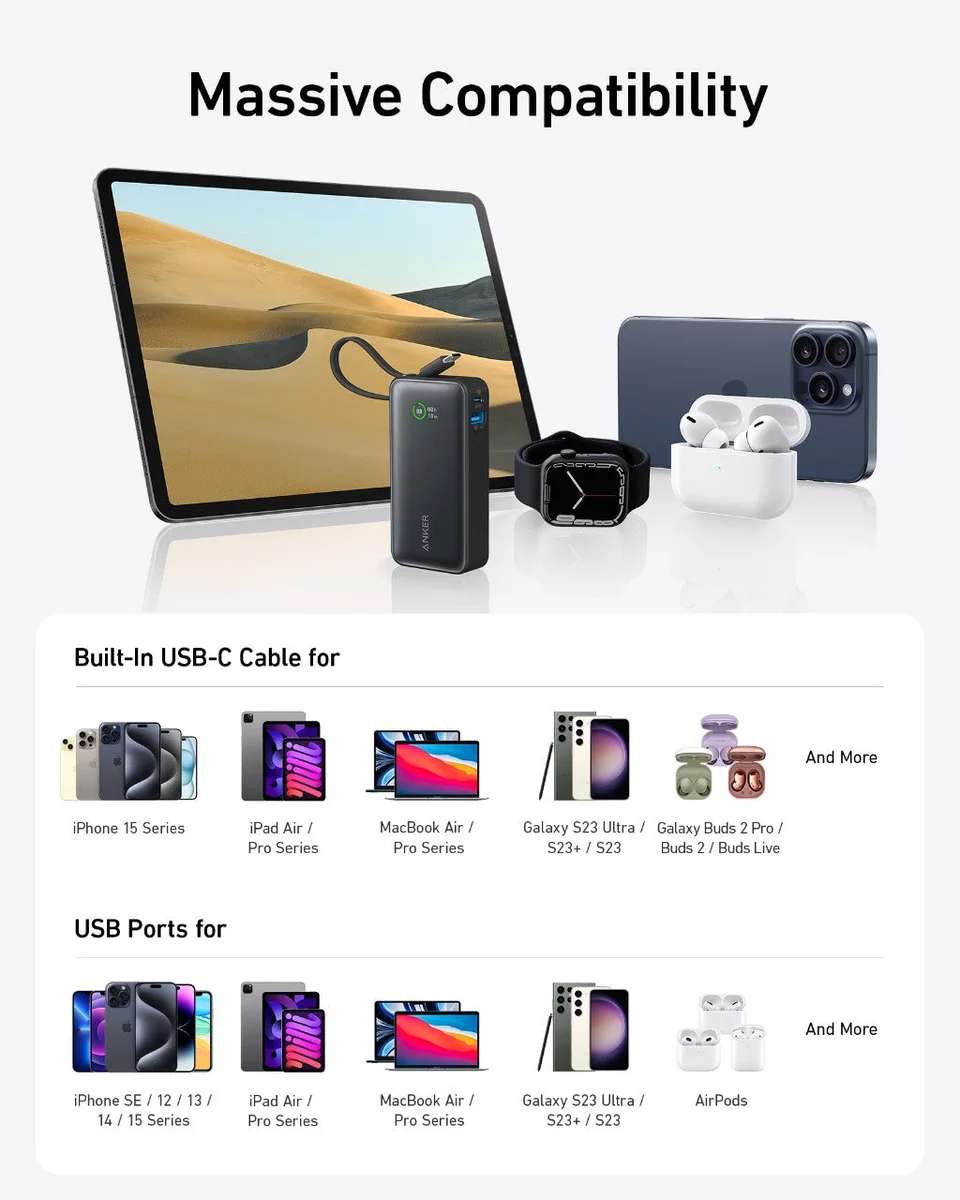
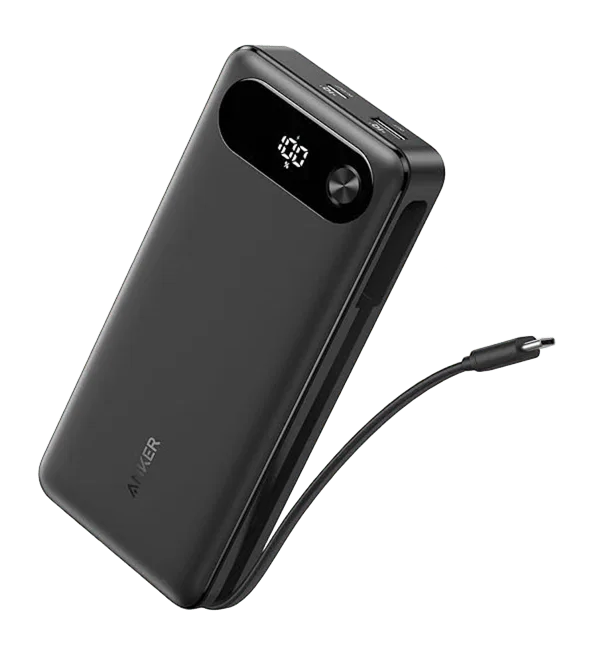
A power bank is most valuable at the moment you stop thinking about it. The phone is low, you have twenty minutes before a train, and the cable you thought was in the bag is on a desk at home. The Anker Nano A1259 answers that small failure with a built-in USB-C lead. That convenience is real as a design choice; it does not automatically make this the best battery for every device or trip. Buy the cable-on-board only if that is the problem you repeatedly have.
The built-in cable changes the packing checklist
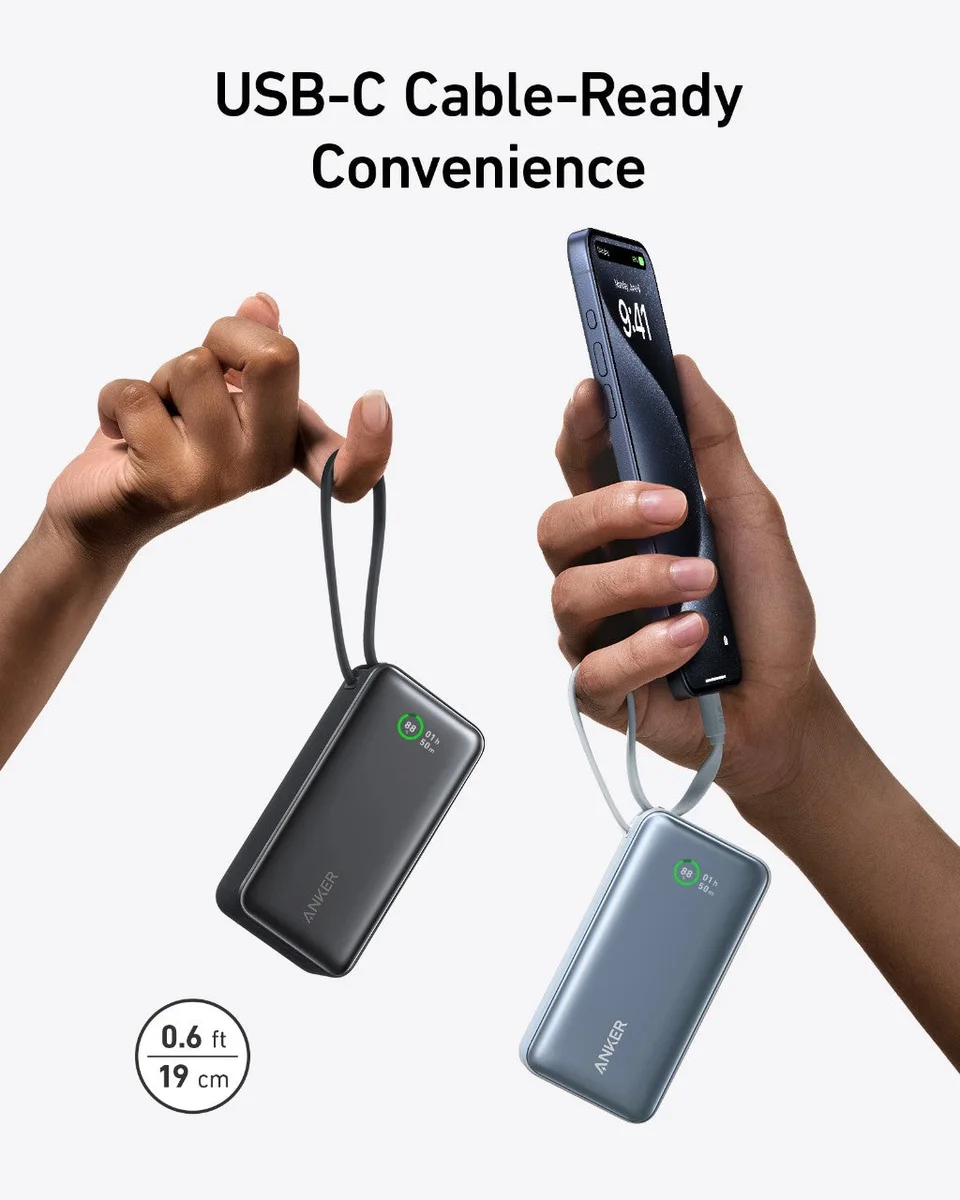
With the cable attached to the unit, you can leave with one fewer loose accessory to remember. The cable also doubles as part of the carrying arrangement in Anker’s product presentation, but do not assume it should bear every bag load or replace normal cable care. Check how far it reaches from your pocket or table to the device you use. If you charge a phone in hand while the bank is in a backpack, a short fixed cable may be less comfortable than your own longer lead. The separate USB-C port gives another connection option, subject to the configuration and output rules in Anker’s instructions.
What 10,000mAh does not tell you
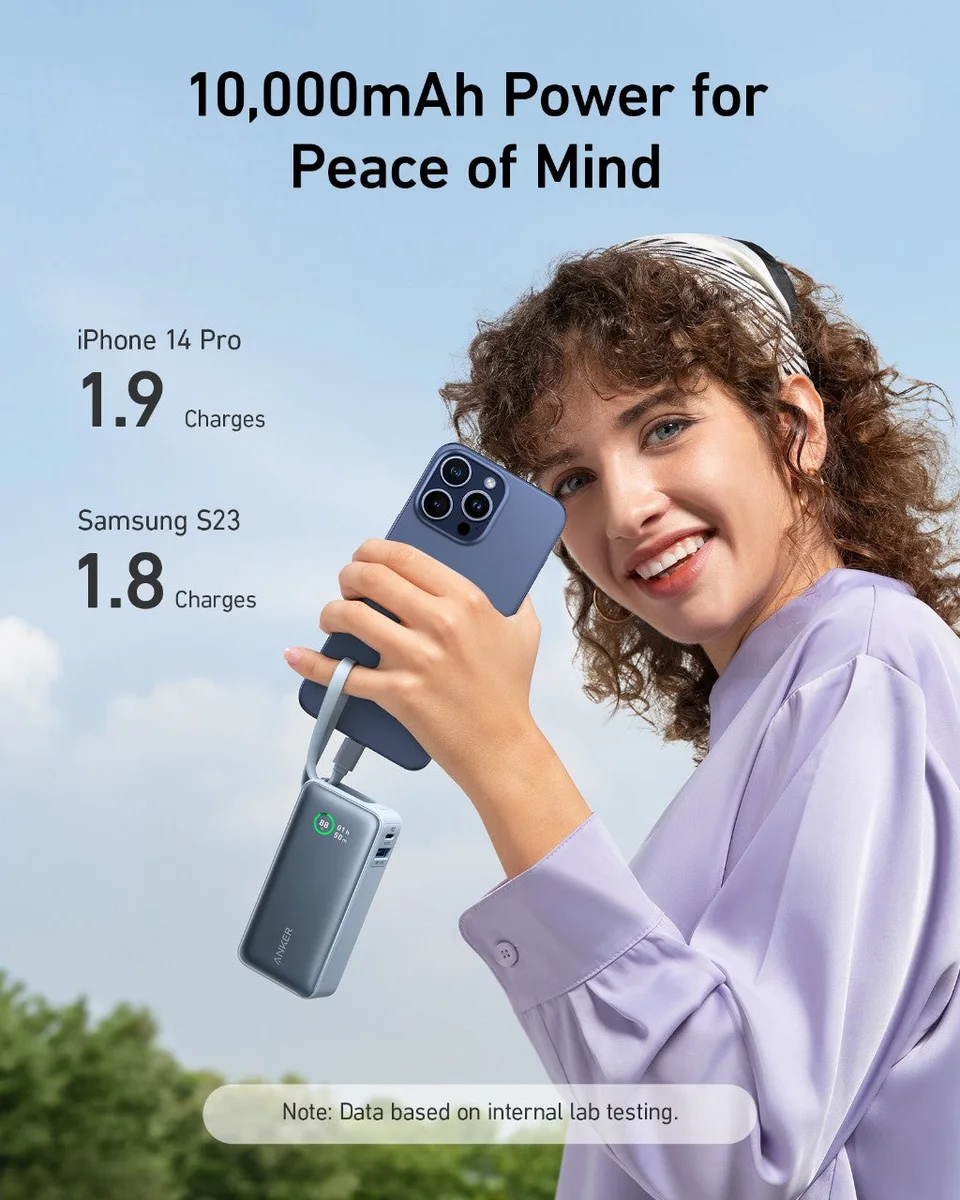
The 10,000mAh figure refers to the internal battery’s nominal cell capacity. A device does not receive every bit of that as usable phone-battery capacity: voltage conversion, heat, cable and charging conditions all create losses. Do not divide a phone’s advertised mAh into 10,000 and promise an exact number of full charges. Anker’s capacity estimates, when given, use particular test devices and conditions. We have not run an output-capacity test. A better planning question is whether this is an occasional rescue bank or your only power supply for a long day away from outlets.
Think about the device, not just “30W”
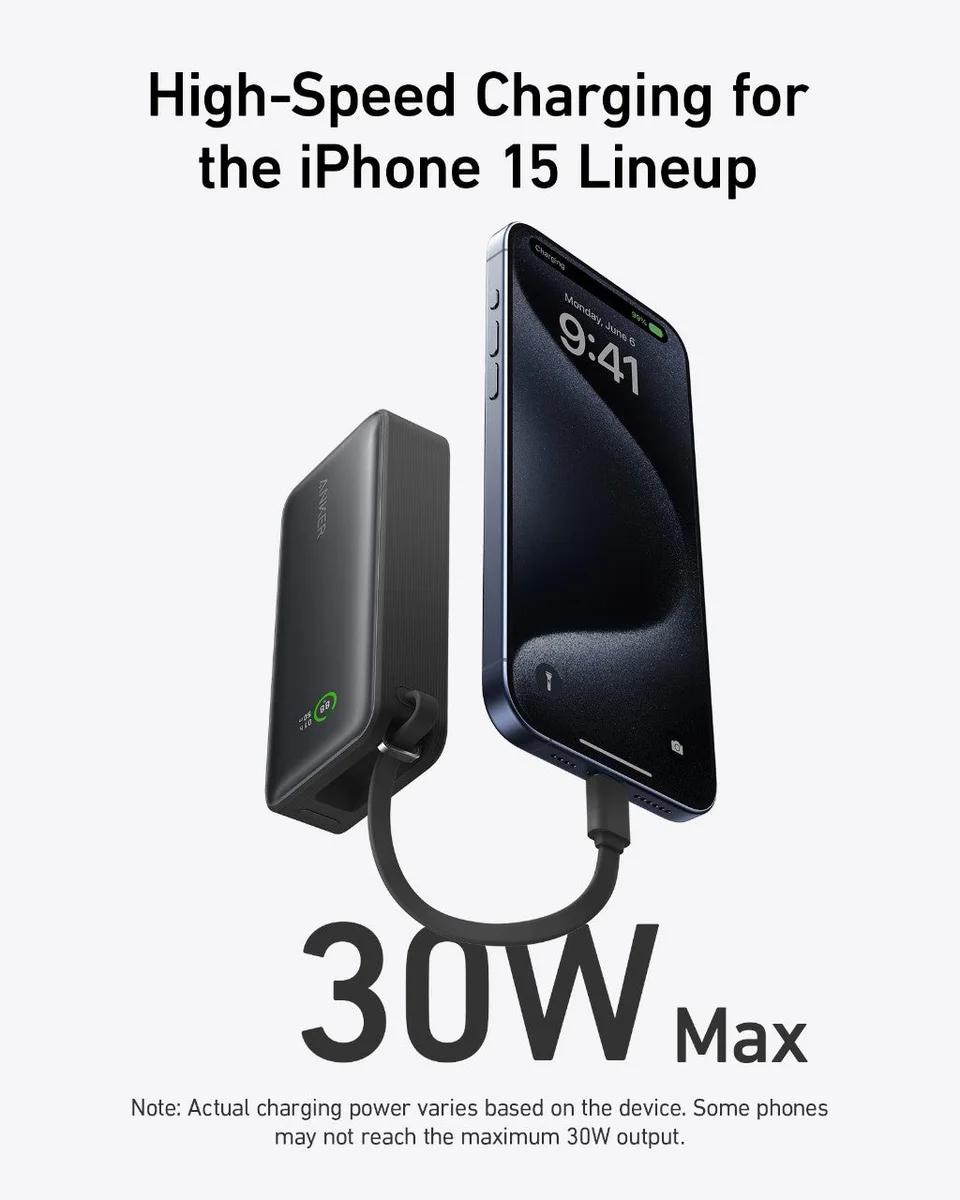
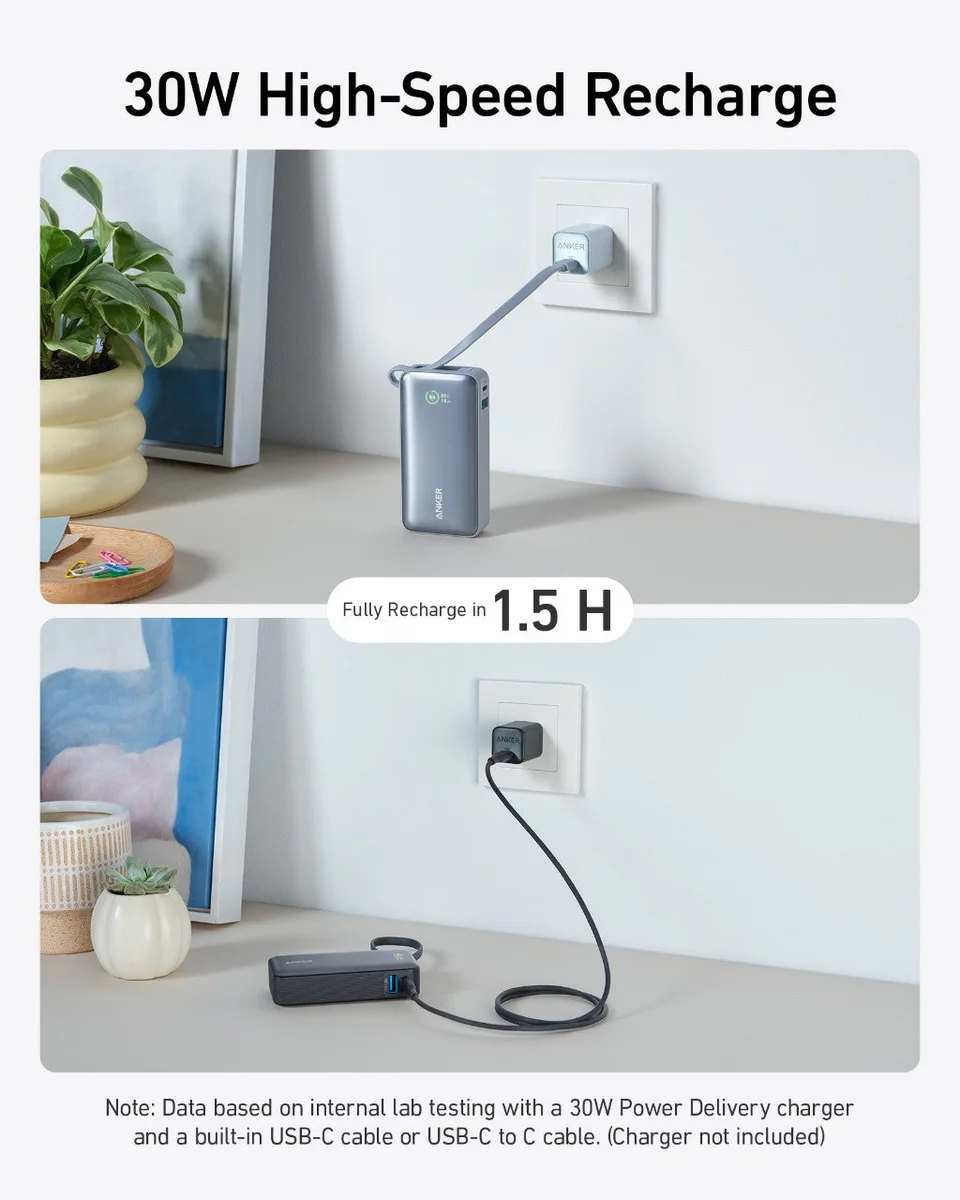
Anker markets up to 30W charging in either direction. That is a maximum under compatible conditions, not a fixed speed delivered to every device. Your phone or tablet decides what it can accept, and charging often slows as its battery fills. A laptop that expects more power may charge slowly, only while asleep, or not at all. Check the input specification of the specific device you carry; do not infer a full laptop recharge from the number 30. Similarly, recharging the power bank itself depends on the charger and cable arrangement you use. The manufacturer illustrations help identify ports, but cannot substitute for your device’s specifications.
The failure mode of an integrated cable
An attached lead cannot be forgotten, but it is also one part you cannot simply swap out if damaged. If your work involves repeated bends or the bank gets tugged off surfaces, protect that junction. If you already carry a durable multi-port charger and a cable you like, another 10,000mAh bank may add bulk without solving anything. The device may still be a good emergency reserve, but buying urgency should come from a real pattern of running out of power, not an imagined worst case.
A fair checkout test
Write down three things: the device you need to rescue, its USB-C charging needs, and how long you are actually without a wall outlet. If the cable is always missing and your device accepts USB-C charging within this bank’s range, the A1259 has a clear advantage. If you need a longer lead, several ports or higher-power laptop charging, shop by those requirements instead. The linked Amazon item is A1259 Pure Black, ASIN B0C9CJKCH3. Confirm the selected variant, new condition and delivery country. We have not measured its capacity, durability or speed; this is a specification-led buying guide.