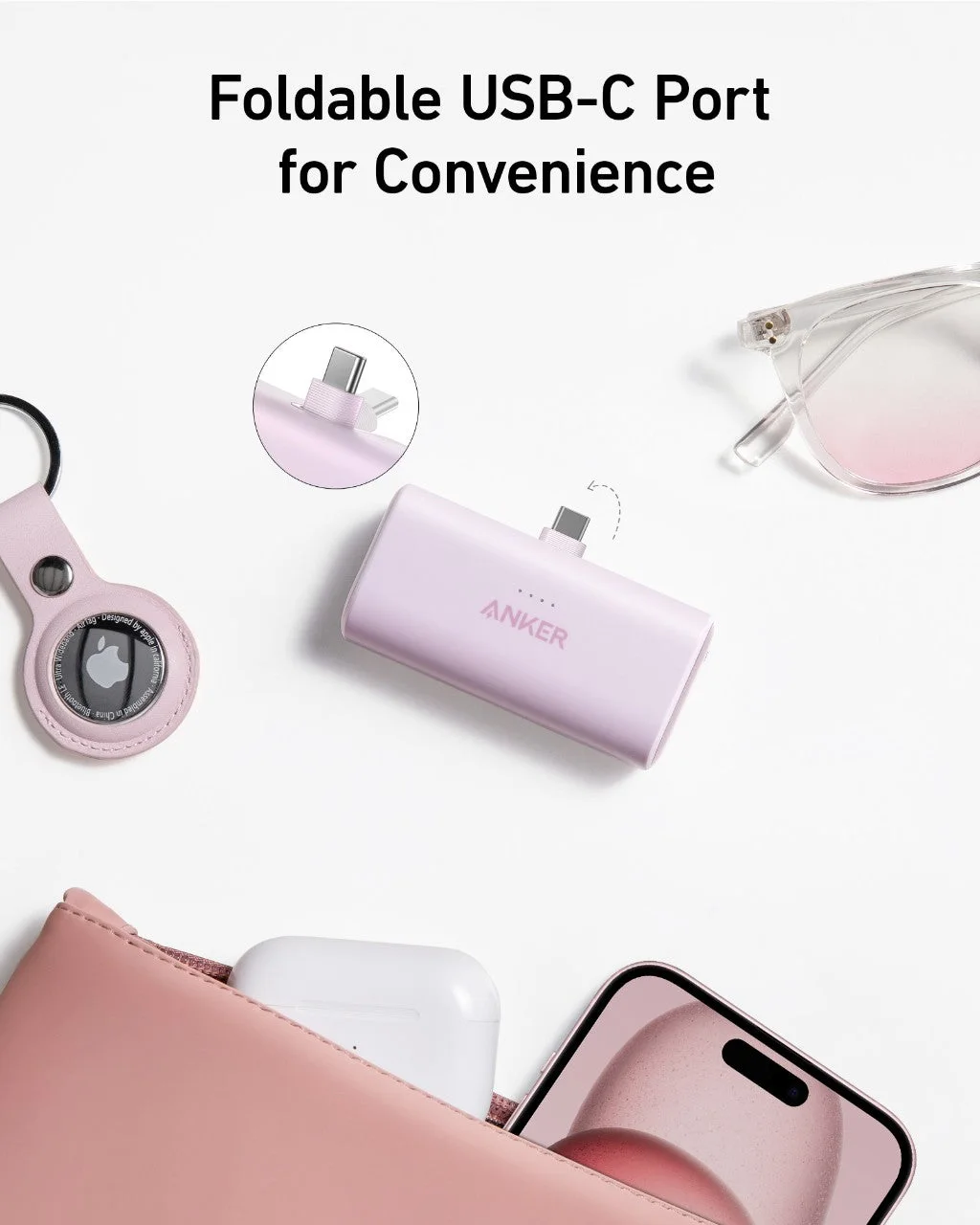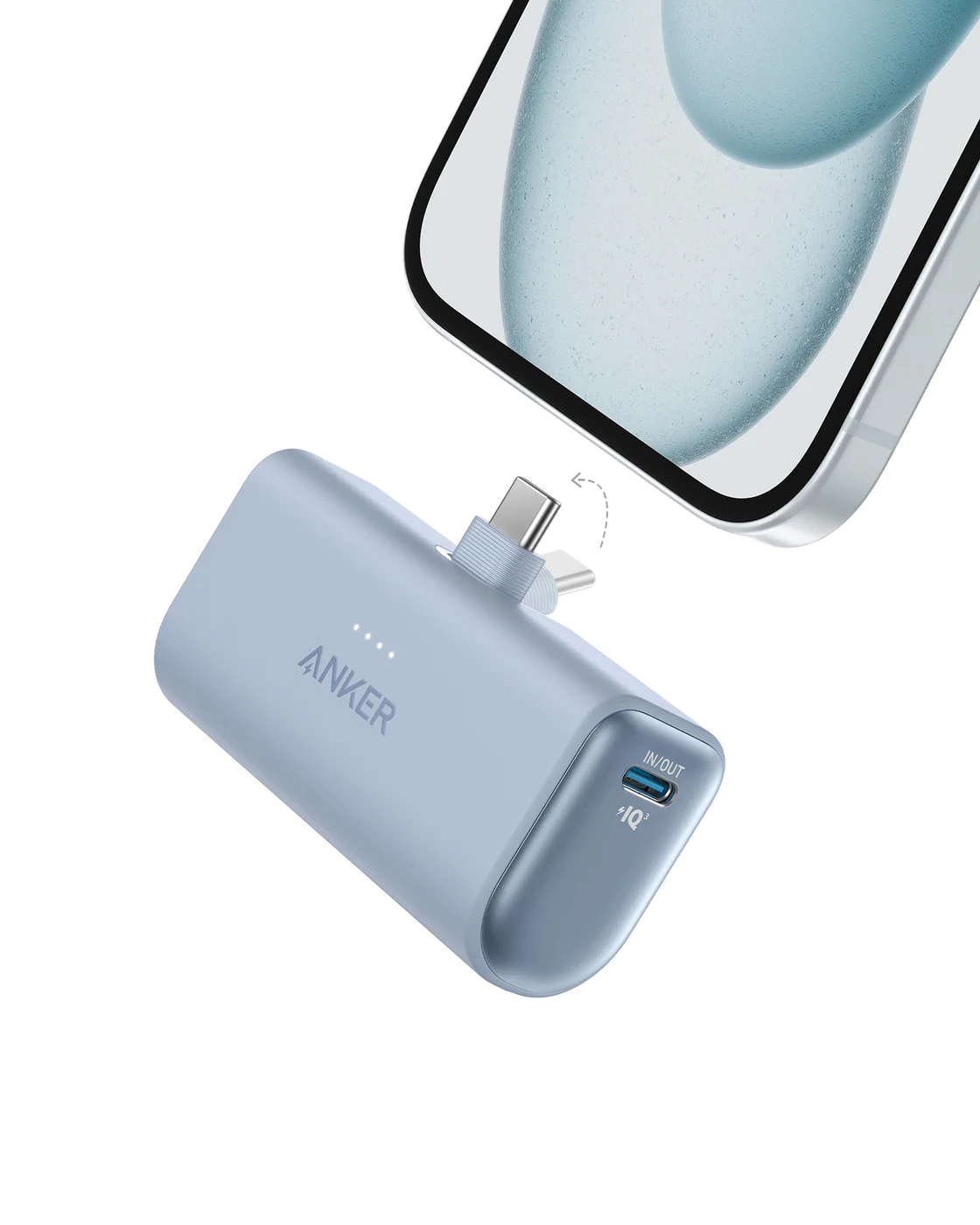
The appealing part of this Anker Nano is not a giant battery. It is the moment you leave for a short outing and realise your phone is already running low: a small USB-C plug folds out of the bank, so there is no separate charging lead to rummage for. That simplicity comes with a fit check worth doing before buying.
Look at the socket, not just the phone name
This is the A1653 with a built-in USB-C connector, selected in Ice Lake Blue. It is not the Lightning version and is not Anker’s larger Nano with a built-in cable. A phone using Lightning needs a different solution; a thick case can also stop a direct connector seating properly. Anker specifies a case-thickness limit of 4.9 mm, so check the area around your charging port rather than assuming a case labelled slim will fit.
Enough for a top-up, not a promise of another full day
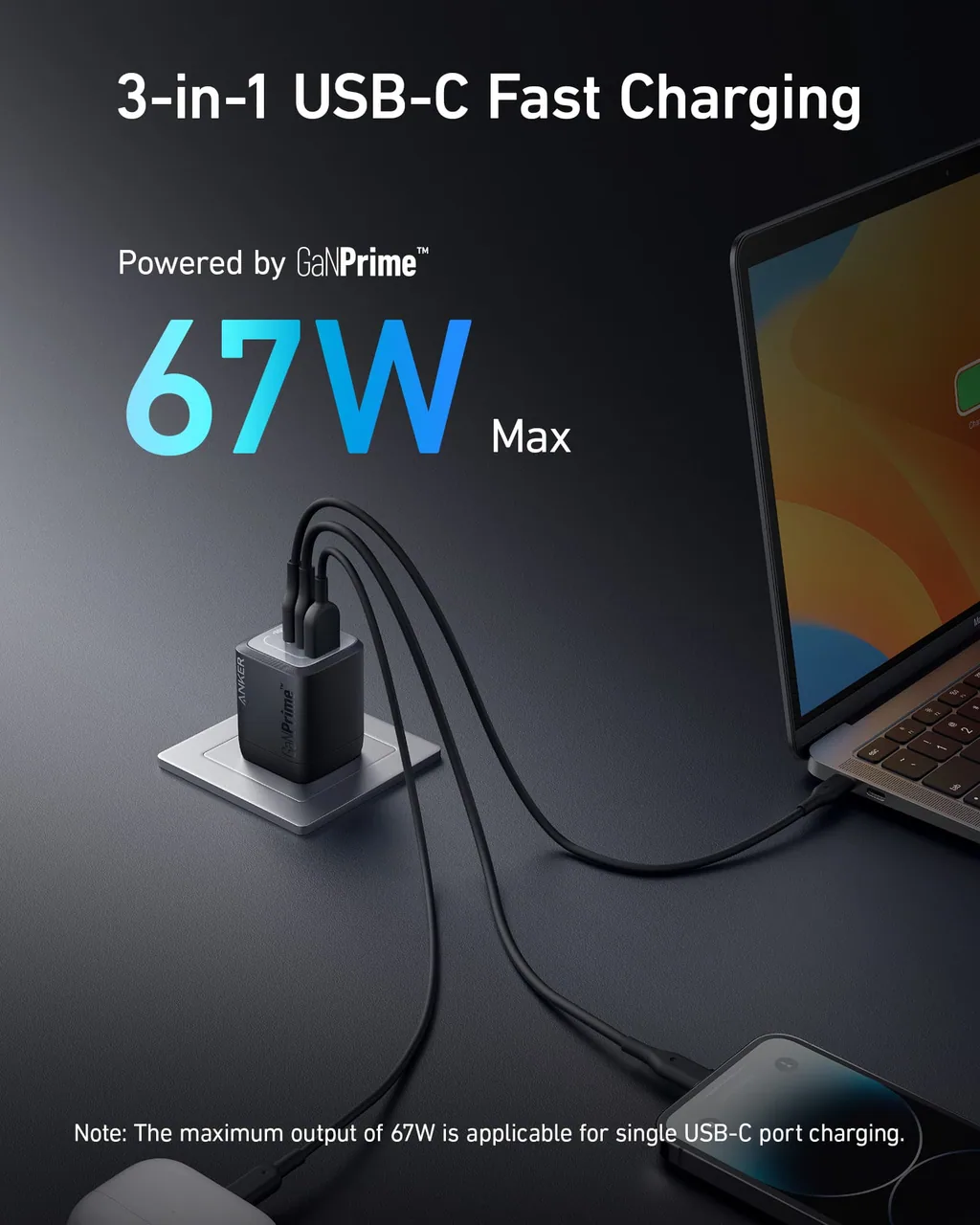
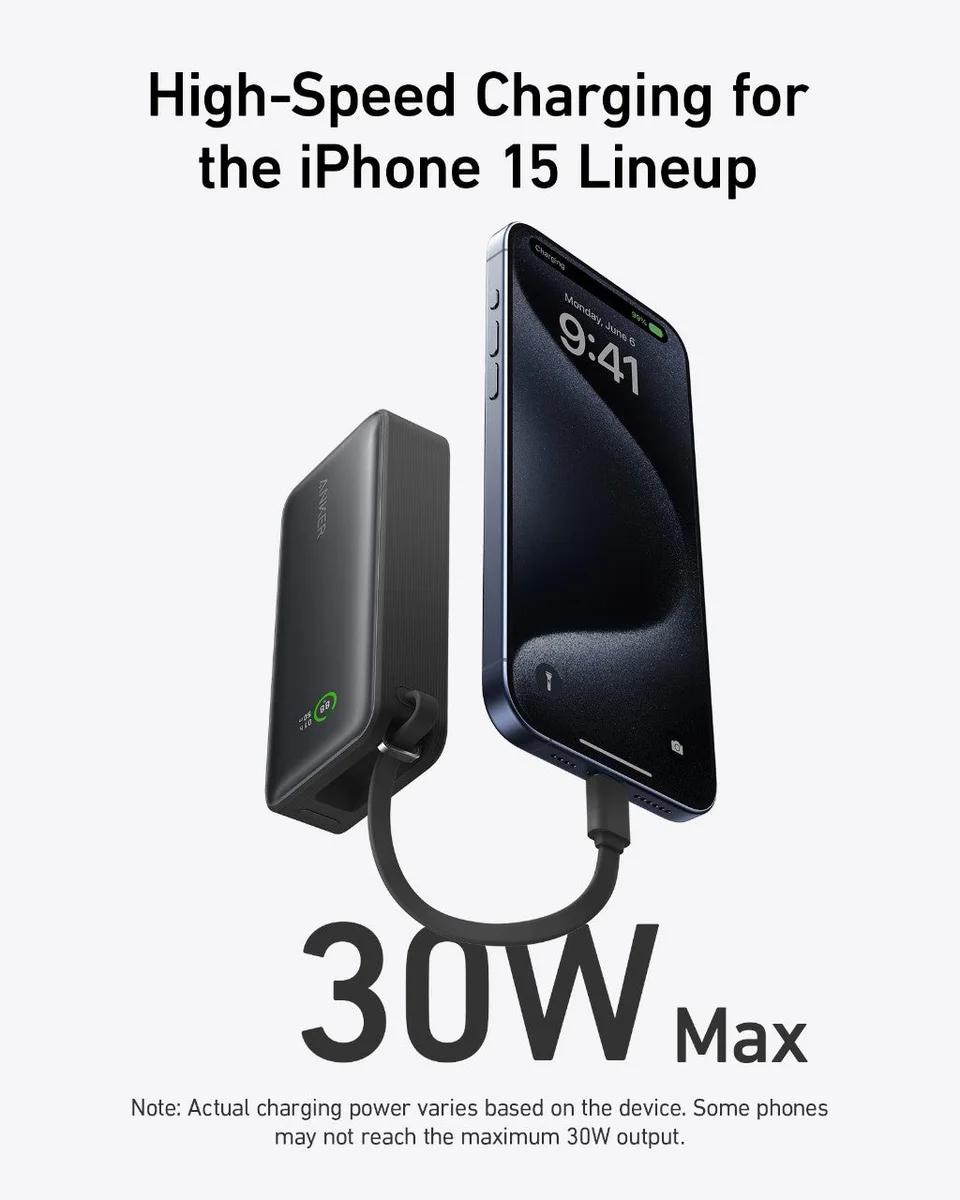
The rated capacity is 5,000 mAh and the bank weighs about 100 g. Treat it as a compact reserve for maps, tickets and getting home, not guaranteed multiple phone recharges. Capacity at the phone is lower than the battery’s nominal figure, and actual charging power depends on the connected device. The manufacturer’s 22.5W maximum is not a promise that every phone receives that speed.
The convenience has a handling tradeoff
With the bank plugged directly into a phone, hold both together. Anker specifically cautions against letting one hang from the other: the connector is an electrical connection, not a handle. If you prefer charging a phone loosely inside a bag, a cable-connected bank is less awkward.
Choose this Nano for a compatible USB-C phone and short, light carry. Skip it for a bulky case, longer trips between sockets or a phone you need to handle freely while charging.