The fun here is not speed. It is lining up a shot, missing by a little, and suddenly having a very specific idea about what to change next. BRIO Trickshot turns a small patch of table into that kind of challenge—without a screen, batteries or a sprawling game setup.
Aim first, then choose the power
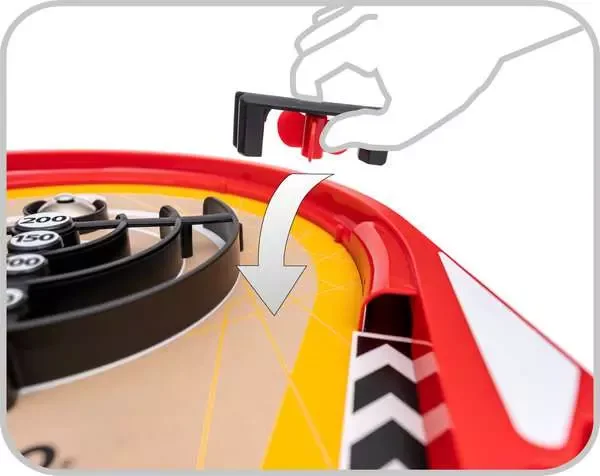
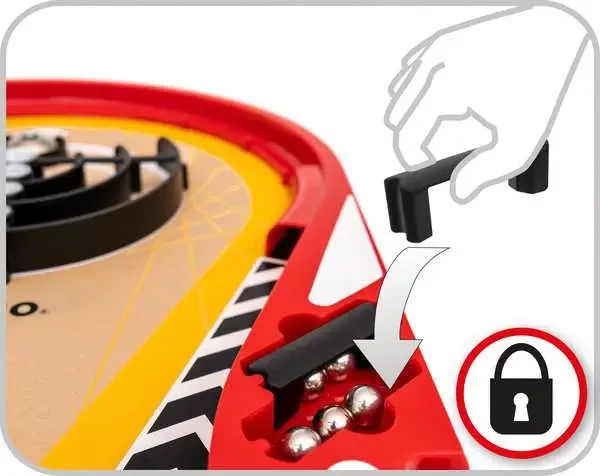
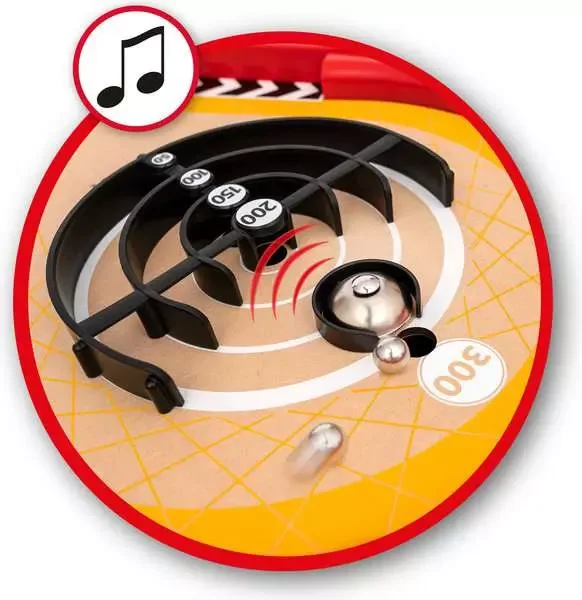
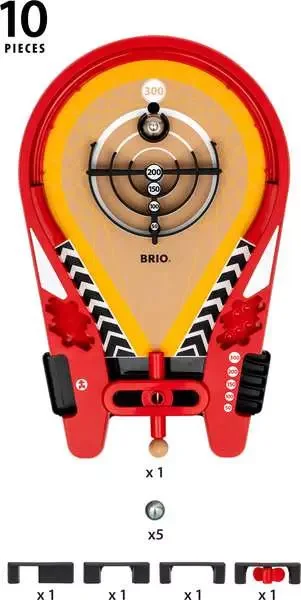
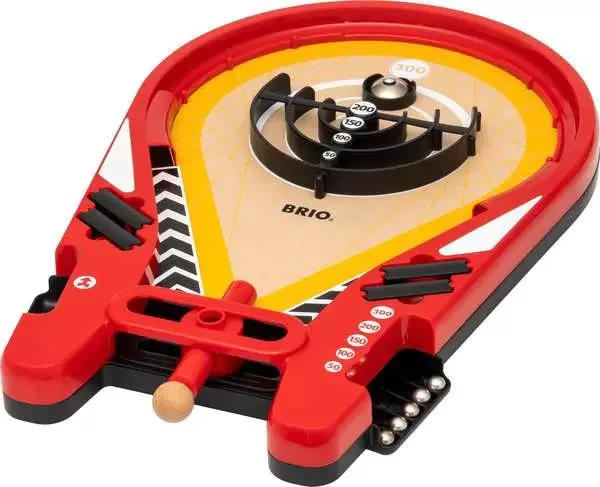
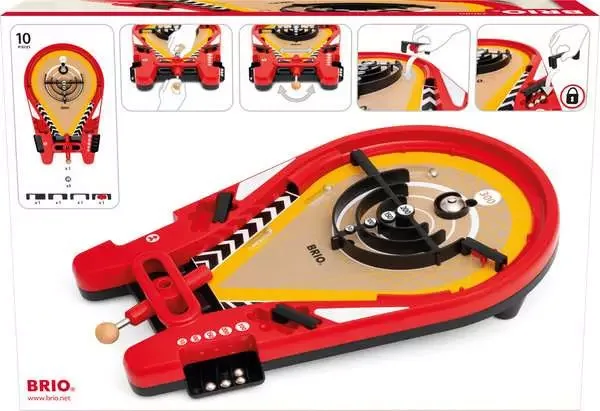
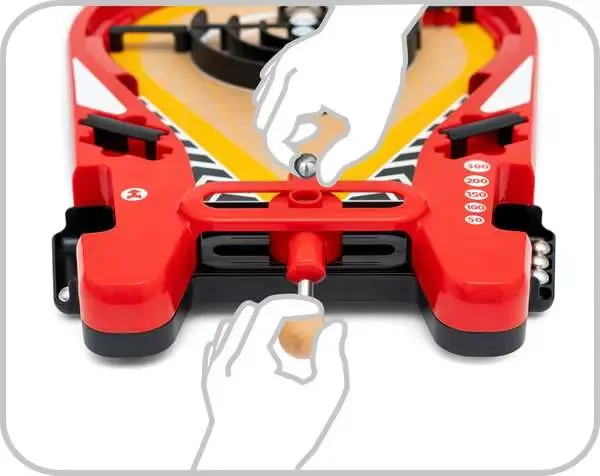
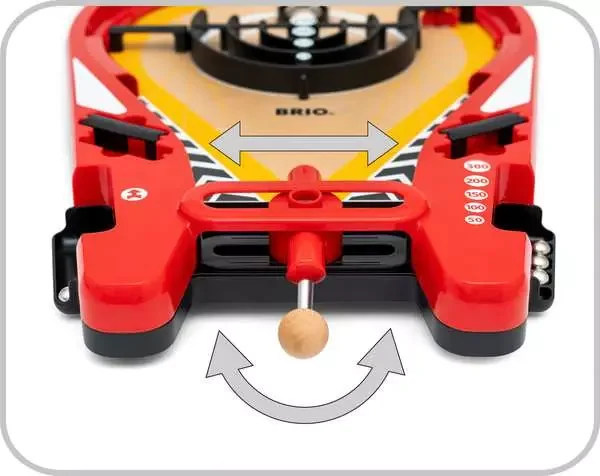
The wooden pull-back launcher rotates so you can change both direction and force. Your ball travels toward numbered scoring holes, while four removable obstacles let you adjust the route. This is a deliberate aiming game, not BRIO’s flipper-operated pinball board: that distinction matters if you are picturing frantic arcade action.
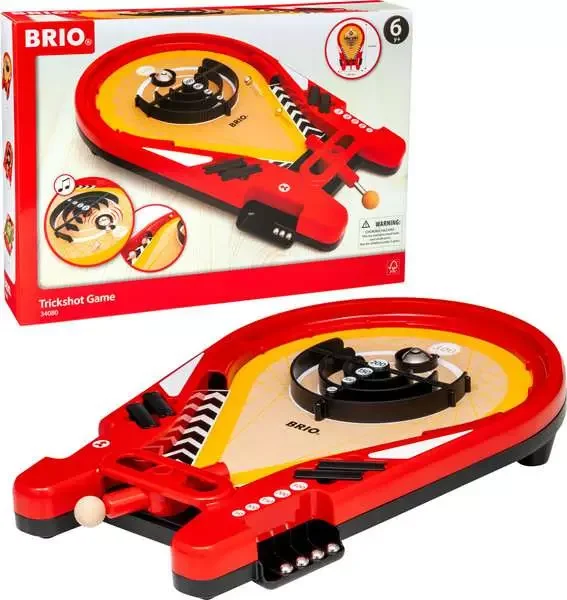
Begin with the obstacles removed and learn the launcher. Then add one obstacle and give everyone the same number of shots. One small change makes the next round feel different without having to learn another set of rules. That is a suggested way to play, not a claim that we have tested the game ourselves.
A good fit for short, shared breaks
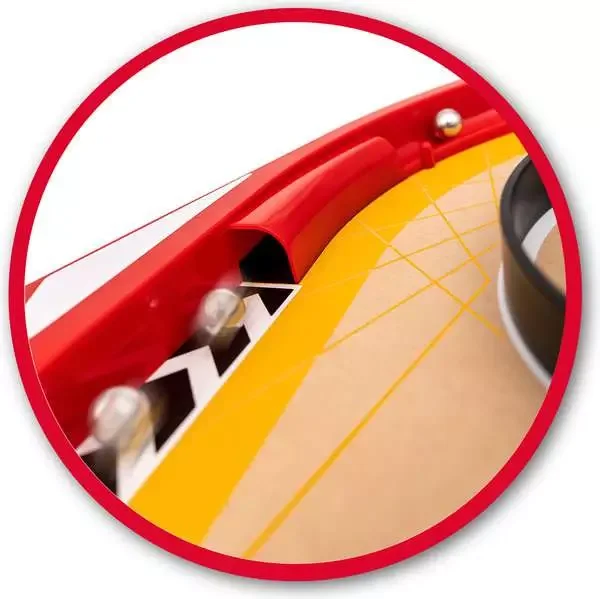
The manufacturer rates the game for ages six and up. You can practise alone or take turns with someone else; the pleasure is watching a shot develop, not having every player operating controls at once. Five metal balls are included in the maker’s description, and the returning balls collect near the player.
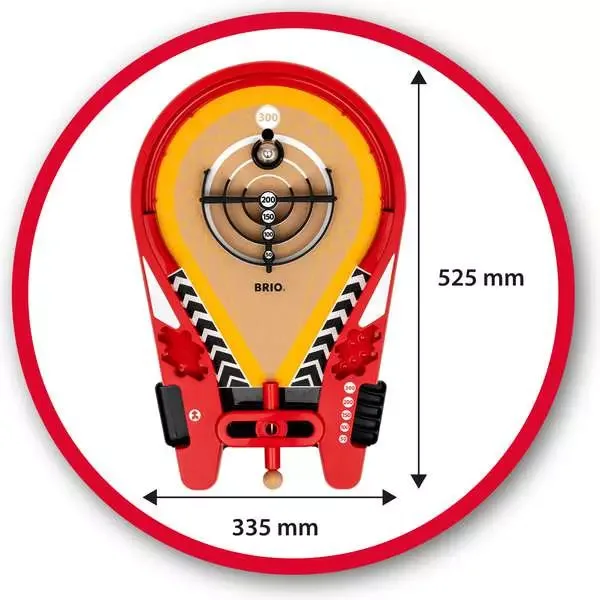
Allow roughly 53 by 34 centimetres of clear tabletop space, plus room for the person at the launcher. It is substantially bigger than a pocket puzzle. Small metal balls also make this a poor choice for a household where younger children might gain unsupervised access.
Buy it for the ritual, not the scoreboard
Trickshot makes sense when you want a visible, inviting game that people can try between longer activities. The red frame, wooden surface and mechanical controls are part of its appeal. Skip it if you need a silent desk object, a compact travel game or automatic electronic scoring. Check that the listing is the 34080 Trickshot version: the other BRIO tabletop games play differently.