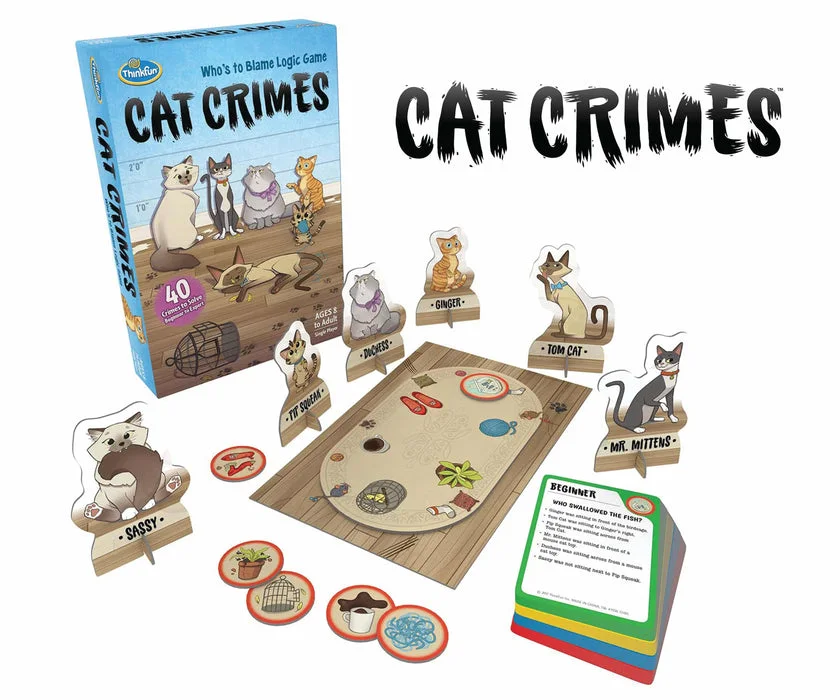
A knocked-over plant or tangled ball of yarn is a more entertaining starting point than a page of abstract logic exercises. ThinkFun Cat Crimes turns that domestic mischief into a tabletop mystery. Six feline suspects, a handful of clues and a small board give you something specific to solve—without opening an app or organising a game night.
The clues are the game
The classic 1550 edition contains 40 challenge cards with solutions, six standing cat tokens and six crime tokens. You place the suspects using the written clues, work out their positions and identify the guilty cat. The pleasure comes from a clue suddenly narrowing the possibilities, rather than quick reflexes or luck.

ThinkFun labels it for one player, ages eight and up. Someone must read and interpret the clues. A child who enjoys arranging figures but dislikes reading may need an adult alongside them; the appealing cats do not turn it into a word-free puzzle. Two people can discuss a card together, but there is no competitive multiplayer scoring system included.
Look past the cute characters
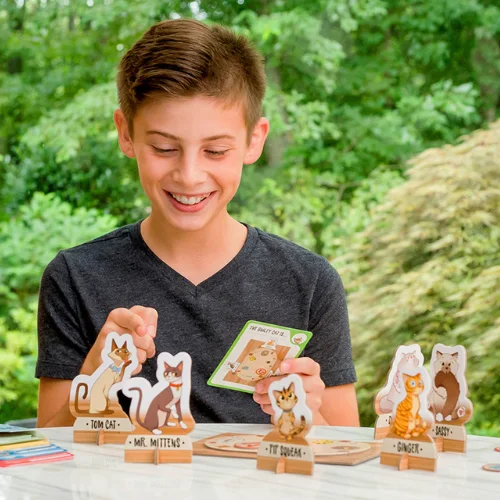
The photographed board and upright tokens show the actual play space. Keep a clear patch of table so a moved suspect does not accidentally undo the arrangement. The pieces also need somewhere to live when the session ends. This is easier to set out at home than to balance across an airline tray during turbulence.
Because the supplied challenges have solutions, replaying a remembered card can be less satisfying. Do not buy it expecting endless new mysteries, an online challenge subscription or a proven improvement in school performance.
A better gift for the right kind of puzzler
Choose Cat Crimes for someone attracted to deduction, a whimsical theme and short self-contained challenges. Skip it if they want a fast group game or a building toy with freely invented scenes. Its most appealing promise is modest: a funny little crime to think through, and a satisfying reason to move the phone out of reach for a while.