Some game nights want a little fantasy without character sheets, hours of setup or a campaign to finish. Dragonwood offers a compact dragon hunt built from cards and dice. The interesting moment is deciding whether your hand is ready—or whether one more card is worth waiting for.
Build the attempt before rolling
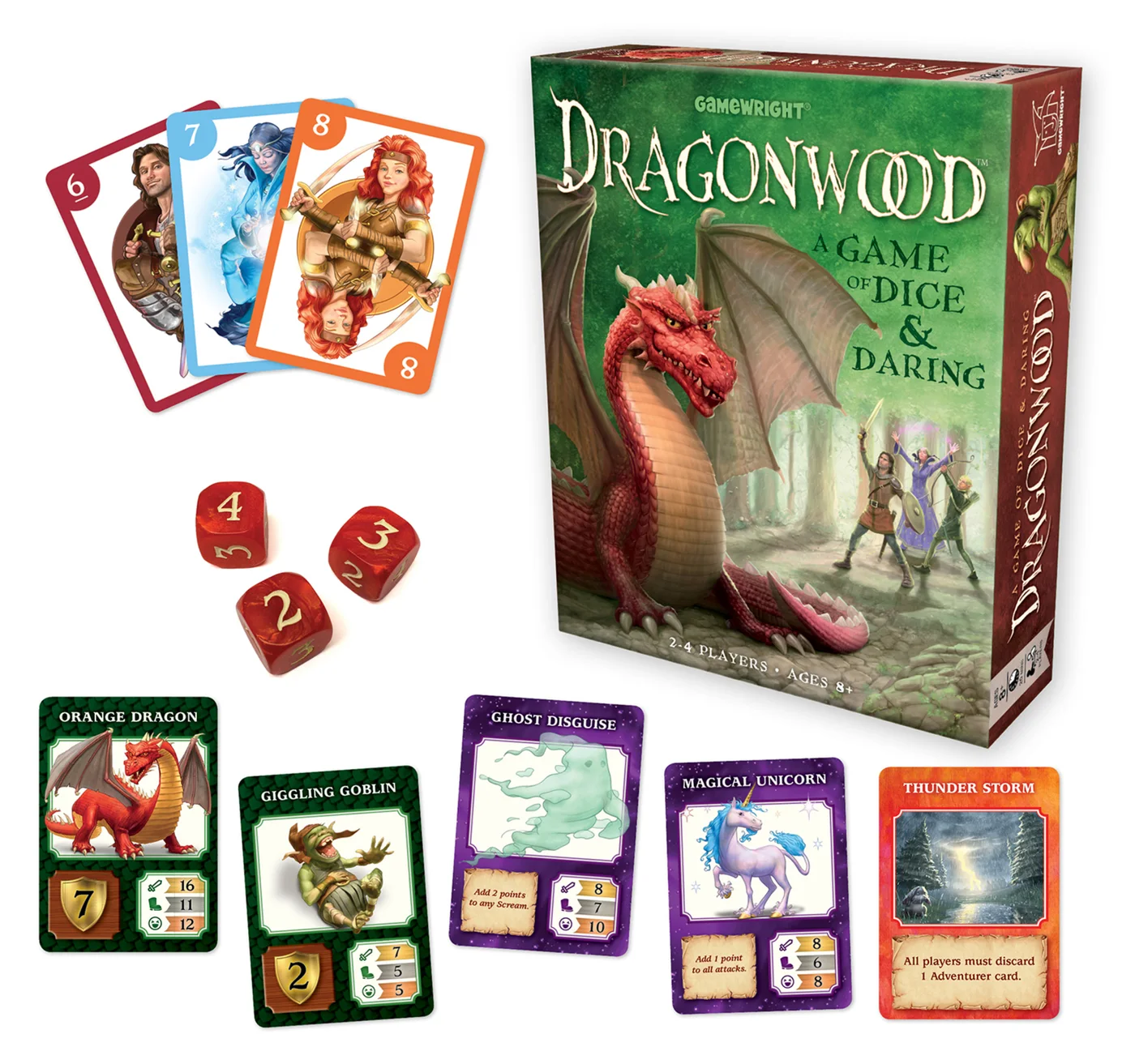
You collect adventurer cards into useful combinations, then use them to earn dice for attempts against creatures in the shared display. The creature’s requirements and your available cards shape the choice. A promising plan can still fail when the dice land badly, which is part of the game’s tension rather than a flaw you can purchase away.
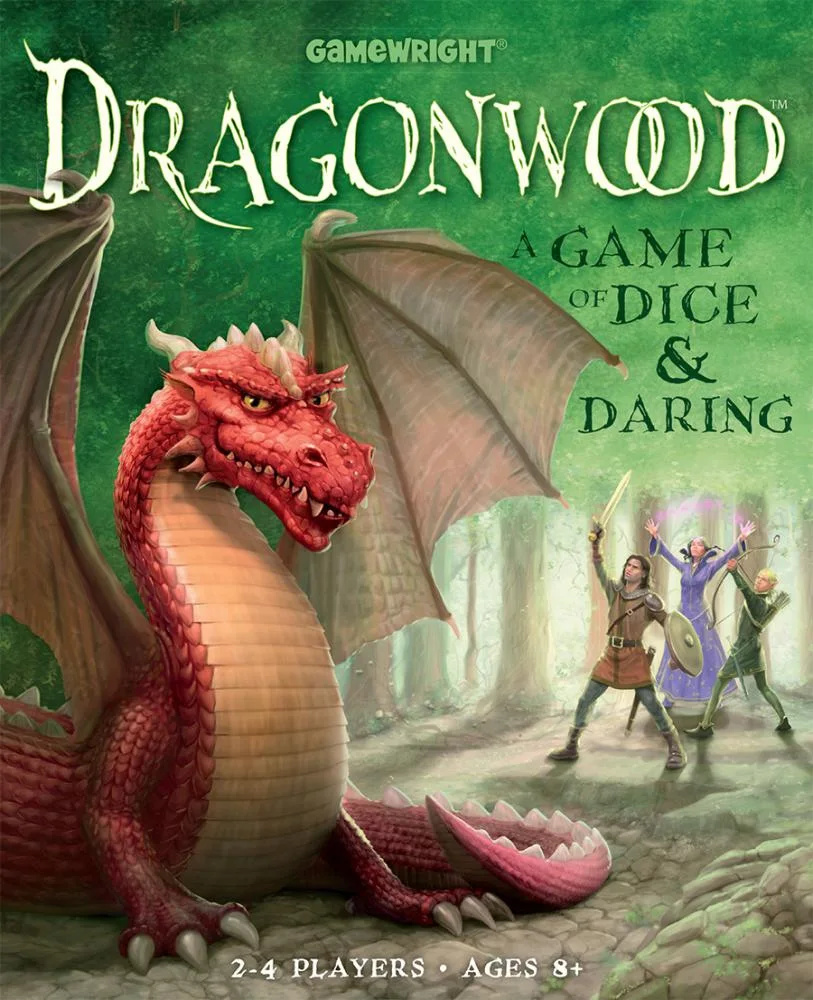
The publisher lists two to four players, ages eight and up and about twenty minutes. The original 108 edition contains 108 cards and six custom dice. It is not Dragonrealm, and there is no sprawling role-playing world hidden inside the box.
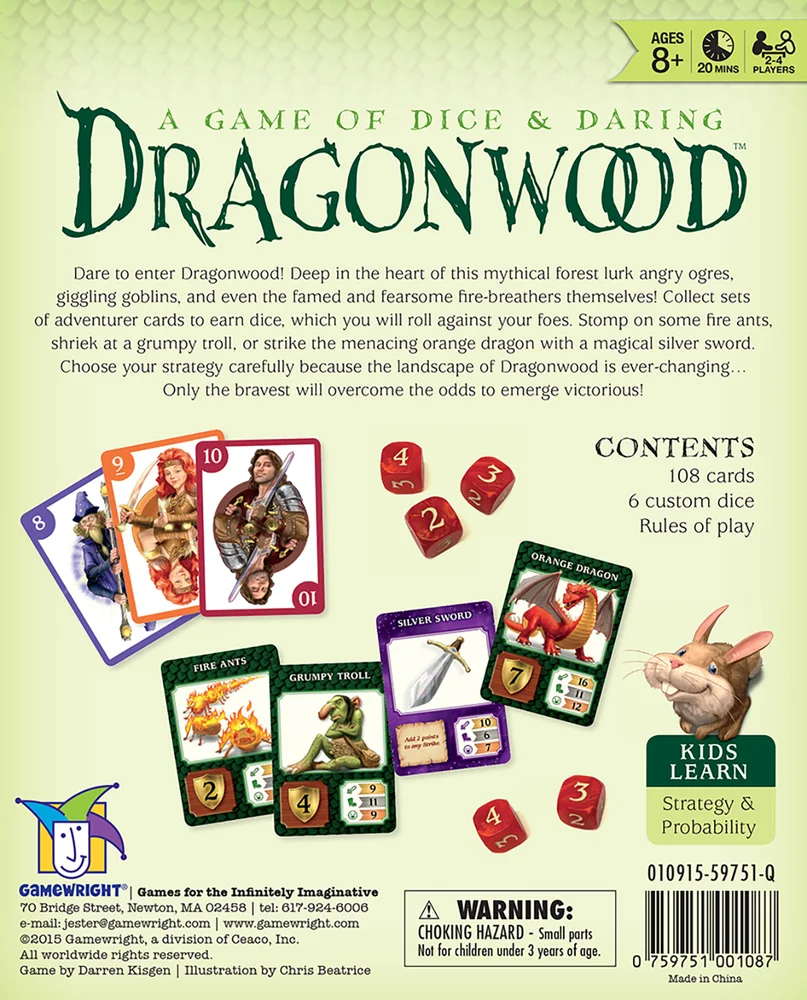
Look at the creature, not only the artwork
The humorous fantasy illustrations can draw a reluctant player to the table, while the capture choices give the pictures a purpose. Read the values together during the first game. Letting a child make a less-than-optimal attempt is often more enjoyable than turning each turn into an adult probability lecture.
Do not rely on the selected Amazon page’s unrelated farm-puzzle paragraphs: the publisher’s game rules and contents are the relevant reference. No puzzle poster or 300-piece jigsaw belongs to this product.
Where it fits
Choose Dragonwood for a short, competitive family game with a sense of adventure. Skip it if the group dislikes dice deciding outcomes, cannot comfortably manage cards and small dice, or expects cooperative storytelling. Leave a clear central space for the creature display and keep the components away from very young children.
Its appeal is a manageable fantasy excursion, not a substitute for a role-playing campaign. This is a researched buying assessment rather than firsthand gameplay testimony.