party-card-games

Carcassonne Board Game: Build a Little World, One Clever Tile at a Time

A road meets a monastery. A city grows an awkward corner. Then someone places a tiny wooden person exactly where you hoped to score. Carcassonne turns a few simple actions into a shared landscape with just enough friendly rivalry to keep everyone looking at the table.

Findweave Editorial3 min read

Published

Shop at Amazon

Paid link — we may earn a commission. Amazon may show a local match, an alternative or search results. Check the exact product, delivery and current price.

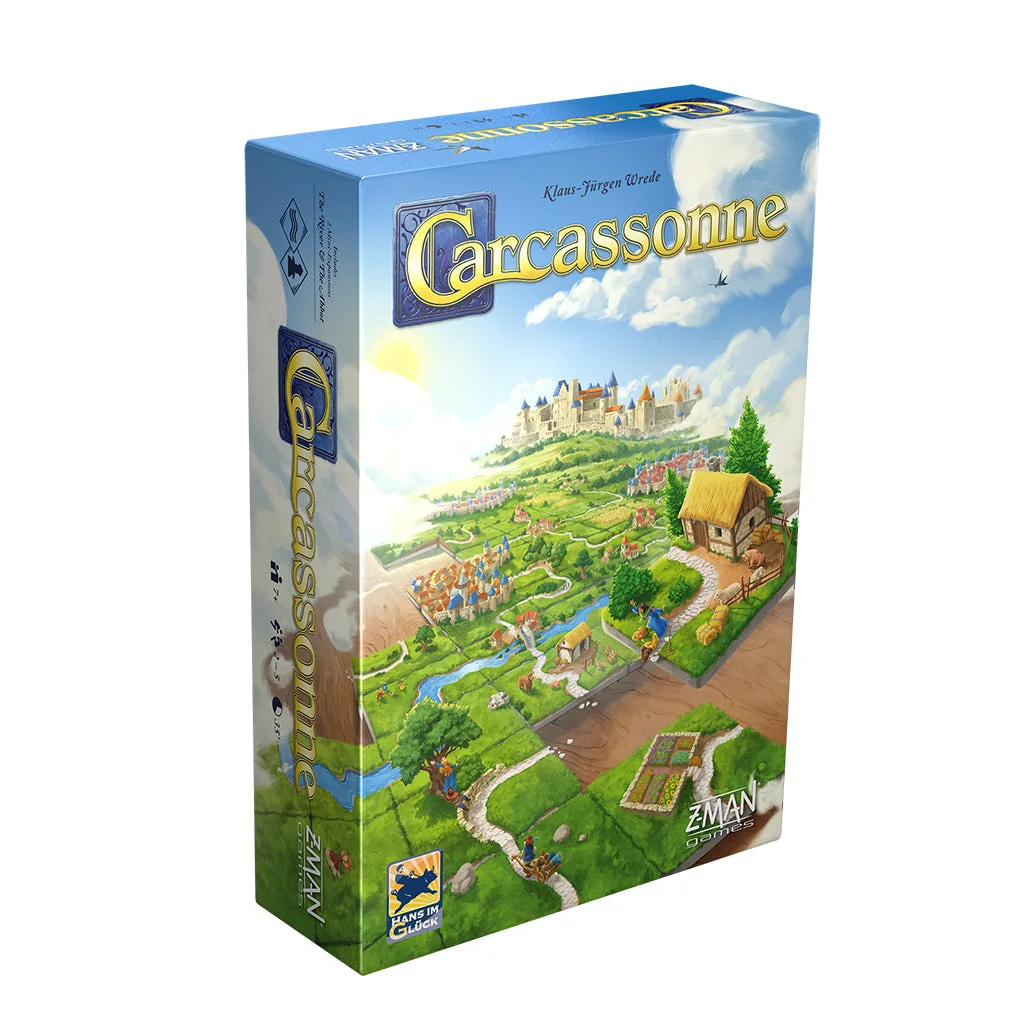
The English Carcassonne base-game box, not the much larger Big Box bundle.
Photo: Z-Man Games · Manufacturer reference image

Some links are paid links: we may earn a commission from qualifying purchases. As an Amazon Associate I earn from qualifying purchases. How we earn money.

THE SHORT VERSION

Before you browse

  1. Place landscape tiles and commit a limited supply of meeples to roads, cities and monasteries
  2. 2–5 players, publisher age 7+, around 45 minutes; retailer estimates vary
  3. Shared features can be contested; expansions and additional rules are not needed for a first game

A road meets a monastery. A city grows an awkward corner. Then someone places a tiny wooden person exactly where you hoped to score. Carcassonne turns a few simple actions into a shared landscape with just enough friendly rivalry to keep everyone looking at the table.

The pleasure is watching the map appear

There is no huge map to memorize before you begin. You draw a landscape tile, fit its edges to the growing countryside, then decide whether to commit one of your meeples. Roads must continue roads; cities must continue cities. The resulting patchwork is part puzzle, part negotiation with whatever tile comes next.
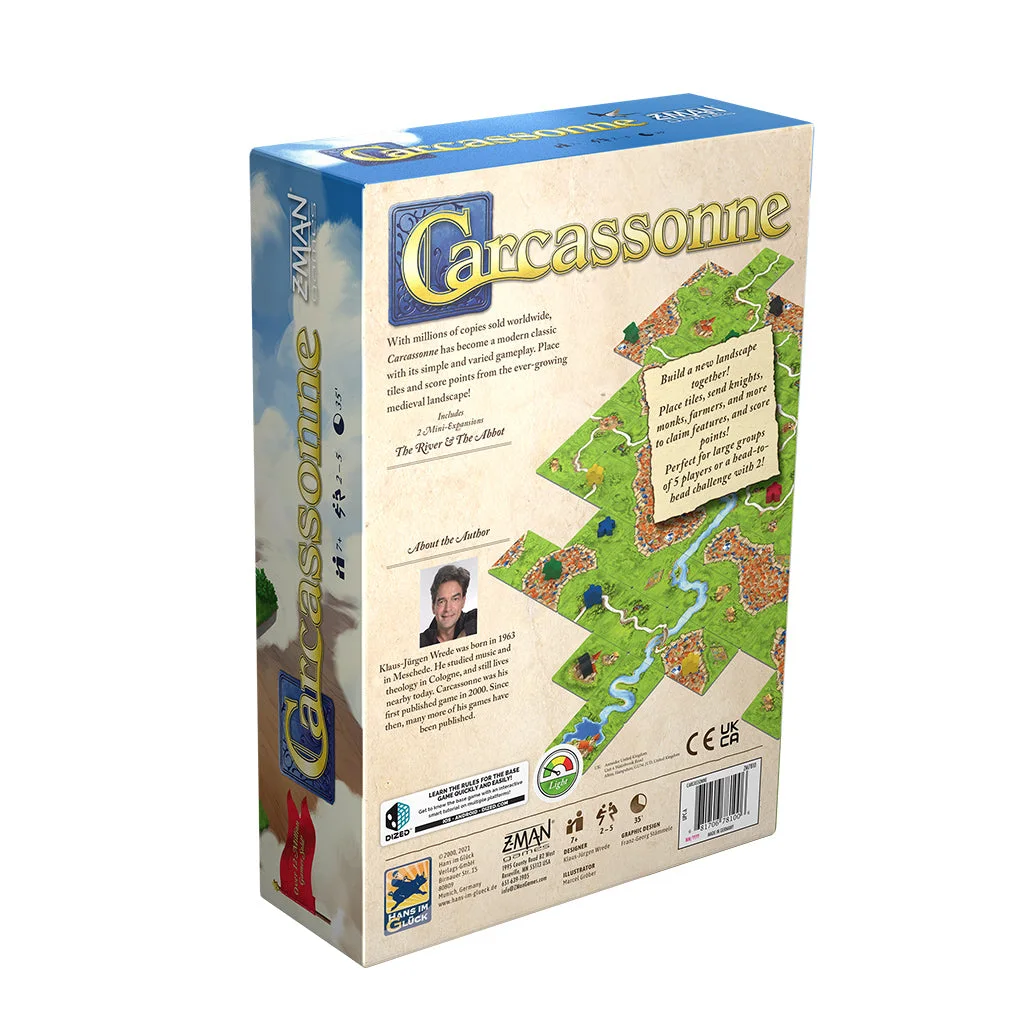
Back-of-box overview of the tile landscape and base-game contents.
Photo: Z-Man Games · Manufacturer reference image. Back-of-box overview of the tile landscape and base-game contents.

This makes the game appealing when your group wants something tactile and strategic without spending the evening managing pages of equipment. It also creates an obvious visual invitation: even a newcomer can see the city everyone is trying to finish.
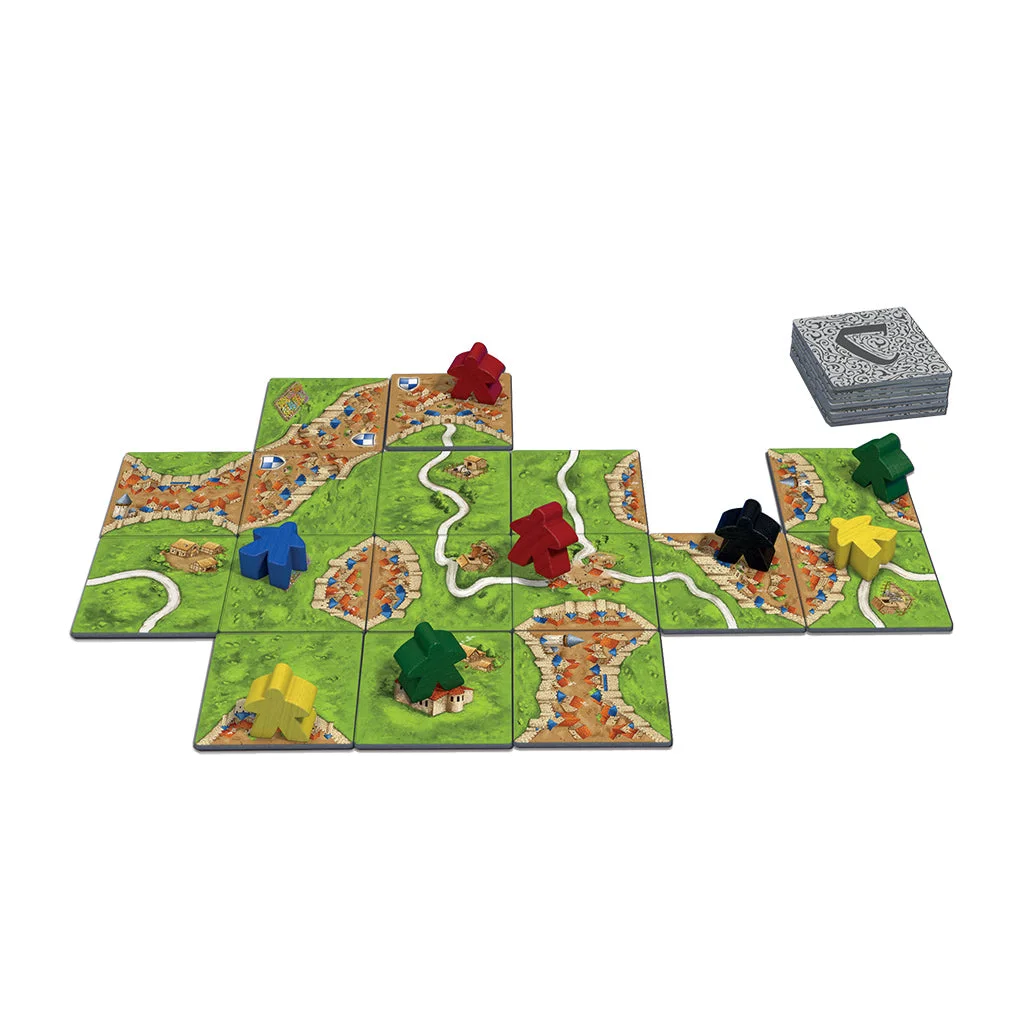
Roads, cities and coloured meeples arranged on a small growing landscape.
Photo: Z-Man Games · Manufacturer reference image. Roads, cities and coloured meeples arranged on a small growing landscape.

A small figure is a real commitment

The important decision is not merely where a tile looks nicest. A meeple tied up in an unfinished feature cannot immediately help elsewhere. Leave yourself a usable supply rather than putting every figure onto the first promising road or city.
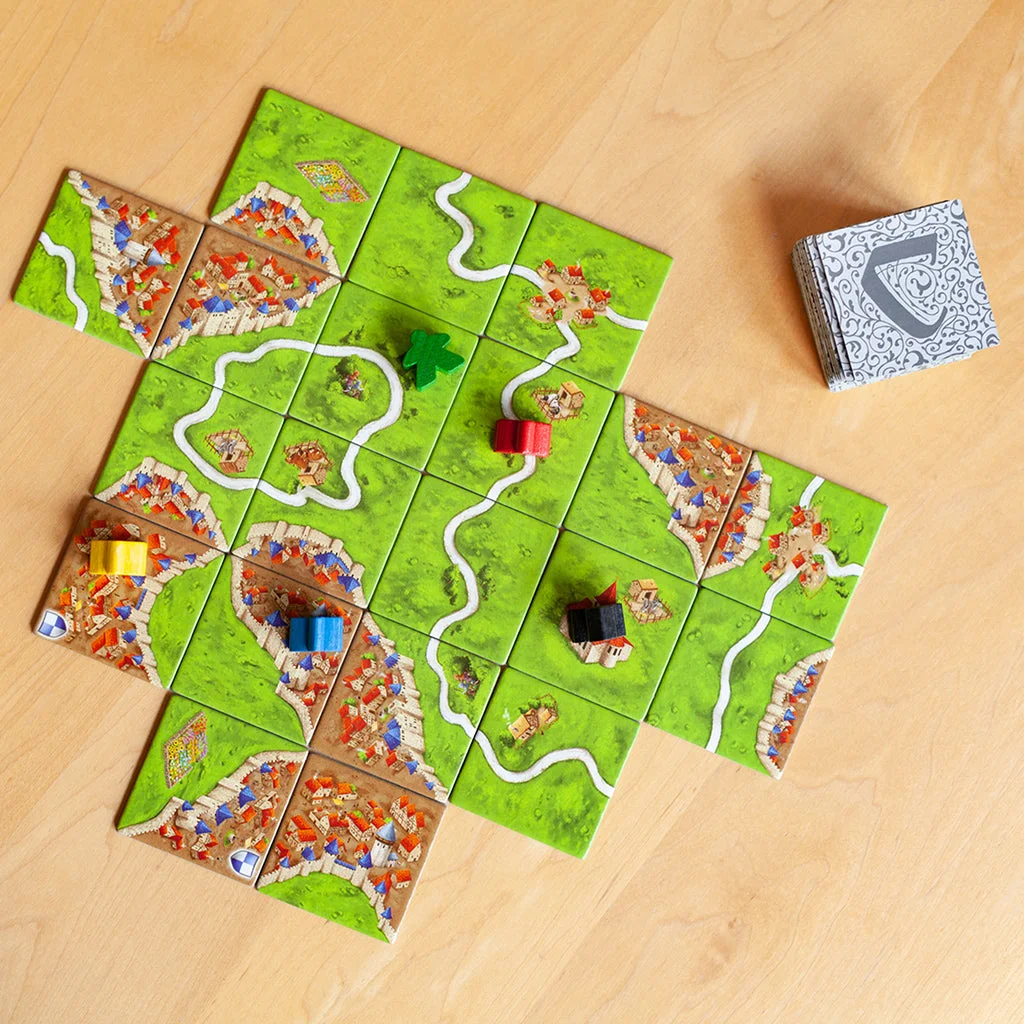
Overhead tile placement: adjoining edges must continue matching roads, fields and cities.
Photo: Z-Man Games · Manufacturer reference image. Overhead tile placement: adjoining edges must continue matching roads, fields and cities.

Shared territory also means the countryside is not peaceful by default. Another player may connect into a feature or make it harder to finish. Buy this for a group that enjoys light competition, not one expecting a cooperative village-building activity.
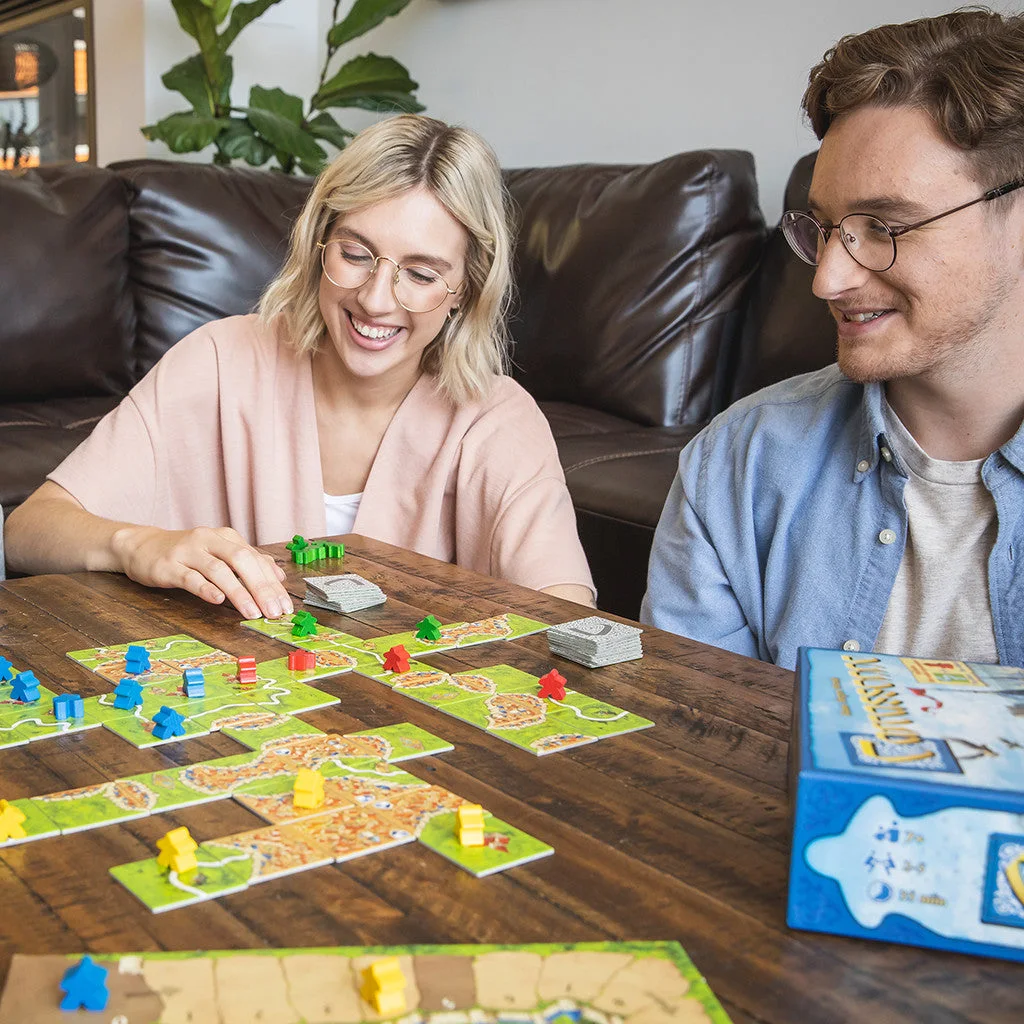
Publisher lifestyle photograph showing a two-player tabletop session; not a Findweave playtest.
Photo: Z-Man Games · Manufacturer reference image. Publisher lifestyle photograph showing a two-player tabletop session; not a Findweave playtest.

Begin with the base box

The selected English ZM7810 set is the base game, not a Big Box or a separately sold expansion. Publisher information describes two to five players and roughly 45 minutes; retailer estimates vary. It includes The River and The Abbot, but you do not need to pile every extra rule into your first session.
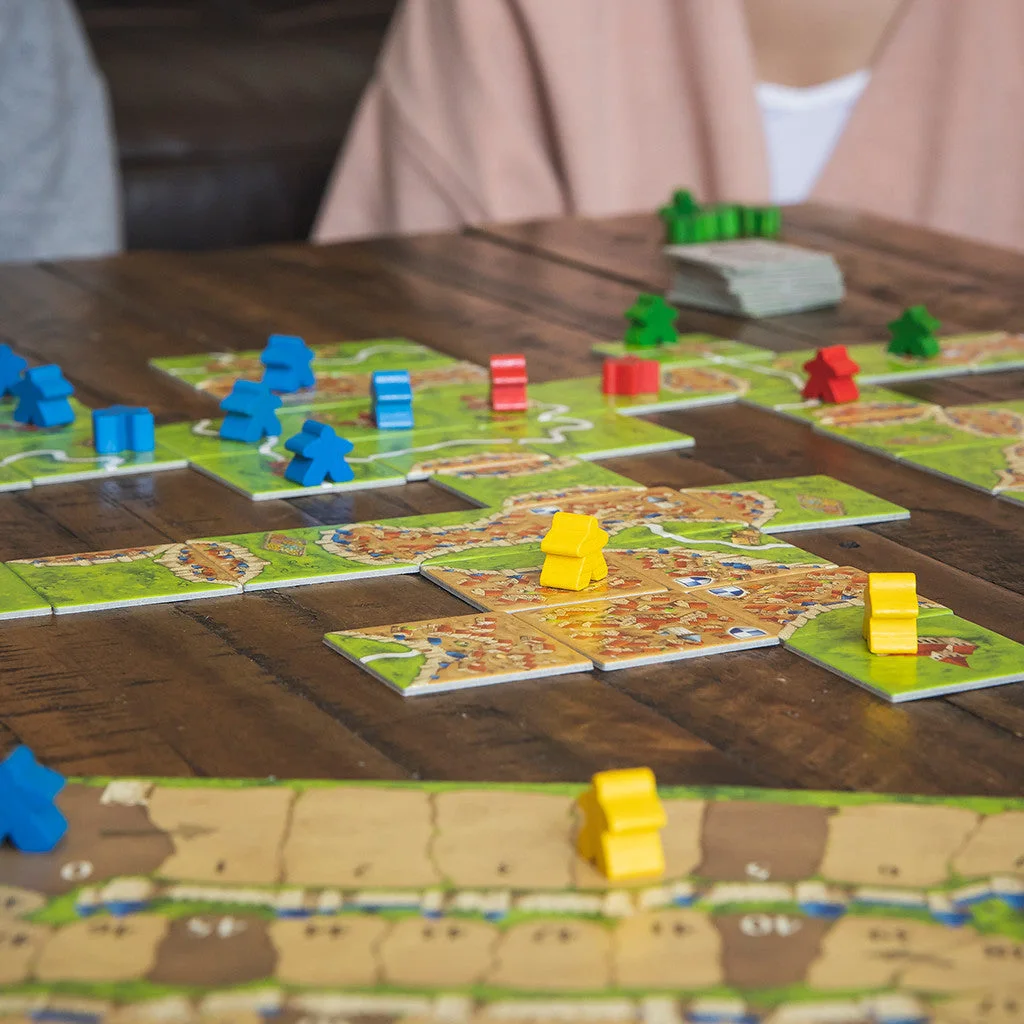
A closer tabletop view of the scoring track, tiles and the players' limited meeples.
Photo: Z-Man Games · Manufacturer reference image. A closer tabletop view of the scoring track, tiles and the players' limited meeples.

Leave open table space for the landscape to grow. For mixed-age play, explain scoring with a small example and check the age guidance on the actual box. The publisher lists seven and up, which is guidance rather than a promise that every seven-year-old will enjoy tactical competition.

Choose it if you want a repeatable tabletop puzzle that ends with a different little world each time. Pass if your group dislikes contested scoring or you need something playable on a cramped tray. This guide is based on publisher information, not a Findweave hands-on playtest.
Ready to check availability?

Shop at Amazon

Paid link — we may earn a commission. Amazon may show a local match, an alternative or search results. Check the exact product, delivery and current price.

Evidence and sources

Research-based product guidance, not hands-on testing. Exact variant reviewed; price, stock, medical effects and international equivalence are not promised.