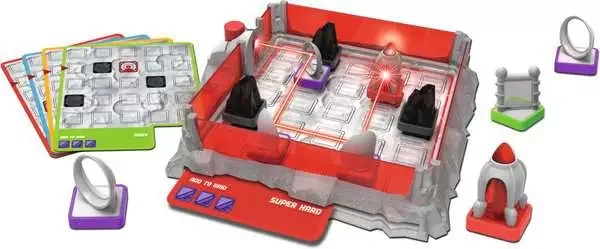
There is an appealing difference between guessing an answer and watching it work. In ThinkFun Laser Maze, the proof is physical: correctly positioned pieces steer a beam towards the target. The light is a reward for solving the layout, not a replacement for thinking.
What you actually do
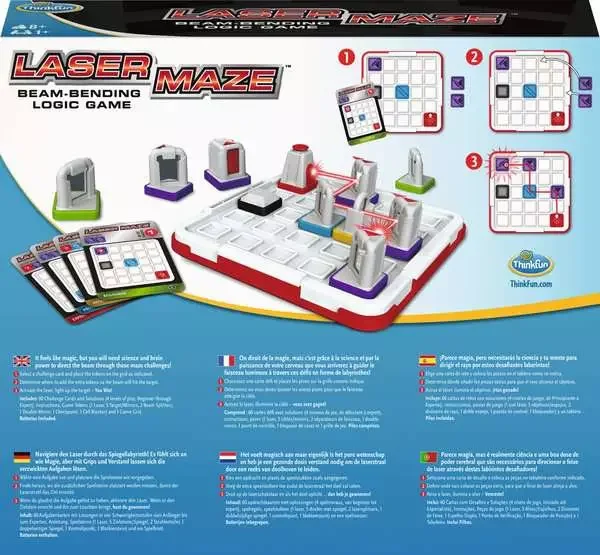
Choose a challenge card, arrange the starting pieces on the grid and work out where the remaining tokens belong. Mirrors and beam splitters change the route. Press the laser token when the layout is ready, then compare with the solution if you need help. The standard game supplies 60 challenges ranging from beginner to expert.
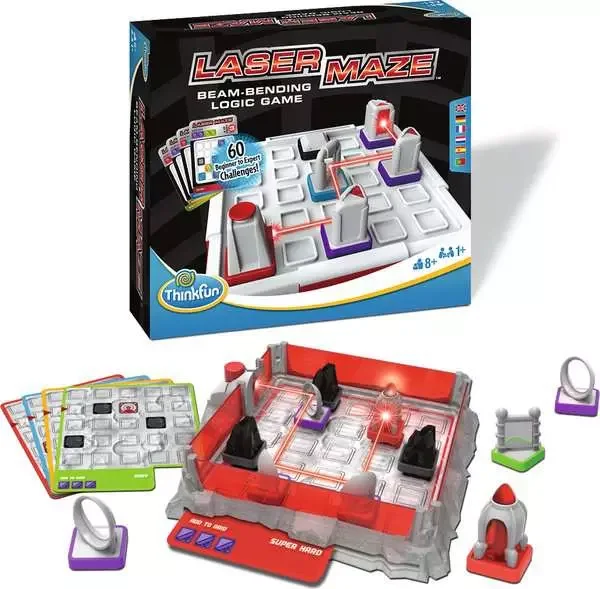
This is a single-player, eight-plus logic game. Another person can discuss a puzzle alongside you, but that does not make it a scored multiplayer board game. Be sure the listing is standard Laser Maze: Laser Maze Junior has a different age recommendation and challenge set.
Why it can feel more rewarding than an app
Turning a token changes a real optical path, which makes an error visible rather than simply producing a red cross on a screen. It invites a useful question: where did the route stop behaving as expected? A patient player can return to that point and adjust the setup instead of immediately revealing the answer.
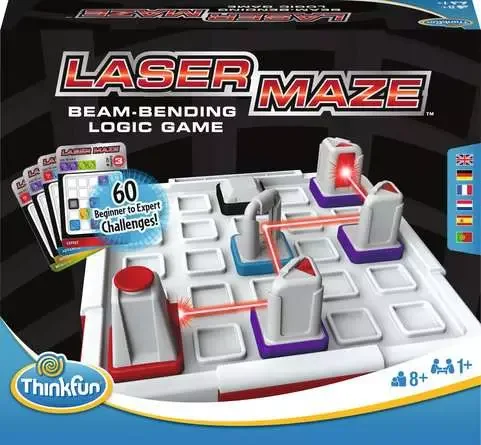
Keep the tokens and cards together, and use the laser only as directed. This selected version is described as a Class 1 laser game, not a handheld pointer for shining at people. Follow its safety instructions and keep small pieces and batteries away from younger children.
The purchase decision
Choose it for someone who enjoys working through a finite set of spatial problems. Skip it if their favourite part of games is conversation, fast rounds or open-ended construction. Regional packaging can differ, so confirm the 60-challenge standard edition. The satisfying part is the moment a planned route becomes a visible beam.